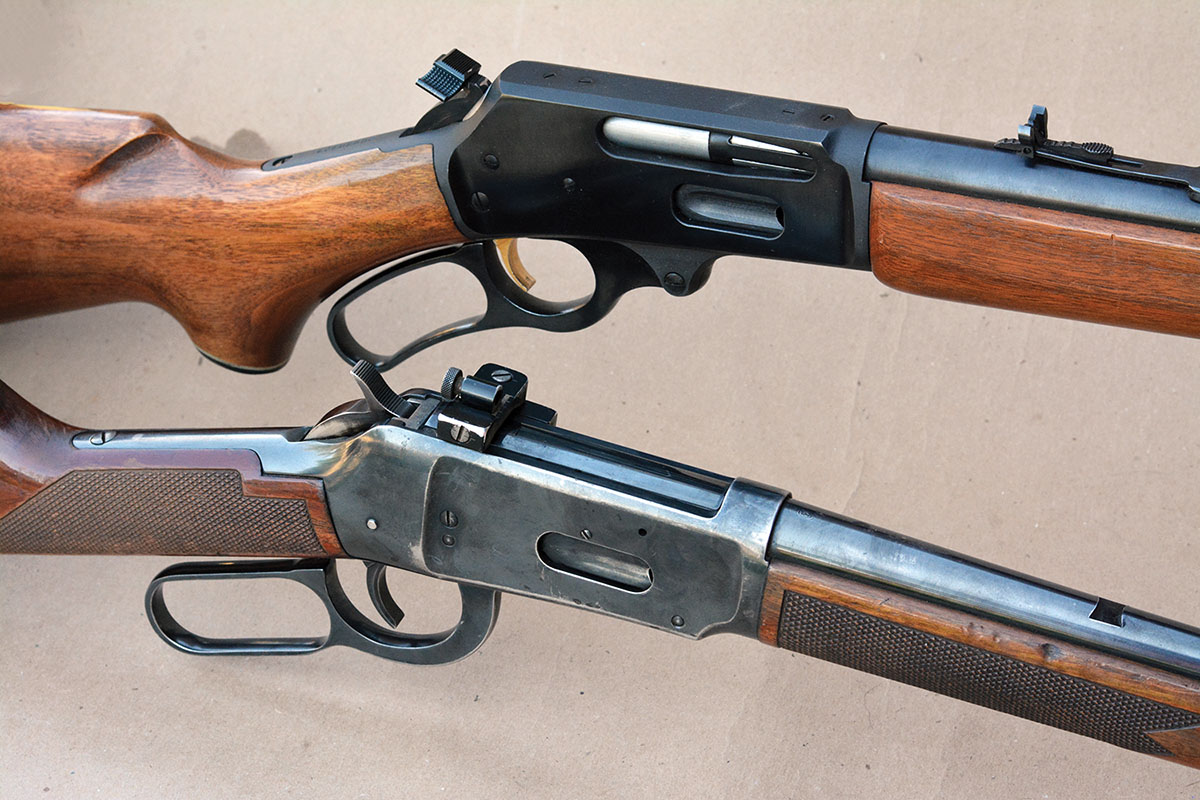
The Marlin Model 375 (top) and the Winchester Big Bore 94 (bottom) were each chambered in 375 Winchester.
Shooters and hunters in the 1970s were enjoying decades of bottleneck cartridge developments with ultra-popular cartridges such as the 30-06 Springfield, 270 Winchester, 7mm Remington Magnum and 300 Winchester Magnum, as well as short-action cartridges such as the 308
and 243 Winchester and many others. Nonetheless, the demand for modern straight-wall cartridges for brush and timber hunting remained strong. For example, Marlin introduced the 44 Magnum in their Model 336-44 in 1963, followed by the more powerful 444 Marlin in 1965 and finally the New Model 1895 chambered in 45-70 Government in 1972. Sales were strong, and every rifle they could build was already sold. Winchester had not offered a new brush and timber lever-action cartridge since the 348 Winchester Center Fire (WCF) had been introduced in 1935/1936 in conjunction with the Model 71 rifle that was based on the Model 1886 action. It was ultimately discontinued in 1958 due primarily to the high cost of manufacturing. 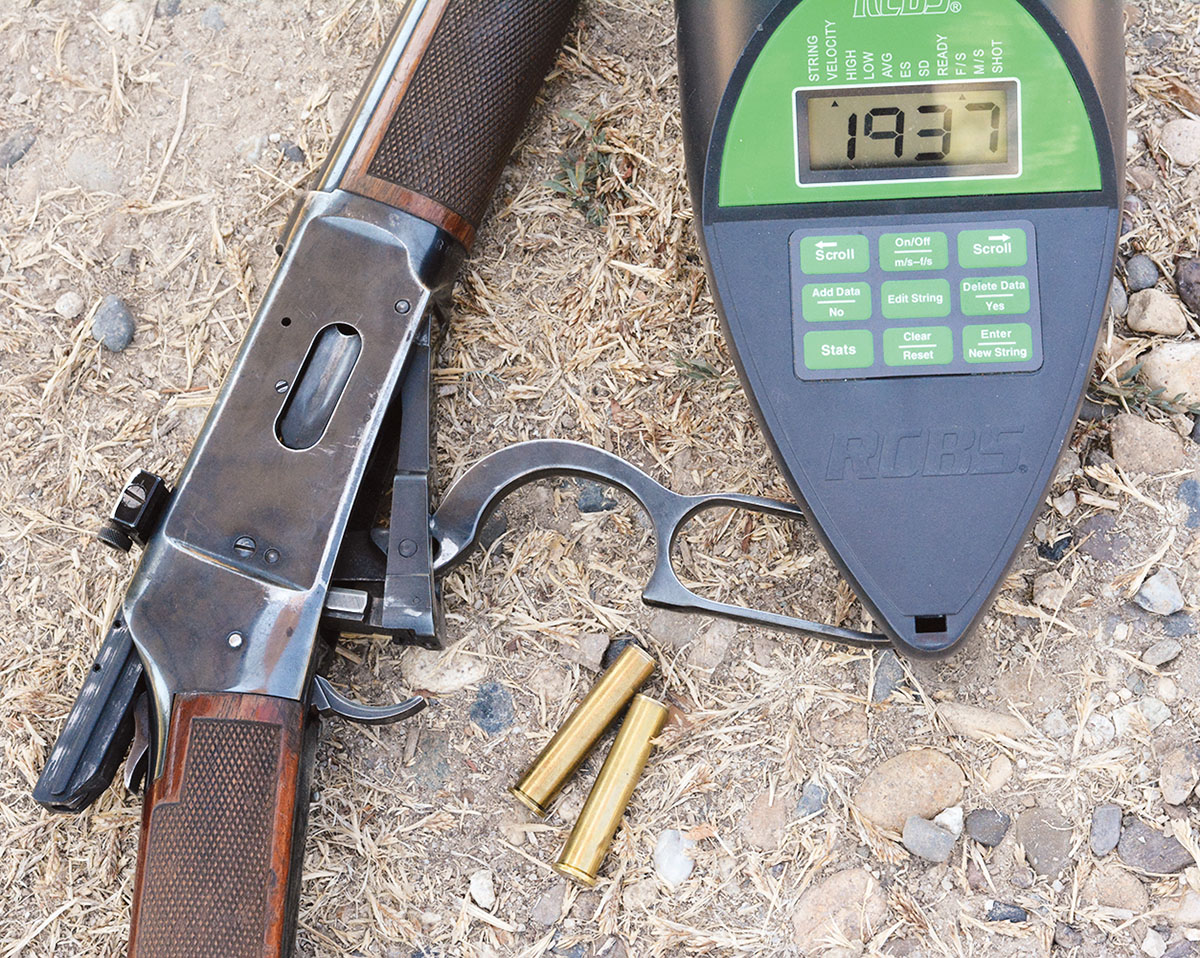
Brian developed many handloads that duplicate period 375 Winchester ballistics.
In 1978, the only centerfire levergun that
Winchester offered was the hugely popular Model 94, so it seemed logical to develop an updated, high-pressure version of the classic 38-55 that dated back to the early 1880s. That cartridge had a good reputation among woods hunters when used at modest distances, but was widely known as an outstanding black-powder target cartridge that gave superb accuracy. Period ballistics listed a 255-grain lead bullet at 1,321 feet per second (fps), but today Winchester lists a 255-grain JSP at 1,300 fps; however, in deference to older rifles, that load generally produces 1,160 fps from most rifles. Winchester knew they would need to improve upon those ballistics to interest modern hunters. The new 375 Winchester and strengthened Big Bore 94 rifle were formally introduced in 1978.
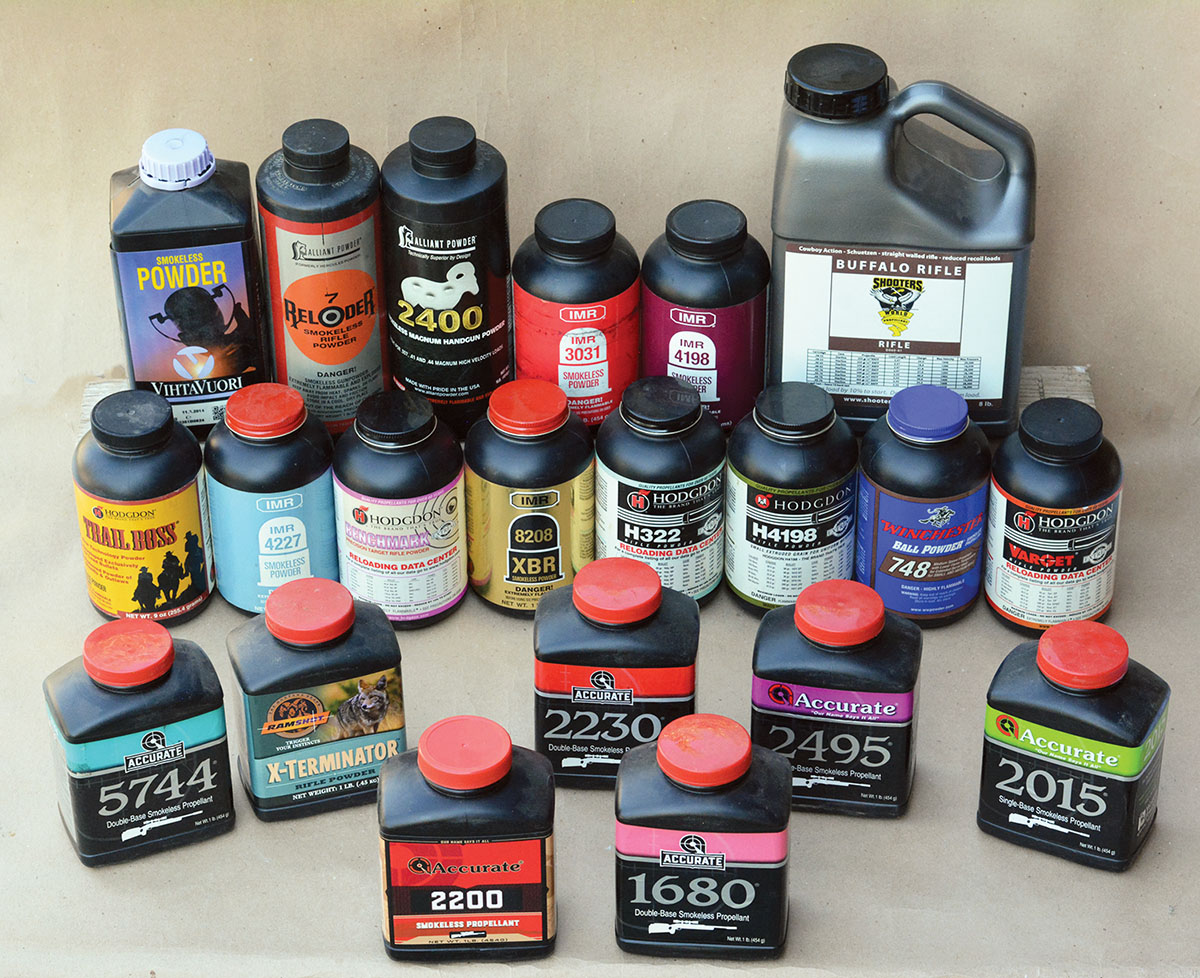
Brian used a variety of spherical and extruded powders for developing handload data for the 375 Winchester.
For several reasons, during development of the 375 it became clear that it was not an option to offer a heavily loaded +P style 38-55 WCF cartridge. For example, there were many guns that were built during the black-
powder era that are simply not strong enough to handle heavy, smokeless-powder loads and somehow modern ammunition often ends up being fired in antique guns with disastrous results. In addition, the case was thin and could not take the pressures that Winchester needed to achieve the desired ballistics. To further complicate matters, the groove diameter variance of 38-55 guns was huge and ranged from .376 to .382 inches. 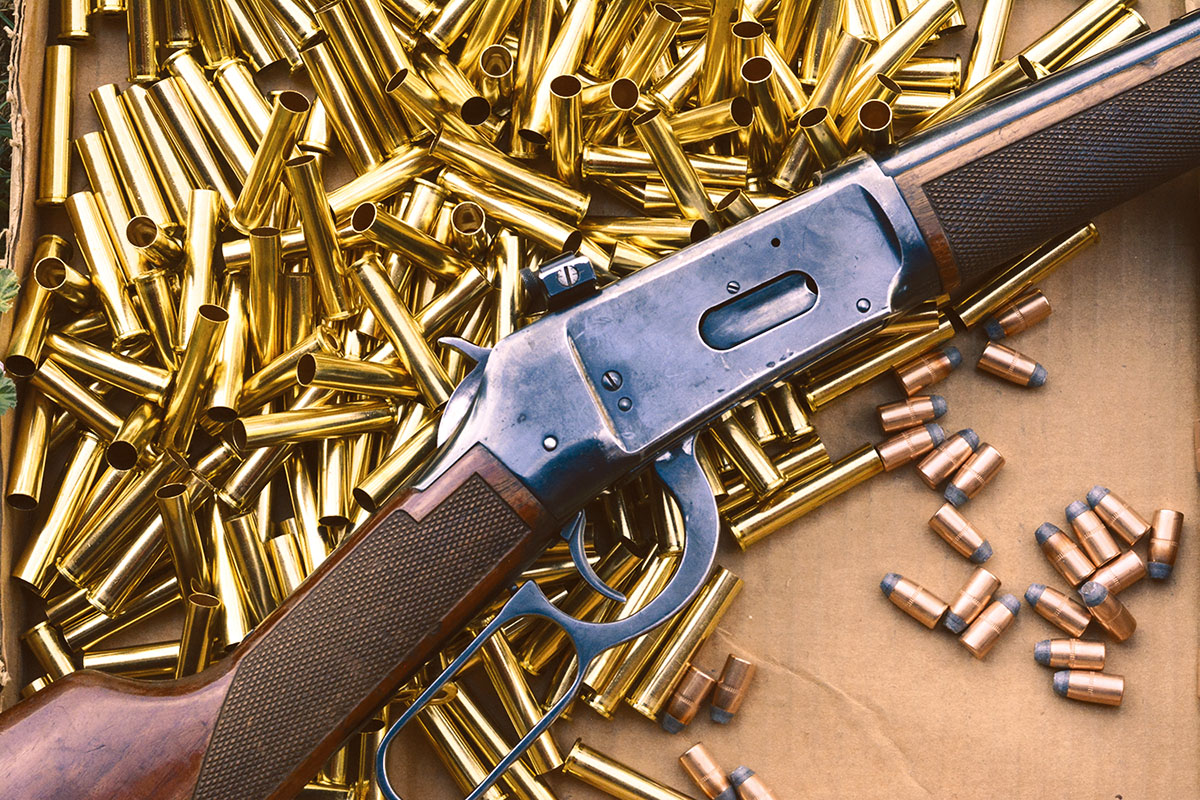
New Starline cases were used to develop handload data.
Clearly, the best option was to begin with a new case, a standardized bore, groove and bullet diameter and a strengthened rifle. While there are small technical external differences with the rim and head of the 375, it is safe to say that it is based on the 38-55 and 30-30 family of cartridges. However, it was loaded at much higher pressures and produced notably greater head thrust. For example, the 375 has a maximum average pressure of 52,000 copper units of pressure (CUP) – for comparison the 30-06 is loaded to 50,000 CUP – while the 30-30 generates 38,000 CUP and the 38-55 generates around 28,000 CUP (some sources claim 30,000 CUP) with factory loads being well below that figure. The 375 case head thrust against the breech bolt was roughly 40 percent greater than the 30-30 and more than double that of the 38-55. This clearly establishes why Winchester needed to increase the receiver strength of the Big Bore 94.
As a result, the 375 case was beefed up, strengthened with thicker specifications to withstand the higher
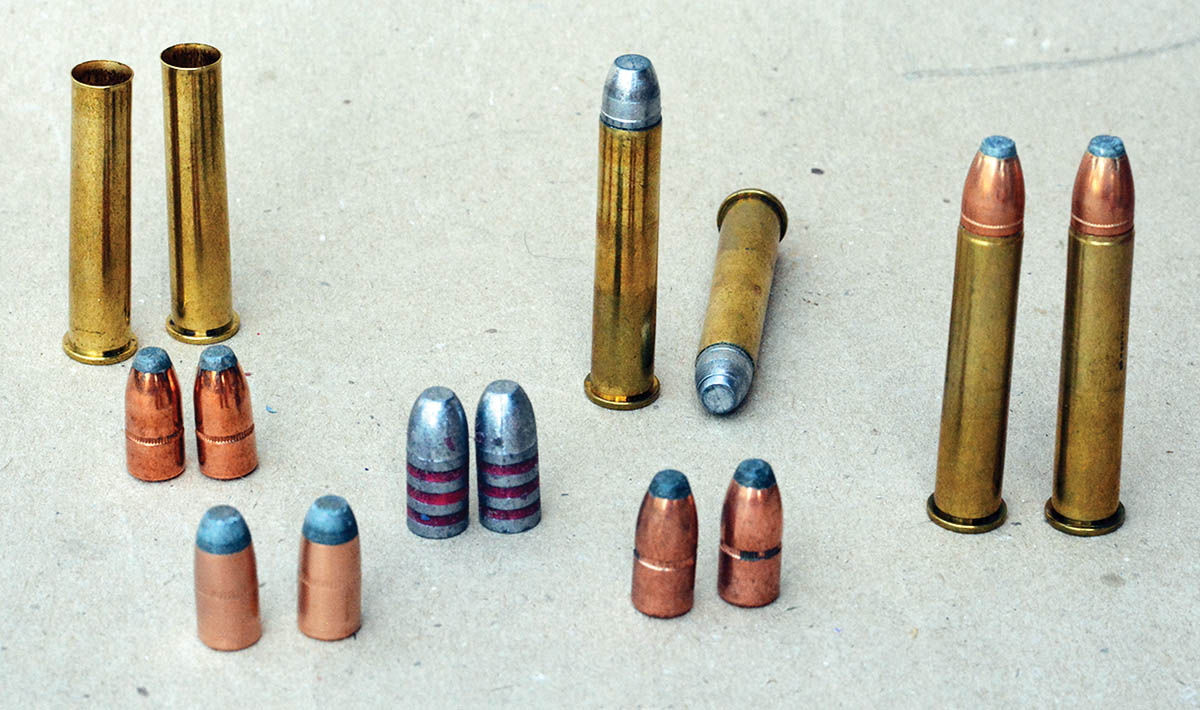
The 375 Winchester performs well with both jacketed and cast bullets.
pressures. However, it was shorter than the 38-55 with a maximum length of 2.020 inches, while the 38-55 case measures 2.080/2.085 inches for Winchester rifles. The maximum overall cartridge length of the 375 is 2.560 inches, while the 38-55 is 2.510 inches.
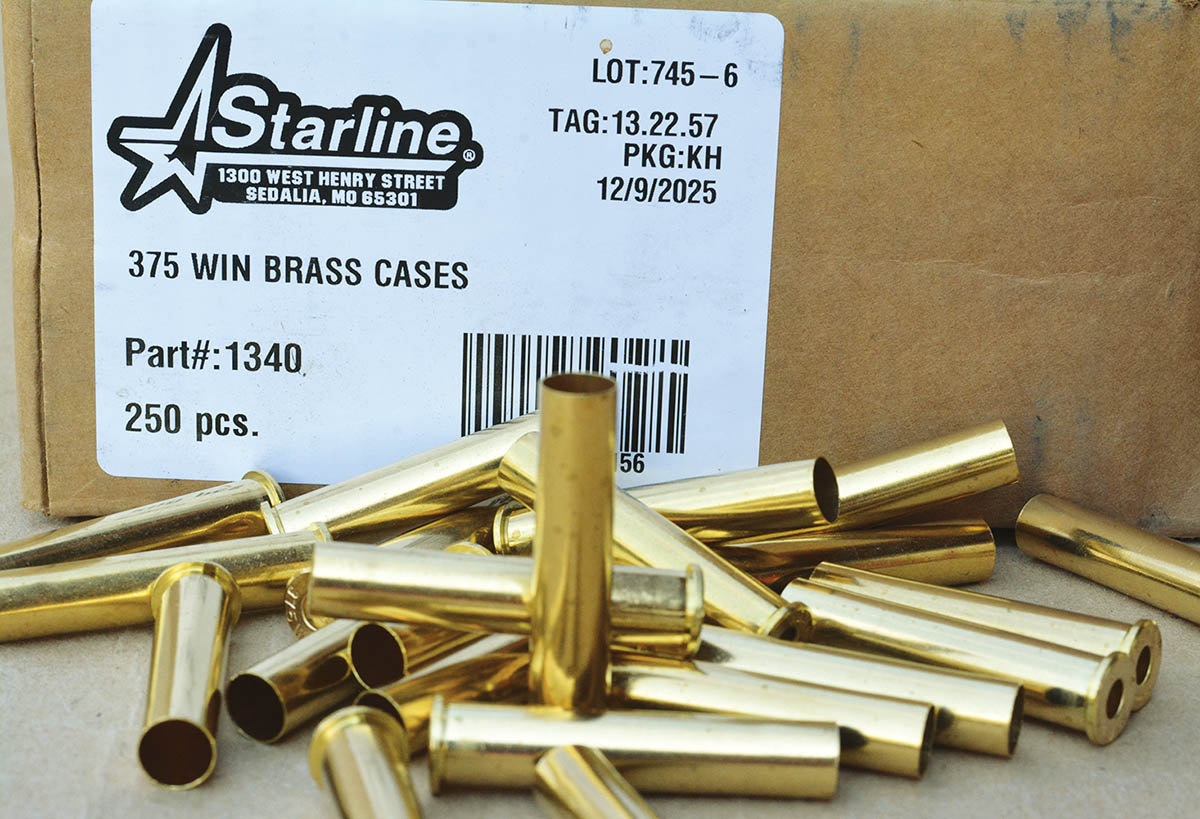
Starline cases for the 375 Winchester are readily available and offered factory direct.
At the risk of opening a can of worms, it should be pointed out that 375 cartridges can be fired in a 38-55
chamber, and 38-55 cartridges can be fired in most, but not all 375 chambers; however, I strongly advise against either practice! This could be a very lengthy discussion but suffice to say that the 375 produces far too much pressure and case head thrust for most 38-55 rifles. The longer case of the 38-55 can bind within 375 chambers, especially those that are cut with minimal dimensions. This can cause the bullet to bind within the case during ignition causing pressures to spike and can tear off large chunks of the case sending them into the bore and downrange. Plus, the 38-55 features an oversized bullet for the .375-inch groove diameter of the 375. The above comments are not a casual statement; rather I have researched, tested and experimented with many rifles both vintage 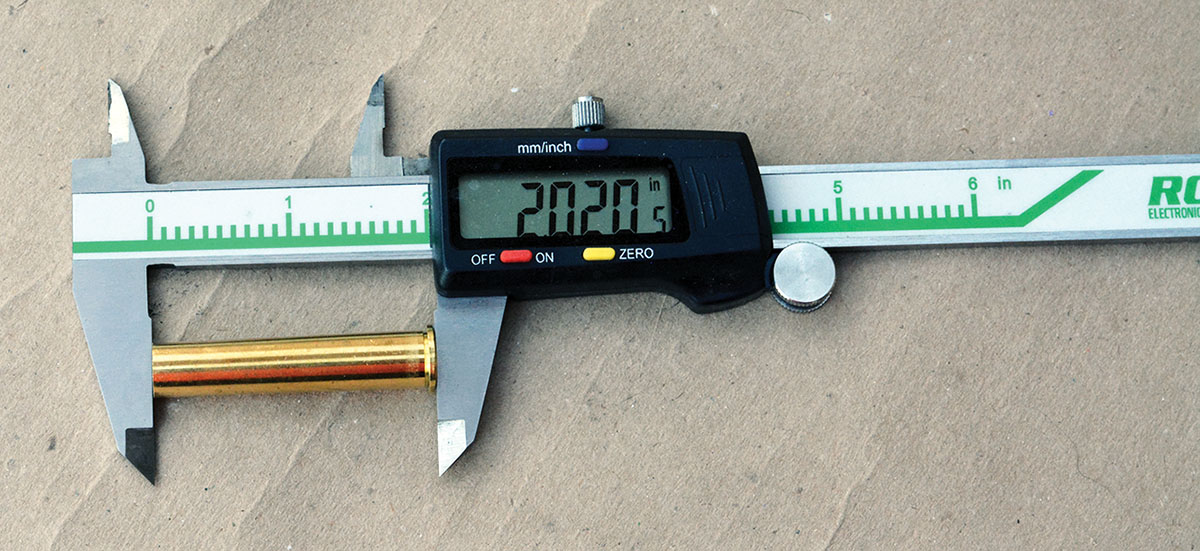
Maximum case length for the 375 Winchester is 2.020 inches.
As indicated the 375’s groove diameter is .375 inch, while the bore diameter (or land diameter) is .366 inch and the jacketed bullet diameter is .375 inch. Period factory loads were listed with 200- and 250-grain bullet weights at 2,200 fps and 1,900 fps respectively. It is important to note that in 1978 Winchester owned both the firearms and ammunition manufacturing plants and the engineering that went into the rifle and cartridge was all under one roof, so to speak. To withstand the higher pressures of the new cartridge, Winchester beefed up the back of the receiver of the Model 94 calling it the Big Bore 94 XTR (indicating greater strength) and upgraded the high-polish, metal finish with a gloss finished wood stock featuring cut checkering.
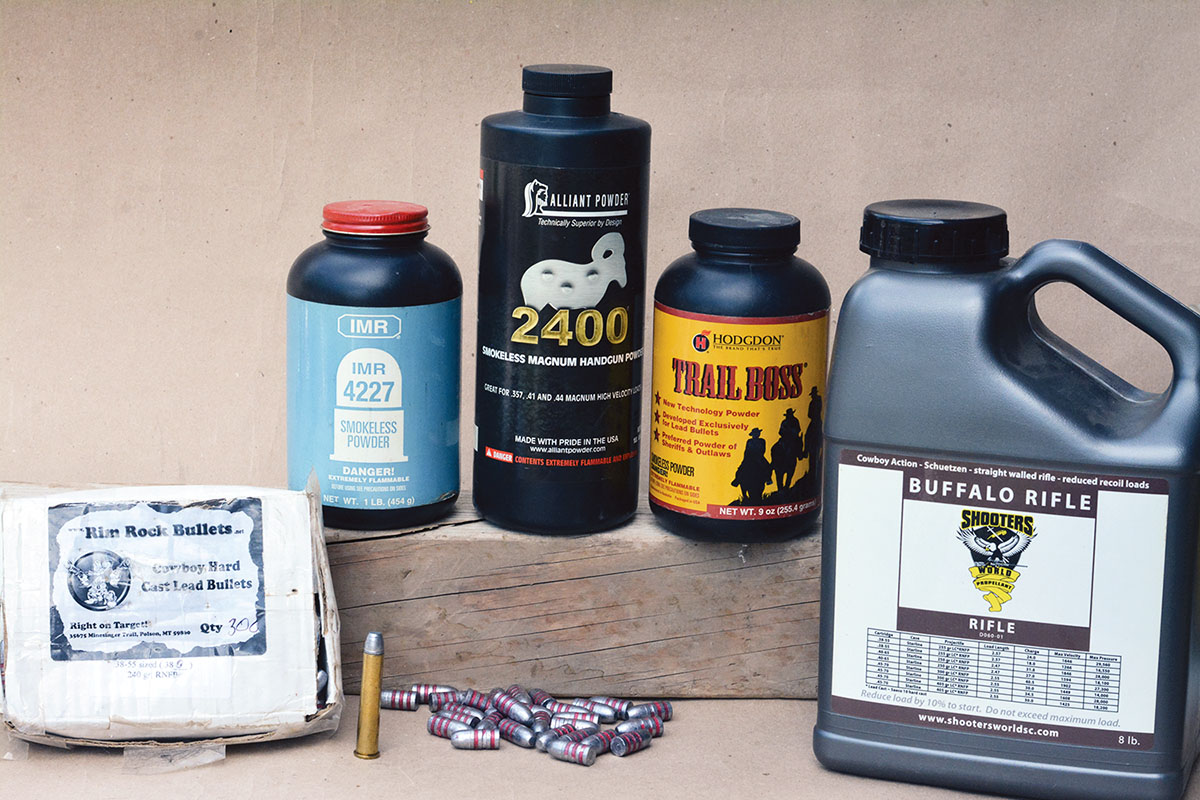
Several powders gave good results with cast bullet loads.
The Big Bore 94 375 was a much better woods rifle and cartridge than most shooters realized. The Model 94 carbine has been hugely popular since it was introduced. In addition to being handsome, it boasts of being lightweight, compact, fast handling and the trim receiver profile carries naturally in the hand. The
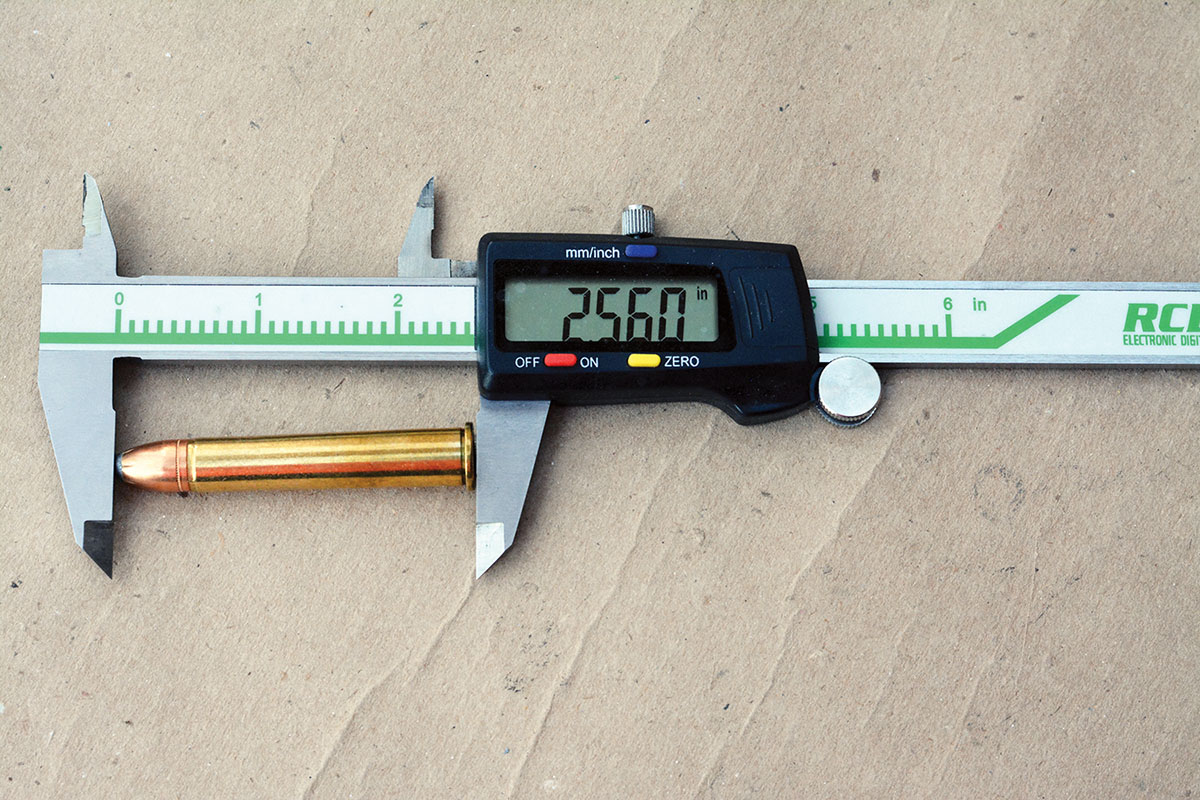
Maximum overall cartridge length for the 375 Winchester is 2.560 inches.
375 offered notably greater shock and bone-breaking virtues than the ever popular 30-30 Winchester but housed in a carbine of the same size. When stoked with heavier bullets, it was capable of taking large black bear and elk at reasonable distances. In my experiments with the cartridge, it has always been accurate and works well with cast bullets that are also suitable for hunting big game.
Period gun writers had a wide variety of opinions about the cartridge, but most did not recognize the virtues of the new round. One writer even reported that Winchester recommended using 375 ammunition in 38-55 rifles, which was absolutely not true and exactly opposite of Winchester warnings.
Regardless, the new rifle and cartridge sold reasonably well and soon Marlin offered their Model 336 so chambered and called it the Model 375, while Savage chambered the Model 99. Ruger soon chambered their No. 3 rifle, and Thompson Center Arms produced it in their popular Contender.
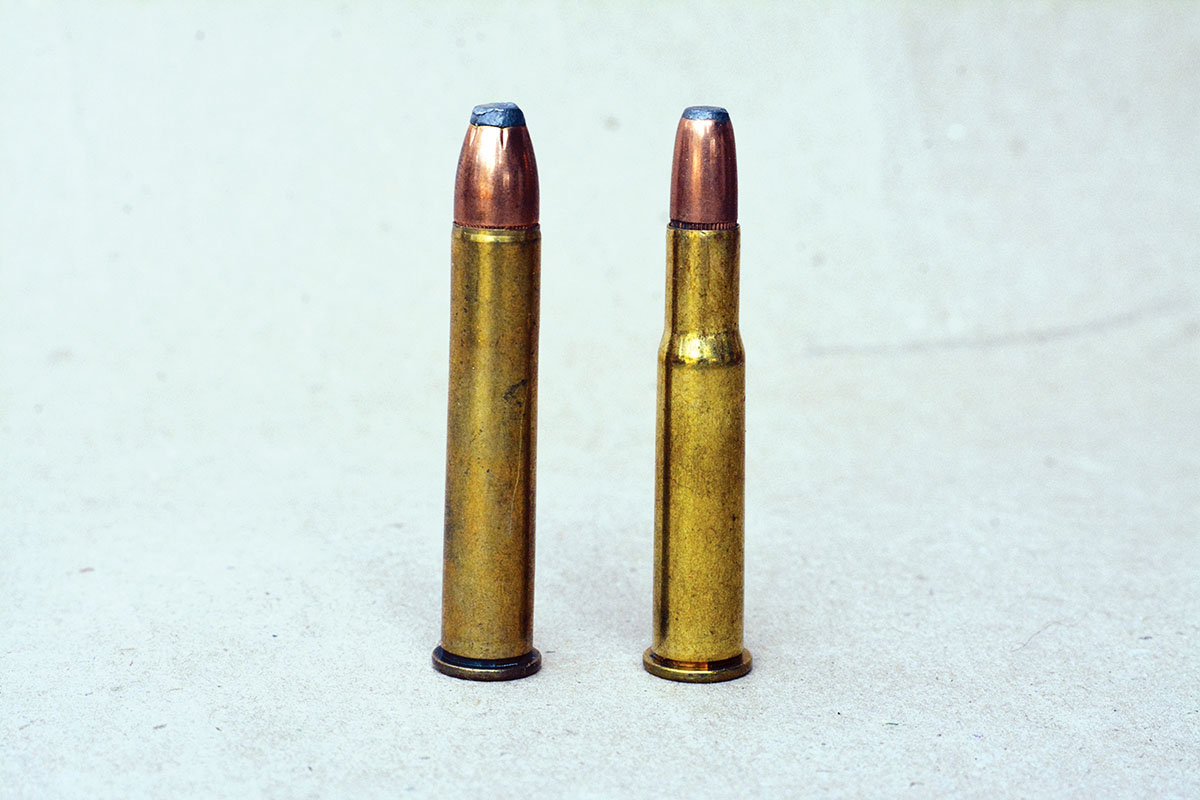
For comparison, the 375 Winchester (left) and the 30-30 (right). Both were introduced in the famous Winchester Model 1894; however, the 375 is loaded to higher pressures and has roughly twice as much case head thrust.
Shooters were generally happy with the quality, accuracy and power of the new Winchester rifle and cartridge combination. What slowed sales was the lack of suitable bullets for handloading. Winchester was slow in getting ammunition onto the shelves and even slower at offering bullets to handloaders. Eventually both problems were addressed, but it took its toll on sales, which in this writer’s opinion, was unfortunate. Today, Winchester still offers the 200-grain Power Point factory loads and components from time to time, but depending on ammunition shortages, factory loads can be hard to obtain on a regular basis. This is where handloading solves that problem. As can be seen in the accompanying table, factory loads are easily duplicated and select loads can notably exceed factory load performance while staying within industry pressure guidelines.
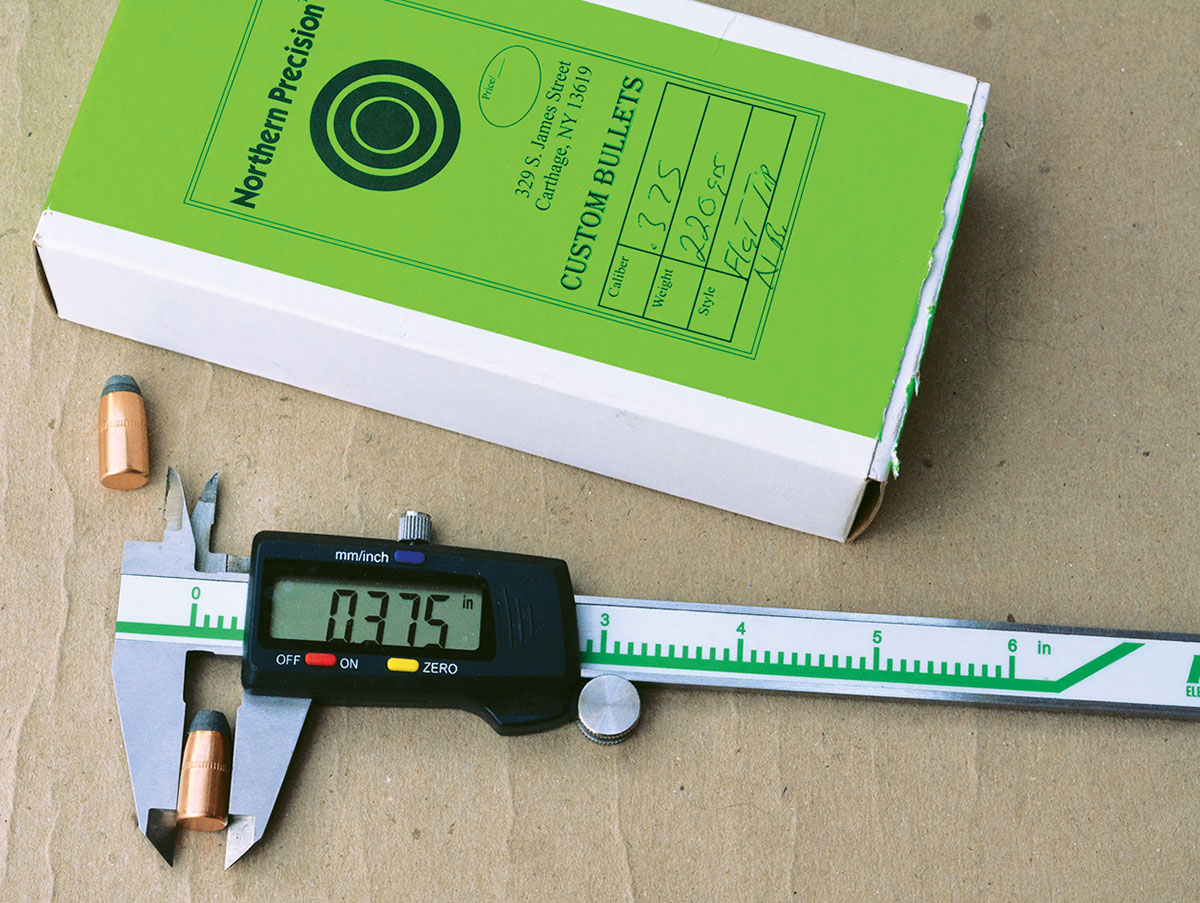
The 375 Winchester utilizes .375-inch jacketed bullets, while cast bullets were sized to .376 inch.
To make matters easier,
Starline Brass offers excellent 375 Winchester cases factory direct. They are of high quality and can be reloaded many times. Their capacity is slightly less than period Winchester cases, but they weigh a few grains more and have withstood many reloads without premature splitting. Starline cases were used exclusively in developing the accompanying data.
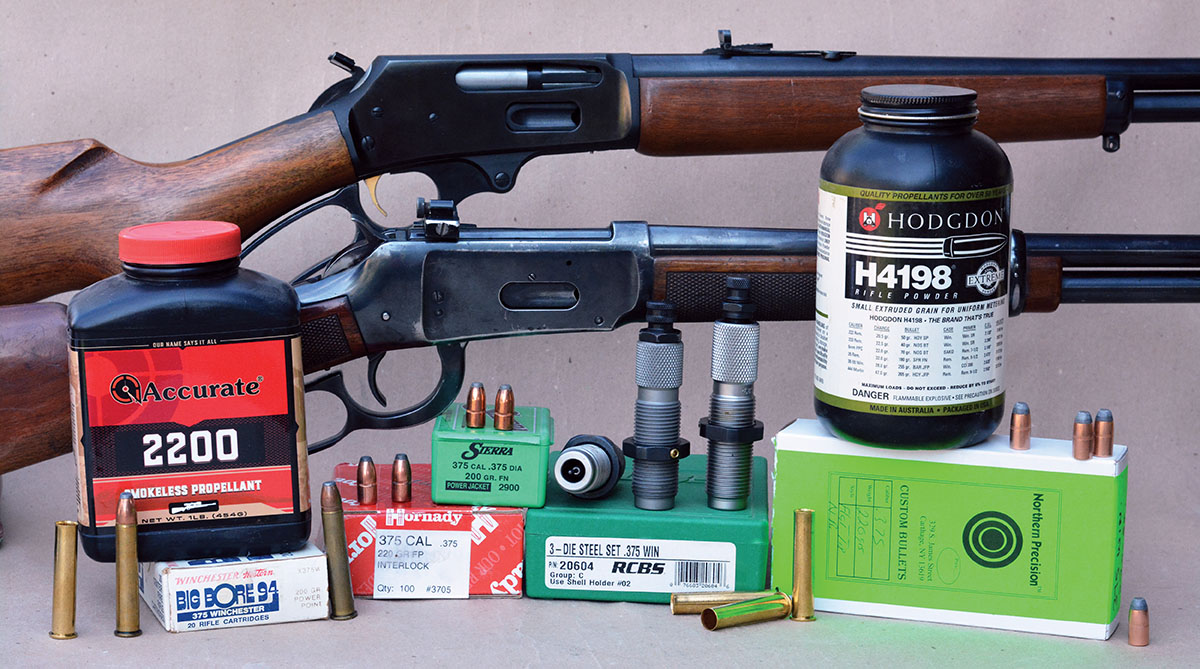
For today’s load development, two 375 rifles were used. The first was a very early production Winchester Big Bore 94, while the second rifle is a Marlin Model 375, both featuring 20-inch barrels. Handloads were checked for function and accuracy in each rifle.
Due to its straight-tapered design, the 375 utilizes a 3-die set, with RCBS dies used to develop the
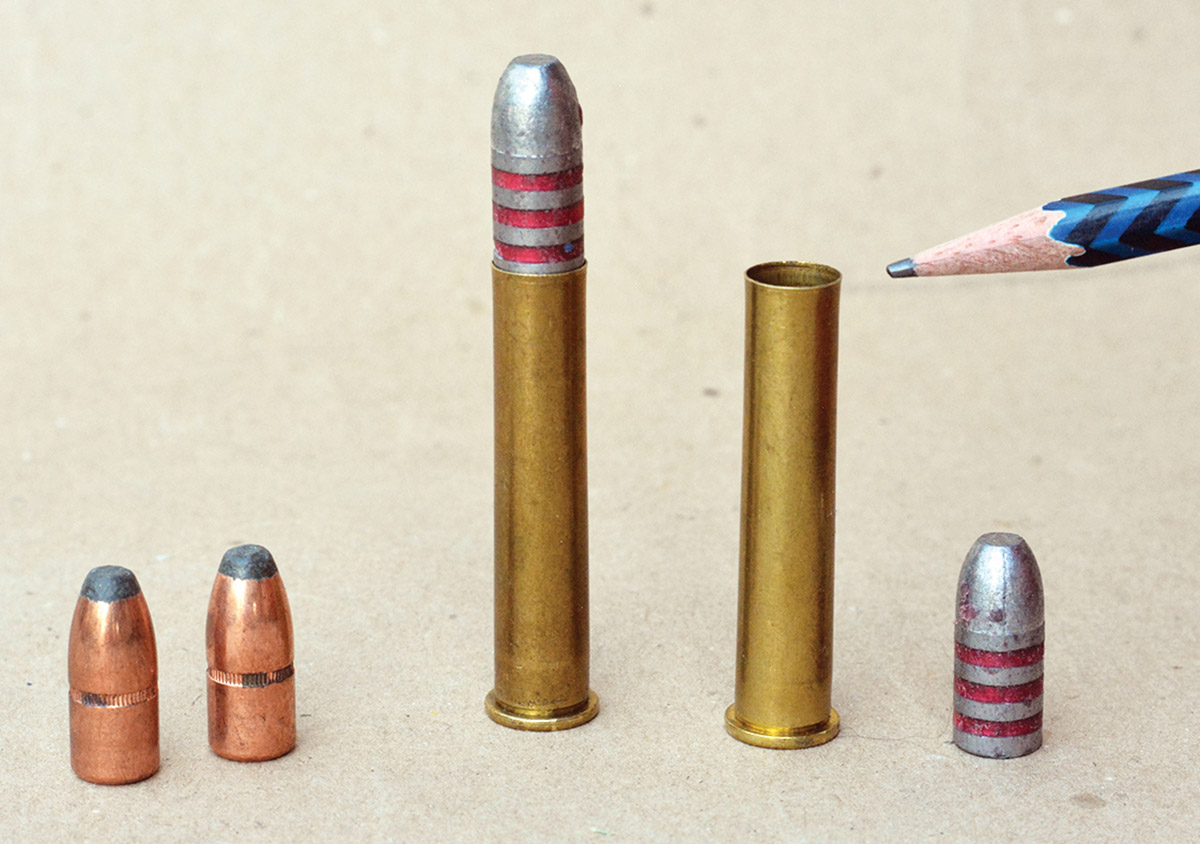
All 375 Winchester cases should receive enough neck flare to allow both cast and jacketed bullets to seat freely. Inside case mouth chamfering is also recommended.
accompanying data. All cases should be full-length sized to ensure proper chambering. Regardless if loading
jacketed or cast bullets, the case mouth should be expanded enough to allow bullets to seat without damaging the case or causing damage to the bullet. It’s a good idea to chamfer the inside of case mouths the first-time cases are loaded (naturally after the case is full-length sized). After bullets are seated to the correct overall cartridge length, a proper roll crimp should be applied as a separate step to aid with powder ignition and help keep bullets in place while cartridges are loaded into tubular magazines and cycled through the action and into the chamber. 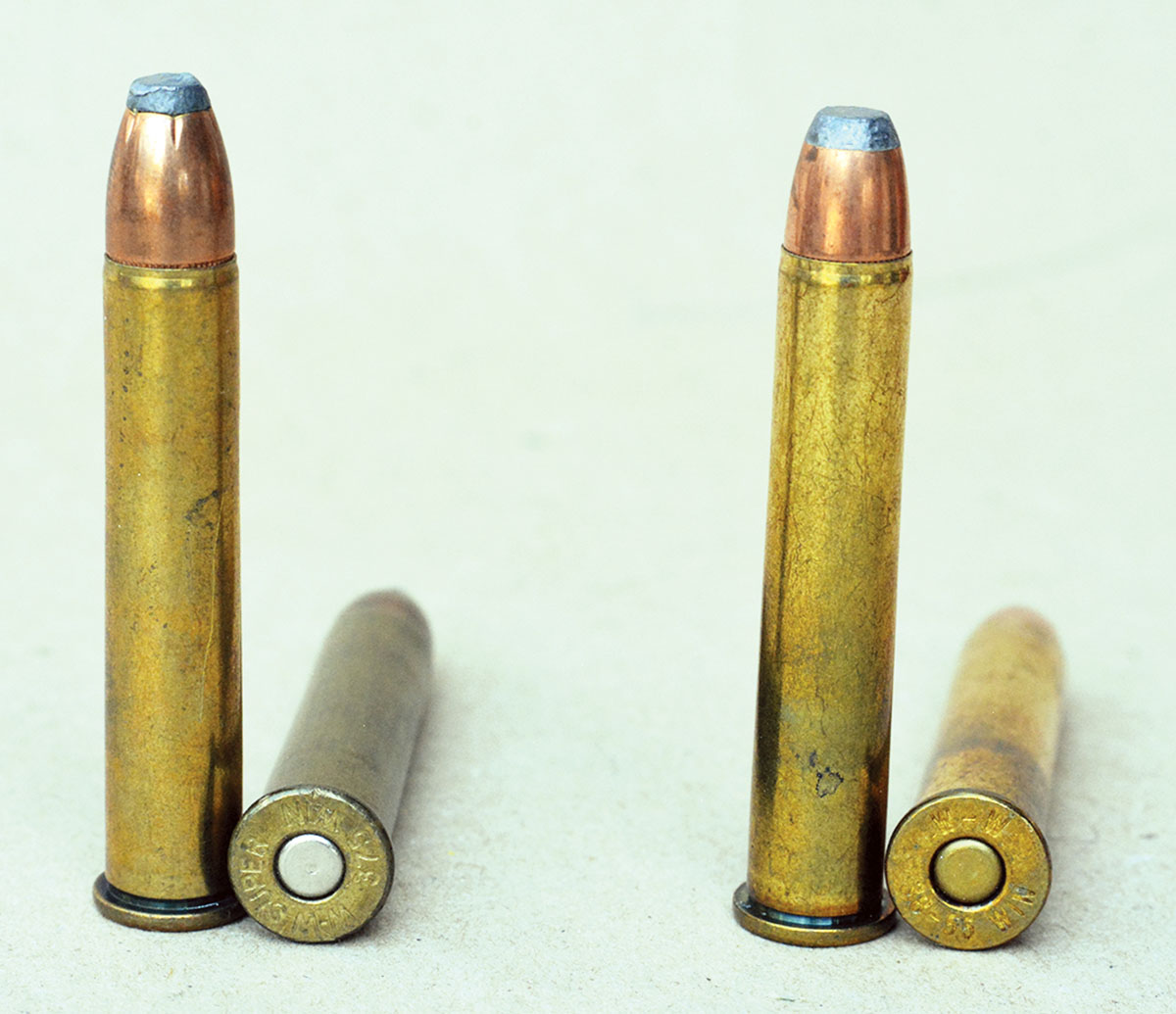
The 375 Winchester (left) is a modern version of the old classic 38-55 Winchester (right) but features a slightly shorter case that is much thicker for greater strength and is loaded to much greater pressures. Standard bullet diameter is .375 inch.
For bullet choices,
Sierra offers a 200-grain flatpoint that proved very accurate and is an excellent choice for deer hunters. For decades Hornady offered a 220-grain flatpoint that is an excellent bullet and weight for the 375, but that bullet has had flickering availability in recent years. It was nonetheless included in the accompanying data, as they are relatively easy to find for sale. Northern Precision Bullets offers .375-inch flatpoint bullets, with their 220-grain version selected to develop today’s handloading data. Also included is data for the discontinued 250-grain Winchester Power-Point bullet in the event that the reader has some on hand or can find them listed for sale. When using a single-shot rifle, spitzer bullets can be used; however, since the majority of rifles are lever actions with tubular magazines, only flatpoint bullets were used herein. Keep in mind that spitzer profile .375-inch bullets are designed for cartridges that offer much higher velocities than the 375 Winchester can produce, so terminal performance will probably be disappointing. For reliable feeding in all leverguns, the maximum overall cartridge length should be limited to 2.560 inches.
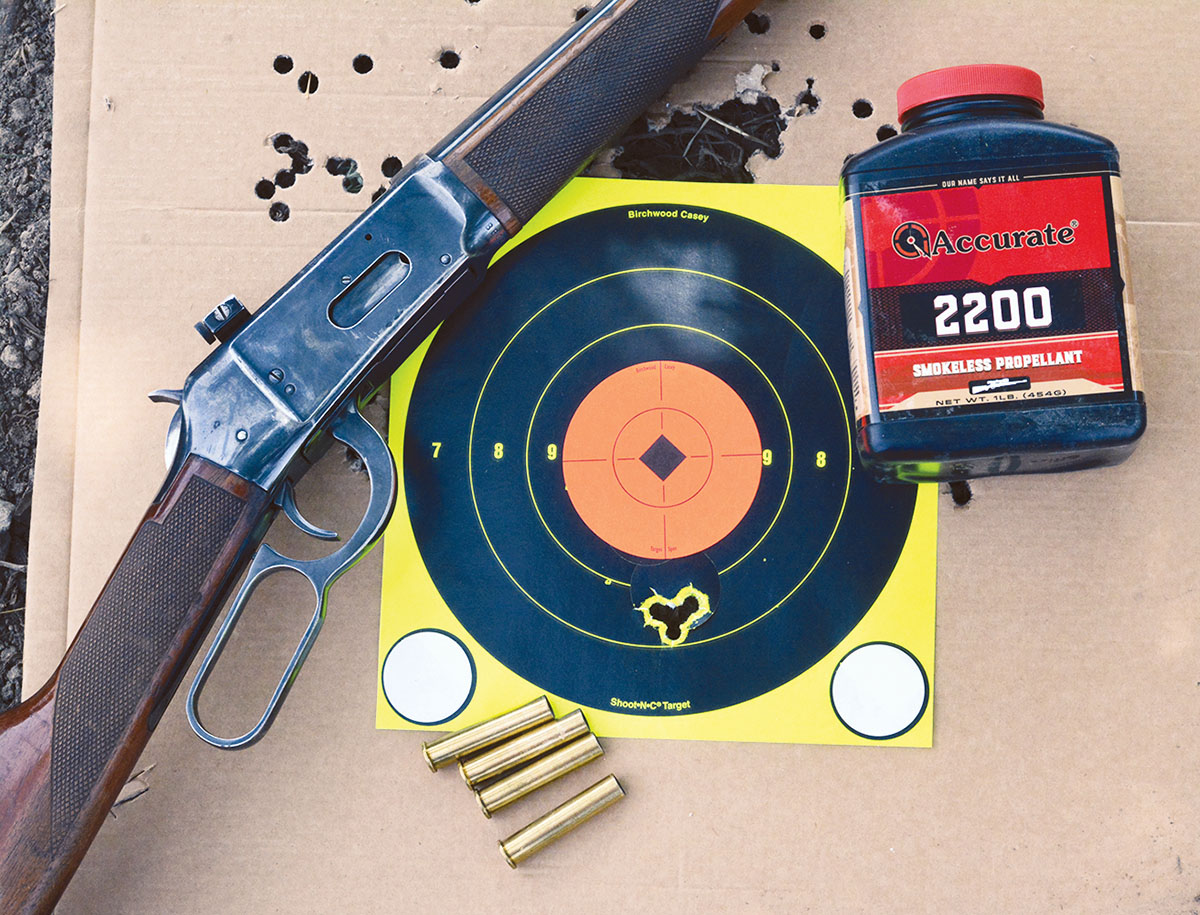
Select 375 Winchester handloads proved accurate with this four-shot group being fired at 50 yards.
Cast bullets are offered commercially, such as the 240-grain
Rim Rock RNFP, and there are several mould options for those that prefer to cast their own. For the accompanying data, Lyman mould 375248 was warmed up and a quantity of bullets were cast and sized to .376 inch.
Velocities ranged from 1,500 to 1,850 fps with good results in terms of accuracy and function.
It should be noted that pressures for the 375 Winchester have been updated from 52,000 CUP to 55,000 pounds per square inch (psi). The accompanying data is all within those pressure limits.
The 375 thrives on medium-burn-rate rifle powders that range in (burn rate tables) from Accurate A-5744 to Winchester W-748. One of the biggest challenges is that the case capacity limits the charge weight prior to loads hitting maximum pressures and giving the highest potential velocity. In my experiments, many powders were tried that have never been published before in conjunction with the 375. Many of these newer powders gave good accuracy and low extreme spreads but fell short in velocity. Nonetheless, many new powder and bullet combinations proved very worthwhile.
As can be seen in the accompanying table, many powders were tried that easily duplicated factory loads in terms of accuracy and velocity. A few examples used in conjunction with the 200-grain Sierra flatpoint bullet include Ramshot X-Terminator, Accurate A-2015, A-2230, Alliant Reloder 17, IMR-4198 and Hodgdon H-322. A couple of notable powders that far exceeded the velocities of factory loads included Accurate A-1680 (2,473 fps) and Hodgdon H-4198 (2,419 fps). Moving up to 220-grain bullets from Hornady and Northern Precision, IMR-4198, Hodgdon H-4198, H-322, Benchmark, Vihtavuori N-130, Alliant Reloder 7, Accurate A-1680 and A-2200 were all top performers.
I don’t know what powder Winchester is currently using in factory loads, but pulling bullets on 1970 factory loads reveals what appears to be IMR-4198 powder. Both IMR-4198 and Hodgdon H-4198 are excellent powders that duplicate or exceed factory load performance.
Both the Winchester Big Bore 94 and Marlin 375 proved accurate with most loads producing sub 1-inch groups at 50 yards from a sandbag rest.
The 375 Winchester is a proven woods, brush and timber cartridge for deer, black bear, elk and even moose with correct bullets. It is most commonly encountered in the hugely popular Winchester Model 94 that is lightweight and fast handling and has proven accurate with both cast and jacketed bullets. In addition to all components being readily available, its ballistics can be improved through handloading. It has been fun updating this 48-year-old cartridge with new powders and bullets.


.jpg)
.jpg)