

Wildcat Cartridges
To Tame a Wildcat
column By: Layne Simpson | December, 26
I grew up on a farm, and one of my father’s best friends owned land about 10 miles away. When an accident with a John Deere tractor ended his days of the soil, two sons took over the day-to-day operation. So the old gentleman spent most of his time in a large, insulated Quonset hut behind his home that was filled with all sorts of supplies and equipment for hunters, shooters and fishermen. A shooting range with target butts out to 500 yards was accessed by swinging open a small window. Next to it was a sturdy benchrest made of oak timbers. A variety of new and used rifles and shotguns were always available for sale there, and he had many regular customers. In his younger days, the old gentleman had used a custom rifle on a modified 1917 Enfield action with an extremely heavy barrel in 220 Wotkyns-Wilson Arrow to participate in modern benchrest competition, which was in its infancy at the time. A long-time crow shooter as well, his favorite rifle for that was built by Jerry Gebby during the 1930s, and its barrel was stamped “22 Varminter.” We know that cartridge today as the 22-250.
I eventually ended up with those two rifles, and since case-forming dies and loading dies, as well as load data, were included, getting to know them was rather pain-free. The 220 Arrow full-length sizing die made by the builder of the rifle pushed the shoulder of a 220 Swift case back just enough to increase its angle from 21 degrees to 30 degrees. That was it. Starting loads for the 220 Swift in a Lyman reloading handbook worked equally well for the 220 Arrow.
The 22-250 required quite a bit more effort. The 250 Savage cases from which the cartridge was originally formed became virtually impossible to find, but virgin military surplus 30-06 match cases were dirt cheap and always available in Shotgun News. Quality was actually better than some commercial brass. A set of RCBS form and trim dies, followed by using a reamer to thin case necks got me closer something I could shoot. Annealing the cases by standing them in water, heating their shoulders and necks with a propane torch, and then tipping them over, followed by full-length sizing, finished the job. A good supply of 49- and 55-grain Sisk bullets, along with loads developed by the owner of the rifle, were bad news for a plentiful crow population.
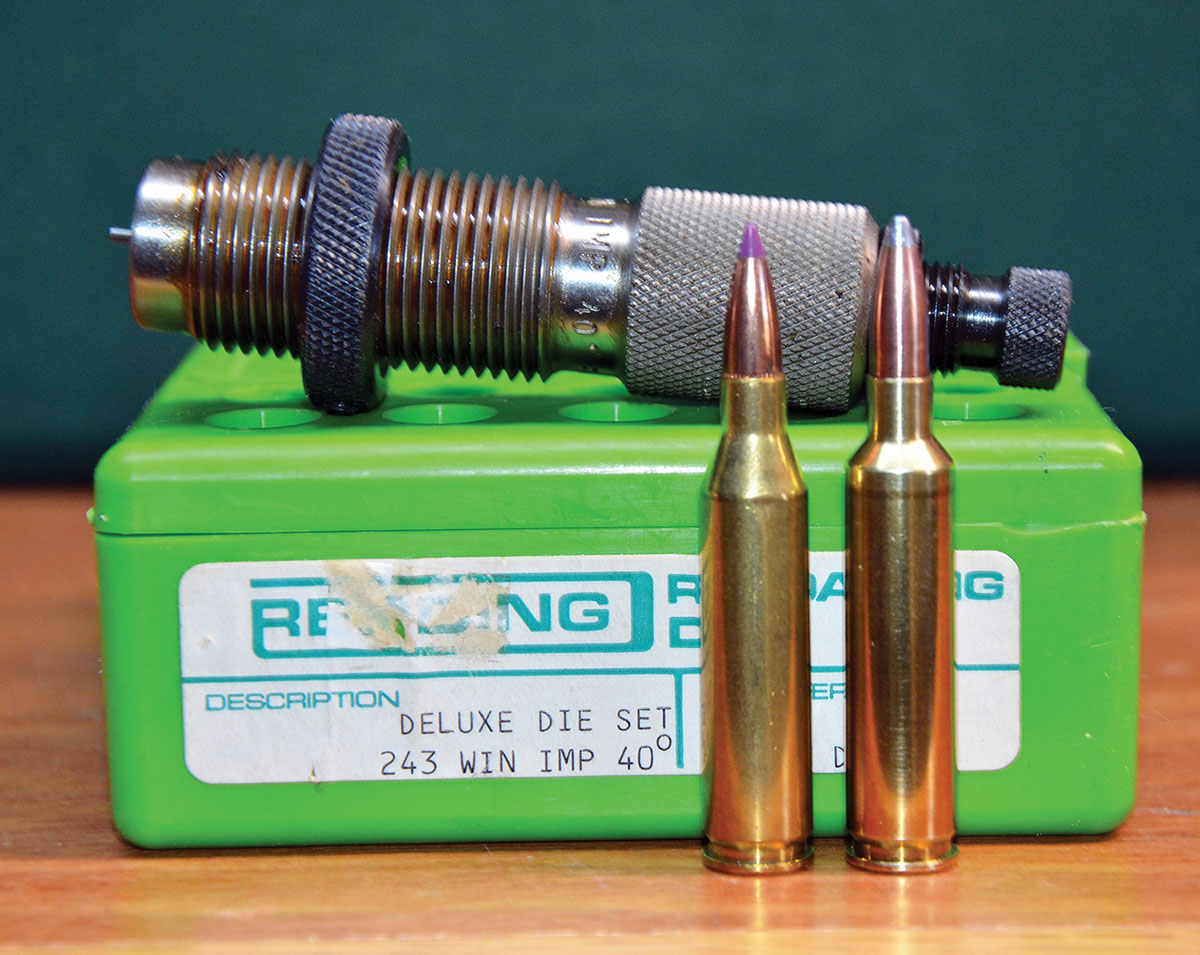
As wildcats go, the improved cartridges are the easiest of all to tame. This is due to the fact that most are nothing more than factory cartridges that have been “improved” by blowing out their cases for less body taper and usually a sharper shoulder angle for a slight increase in powder capacity. This is often done by firing factory ammunition in the improved chamber, although virgin cases can also be used. Parker Otto Ackley’s family of cartridges ranging from the 17 Hornet Improved to 375 Magnum Improved are examples, although others from other sources number in the hundreds if not the thousands. When Kenny Jarrett installed a barrel in 243 Improved on one of my Remington Model Seven rifles, pressure-tested starting charges for the 243 Winchester were used during load development. When Rocky Gibbs designed his line of improved cartridges of various calibers on the 30-06 case, he increased their capacities a tad by moving shoulders forward. A friend who inherited a rifle in 270 Gibbs began load development with pressure-tested loads for the 270 Winchester.
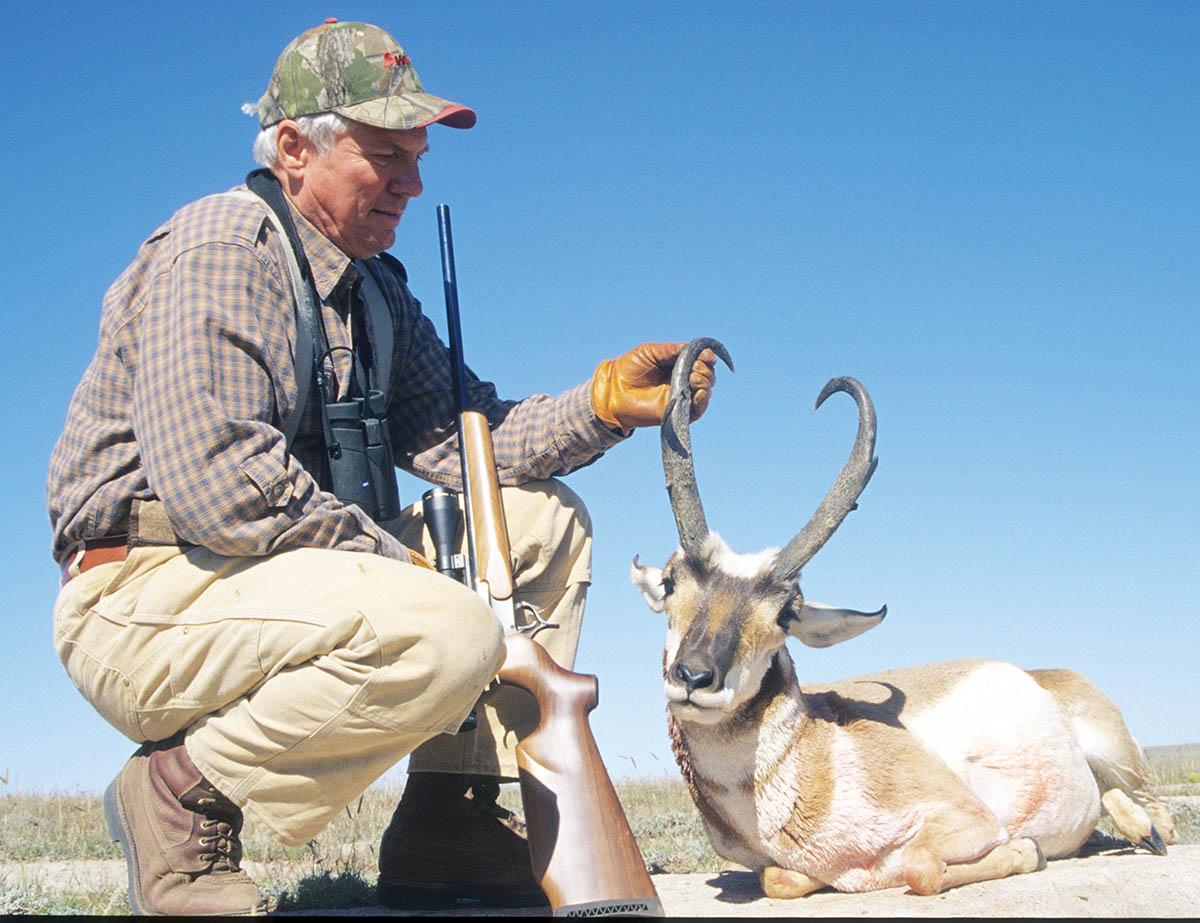
Wildcats of calibers that have the same or similar case capacities as one or more factory cartridges are also easy. Quite a few years ago I had the opportunity to hunt pronghorn antelope in New Mexico with Bill Hober of Swift Bullets. When choosing a cartridge for the hunt, I decided to try something a bit different. In those days, the custom shop at Thompson/Center offered a number of wildcat chamberings, so I placed an order for a 26-inch barrel in 6mm-06 for my Encore single-shot rifle. Also headed my way were loading dies from Redding. I already owned a Mark V rifle
in 240 Weatherby Magnum and found its powder capacity to be close to that of the 6mm-06. Load development for the wildcat began with pressure-tested starting loads published by various sources for the Weatherby cartridge and ended with an excellent load for the Swift 90-grain Scirocco bullet. Years later, I added a rifle in 6mm-284 to my battery, and since its capacity is also close to that of the 240 Weatherby Magnum, developing a load for it was a snap as well.
Then we have a rifle chambered for a wildcat that comes with dies and fired cases but no load data. Determine the capacity of the primed case by first weighing it and then weighing again after it is filled to the brim with water. Then go to an online rifle case water capacity chart such as Case Capacity-KWK US (KWK.US/cases.html). If there is a match of the same caliber, begin with pressure-tested start loads available in various handloading manuals for that cartridge in the wildcat.
I no longer spot as many rifles chambered for various and sundry wildcats for sale at gun shows as in the old days, but do still occasionally run across one. If you discover such a rifle of interest at an
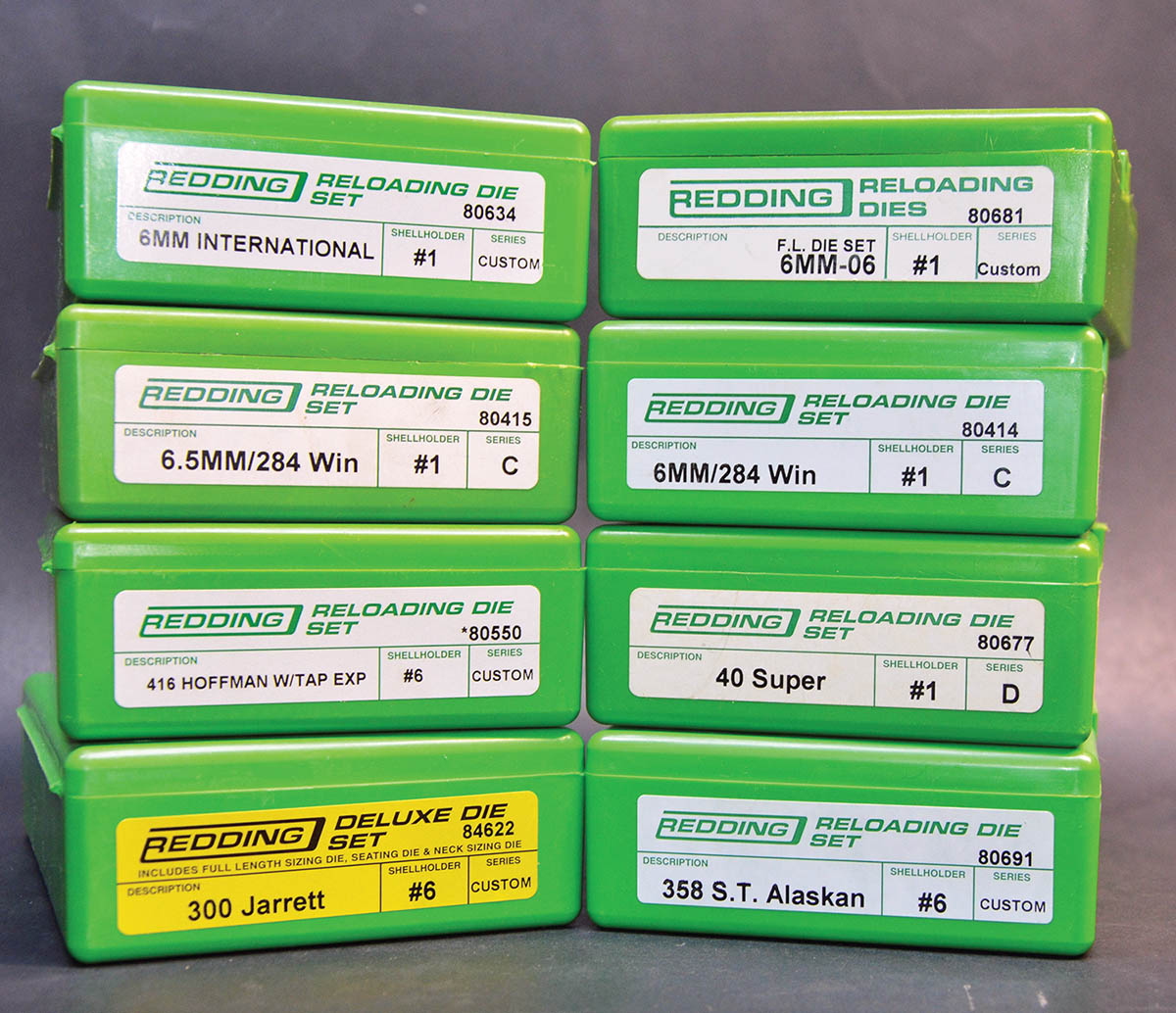
irresistible price and its caliber marking is on the barrel, reloading dies for it may very well be available from Redding. The company has die sets for over 1,000 wildcat cartridges, and they are listed in the hard-copy and online versions of the catalog. If the needed dies are not spotted, Redding can make custom dies for any cartridge.
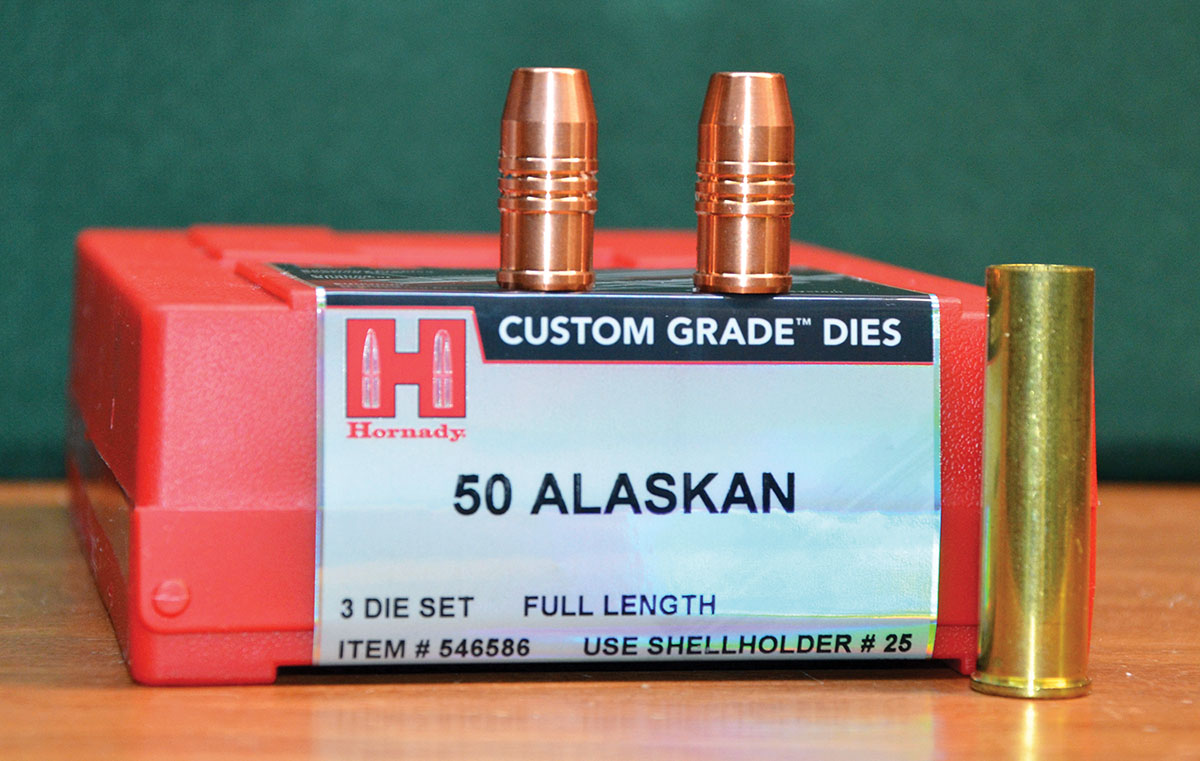
Hornady also has a custom die service, and they are available in Custom Grade and Match Grade. Their guys can make the dies from a chamber reamer drawing, or from three cases fired in the rifle. Elliptical expanders, shell holders, trimmer pilots, bullet seating stems and alignment sleeves can be made to fit any jacketed or lead bullet of any profile. Depending on cartridge length, prices range from $235 to $425 for a standard, 2-die set.
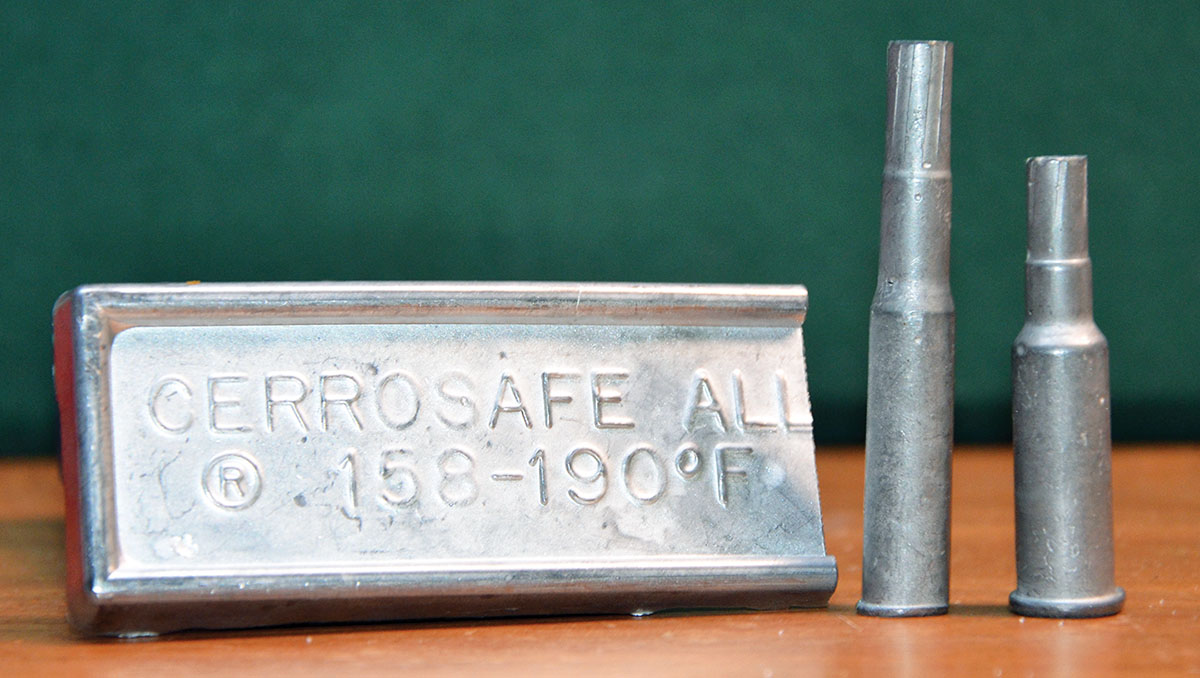
Should the barrel of your new acquisition be unmarked, a Cerrosafe casting of its chamber is a logical and revealing option. The remarkable metal alloy melts at temperatures between 158 and 190 degrees Fahrenheit (water boils at 212 degrees F), and making the casting is easy. First, use a cleaning rod to plug the bore just in front of the chamber with a tight-fitting cotton patch. Then with the stock removed and the bolt fully retracted, clamp the rifle muzzle down in a padded vise. Make a small trough of tin foil, place one end at the mouth of the chamber and the other end just outside of the action. Melt a small chunk of Cerrosafe in a steel or iron ladle (I use the same one used for casting bullets) and pour it into the chamber. The ladle must be clean and free of debris. Cerrosafe shrinks slightly during the first 30 minutes of cooling, and that’s when a cleaning rod inserted into the muzzle of the barrel is used to gently push the casting from the chamber. As the casting completely cools, it expands to its exact dimensions while in a molten state in the chamber. In other words, the exterior dimensions of the cooled-down casting are precisely the same as the interior dimensions of the chamber of the rifle. Wrap the casting to protect it from damage and send it to the engineering guys at Redding. If the appropriate dies are not already available, they will send you a price quotation for making them. Cerrosafe in bar form is available from Brownells.
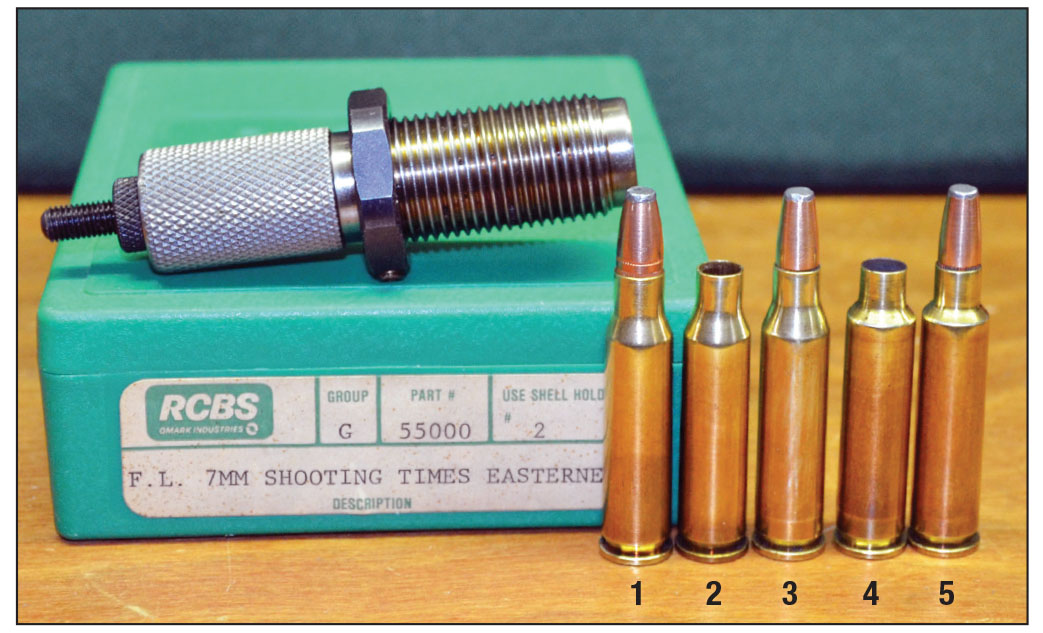
While many wildcats are decades old, some are more recent introductions. They continue to spring from the bushes for various reasons, not the least of which is that they can be fun. Michael McCourry created the 50 B&M Alaskan for the Marlin 1895 and Winchester 71 rifles due to the greater selection of .500-inch bullets than those measuring .510 inch for Harold Johnson’s 50 Alaskan. Chris Moen created the 411-284 on the 284 Winchester case because he wanted a modern version of the 405 Winchester for his custom elk rifle built around an 1874 Remington Rolling Block action made by the Swedish firm Husqvarna. The 7mm Shooting Times Eastener (STE) is the 307 Winchester case necked down and fire-formed to the improved shape for a Marlin 336 rifle. Loads were developed for the Nosler 120-grain Partition and Hornady 139-grain InterLock bullets, both of flatnose shape. As fate would have it, the first game taken with the rifle was a western mule deer rather than an eastern whitetail.
Information on hundreds of wildcat cartridges can be found in books and publications such as Cartridges of the World (Gun Digest Books) and P.O. Ackley’s Handbook for Shooters & Reloaders. Other great reads in my reference library are Practical Dope on the .22 by F.C. Ness, Woodchucks and Woodchuck Rifles by Charles Landis and my favorite, Wildcat Cartridges by Richard Simmons. An online search should turn up those that are long out of print.