

Cartridge Board
9mm Luger - The First Fifty Years
column By: Gil Sengel | December, 26
It took quite a while to scrub the idea of melting all my old revolvers and replacing them with plastic and metal-injection-molded pistols. Even harder to forget was the statement that the 9mm Luger was adequate for 98 percent of handgun needs. Just why should we toss out our hundred-year-old handguns and replace them with new guns chambered for a 125-year-old cartridge? Right! Makes no sense to me either. The 9mm Luger is a series of compromises, trade-offs and – wait for it – yes, politics.
The chronicles tell us that the 9mm Luger has been known by several names, including 9mm Parabellum, referring to the
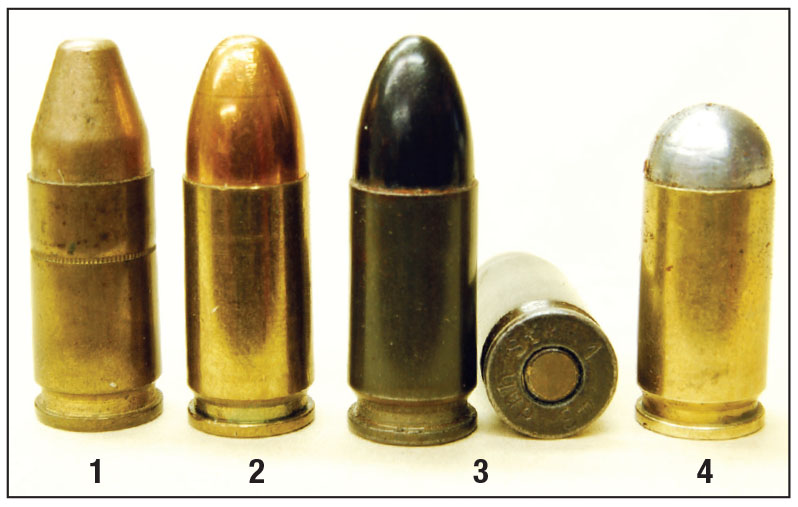
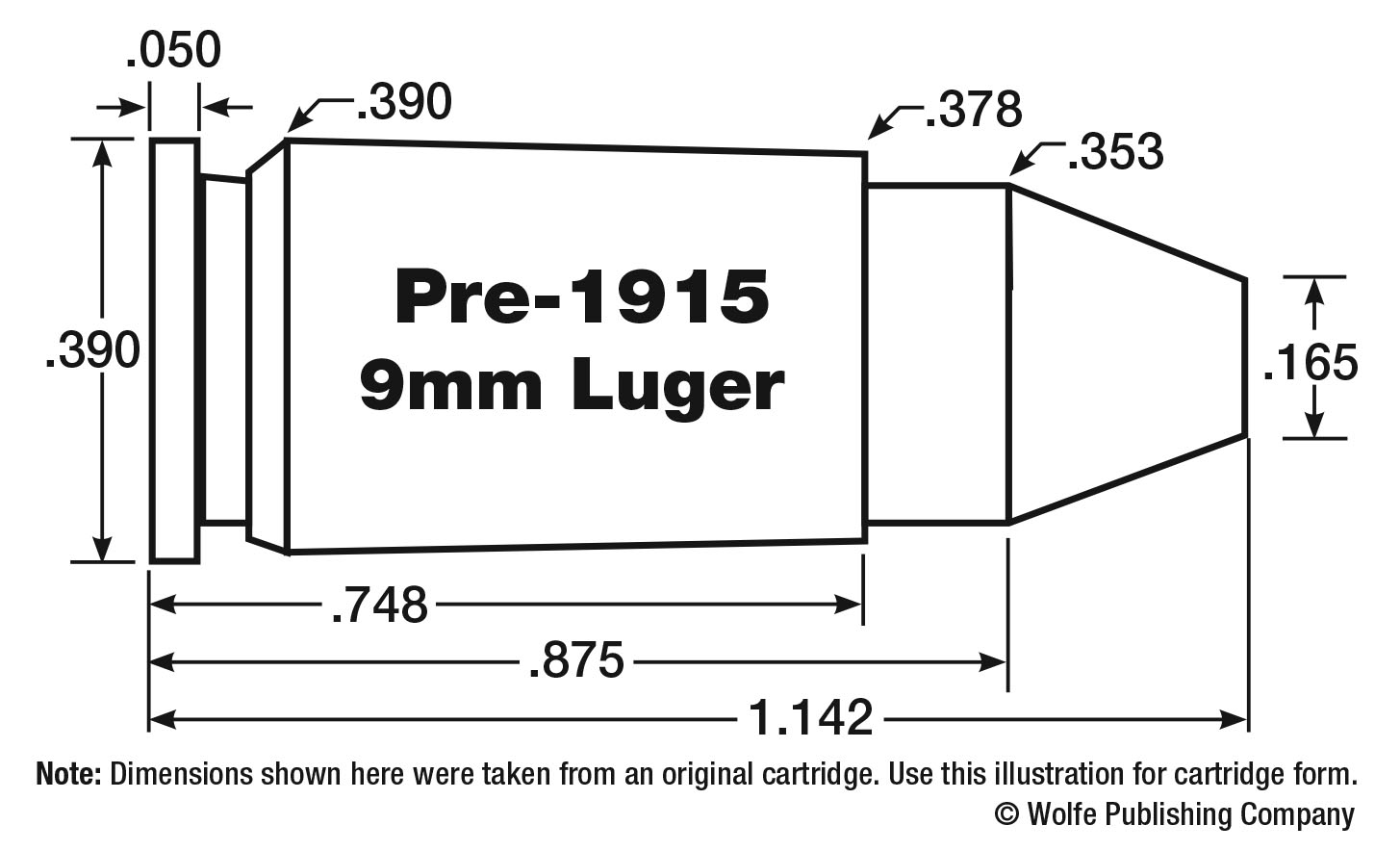
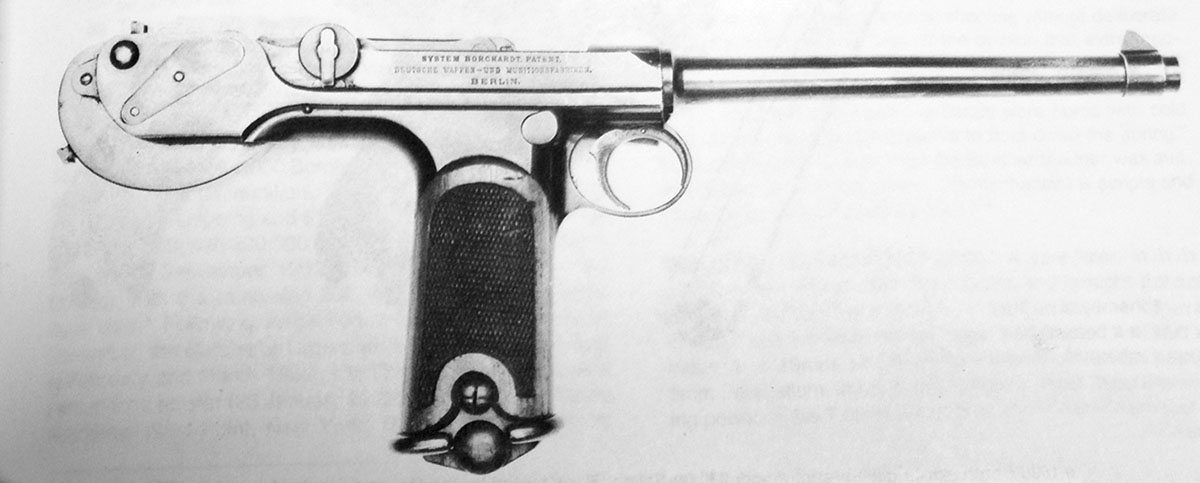
History now becomes a bit confusing in that 1890 to 1905 saw a frenzy of semiautomatic pistol designs appear in Europe. Hugo Borchardt’s first design was chambered for a round called 7.65mm Borchardt, a bottlenecked cartridge with case length of 25mm and bullet diameter of 7.81mm. A later model 1893 Borchardt pistol was titled 7.65mm Parabellum but used a cartridge having a case roughly .050 inch shorter than the previous round. This cartridge was also called 7.65mm Parabellum. Still later, the Borchardt-Luger (which looked like a modern Luger) was called the 7.65mm Swiss Model 1900 Parabellum pistol. Note that there was not yet a 9mm cartridge for the gun.
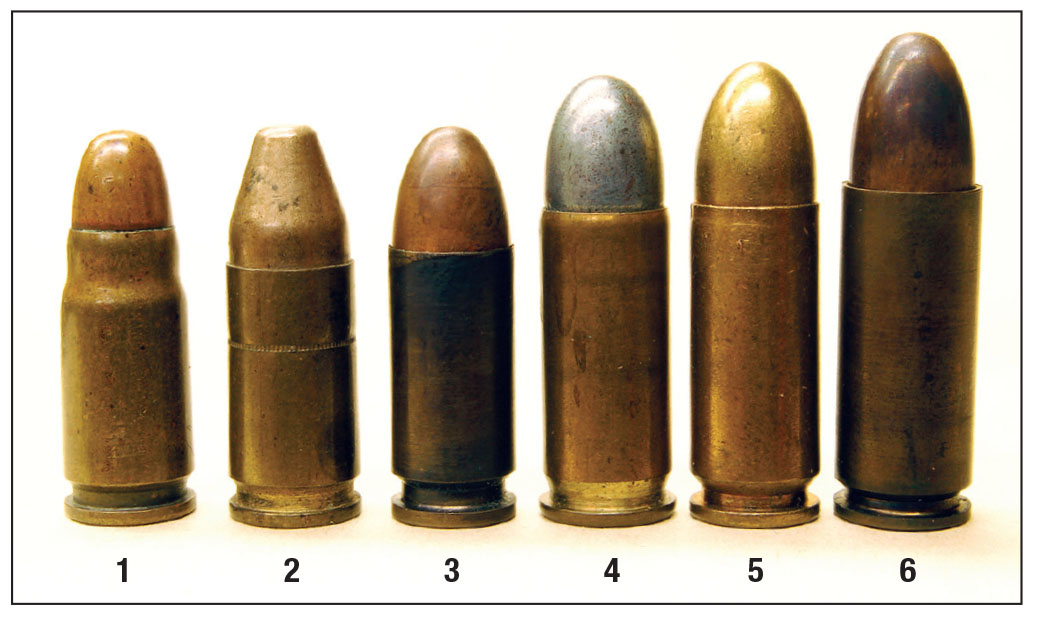
There seems to be no record of how the ungainly 1893 Borchardt became the Borchardt-Luger, then the modern-appearing 1900 Luger. Yet happen it did. Nevertheless, the Luger design was built around the bottleneck 7.65mm Parabellum round. A larger cartridge was not anticipated, yet prospective customers liked everything about the Luger –except the cartridge.
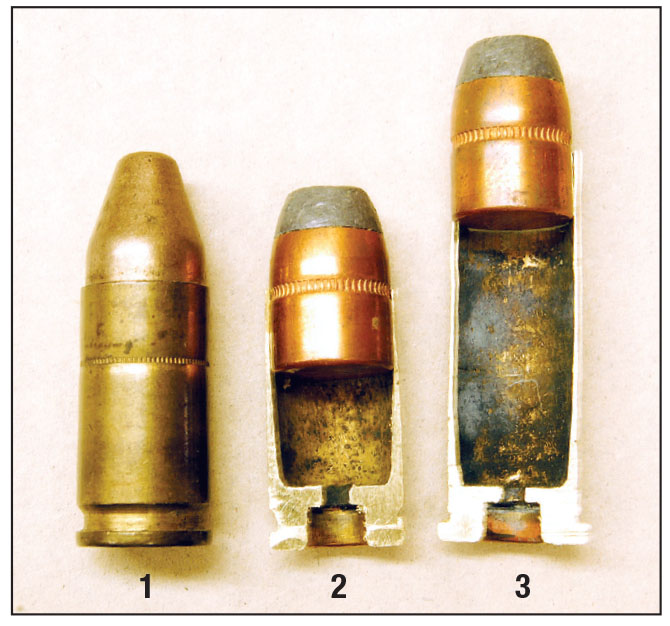
Georg Luger did exactly what one would expect. He created a cartridge of the maximum size that would fit into the Luger pistol without modifications to the gun. At first this appeared to be a 9mm round built on a neck-expanded 7.65mm Parabellum case. But there was a problem. Most cartridges of the time were named by numerical caliber, and caliber was
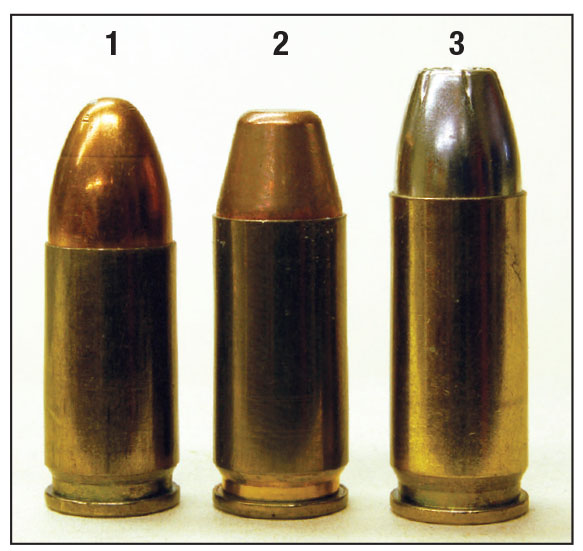
By using a 9mm caliber bullet (9.195mm diameter) in the new cartridge and case walls thick enough to hold the bullet solidly, the case mouth would be larger in diameter than the base of the parent case! Obviously, this would not work because a certain taper is needed for chambering and extraction in semiauto pistols and the coming submachine guns. Why DWM didn’t just produce a case 0.2mm larger at the base is not known. There is some indication this was tried but required slight modifications to the pistol, which wasn’t going to happen. Apparently both DWM engineers and Georg Luger believed military purchasers would eventually come to their senses and buy the 7.65mm Parabellum.
The marketing folks, meanwhile, were having none of this. They were going to have a larger bore cartridge to sell. It would
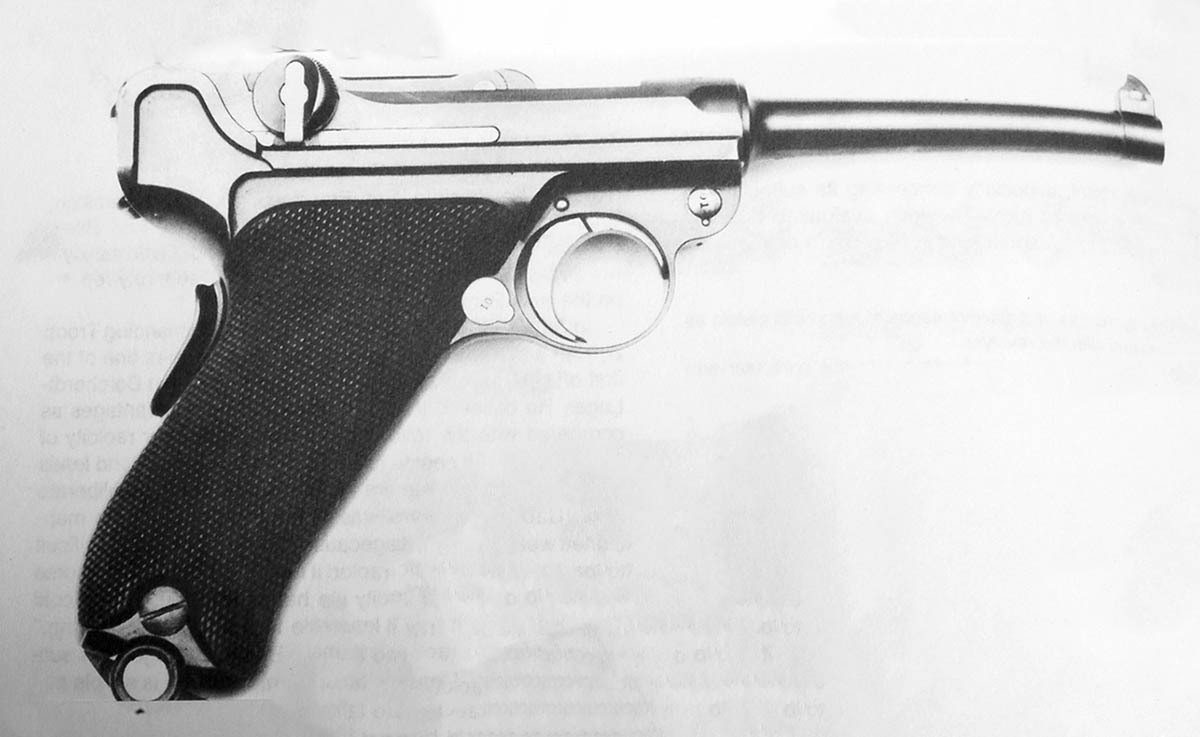
The first Model 1900 Luger pistol, chambered for the new 9mm round, was ready sometime in 1902. Ballistic figures differ somewhat no matter if given in metric or English form. Testing of the new pistol in 9mm had been ongoing by the U.S. Army and Navy since May 1903. In that year, Springfield Armory released figures from Luger pistols presumably obtained using Springfield equipment and DWM ammunition. Chronographs of the time were far different than today; velocities were given as “at 50 feet.” Obviously, this is not muzzle velocity but is okay for simple comparison.
For some reason, the Springfield results were given in metric measurement, perhaps because no American company then loaded it. These figures have been converted into something useful here. Basically, they show a 123-grain bullet achieving 1,095 fps from a 4-inch barrel, 1,128 fps from a 4.7-inch barrel and 1,171 fps from a 5.8-inch barrel, all at 50 feet. Energy values would come in at 300 foot-pounds (ft-lbs) to just under 400 ft-lbs and were gotten only by raising breech pressure significantly.
The militaries of the world liked the Luger pistol and 9mm cartridge for their accuracy and light recoil, but not for the feeding and extraction jams. Changes to the gun, magazine and ammunition were quietly tried, but had little effect. The trait still plagues the gun today. Since ammunition is critical to semiautomatic designs, it was pretty much standardized at the ballistics mentioned earlier.
When Germany adopted the Luger and its cartridge in 1908, their success appeared assured. All the European ammunition makers began loading it, but acceptance was slow. Winchester first listed it in 1908. Bullets offered were 125-grain “Metal Patched and Soft Hollow Point.” Others followed, but there was little interest in the U.S., even after World War I when soldiers brought back thousands of Lugers.
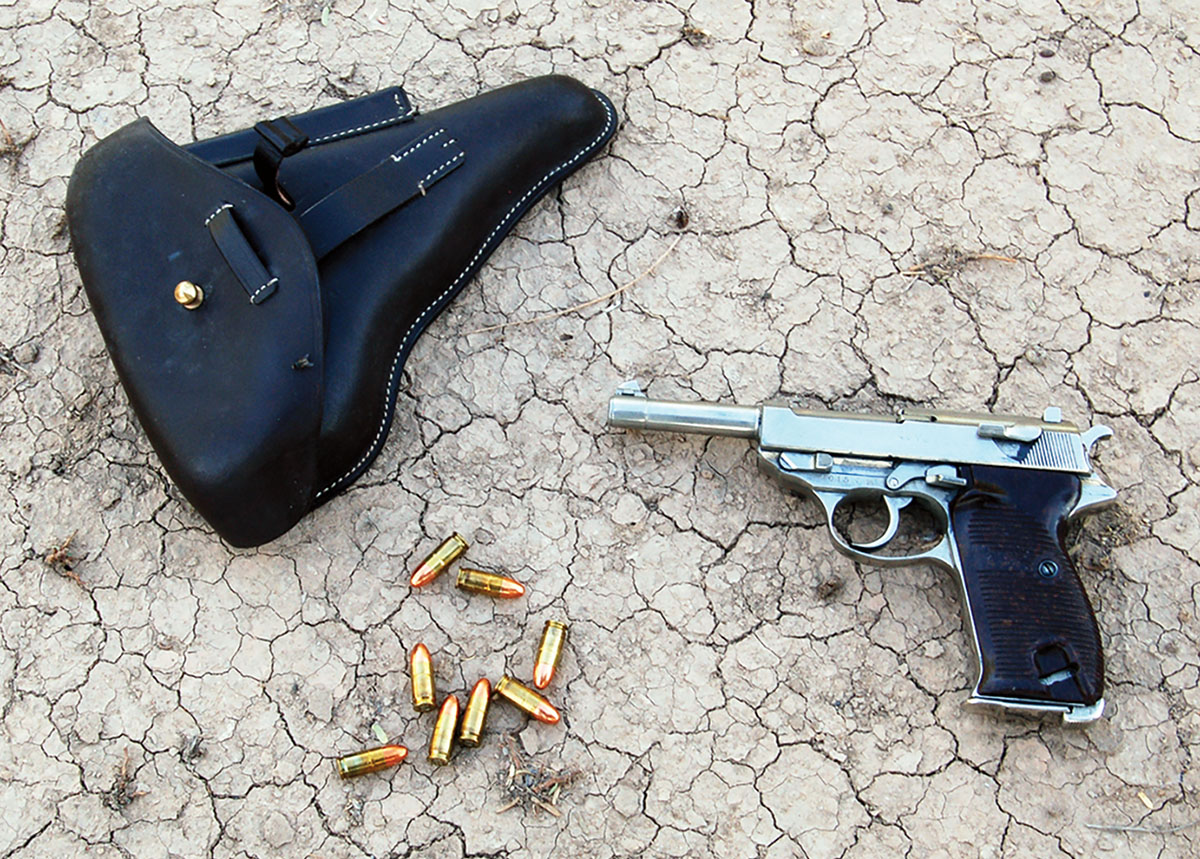
Finally, I must mention my favorite 9mm chambered handgun, and though it fits in the timeframe of this report, it’s not a Luger. It was given to me by an uncle who said at the time, “Every boy needs a World War II military pistol that actually saw combat to handle and shoot whenever he feels like it. You will understand some day.”
This pistol is the nickel-plated Walther P-38 shown in the first photo. It was picked out of a pile of German weapons in an ammunition dump somewhere in North Africa just as my uncle’s outfit was preparing to blow up the dump. He shot it and liked it so well he gave his Ml911 away and carried the Walther all the way back to Germany, using it in several firefights. My uncle wasn’t a gun guy, but said it seemed to have greater knockdown power than the 45 so long as the range was short. The original holster disintegrated due to exposure to the weather; the one shown is a reproduction.
Next time, the post-World War II period will be covered to see what the 9mm Luger has become, or at least what many think it has become.
.jpg)