

Going Back in Time with the Ideal 310 Tool
Loading Like It’s 1905
feature By: Terry Wieland | December, 26
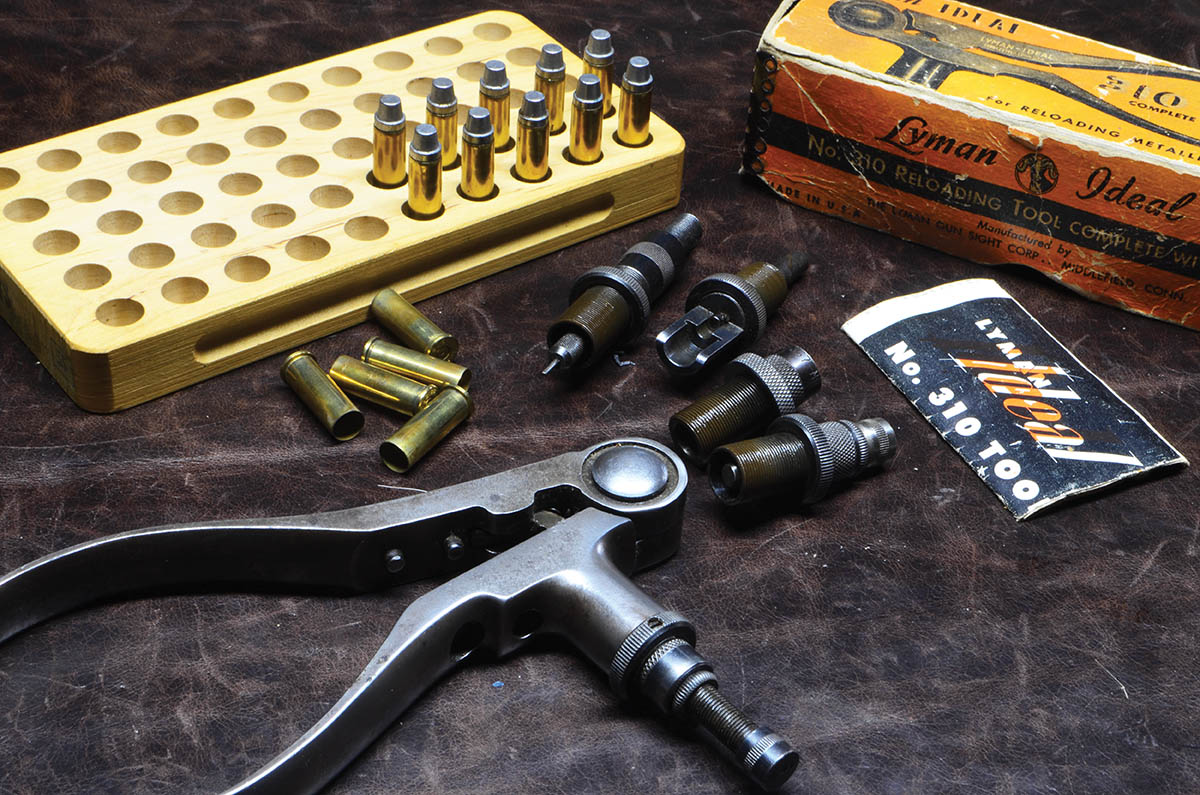
By today’s standards, the 310 looks somewhat crude and, compared to the later Lee Loader, is also rather complex. However, they worked, and supported by Ideal’s loading manuals and data, became the mainstay of a handloading industry that, after the advent of smokeless powder, had largely fallen by the wayside.
However, I am (almost) equally as fascinated with old loading tools and methods as I am with old rifles and handguns. In fact, for some rifles I own, you either handload or you don’t shoot, and in a few cases, this involves fashioning your own brass to fit and casting your own bullets.
Anyway, I began looking around for a complete Ideal 310 for a caliber I own and came across a listing for one in 250 Savage. Perfect! Naturally, I bought it, only to find $40 plus shipping later that it consisted only of the pliers and a full-length sizing die from a later era that is not even part of the 310 set of tools. Well, okay, I can still make use of that, so no complaints.
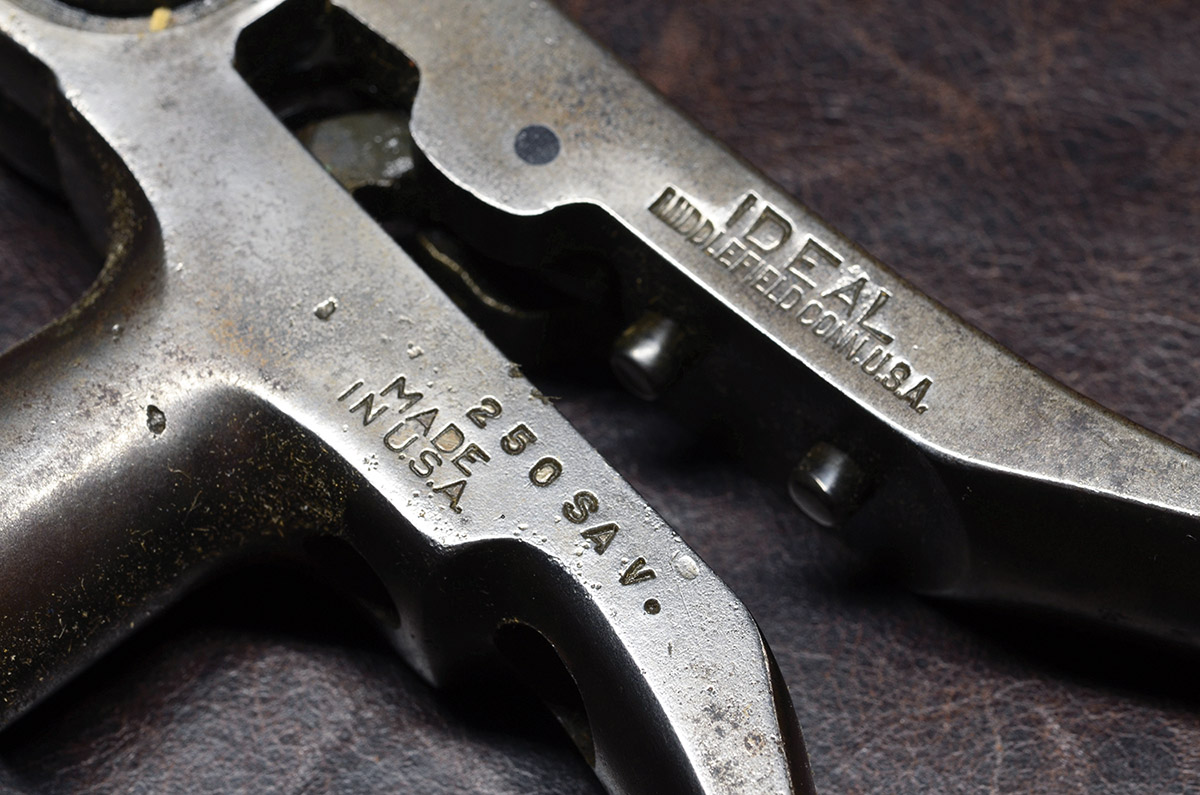
When the shipment arrived, the tool did have “250 SAV.” stamped on the handle, and the instruction sheet did show and identify all six of the component dies and parts. Unfortunately, though, none were for the 250 Savage. Instead, they were 38 Special dies. Again, however, I didn’t complain. Since not all of the dies are marked for caliber, it would be an understandable mistake for someone who is not a handloader, merely a reseller on eBay or the distraught daughter of a deceased handloader trying to clear out the clutter. Anyway, I have several .38s, so we will forge on.
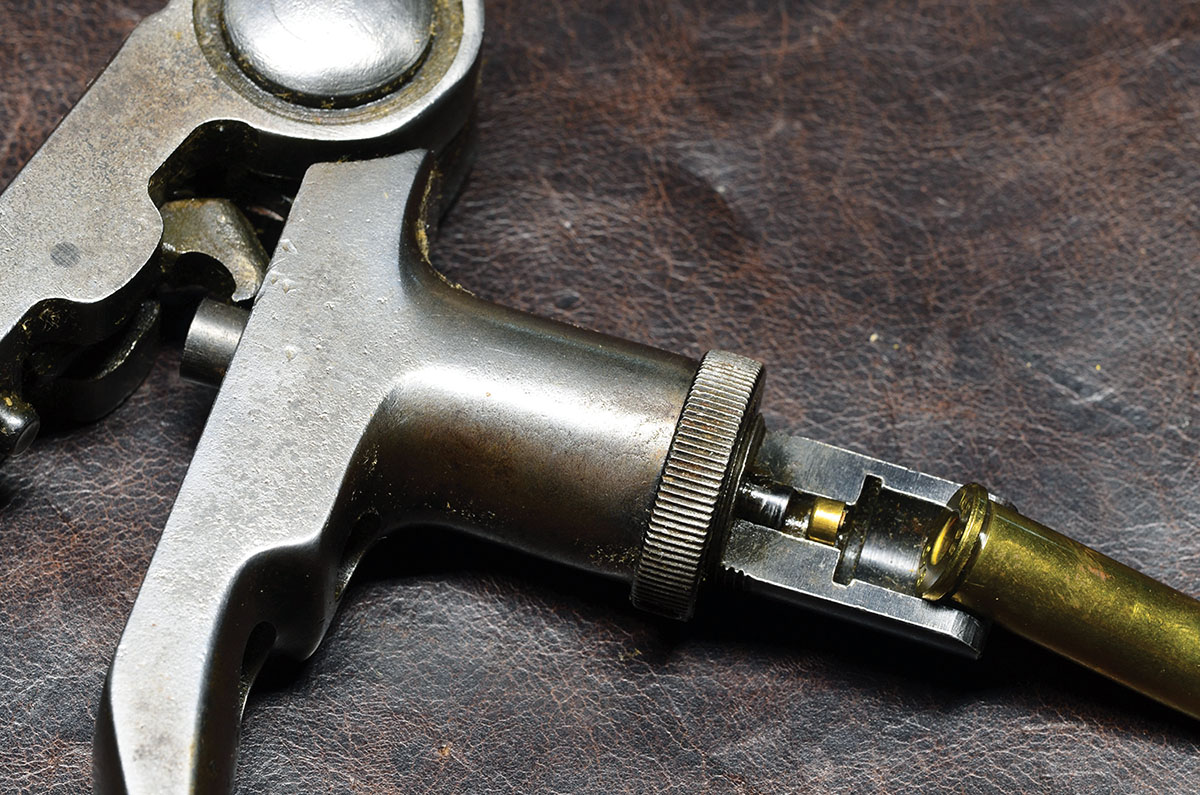
You would think 38 Special would simplify things because powders in use back then can still be found, such as Bullseye, Unique and so on and .38-caliber cast bullets are much the same as they were then. In fact, however, Bullseye and Unique are the only powders listed for the 38 Special in the Ideal Hand Book Number 34 that are still around, and they are out of stock almost everywhere because of supply-chain difficulties. Fortunately, I still have a good supply.
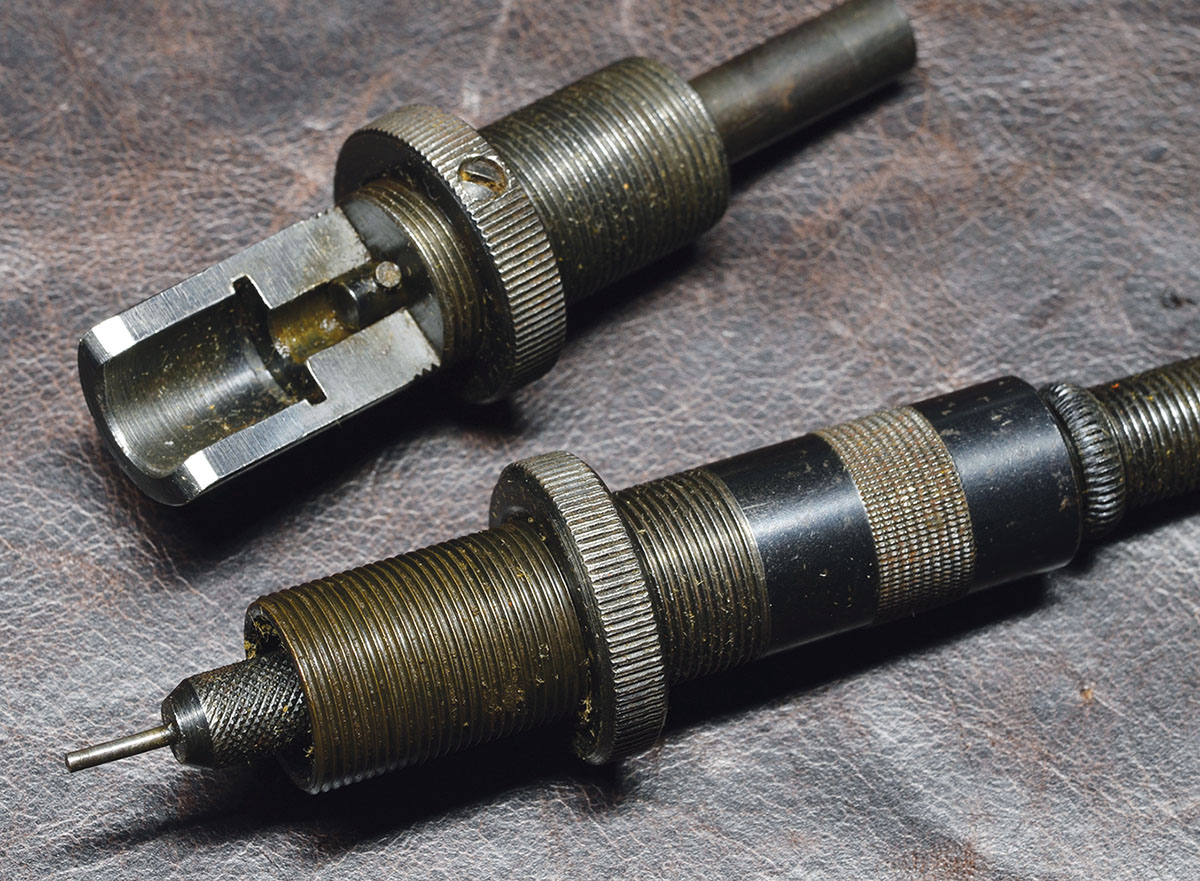
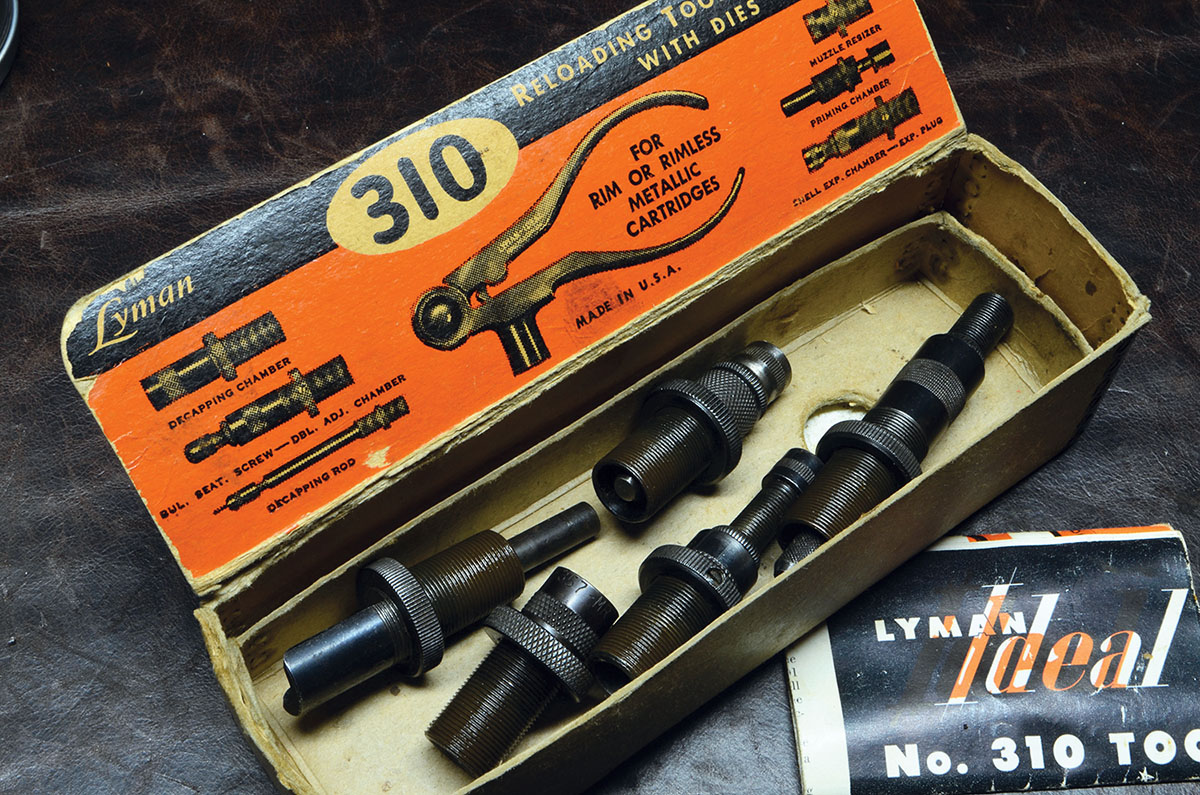
The 310 Tool comes with five die-like fixtures that thread into the tong, including a de-capping chamber and rod, muzzle resizer to size down the neck, shell expansion chamber with plug that both sizes the inside of the neck and bells it slightly (if you wish), priming chamber and bullet seater.
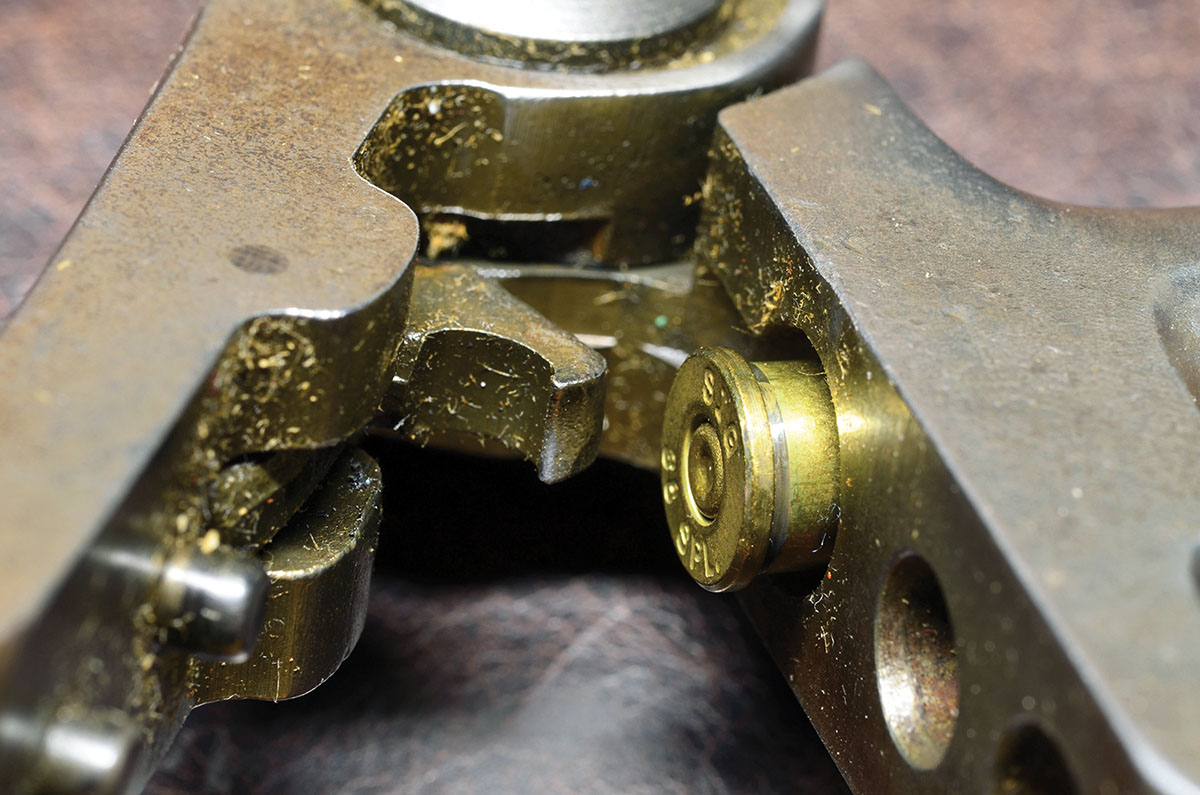
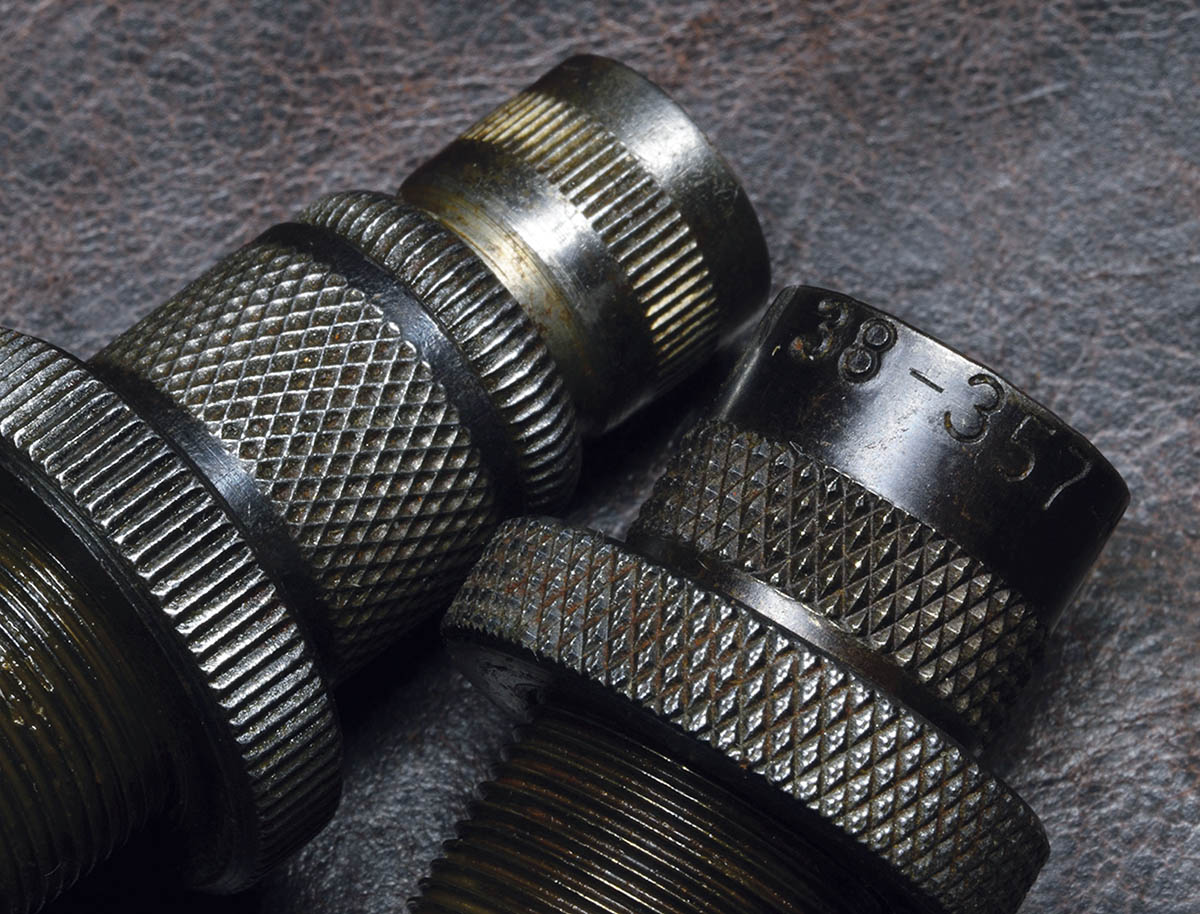
As you can see from the illustration, each die has a knurled lock nut fitted with a set screw, so once you’ve run through one reloading operation start to finish, you can have all the dies ready to simply screw into the right depth the next time. Getting each die set up properly took some fiddling; there is a definite learning curve, but that’s true of most mechanical things. Any experienced handloader should be able to manage.
It’s good to remember, though, that the equipment we buy today is the result of more than a century’s worth of industrial evolution since the tong tool was introduced. The operation may be the same seating primers, for example, but the old method will seem crude and inexact. Well, that was life in 1905.
The other thing to remember is that the tong tool was never intended for mass production. It was the true “kitchen table” setup that allowed a guy to load what he needed, a dozen at a time, for a hunting trip or visit to the range.
The instructions that accompanied the tong tool left a lot to be desired, as did the chapters in the various old Ideal handbooks, and I cast back through all my Gun Digests going back to 1944, looking for an article that would take me through the operation step by step. There was none. Nor did Philip B. Sharpe’s Complete Guide to Handloading or Earl Naramore’s Principles and Practice of Loading Ammunition get into it in any detail, beyond describing the basic tool — which both described as “nutcracker-type.”
Well, figure it out I did, eventually, using my tried-and-true method of trial and error.
The first step is to deprime. You put the de-capping rod in the die, screwing it in to sufficient depth to push out the old primer, and install the die to the right depth in the tong. Nothing remarkable there, except to remember that a nutcracker presses on a radius, not a straight push like a modern press, so there is a slight danger of bending the rod if it projects too far. (I told you, trial and error.) Unlike modern dies, fitting a new rod isn’t easy. One does, however, learn to straighten it gently (!) with a needle-nose pair of pliers.
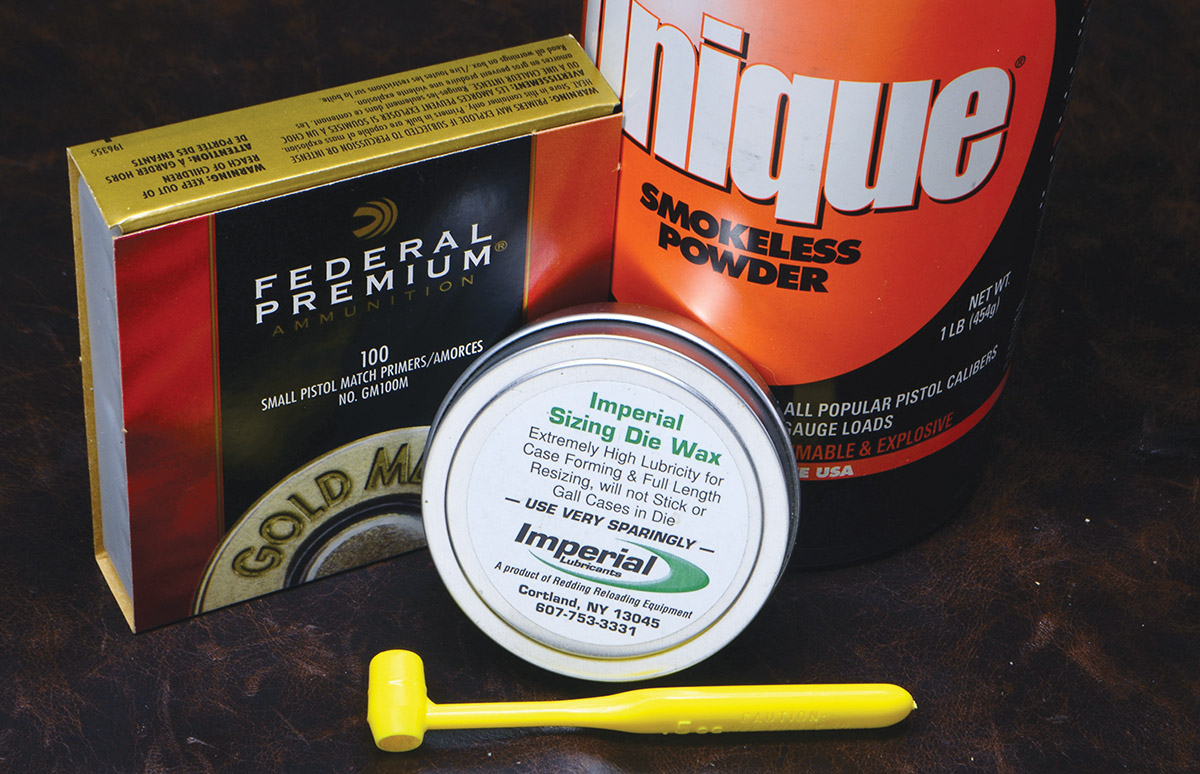
Although the instructions don’t call for it in every instance, I like my cases well lubed, and for this I used Imperial Sizing Die Wax instead of lanolin or Ivory soap as originally recommended. I like to ensure cases slide in easily and, more importantly, slide out, especially when employing dies that are maybe a century old, and of, shall we say, mysterious background.
A word of background: Originally, Ideal made a No. 3 tool and a No. 10 tool, one for rimmed cases, the other for rimless. These evolved until, after the war, their features were combined into the Lyman Ideal No. 310 Reloading Tool, which would handle both. Nowhere that I can find is there an explanation, with illustrations, showing the exact differences that occurred along the way, and of course, the tools themselves don’t seem to be marked. This is just part of the fun.
Next, we muzzle-size it (as Ideal calls it), meaning the mouth of the case, followed by the shell expansion chamber and plug. Again, I erred on the side of over-lubricating inside and out, it being a lot easier to de-grease a case than to remove a seriously stuck one from inside a die. You then reprime.
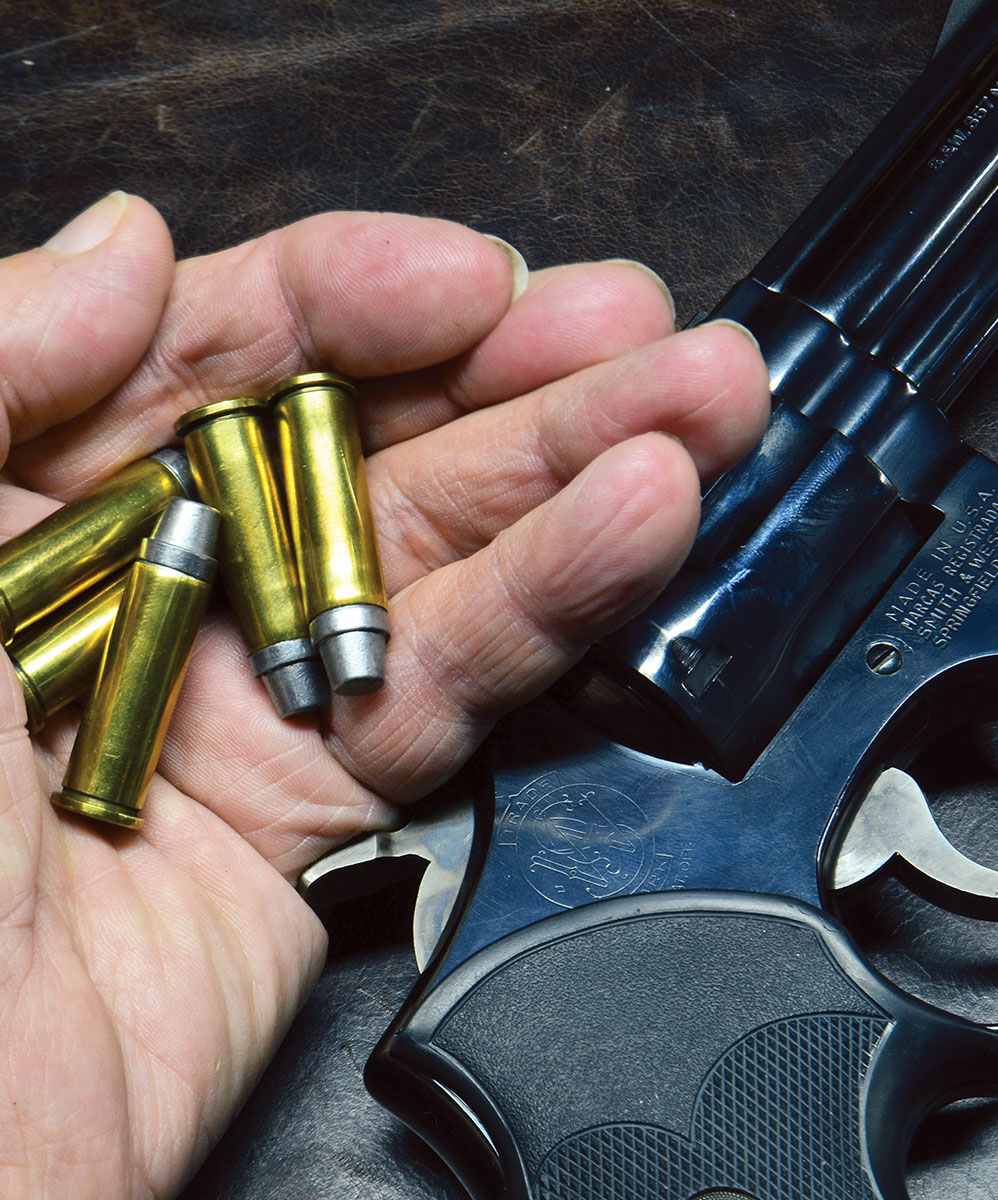
With the case sized, primed and belled, all that remains is to add a charge of powder and a bullet.
In days of yore, Ideal made a powder measure not unlike the bench-mounted models of today. I decided to use Unique and measure it using one of Lee’s collection of indispensable scoops. Therein lies the problem, however, and that is the remarkable spread of recommended loads for Unique, and the disparate velocity predictions. While the Ideal Hand Book Number 34 suggested 5.4 grains, and continued this through Number 45 (1970), for all 158-grain bullets, either cast or jacketed, the Speer Reloading Manual Number 11 (1987) suggested a maximum of only 4.7 grains for cast bullets. Predicted velocities ranged from 700 to more than 1,000 feet per second (fps), with no mention of barrel length.
There have been good balance-beam scales available for longer than the Ideal 310 itself, but a century ago they were not found in every kitchen or even on the shelves of every handloader.
The usual approach was for a manwho was reasonably handy with tools to make himself a custom scoop from a cut-down cartridge case with a wire handle soldered to it. The Lee scoops are a reasonable substitute, and usually you can find one, or a combination of two smaller ones, that gives you something close to the load you want.
It was mentioned earlier that hand-loading had fallen into disfavor with the advent of smokeless powder. This was because, unlike black powder, one did not simply fill the case and seat the bullet. Apparently, a few people tried that and paid the un-welcome price, so ammunition makers tried to discourage handloading altogether and pushed the use of factory ammunition. It took a while for the concept of powders of widely varying energy and loads, and the methods necessary for measuring and weighing same, to sink in.
For the record, my one scoop of around 4.0 grains of Unique, with a 158-grain cast bullet, delivered an average of 705 fps with no sign of undue case expansion. This is important not only for the well-being of the gun, but because old-time handloaders would want to reuse these cases, and the 310 tool did not have the capability of full-length resizing.
The Lyman/Ideal No. 310 Reloading Tool continued in production until around 2020, although it was available in fewer and fewer calibers. Through the 1970s and 1980s, it steadily lost out not so much to the elaborate bench setups we have today but to the simpler and cheaper Lee Loader. Richard Lee managed to provide even benchrest shooters with tools that could do everything necessary, including case trimming and inside-neck reaming, for relatively next to nothing. Even nitpicking benchresters used Lee Loaders to fashion one load at a time, at the range, on the bench.
At one time, the 310 was available for more than a hundred different cartridges; by the time it was discontinued, the list was down to fewer than a dozen, limited to older cartridges like the 38 Special, 30-30 and 45-70.
There does seem to be an ample supply of used ones around, however, and I’m still hoping to find a complete set for the 250 Savage. Having acquired the largely non-marketable skills of using a No. 310, it seems a shame not to put them to use.