

A World War II Victory Model That Isn’t
A Politically Correct British Service Revolver
feature By: Art Merrill | December, 26
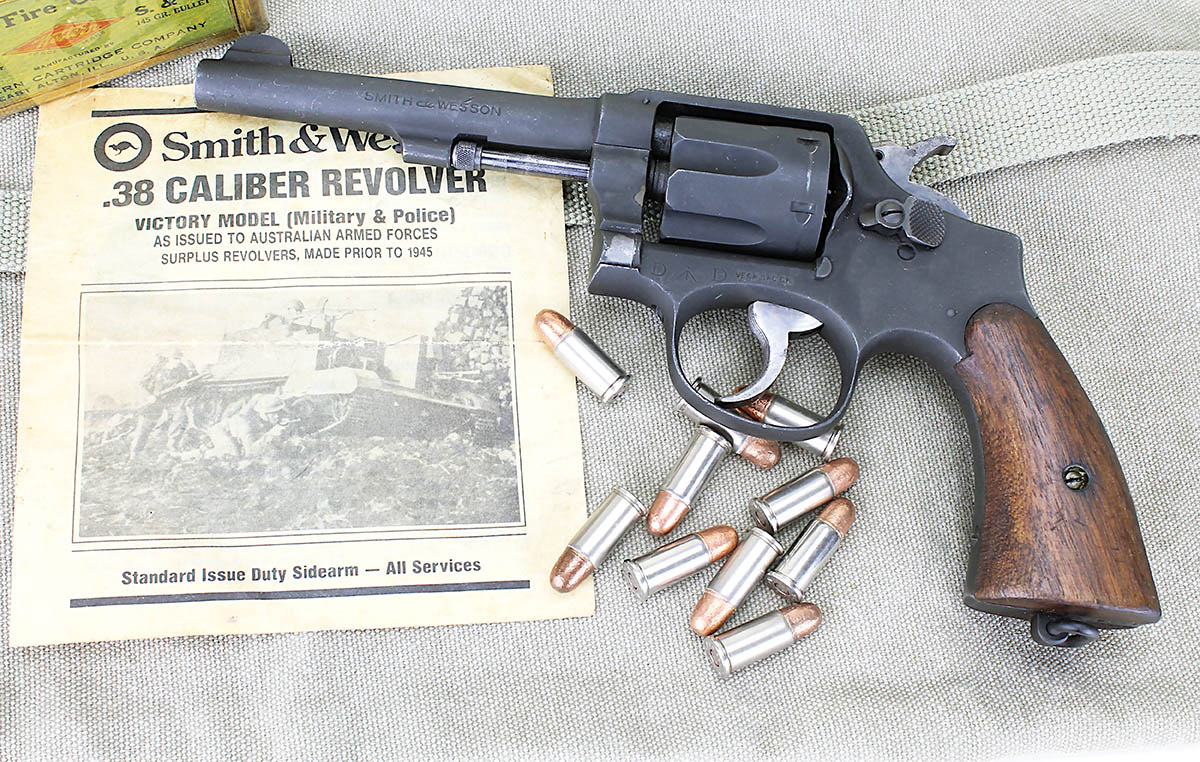
One of the fascinations in being a lifelong student of World War II history is in discovering another piece of that war that I can take home with me. While it would be nice to garner, say, a PT boat or a P-38 Lightning, and I do have room in the back yard by the garden shed, I must content myself with historical items within my price range, and many firearms fall within that category.
I have not found an official government or Smith & Wesson reference published during World War II wherein the BSR is referred to as a Victory Model (though such references may exist – I just haven’t found one). Lacking that, it appears that later American importers of surplus BSRs tacked the Victory Model name onto the BSR as a marketing tool, thus muddying the waters. Adding more mud, for a few years there was a small industry in converting milsurp BSRs to chamber and shoot the more powerful and more prevalent 38 Special ammunition.
Smith & Wesson manufactured 1,311,000 BSRs and Victory Models during World War II. Smith & Wesson also produced post-war Victory Model revolvers in 38 Special as the 38 Military & Police (known today as the Pre-Model 10) and in 38/200 as the 38/200 Military & Police (never cataloged and today known as the Pre-Model 11).
According to the Standard Catalog of Smith & Wesson 4th Edition, by Jim Supica and Richard
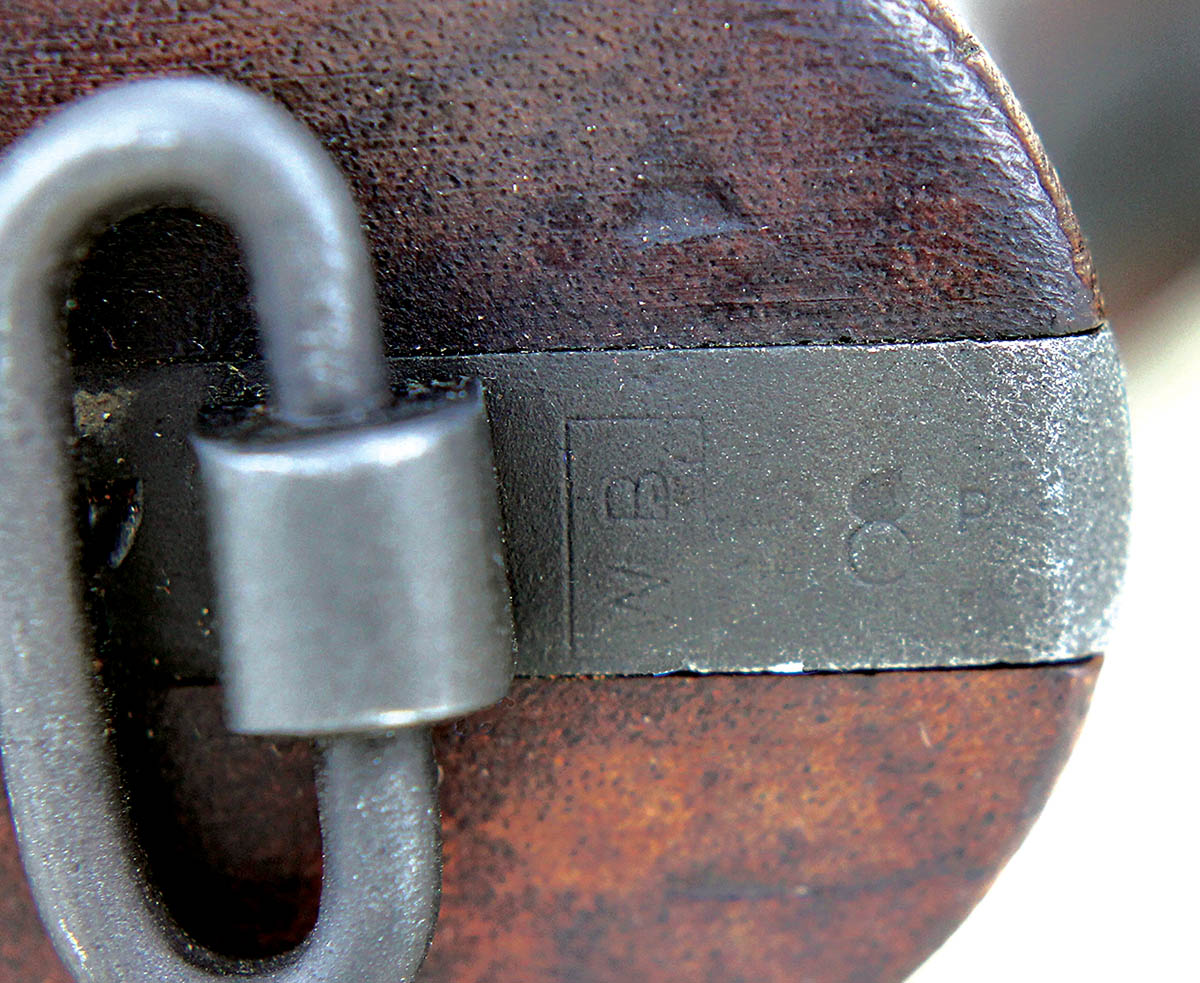
Smith & Wesson provided BSRs to the British in different batches, not all sequentially serial numbered beginning from 680,000, as evidenced by the “875,477” serial number stamped behind the lanyard ring on the Australian BSR presented here. Stamps on the butt in front of the lanyard ring are the American “flaming bomb” and P indicating passing proof and “WB” within a rectangle identifying Chief of Ordnance inspector Col. Waldermar Broberg. These latter stamps are barely discernible.
The earliest BSRs had standard bright bluing that changed to a “brushed blue” finish. Frequently mistaken for Parkerizing, a phosphate chemical process that leaves a layer of iron/zinc/manganese phosphate on steel, Smith & Wesson next applied to BSRs, and Victory Models an iron oxide finish derived from controlled rusting, which it called “Black Magic.” Variously referred to as “sandblast blue” or “sandblast Black Magic,” the black color in the Black Magic rust coating is due to the inclusion of magnetite in the process. (Parkerizing, which is typically a shade of gray or gray-green, can also be rendered black by adding manganese phosphate.) That said, know that several resources state that the BSR’s wore a “sandblasted and phosphated” finish.
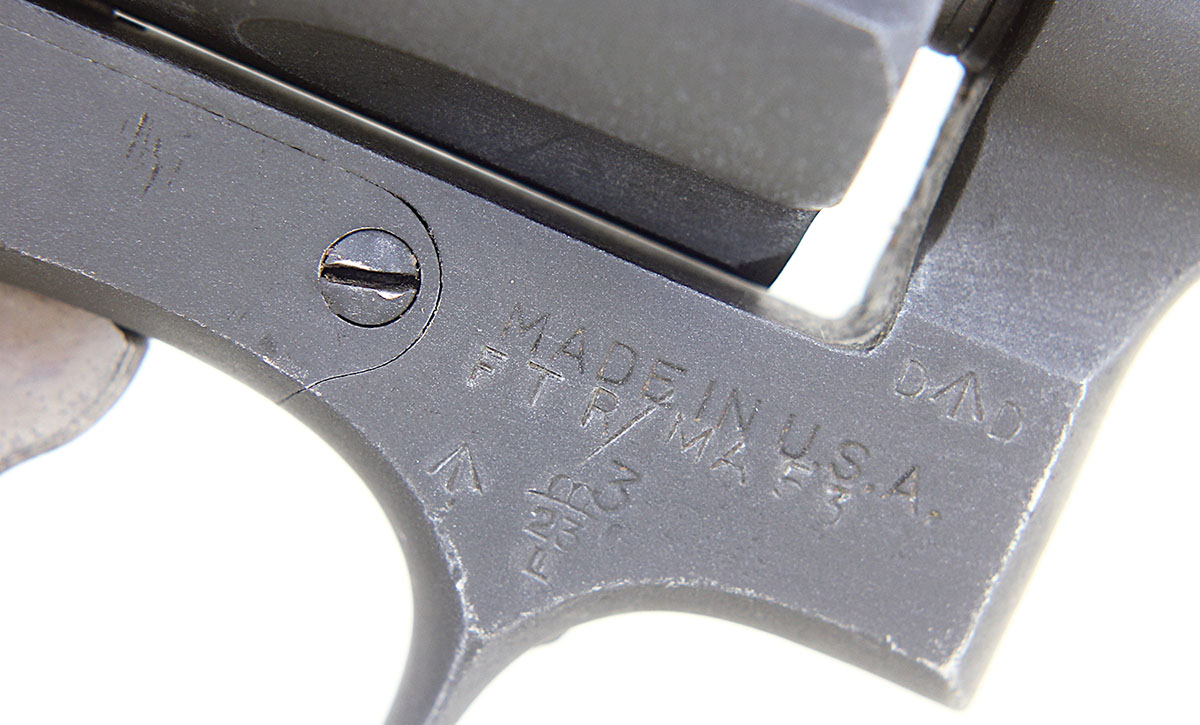
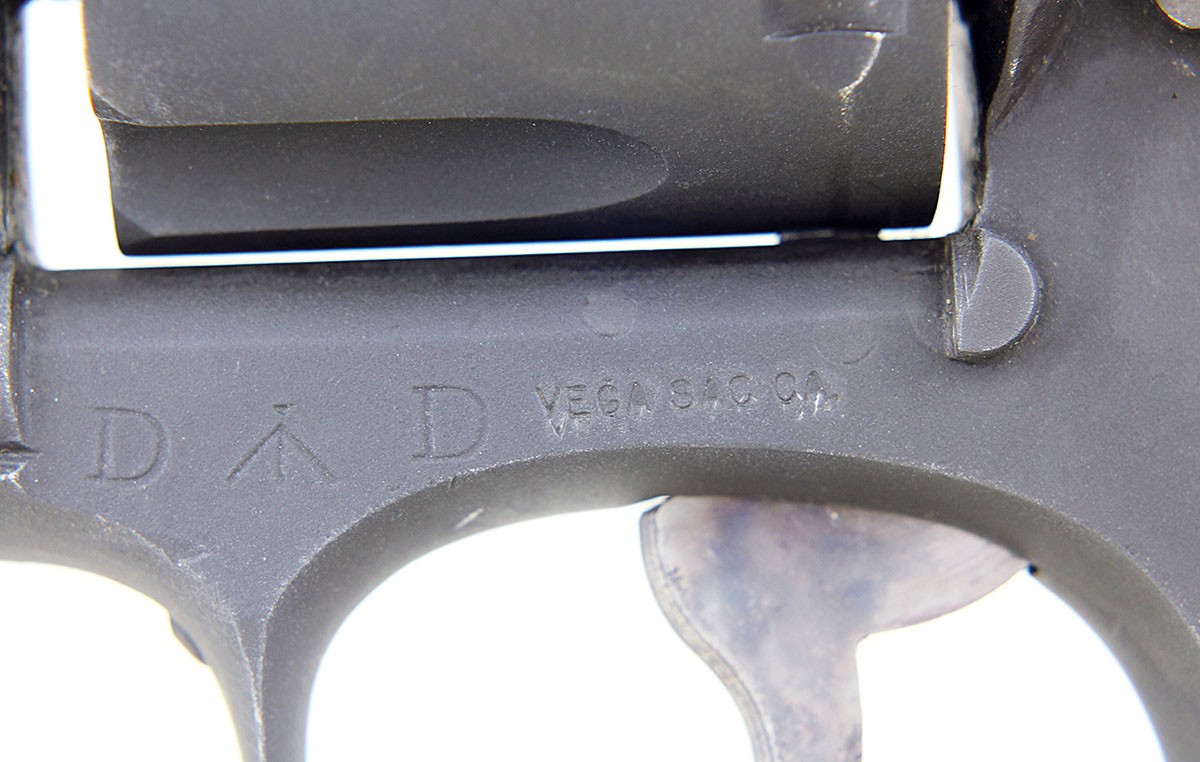
This revolver bears the stamp “FTR/MA53,” indicating the Aussies gave it a “Factory Thorough Repair” at their Lithgow Arsenal in 1953. Under high magnification, the finish appears to be applied on top of the American and Australian stamps, which we might assume Lithgow Arsenal re-applied during FTR. However, the finish also appears to coat the importer’s stamp, which is at first puzzling, as the importer struck its “VEGA SAC CA” stamp (in two attempts) about 30 years after the revolver left Lithgow Arsenal. Careful scrutiny shows that either none of the stamps penetrated the original finish, or else a re-finish is applied on top of all the government stamps, and the import stamp alone doesn’t penetrate the finish. Forensic metallurgy is not among my skill set, so I cannot resolve the matter for us here, but my vote is that none of the stamps penetrate the original finish.
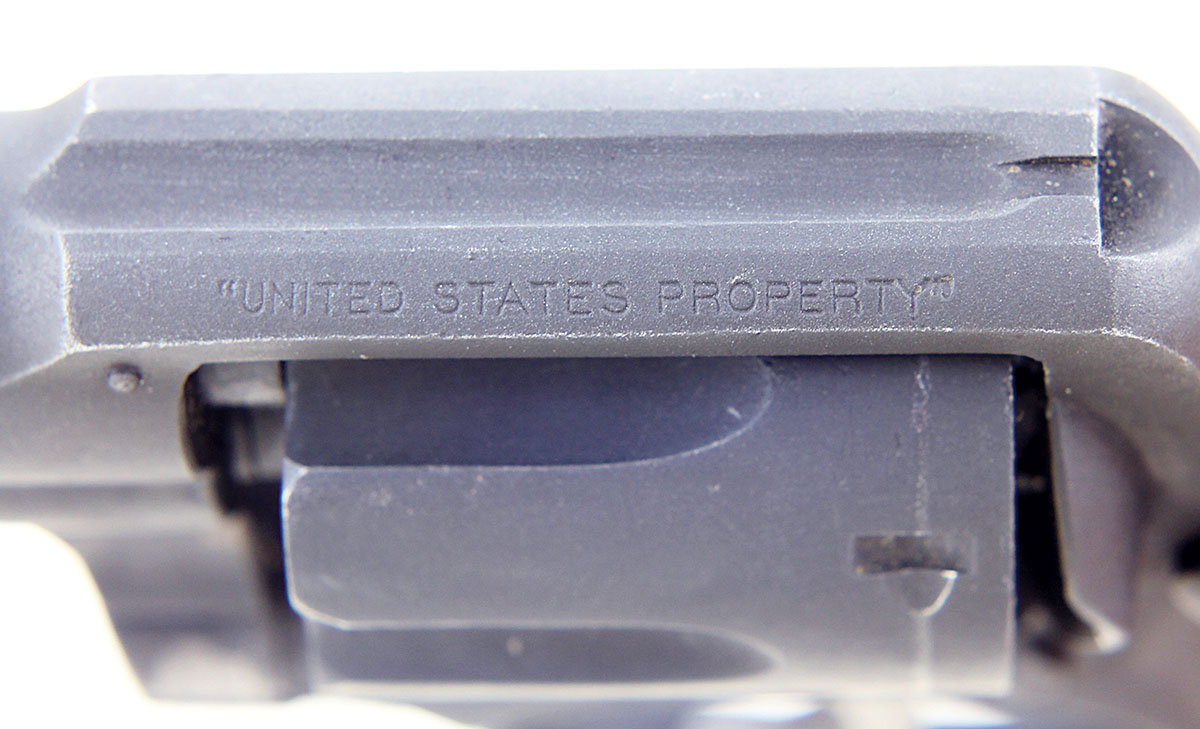
Smith & Wesson stamped its logo on the side plate and “MADE IN U.S.A.” on the frame right side. In accordance with Lend-Lease international political correctness, the top strap bears a very diplomatic “UNITED STATES PROPERTY” stamp. Smith & Wesson’s two-line address and patent dates appear atop the barrel; “SMITH & WESSON” and “38 S&W CTG” appear on the barrel left and right sides respectively. A single broad arrow stamp accompanied by a “3” and a crown-over-23-over-L is possibly a British inspection/acceptance stamp; the Australians subsequently added two of their own D-broad arrow-D acceptance stamps, one on each side of the frame. All add to the historical interest of the revolver.
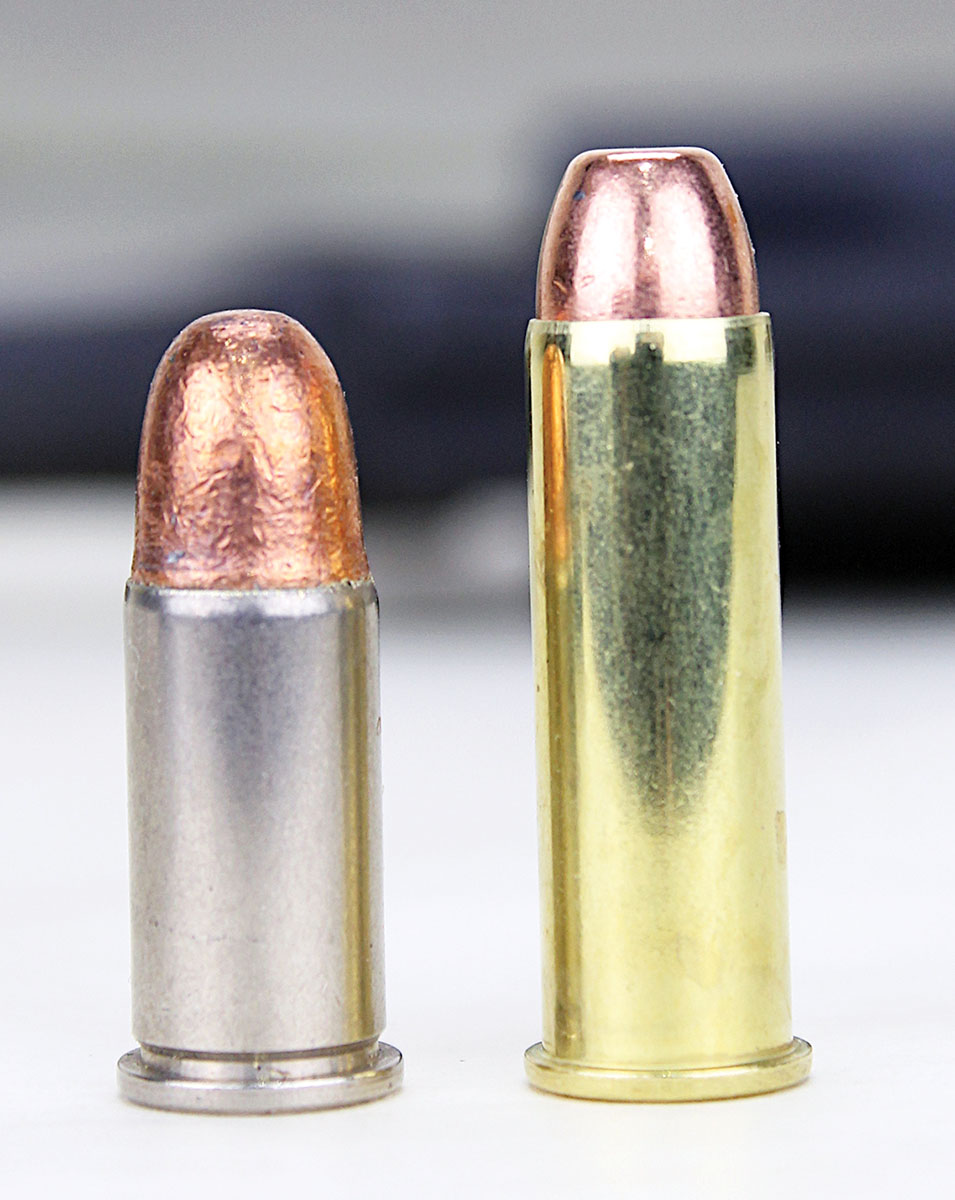
A few major manufacturers still produce the obsolete 38 S&W cartridge today – Winchester, Remington, Prvi Partizan and Magtech come immediately to mind, all of which utilize standard 145- or 146-grain lead bullets. Retail prices for 50-round boxes are in the $30-$37 neighborhood. Unless you are fairly new to revolver shooting and handloading, you may already know that the 38 S&W cartridge differs from the 38 Special in case length, neck and bullet diameter, and cartridge overall length, detailed in an accompanying table.
Let’s drop the 38 S&W moniker and, from this point forward, just reference it as the 38/200 cartridge since the subject is the BSR. While it is possible to handload 38/200 cartridges with standard 38 Special bullets, the latter measures .357 inches in diameter, whereas the 38/200 bullet diameter is slightly larger at .361 inches. The slight difference can result in a loss of accuracy when shooting jacketed .357-inch bullets through a 38/200 bore intended for .361-inch bullets. Lead .357-inch bullets, particularly soft lead bullets, may perform better, and .357-inch hollowbase wadcutter bullets even more so, as the hollow base is intended to obdurate (expand) upon firing to better grip the bore’s rifling. Proper 38/200 bullet moulds and custom cast lead bullets are readily available (as 38 S&W) for the seekers of historical or practical accuracy.
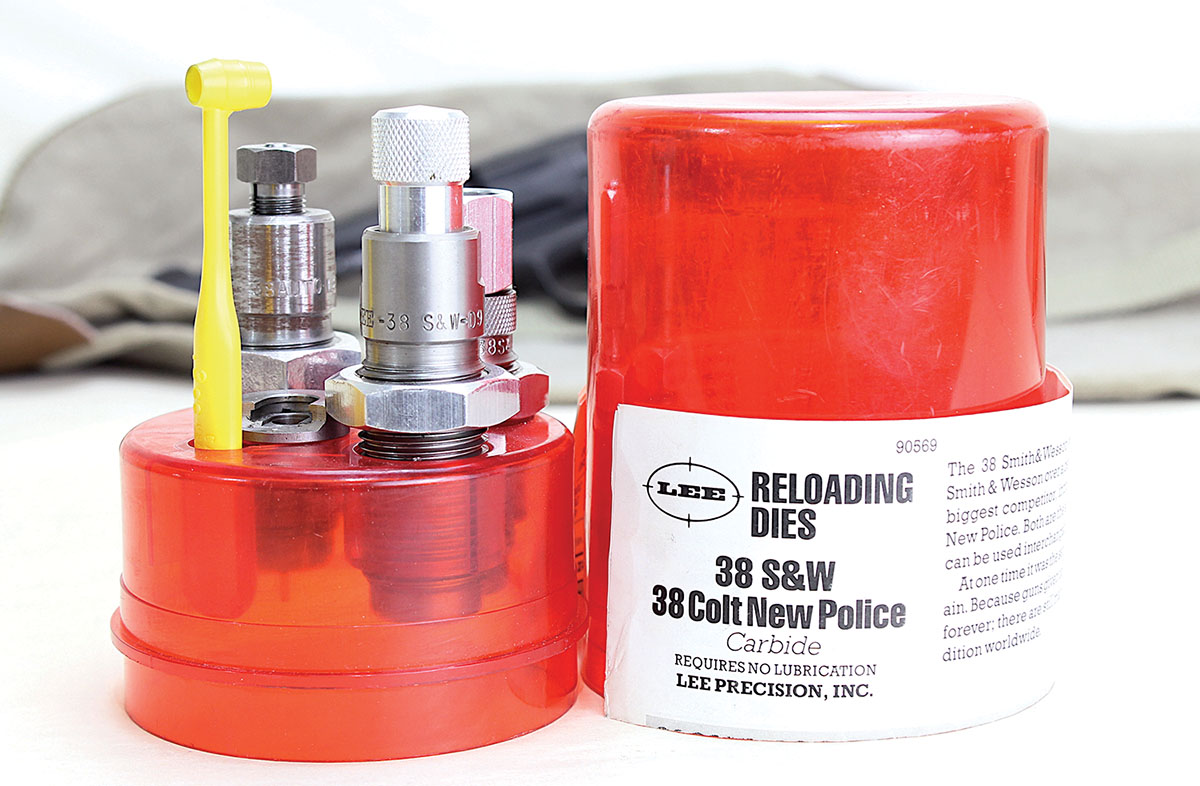
Case diameter of the 38/200 is also slightly larger than that of the 38 Special to accommodate the .361-inch diameter bullet. We can make workable 38/200 handloads by shortening the 38 Special case, but cases tend to split at the mouth when fired in the larger 38/200 chambers. Both Starline and Prvi Partizan make proper 38 S&W brass at perfectly reasonable retail prices, so there’s no reason to put up with the aggravation of split cases. Why not just buy a box or two of factory cartridges for some instant shooting gratification that also creates brass for handloading later? Reloading dies aren’t often seen on store shelves, but they aren’t scarce, either, and a little searching will turn up new die sets marked “38 S&W and 38 Colt New Police,” as they are, except for bullet weight, the same cartridge (Lee Precision, for example, offers a set).
Again, the 38/200 differs from the 38 S&W in launching a 200-grain bullet rather than the 38 S&W’s typical 146-grain bullet. Though one can shoot the lighter bullet in the 38/200 BSR with satisfaction, purists will certainly want to work with 200 grainers. While a smidgeon of load data for 38 S&W and the lighter bullet appears in several of my reloading manuals aged 50+ years, the only modern reputable data for the 38/200 or 38 Super Police I found is at LoadData.com, which lists 23 appropriate loads for the seeker plugging “38 S&W” and “200” into the caliber and bullet weight search bars. A sampling of those loads appears in the accompanying table. Additional loads at LoadData.com also utilize Unique, Bullseye, 700-X, Blue Dot and True Blue powders.
Because the BSR and the Victory Model are essentially the S&W M&P Model 10 K frame revolver, some parts for the common Model 10 will fit the BSR and Victory Model. In the past few years, BSRs comparable to this one in “NRA Very Good to Excellent” condition selling online fetched from $500 to $549, at an average of $528. In January 2026, I found this one at the gun show mislabelled, unsurprisingly, “Victory Model.” It was accompanied by a period marketing pamphlet that was apparently packaged with the revolver, also identifying the BSR as a Victory Model. Ah, well.
So, what’s not to like? Here’s a bit of mild-shooting World War II history at a blue-collar price, with parts available, usable factory ammunition still being offered, reloadable brass, dies and bullets procurable, and handloading uncomplicated. Plus, I don’t need to keep it out by the garden shed. Still, I do have space there for a P-38 Lightning, so if you know of one at a blue-collar price, give me a holler.
The British Service Revolver Tradeoffs and Loans
At the outset of World War II, the British were replacing the large 455 Webley revolver with the smaller .38 caliber 38/200 Enfield and Webley revolvers. While at first blush it seems unlikely that the man-stopping energy of a .38 caliber bullet of 200 grains traveling at 630 feet per second (fps) can compare to a .455-caliber bullet of 265 grains launched at 600 fps, doing the math results in 176 foot-pounds (ft-lbs) of 38/200 bullet muzzle energy, and only slightly more 212 ft-lbs of muzzle energy for the 455 Webley. The British powers that be felt that the lesser 36 ft-lbs of the 38/200 cartridge was a good-enough tradeoff to replace the big Webley with the smaller revolver and cartridge.
Britain suffered a shortage of everything during that war, most importantly, weapons. In the 1930s, Britain had paid Smith & Wesson $1 million in advance to develop a 9mm Parabellum semiautomatic carbine (the S&W Light Rifle MKI and MKII), but found it couldn’t digest “hot” 9mm ammunition. Rather than seek reimbursement, in 1940 Britain agreed that Smith & Wesson would instead fulfill the contract with revolvers chambered for the British military 38/200 cartridge. These went to Britain under Lend-Lease as British Service Revolvers, and Smith & Wesson concurrently manufactured the same revolver chambered in 38 Special for U.S. Forces that came to be called the Victory Model.
Incidentally, if Smith & Wesson’s 110,379 BSRs (that went to Britain)satisfied that company’s $1 million advancement debt, then that would mean the BSRs sold in 1940 for $9.06 each, or about $216.11 today.
.jpg)
.jpg)