

Going Subsonic
Taking the 308 Winchester and 30-06 Springfield Below the Sound Barrier for Hunting
feature By: Patrick Meitin | December, 26
That said, I do understand the need in thronged Eastern woodlands. I use thronged to describe both the habitat and abundance of humanity and their myriad infrastructure. These are habitats where success typically comes after climbing into an elevated treestand or slumping onto a stump, resulting in average shot distances in the double digits. Intimate yardage largely solves the energy problem, the primary concern in the subsonic realm.
When considering subsonic, the 300 Blackout is sure to enter the conversation or the new 338 ARC. Yet you likely already own a viable option in arguably North America’s two most popular big-game cartridges: the 308 Winchester and 30-06 Springfield. Most 308 Win and 30-06 owners I guided back in the day shot 180-grain factory loads. When fired from the 308 Win at around 2,500
By contrast, subsonic loads with the same bullet produce little more than 450 ft-lbs of kinetic energy at the muzzle.
Bear with me if you’ve already heard this one, but subsonic loads means the bullets leaving the muzzle at less than the speed of sound, or Mach 1. Sound travels at 1,125.33 fps at sea level and 59 degrees Fahrenheit. Any bullets leaving the muzzle at higher velocities break the sound barrier and produce a distinctive crack. Temperature, air density/altitude and relative humidity all affect actual subsonic velocities. Ideally, when loading subsonic loads, you’d like to hit 1,100 fps under the atmospheric conditions most encountered, but most commercial subsonic loads are held to 1,050 to 1,080 fps to provide a buffer for the disparate conditions customers are likely to encounter.
Sending bullets at less than the speed of sound is easy enough with the right powders (faster than usual for individual cartridges) and bullets (typically at the heavier end of the spectrum). But as the saying goes, speed kills. Subsonic loads are intentionally lacking in speed to remain beneath the sound barrier. The kinetic energy formula uses the weight of the projectile multiplied by velocity squared (divided by the constant 450,240). Velocity weighs heavily in the kinetic energy formula. When speed is reduced, kinetic energy suffers. I stress this only because hitting a deer with subsonic loads at 200 or 300 yards includes manageable drop margins from the 308 Win and 30-06 cartridges and bullets selected. Yet, that bullet just isn’t going to retain enough energy to ensure clean kills at such ranges. If you’re going to go subsonic, you’re also going to have to keep shots intimate.
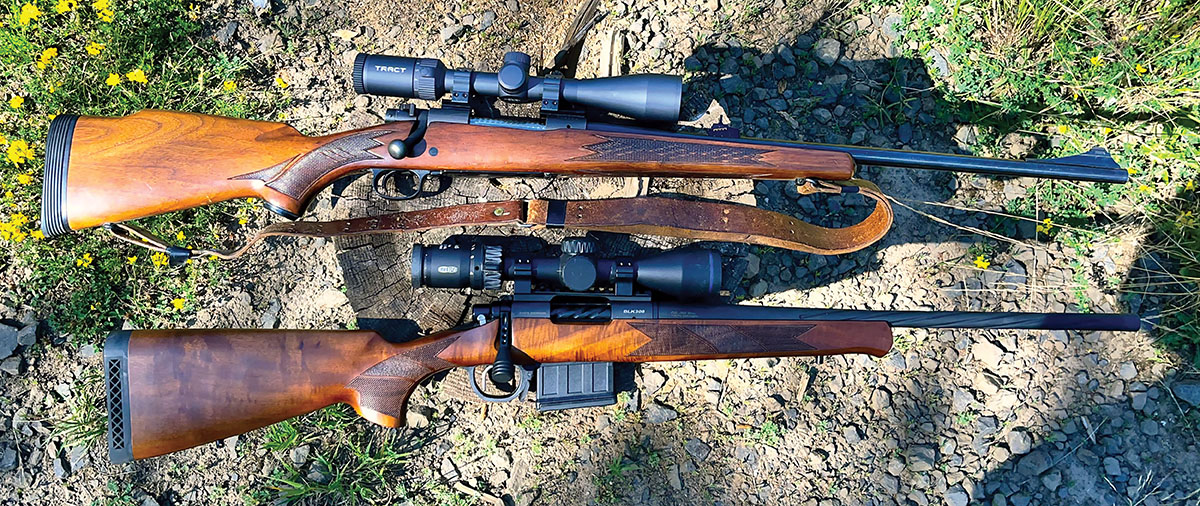
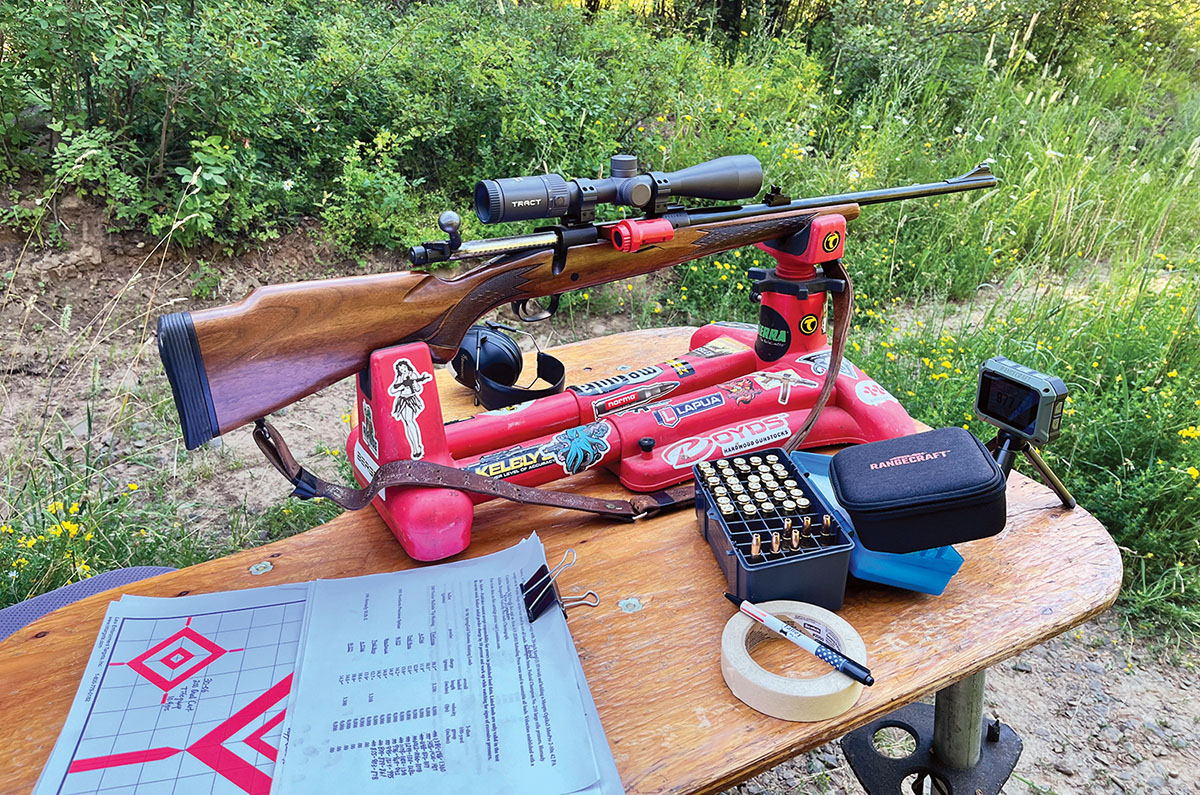
My classic Winchester Model 70 30-06 Springfield was also used for testing. It is truly representative of the type of hunting rifle so many whitetail hunters own. It was manufactured in 1966 and sports a 22-inch medium-contour barrel with 1:10 rifling twist. Traditionally, this hunting rifle has assembled 1-MOA or slightly smaller groups with tailored handloads, so I was curious to see how it would handle heavy bullets sent at a snail’s pace. It has held a sleek Tract TORIC HD 2-10x 44mm scope for many years, an optic well suited to Western mountain hunting or Eastern treestand approaches. It holds a BDC-style reticle and quality SCHOTE glass that provides clean, sharp viewing.
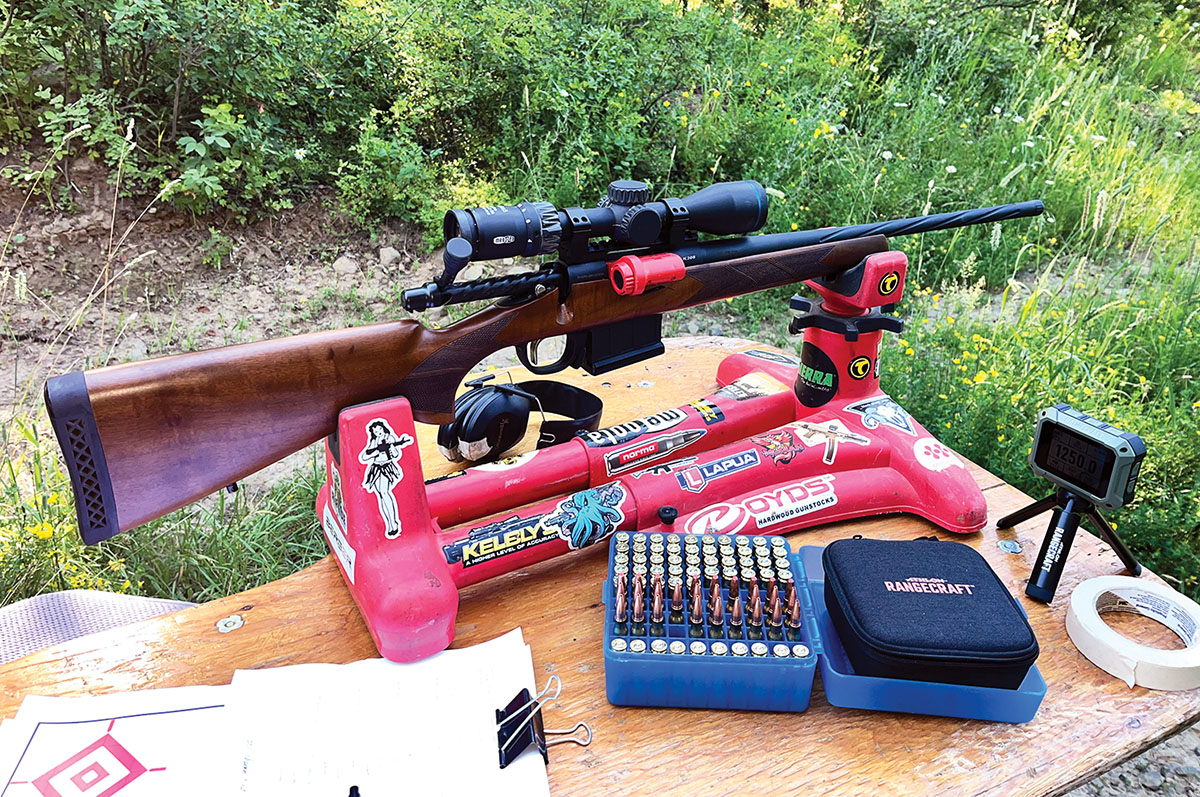
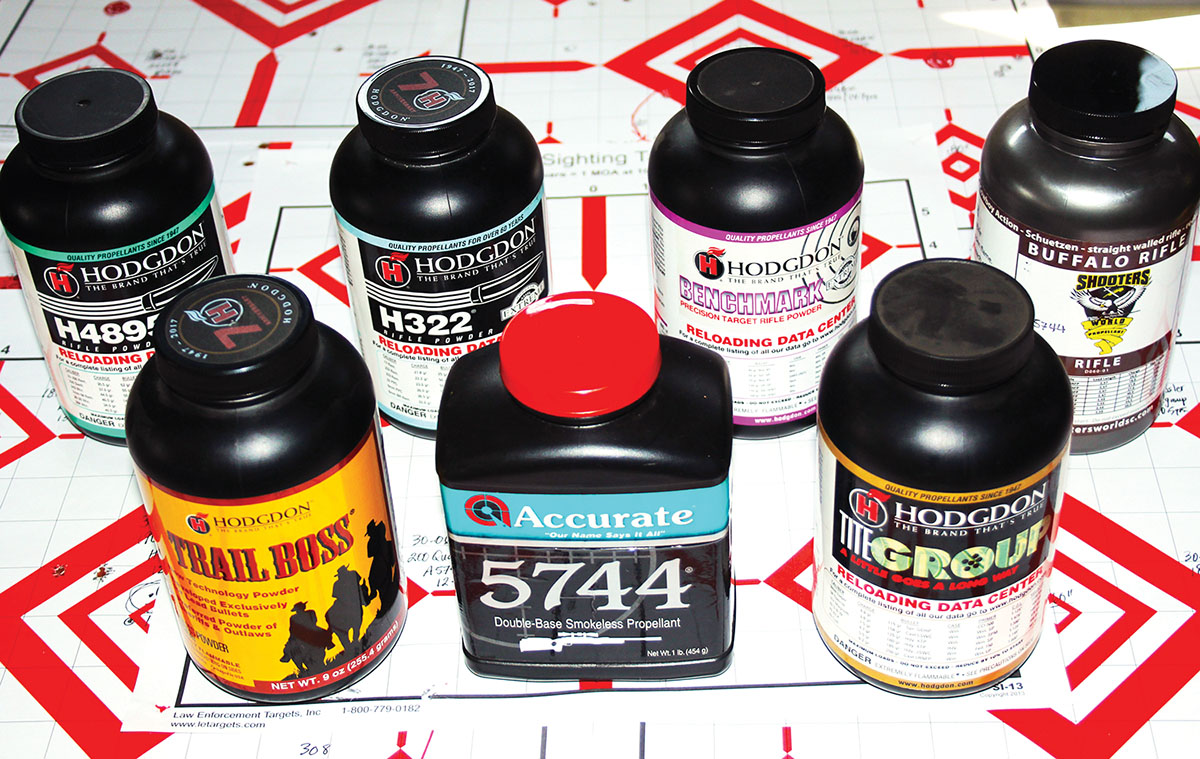
The quest for subsonic loads limits handloaders to a handful of powders. Undoubtedly, other powders than those selected will serve, but the listed options include proven track records. These include faster-burning pistol or straight-walled cartridge powders such as Hodgdon Titegroup, Hodgdon Trail Boss, Accurate 5744 and Shooters World Buffalo Rifle. Low doses of medium-fast burn-rate rifle powders also work well, including Hodgdon 4895, H-322 and Benchmark. Two different loads were auditioned with each powder to increase the odds of hitting the subsonic mark with the test rifle’s 20- and 22-inch barrels. It was also hoped this would provide data points for fps gained or lost per 1/10-grain of powder, which didn’t exactly work out.
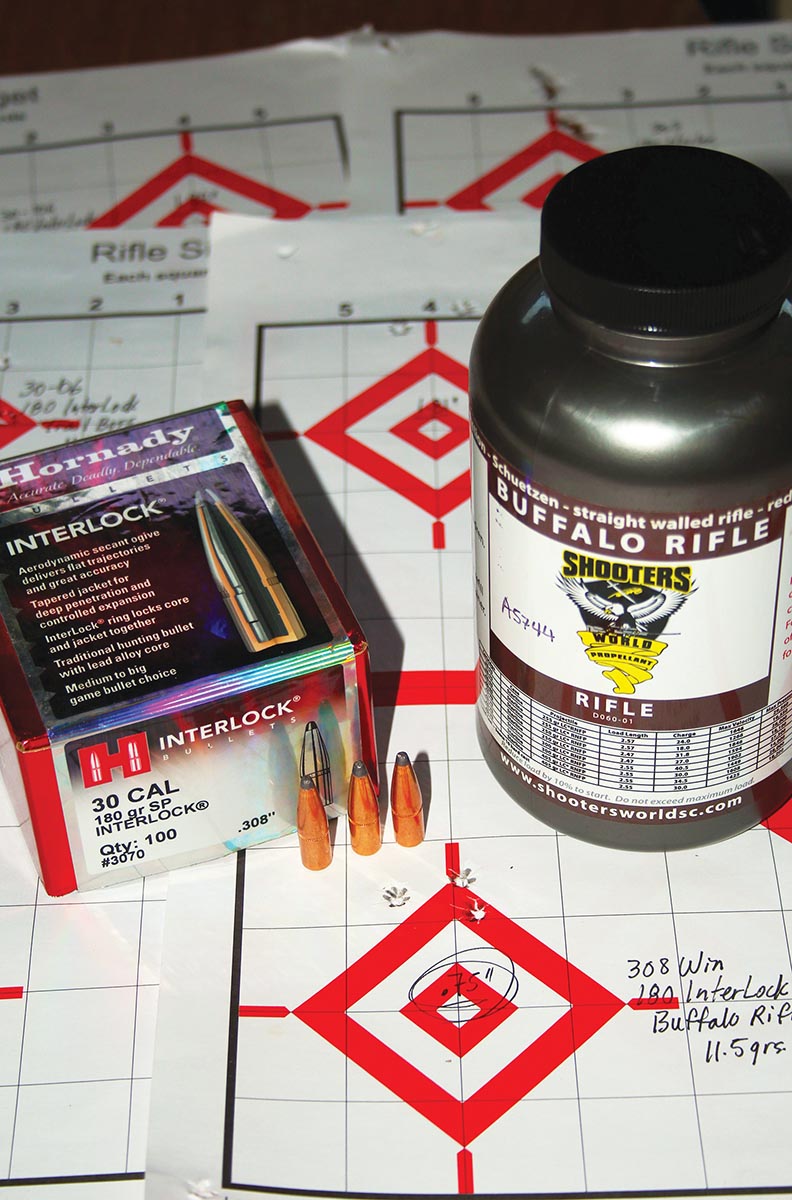
Once-fired Federal Cartridge brass was used in the 308 Win, and Remington brass in the 30-06. Federal Champion No. 210 Large Rifle primers were utilized for both. For dies, the 308 Win was loaded with Hornady Custom Grade New Dimension full-length dies, and the 30-06 with a Redding Full Length Die Set.
A beam scale and powder trickler manufactured by RCBS were also employed.
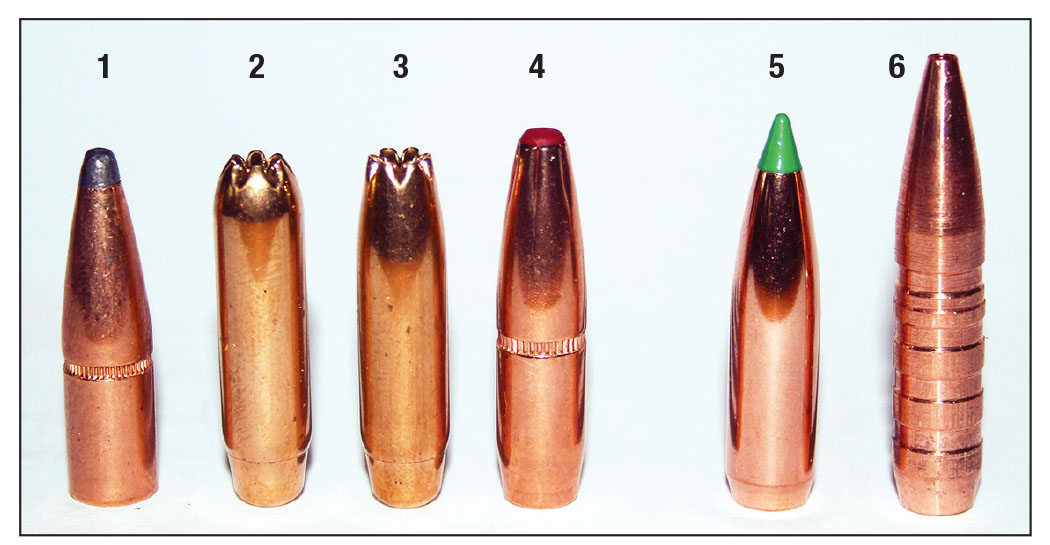
For bullets, I started with five examples weighing between 180 and 200 grains. The .308-caliber bullets kept on hand in this weight class are bonded-core or monolithic copper designs intended for elk or larger African plains game, which means they are unlikely to expand well at subsonic velocities. With that in mind, I initially chose Nosler’s 180-grain Ballistic Tip Hunting, a pair of 185-grain Northern Precision Saber Star hollowpoints (roundnose in the 308 Win and spitzer in the 30-06), Hornady’s 190-grain subsonic-optimized SUB-X and a 200-grain Quality Cartridge monolithic copper Game-StopR. With the Nosler, I surmised it would act as a controlled-expansion design at subsonic velocities, while I hoped the long-for-caliber copper bullet would tumble through vitals following impact. Ultimately, the Nosler and Quality Cartridge bullets were eliminated due to insufficient stabilization, particularly from the 308 Winchester. This illustrates the caution that loads should be tested thoroughly before introducing a suppressor to avoid the possibility of destroying a valuable accessory.
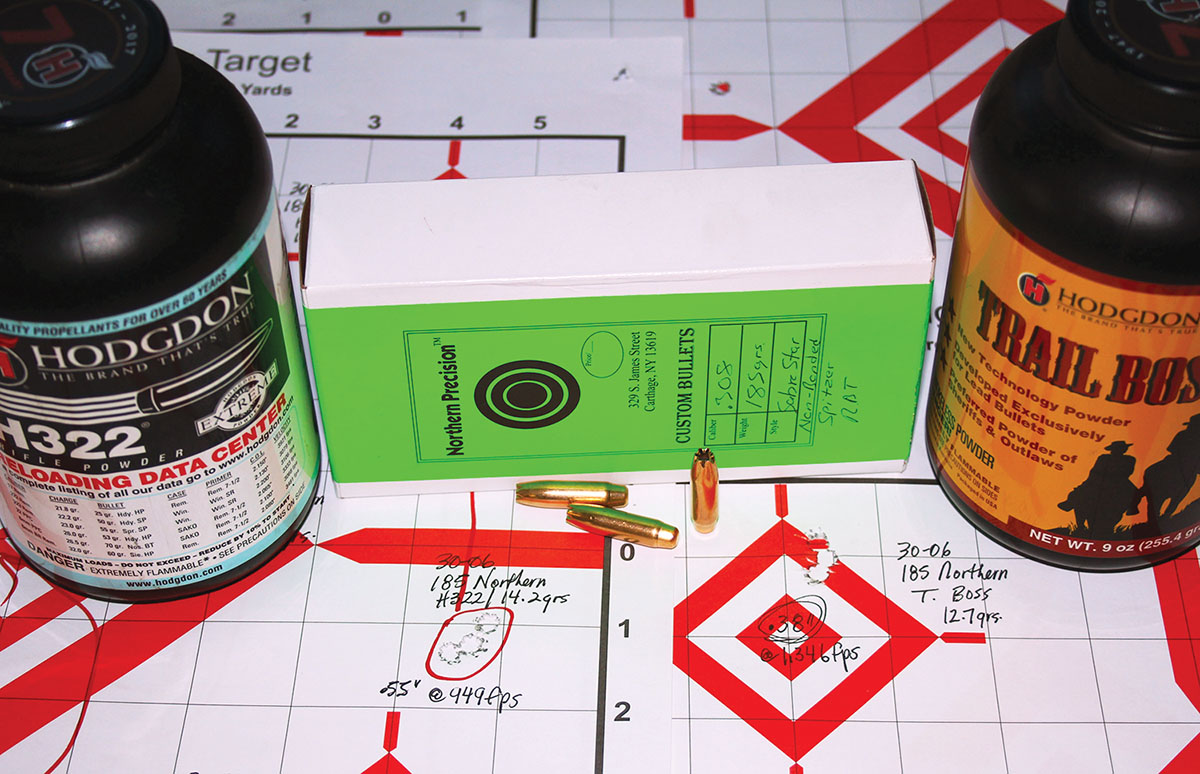
Pondering the question of bullet expansion, I contacted Bill Noody, owner of Northern Precision Bullets. Northern Precision’s custom abilities allow Noody to control all construction factors. While Northern Precision is renowned for bonded-core, high-weight-retention big-game options, I needed something quite the opposite. Noody created a pair of thin-skinned, non-bonded bullets holding his trademark Sabre Star hollow points and rebated boat-tails. The Sabre Star treatment is normally applied to Northern Precision defensive handgun bullets to maximize expansion and vital tissue damage from stubby barrels. These bullets would also prove ideal 300 Blackout fodder.
The two 185-grain Northern Precision bullets, with their rebated boat-tail, should retain roughly the same kinetic energy as the slightly heavier Hornady. The roundnose was paired with the 308 Win and Accurate 5744, Hodgdon Titegroup and Benchmark; the 30-06 with the spitzer and Hodgdon 322, Benchmark and Trail Boss.
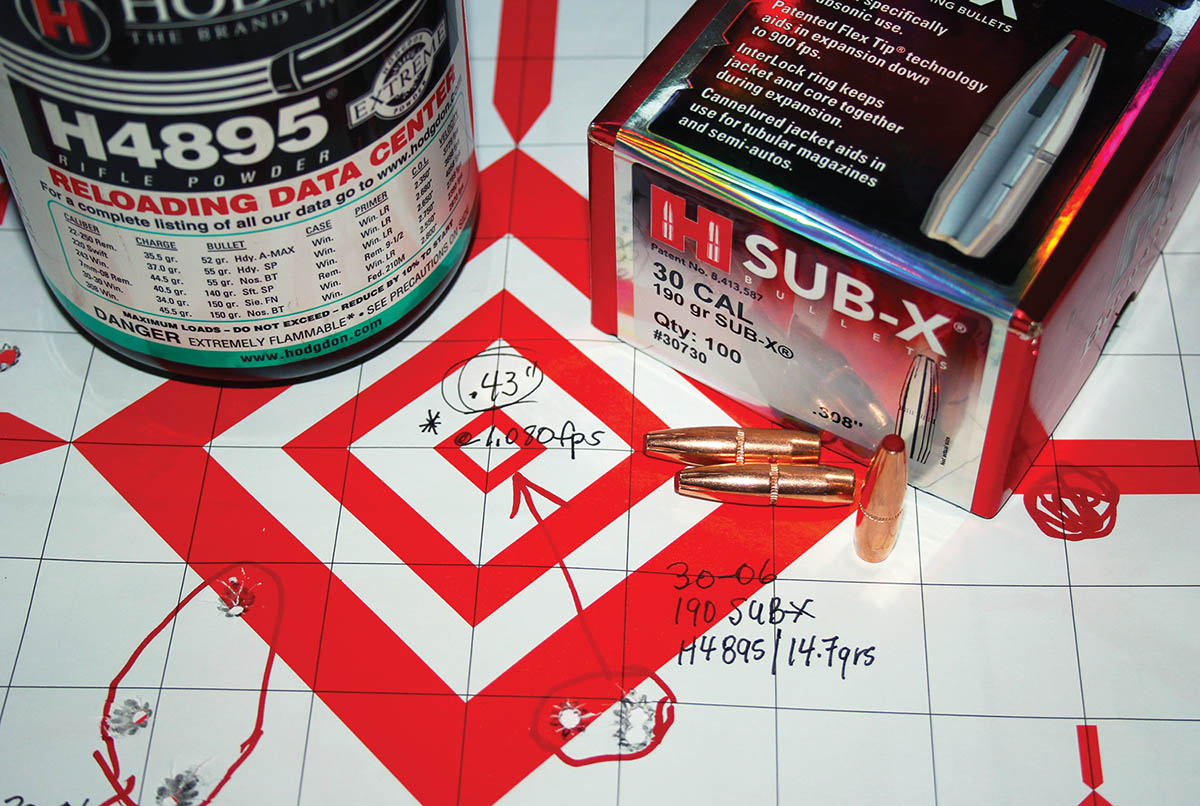
Hornady’s 190-grain SUB-X was designed specifically for the 300 Blackout. Long grooves in the jacket, its flat profile, and patented Flex Tip insert inside the deep hollowpoint cavity were designed to initiate reliable expansion at subsonic velocities. With its .437 G1 BC, it retains 419 and 453 ft-lbs of energy at 100 yards when sent at 1,050 and 1,100 fps. Powder choices included Hodgdon 322, Trail Boss and H-4895 in the 308 Win, and Accurate 5744, Hodgdon 322 and H-4895 from the 30-06.
The quest for subsonic velocities produced some interesting anomalies. The biggest surprise was discovering that adding a few tenths of a grain of powder often resulted in slower velocities in the loads tested. This I cannot explain, other than that with charges so small, standard deviations might account for the discrepancies. That said, extreme velocity spreads remained remarkably low considering the light charges.
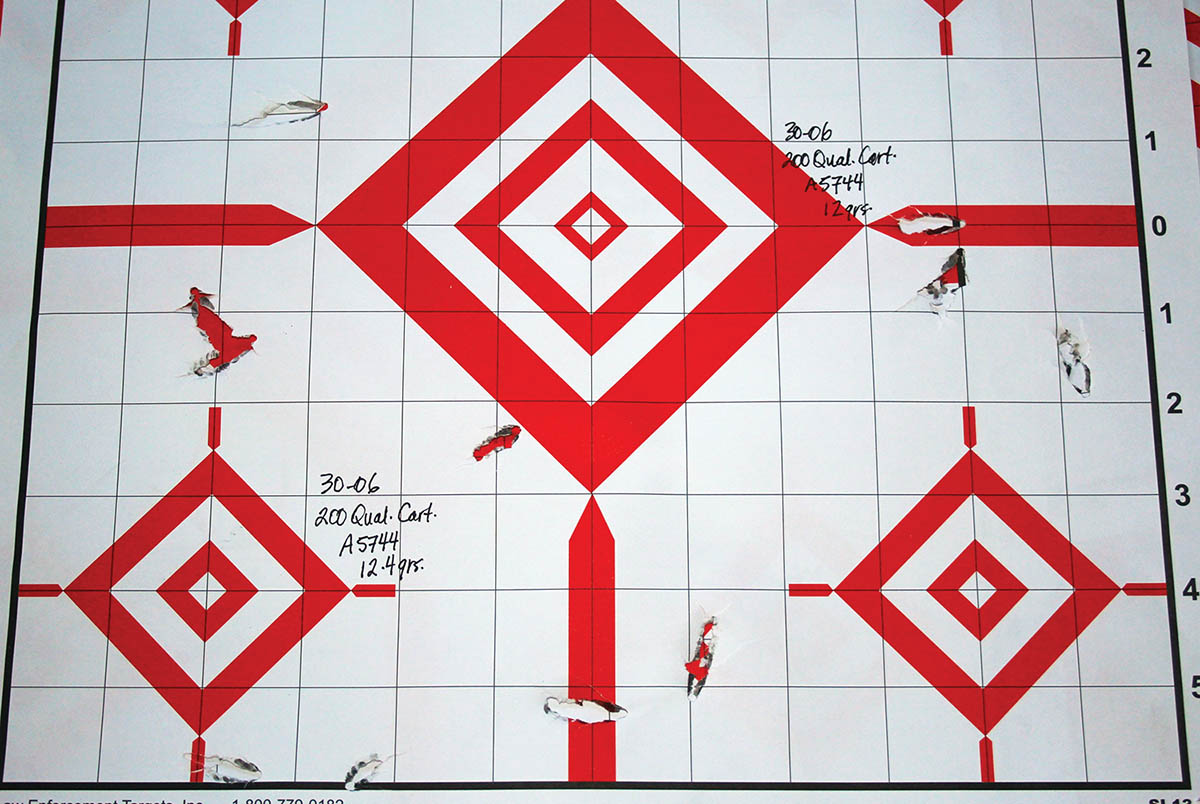
The shorter barrel lengths also tossed some monkey wrenches into the equation. With the 308 Win’s 20-inch barrel, in particular, hitting the subsonic mark will require less powder with a majority of the powders tested. The tested loads resulted in several sub-MOA groups from the 308 Win firing Hornady’s InterLock, the Northern Precision roundnose Sabre Star hollowpoint (which presented some feeding issues) and Hornady SUB-X. The adjusted InterLock loads all hit the subsonic mark, while only two of the SUB-X loads met our goals.
Things improved markedly with the Winchester M70 30-06 and its 22-inch barrel. Hornady’s 180-grain InterLock did not shoot as well in the 30-06, its best showing measuring 1.26 inches at 1,118 fps. The Northern Precision Sabre Star spitzer hollowpoint boat-tail produced two excellent groups – one at a pokey 949 fps, another at a marginally supersonic 1,346 fps. The Hornady SUB-X worked out best in the 30-06, producing two true subsonic loads with sub-MOA and sub-1⁄2-MOA groups. The clear winner from my rifle was .43-inch at 1,080 fps using 14.7 grains of Hodgdon 4895.
Hodgdon 4895 and H-322 came the closest to matching the velocities of Hodgdon’s data for the 190-grain Hornady SUB-X in the 20- and 24-inch barrels. The fastest-burning powders gave the largest discrepancies (much higher velocities) in loads not adjusted for the 180-grain Hornady. These included Hodgdon Trail Boss, Accurate 5744 and Titegroup pistol powders, in particular. Buffalo Rifle loads hit the mark with the 308, but came up well short from the 30-06. This project reminded me yet again that developing subsonic loads for a particular rifle requires some careful load-ladder trial and error. Yet even those loads that didn’t hit the desired mark provide safe starting points for developing your own subsonic ammunition suitable for close-range whitetail or hog hunting in settled areas.
.jpg)
.jpg)