

25-20 WCF
A Fun Little Cartridge
feature By: Terry Wieland | June, 26
Almost every report you will ever read about the 25-20 WCF (Winchester Center Fire), and there have been many over the past 130 years, either begins or ends by calling it “a fun little cartridge.”
Not the most powerful, nor the most accurate, nor the most versatile, the 25-20 has still managed to endear itself to several generations of shooters. Despite its limitations, it even corralled a place in big-game history as the cartridge James Jordan used in 1914 to take the Jordan Buck – for many years the greatest whitetail trophy of all time.
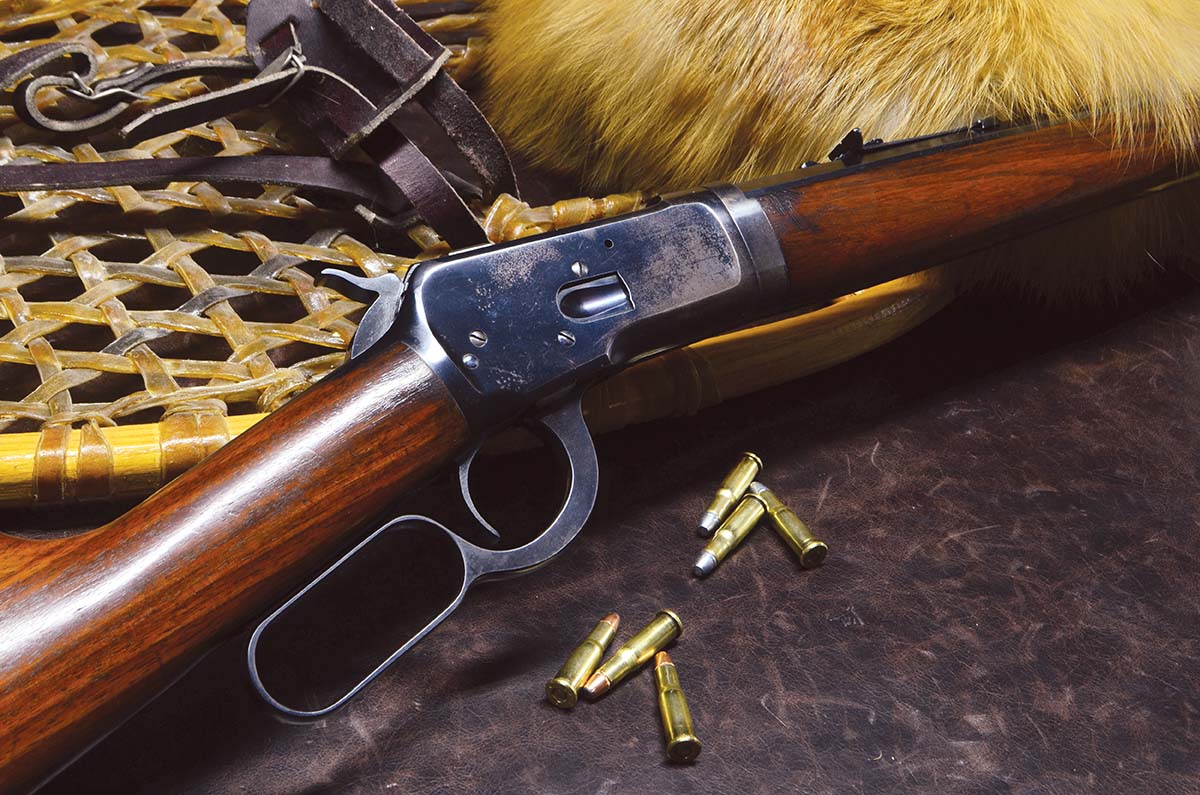
Alas, among its limitations is the fact that not many different rifles were ever chambered for it, and of those, it seems, relatively few were made. As a result, a good 25-20 WCF is hard to come by. Fortunately, the most popular (and populous) is the Winchester Model 1892, and it’s one of the best.
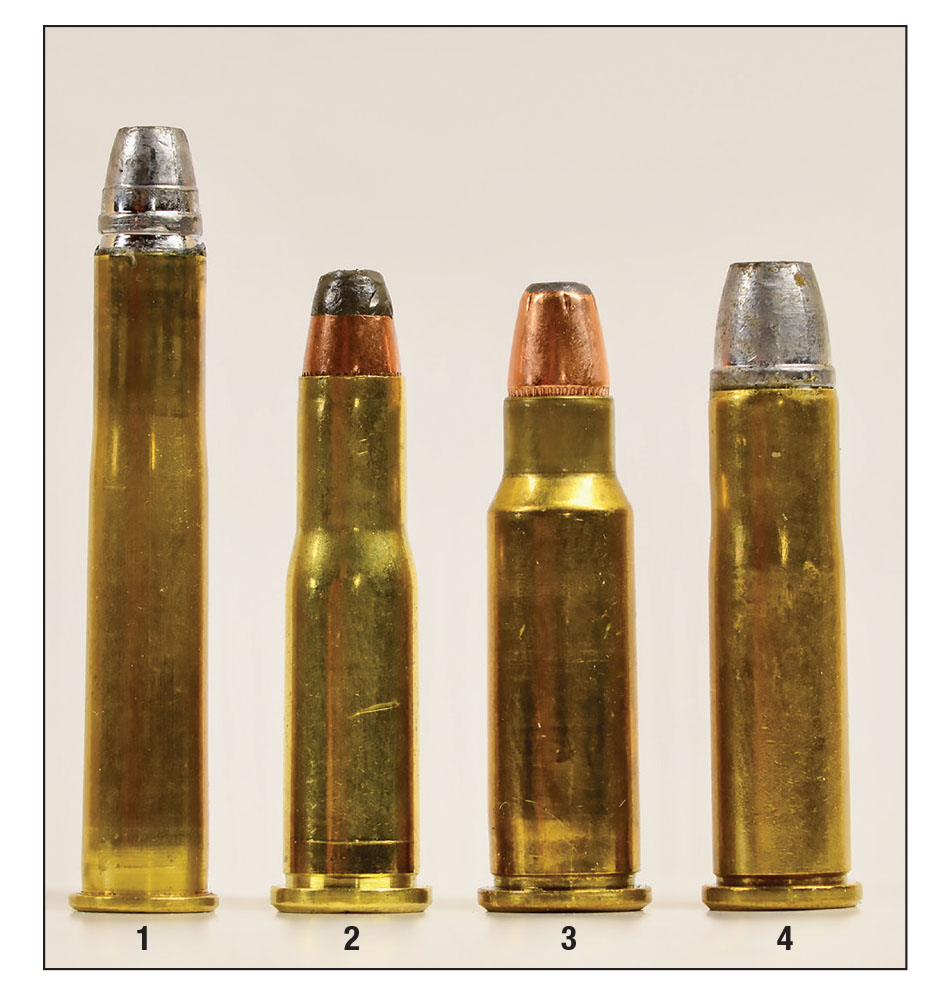
In fact, the 25-20 was designed specifically for the 1892. Seeing the popularity of the earlier 25-20 Single Shot (designed by F.J. Rabbeth and introduced in the 1880s), Winchester wanted something similar for its new lever action. Since the 25-20 SS was too long, they duplicated it in a shorter cartridge delivering the same ballistics with an 86-grain bullet at 1,500 feet per second (fps). This was accomplished by simply necking down the existing 32-20 WCF.
Of the four original calibers, the others being the 44-40, 38-40 and 32-20, it appears the fewest 1892s were made in 25-20, with the best estimates being around 90,000 out of a total production of more than a million.
The two 25-20s overlap each other everywhere you look. For example, Winchester chambered its Model 1885 Low Wall for both and did not differentiate between them in its records. There is no absolute number given for the number of Low Walls in 25-20, but a reliable estimate is about 7,500 out of the total production of more than 100,000. How many were 25-20 is anyone’s guess.
For what it’s worth, I’ve seen more Low Walls for sale in 25-20 Single Shot than WCF, but that may be due to ammunition availability.

Other gunmakers who chambered the 25-20 WCF included Marlin (lever and pump action), Remington in a pump and Savage in a bolt action. Winchester chambered it in later Models 53 and 65 lever rifles, and even a bolt action in 1949; but again, there were never many.

Factory ammunition has been available for most of the cartridge’s long life, and you can still find some Remington, although it’s no longer listed as a production item, and those who have some in stock are not underpricing it.
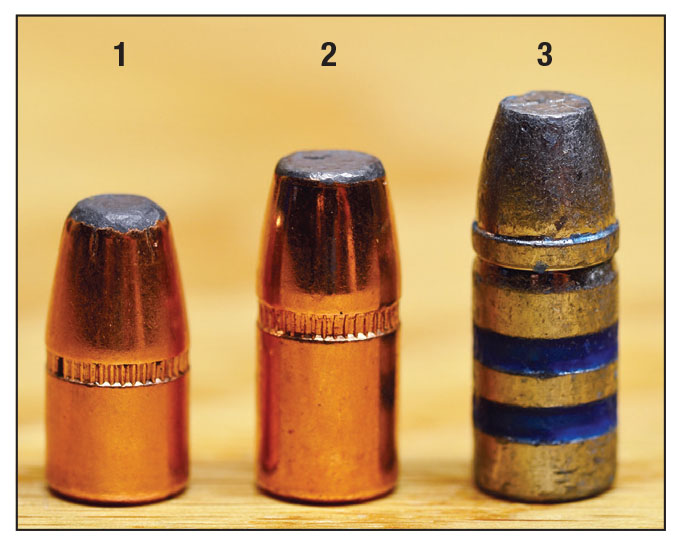
Quality Cartridge lists brass, but it’s out of stock everywhere I looked; the company says it will do a run when it has enough back orders. Alternatively, brass can be made by resizing 32-20 simply by running it into the sizing die, taking it slow and being careful of folds at the shoulder.
That sums up the supply difficulties. Now for the technical ones.
First, the lever and pump rifles all employ tubular magazines which, unless you want to use it as a single-shot, effectively limit you to loading flat- or round-nosed bullets. Also, the picky 1892 insists you stick to the correct cartridge length of 1.59 inches. Because you need to crimp the bullet to prevent it being driven back into the case under recoil, location of the cannelure as it relates to overall cartridge length also enters into it.
Our long-time technical editor, Ken Waters, wrote only one “Pet Loads” article about the 25-20 WCF. It appeared in 1972, and a great deal has changed in the intervening 54 years. Waters had both Remington and Winchester brass and noted, first, that 25-20 brass was thin compared to others, and there was an almost ten percent difference in case capacity between the two: 13.6 grains of water for Winchester, 12.8 grains for Remington.
Brass thickness was a concern because it tended to split after two or three high-pressure loadings, which was one more good reason to stick with moderate loads. An even better reason, Waters found, was that so-called “high velocity” loads in both the standard 86-grain and later 60-grain bullets were not as accurate. Since the cartridge’s usual application is small game such as squirrels, accuracy is far more important than an extra hundred feet per second.
While we’re on the subject of bullets, the picture is not rosy, at least as far as jacketed slugs are concerned. The two traditional weights are 60 and 86 grains, and you can’t go heavier because there simply isn’t the powder capacity. As of right now, Hornady makes its delightful 60-grain flatnose (FN), but no one makes an 86-grain FN that I can find.
In the 1990s, Speer produced a 75-grain FN to assist Marlin in promoting its new Model 94 CL lever action in 25-20 WCF. Neither rifle nor bullet survived long, although Ken Waters included it in a 1997 update of his earlier article and reported great accuracy using a moderate load of IMR-4198. I have a few of these bullets, and included his load out of curiosity.
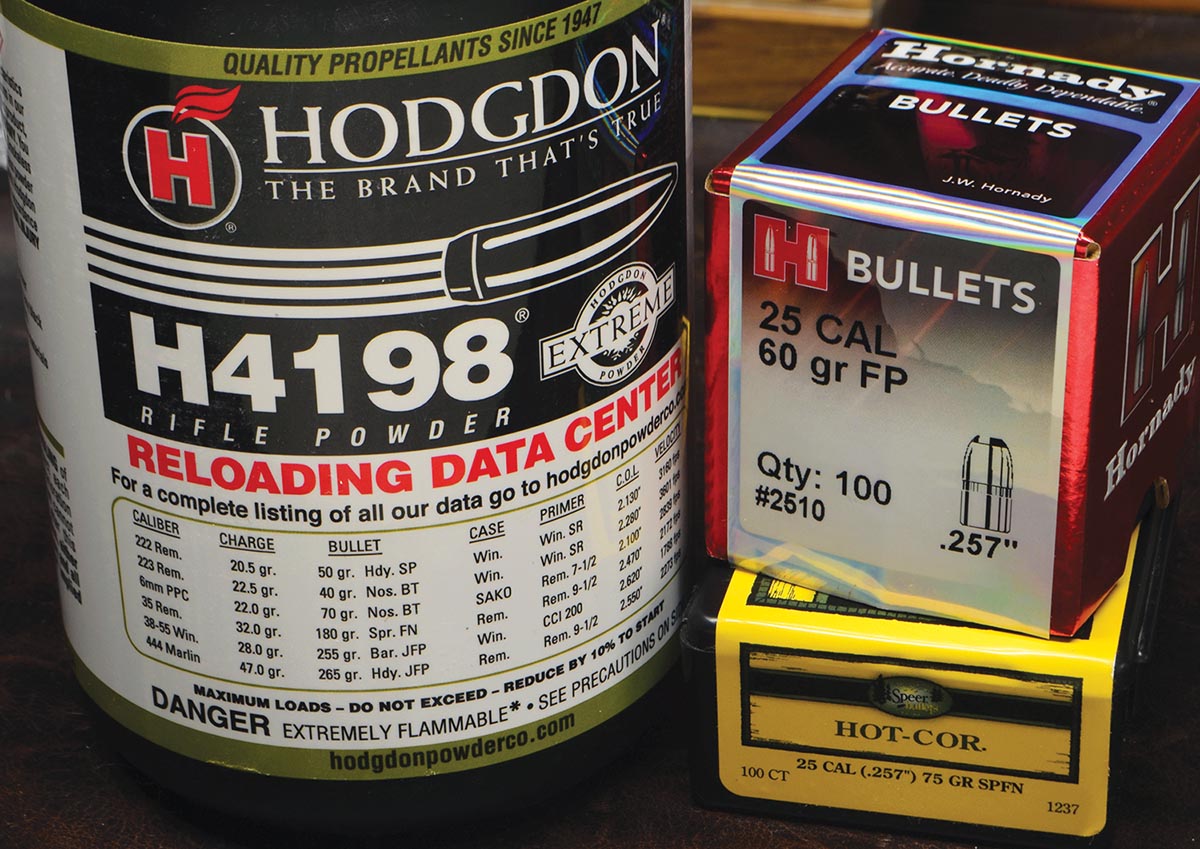
This limits us to one jacketed bullet, Hornady’s 60-grain FN, which is not really a hardship because it’s the only weight that can take you into velocities where you worry about fouling.
The 25-20 WCF was intended to shoot cast bullets, and there are all kinds of them available. For the purposes to which an 86-grain bullet is likely to be put, a hard-cast bullet is every bit as good as a jacketed one, as well as being cheaper and easier to come by.
Fortunately, the powders Ken Waters preferred in 1972 are, with one exception (N200), still available: 4198, 4227, H-110, and Alliant 2400. (I’m including the last because, though it is out of stock everywhere, there’s still hope.)
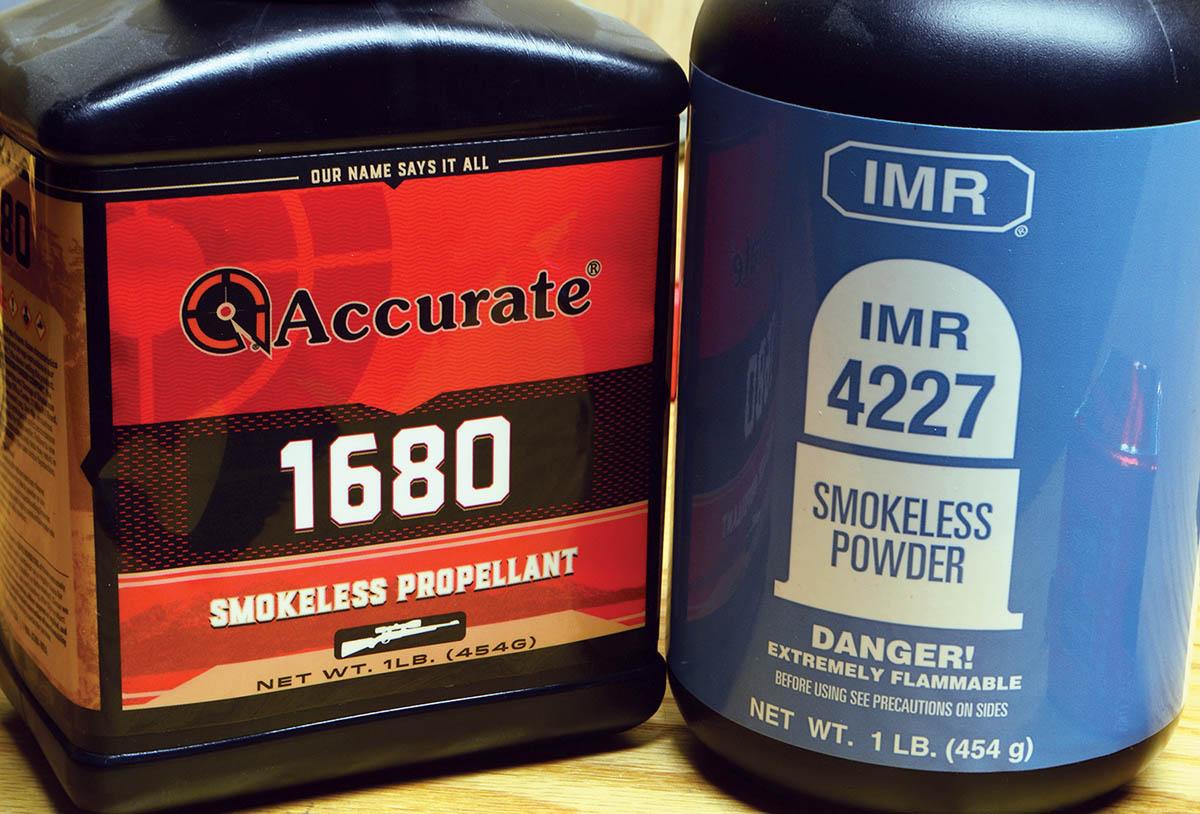
Waters was using IMR-4198 rather than Hodgdon’s, but Hodgdon provides load data for H-4198, and even has a newer version available that is more temperature resistant, with shorter kernels for easier measuring. I obtained some to use here.
It doesn’t matter which 4227 you have. According to Hodgdon’s long-time chief ballistician, Ron Reiber, they are identical. Some years ago, Ron sent me a note with his favorite 25-20 WCF loads. He preferred H-4198 for jacketed bullets and H-4227 for lead.
In his 1997 update, Ken Waters reported that his best powder for the Hornady 60-grain FN was AAC-1680.
Unfortunately, most of the bullets and primers Waters used are no longer available, including Remington jacketed bullets and Hodgdon primers. So, we grope our way along.
Our final shortfall lies in the load data itself. With the exception of Hodgdon, which has a pressure barrel for the cartridge and tests its newer powders, there simply isn’t much. The cartridge is not popular enough to warrant newcomers to the American market developing data, even if they have suitable bullets and powders. There is no data in the newest Alliant reloader’s guide, in spite of the fact that 2400, for one, is a famous propellant from way back.
Older data, when you can find it, often calls for components that are long gone.
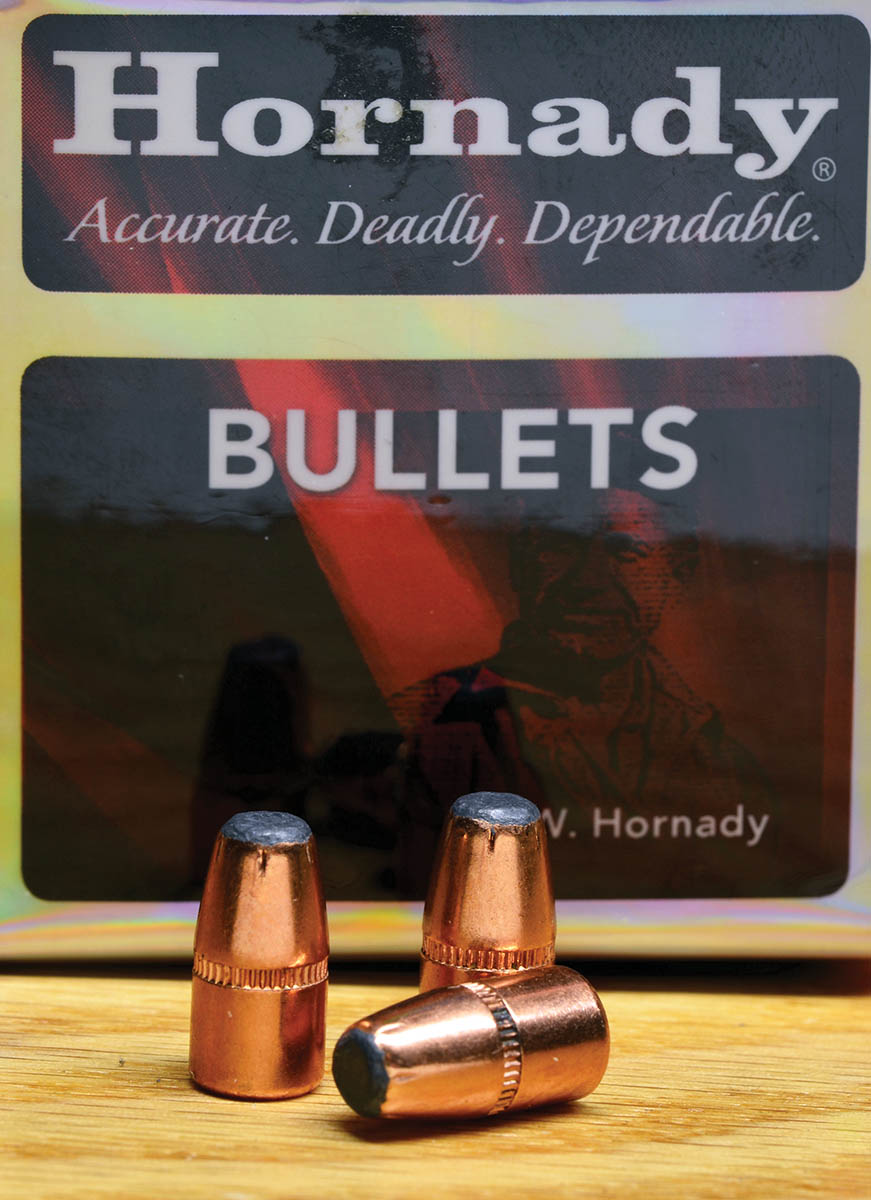
The bullets I had available included Hornady 60-grain FN (stockpiled for my beloved 256 Winchester), some Speer 75-grain FN and 86-grain cast bullets with an 18-Brinell hardness.
In 1972, Ken Waters used a Savage bolt action and a Winchester Low Wall in testing, along with a borrowed Winchester 1892. I have two 1892s, and that’s it. With all the other constraints I encountered, I decided that working with those, with flat-nose bullets, would do for this effort. If a Low Wall ever comes my way, I’ll move on to pointed bullets.
The accompanying table shows results with six different loads, using three different bullets. Some explanations are in order.
For the sake of comparison, I chronographed some Remington factory ammunition with 86-grain jacketed bullets and got only 1,213 feet per second (fps), considerably less than the claimed 1,460 fps. Handloading, it’s not hard to improve on that.
The first 60-grain load, with H-110, was Ken Waters’s preference in 1972, and is in the current Hodgdon data. The 8.5-grain is Hodgdon’s starting charge, but Waters reported excellent accuracy with it in his 1892. He got much higher velocity than I did, 1,730 fps versus 1,582 fps, with horrendous extreme spread, but it’s impossible to know what equipment he was using, and under what conditions, so that doesn’t mean much.
Hodgdon does not include any Accurate powders in its data, but Waters reported the 13.5-grain charge in his 1997 update as optimal for velocity and accuracy. The Accurate Smokeless Powders Loading Guide, Number 2 (2000) gives a range of 12.6 to 14.0 grains with the Hornady bullet, so Waters’s load is less than maximum. He got 2,200 fps, I got 2,149 fps.
Waters used IMR-4198 with a 75-grain bullet, but modern data lists only H-4198. The two are included for comparison purposes, although the Speer FN is no longer available. Having a limited supply of those, I kept testing to a minimum, and it was more out of curiosity than anything. The results with IMR-4198 and H-4198 speak for themselves.
An interesting point: Speer Reloading Manual #14 (2007) lists a maximum charge of 12.6 grains of IMR-4198 and warns that it’s a compressed charge. They were using the roomier (according to Waters) Winchester case. Even in my once-fired, less roomy Remington case, however, a charge of 12.8 grains came barely to the base of the bullet. Same with the new H-4198. This is one more anomaly that suggests erring well on the side of caution when one starts loading this cartridge.
The cast bullet load draws on both information from Ron Reiber and current Hodgdon data. Ron’s chart showed 7.0 grains of H-4227 as a maximum load with an 85-grain cast bullet, and a velocity of 1,317 fps. I tried it with IMR-4227 and got only 1,218 fps.
Since that’s well below what I consider a useful load for a hard-cast bullet of that weight, I tried Hodgdon’s maximum load for use with jacketed bullets and got a very gratifying 1,561 fps with no pressure signs whatsoever. Hodgdon still lists 7.0 as the maximum for a plain-base 85-grain lead roundnose, but at 20,600 copper units of pressure (CUP), well below the industry maximum of 28,000 CUP, it makes one wonder.
At any rate, I’ve decided on 8.6 grains with my hard-cast 85-grain bullet as a standard load for my 1892s.
As with many of the old cartridges, you run into problems that just don’t exist with newer ones and today’s excellent loading equipment.
Thin brass, a trait the 25-20 shares with its stablemate, the 38-40, requires extra care in both resizing and crimping. It’s all too easy to crush the case if you encounter some resistance and try to use force.
As for accuracy, this was an instance where limitations in terms of available components and data left me hoping just to find two or three repeatable, dependable loads and worry about accuracy later. I can always go up or down a grain or two, hoping for improvement.
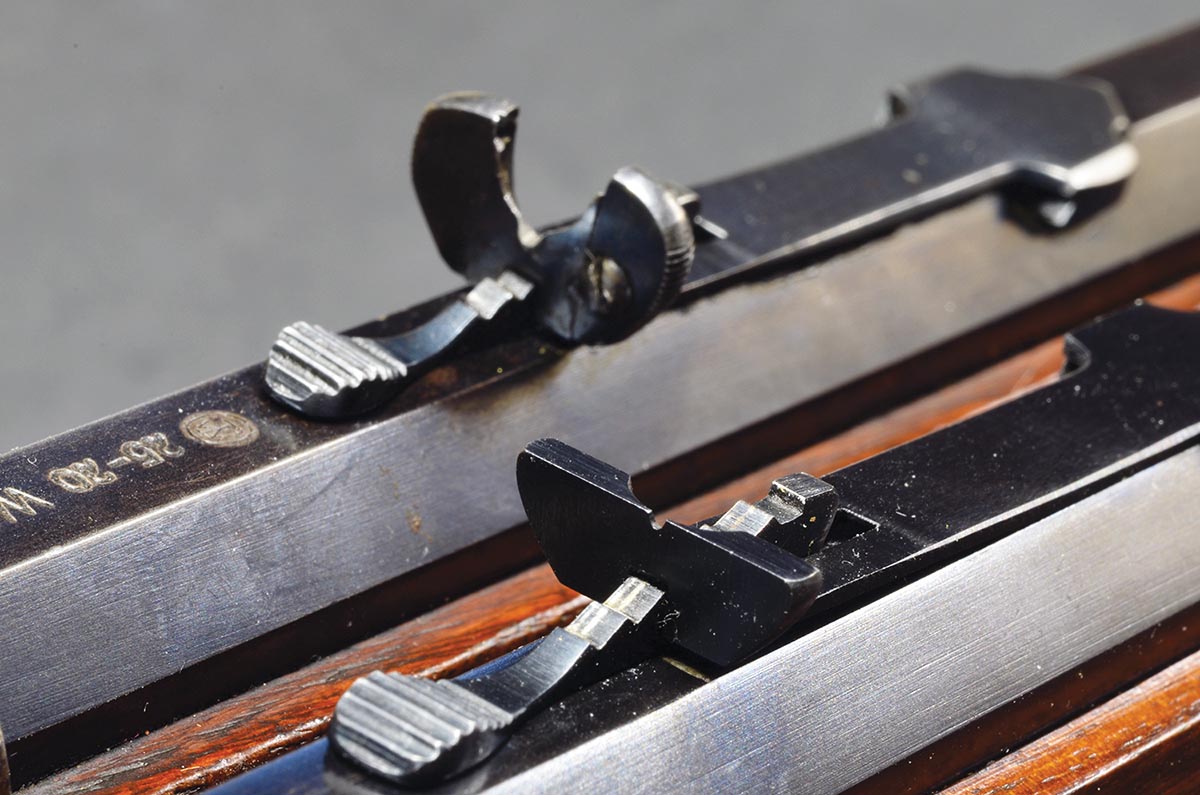
My older 1892 (1907) sports an original buckhorn rear sight on the barrel, combined with a bead so tiny that any aiming is more instinct than science. The newer 1892 (1920), a special-order takedown, has a more modern blade on the barrel and a more visible bead, so some degree of repeatability is possible. Even so, there was no accuracy data worth printing.
Ken Waters ran into a similar situation, and while he reported “excellent accuracy with the 1892” a couple of times, he gave no numbers, and limited most accuracy tests to the bolt action with a scope.
An odd thing: In spite of all the difficulties and obstacles, I found myself falling in love with both 1892s – so beautifully made and performing like clockwork every time.
And the 25-20 WCF? It’s a fun little cartridge…
.jpg)