

Reloader's Press
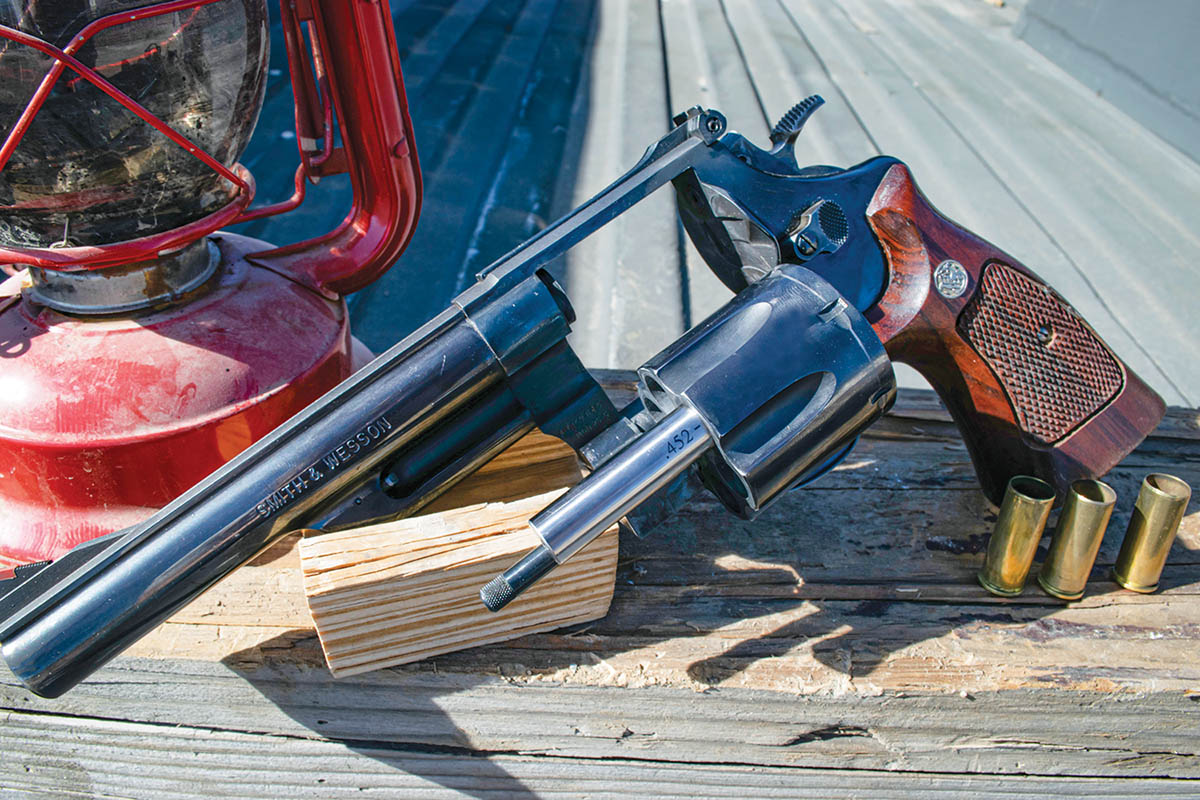
45 Colt in a Smith & Wesson Model 25-5
column By: Jeremiah Polacek | June, 26
The 45 Colt was developed in 1873 to go into Colt’s new Single Action Army revolver. Birthed in the aftermath of the Civil War, with westward expansion in full swing and the American Indian Wars still underway, the timing was right. The U.S. Army had also just adopted the 45-70 Government cartridge in the Springfield 1873 “Trapdoor” rifle. Technology was advancing and the age of black-powder cartridges was in full swing. Two of the most successful black-powder cartridges were the 45 Colt and the 45-70 Government. Both cartridges still see widespread use today and have made the transition to smokeless powder, which is more than can be said for most cartridges of that era. The 45 Colt is over 150 years old, and yet it lives on as an inspiration that a well-designed cartridge at the right time can indeed achieve legendary status.
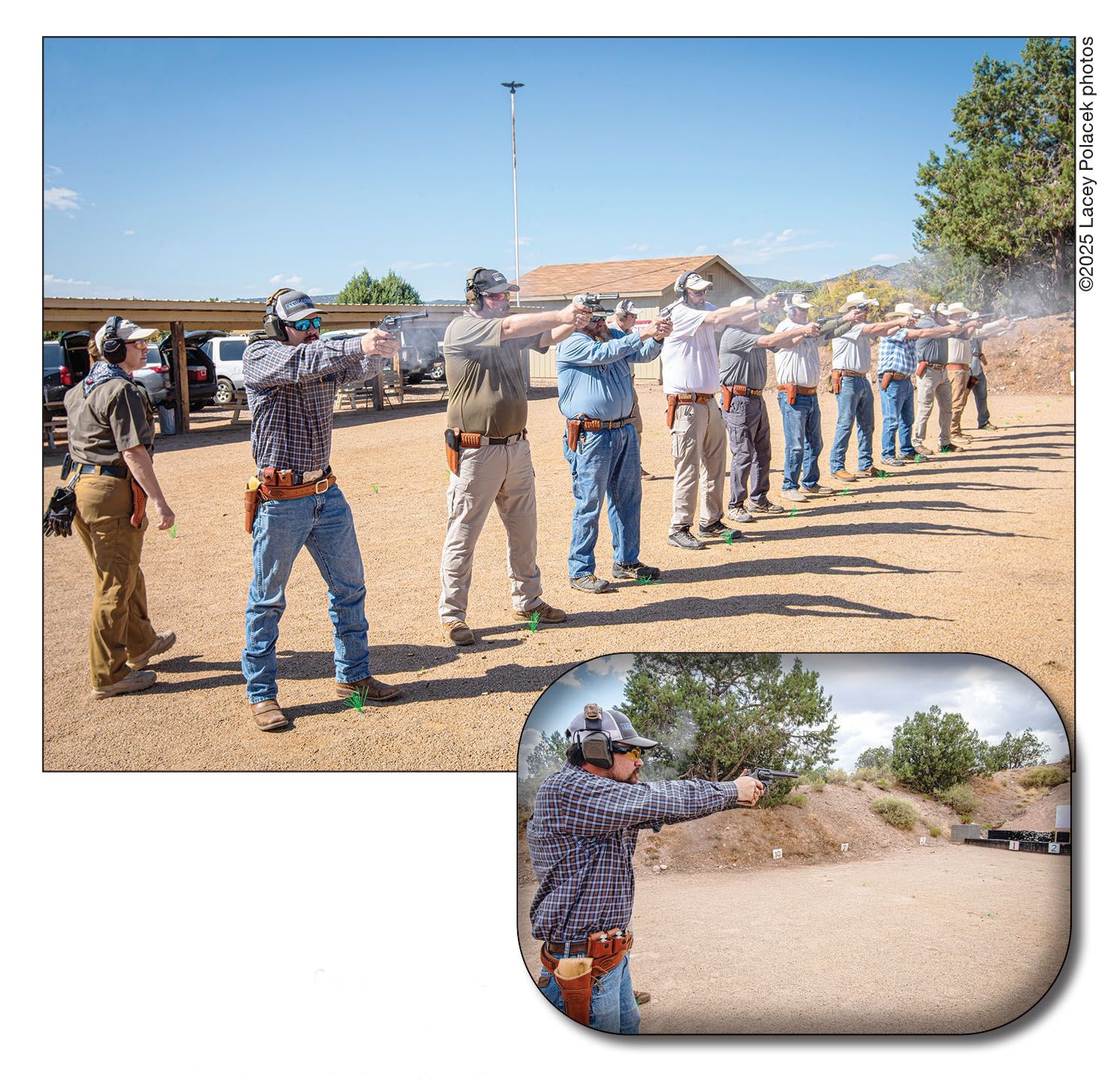
Having extensively used the 45 Colt in everything from single actions to lever actions and even some break-action rifles, the cartridge has proven itself well over years of use in the field. More recently, there is a particular gun that has seen a lot of use not only in the field but also on the range and while attending classes and events at Gunsite Academy in Paulden, Arizona. That gun is a Smith & Wesson Model 25-5 chambered in none other than 45 Colt.
While I will be the first to admit that a Single Action Army pairs perfectly with the 45 Colt cartridge, there is no doubt that it works extremely well in a double-action revolver. From a practical standpoint, it is faster to reload and has better factory sights that are fully adjustable, which is a huge benefit to the handloader who shoots multiple loads through a single gun. This is a rather strong revolver capable of handling pressures up to 23,000 pounds per square inch (psi), provided the gun is in good condition. For the purposes of this article, all pressures will be kept to 16,000 psi or less, which is what CIP has designated as the safe maximum pressure of 45 Colt, with many loads being below 14,000 psi, which is the SAAMI (Sporting Arms and Ammunition Manufacturers’ Institute) maximum average pressure of the cartridge. As such, use caution and avoid maximum loads or even near maximum loads in weaker original Single Action Army revolvers and in some of the weaker clones, or any firearms designed for use with black powder.
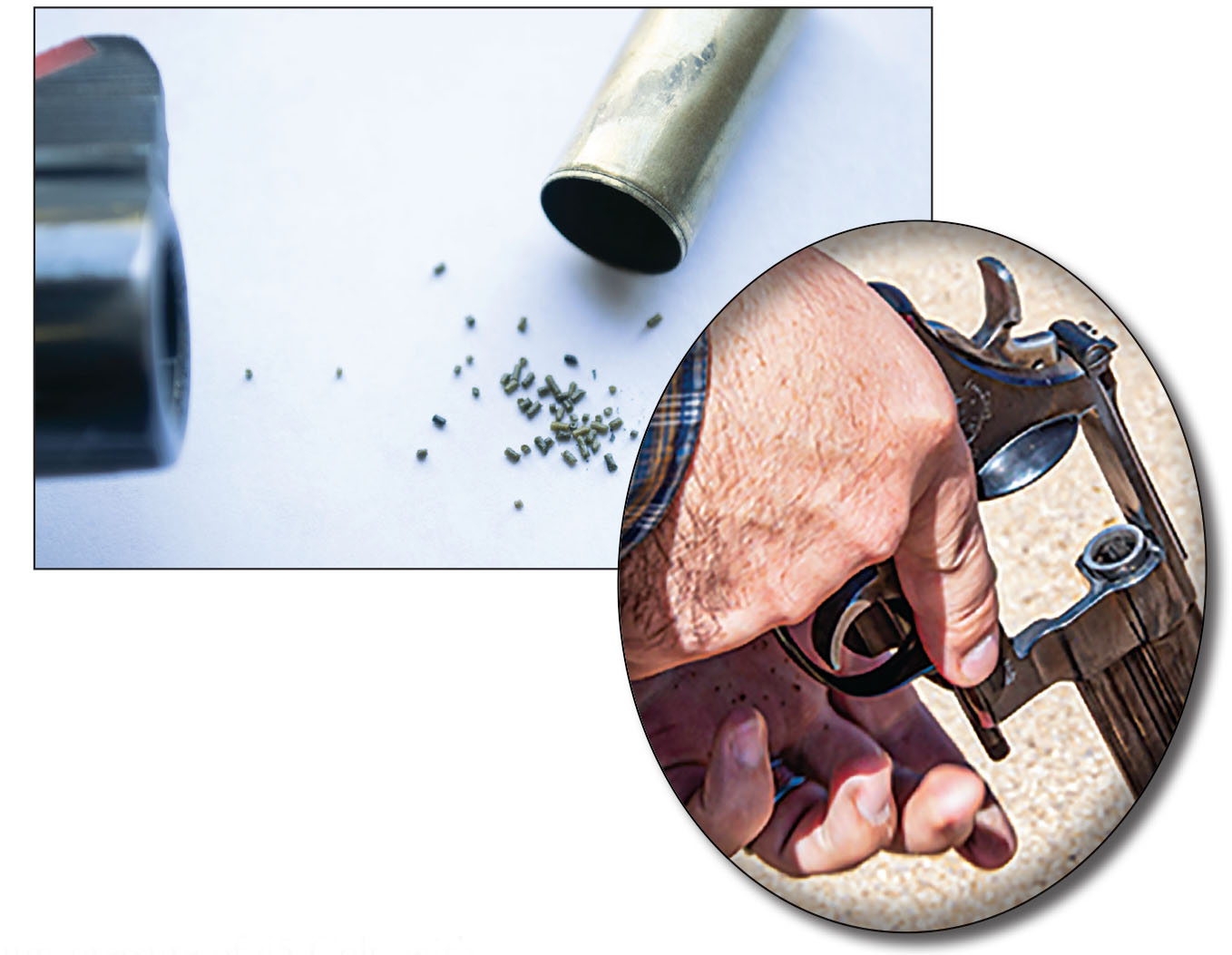
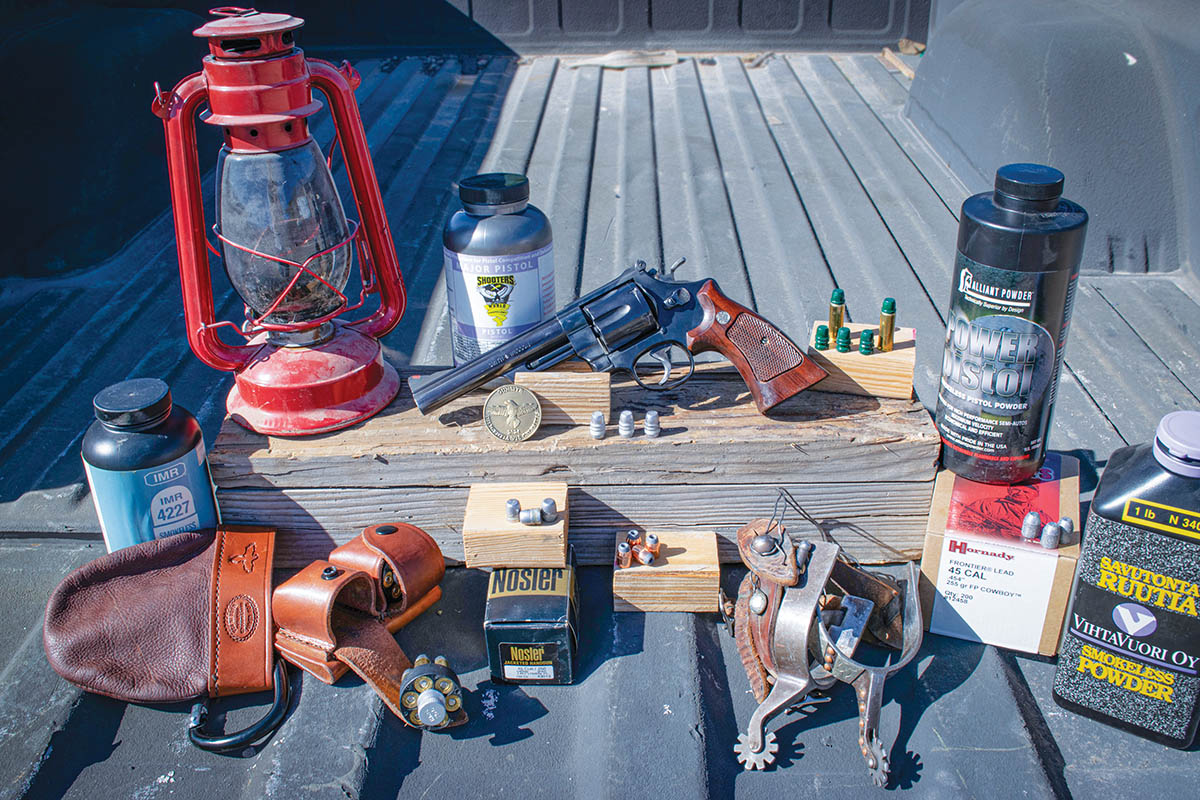
Originally, the goal of this was to find a load that duplicated or exceeded the performance of IMR-4227 powder, which I had previously been using in this Smith & Wesson. The reason for the new load was not due to a lack of accuracy because the load has proven quite accurate. The primary issue with IMR-4227 powder is the fact that it is extremely dirty. Unburnt kernels of powder can work their way under the ejector star, effectively jamming up the gun. This was not noticed initially when this load was worked up, but after several trips to Gunsite, the issue became quite apparent and usually happened at rather inopportune times, during a shoot-off or when going through a shoot house. Since this is a revolver I have carried for self-defense, this simply was not acceptable and a solution had to be found.
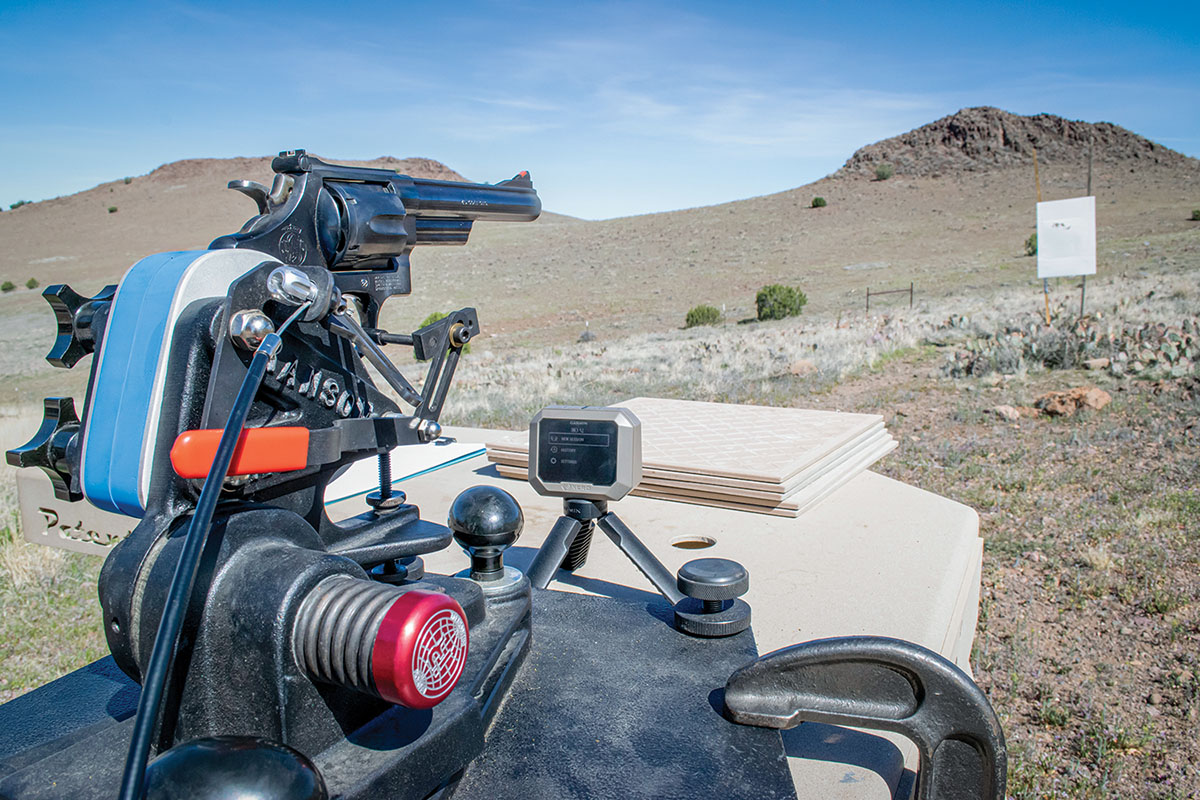
After doing some research and digging through old Handloader magazines and LoadData.com, I assembled about 25 different loads with various bullets and powders, knowing that I would surely find a suitable alternative to my load with IMR-4227. Wanting to eliminate as many variables as possible in the loads, especially given the nature of reloading the 45 Colt, there is generally a lot of space between the base of a seated bullet and the flash hole. For this reason, less position-sensitive powders were used, or powders that offered better than average case fill. In addition, all accuracy testing was conducted on a Ransom International Master Series rest, and all the reloading was done with top-notch products such as an Area 419 Zero reloading press.
The loads were assembled from new, unfired Starline cases, which I have found to be of exceptional quality and consistency. They make some of the finest handgun brass available on the market today. The cases were run through a Redding NxGen full-length sizing die, followed by the NxGen expander die, which features a TiN (Titanium Nitrade) coating, making the entire process extremely smooth. The next step was to apply a chamfer and debur to each case prior to priming them with Federal 150 Gold Medal Match Large Pistol Primers. All powder charges were weighed and dispensed with an RCBS Matchmaster Powder dispenser, and each round was finished off with a stout crimp which was applied as a separate step from bullet seating. With this level of care and detail put into the loads, curiosity was building as to what kind of performance could be coaxed out of this old S&W Model 25-5.
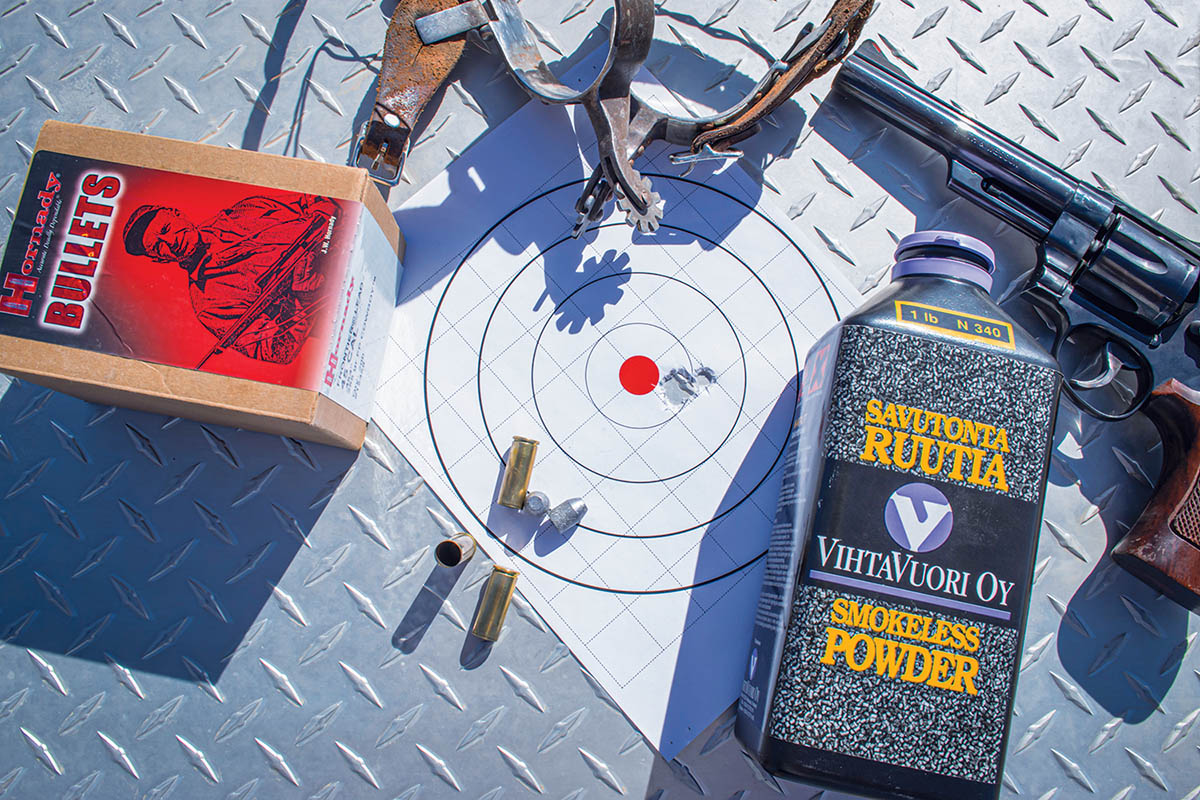
After assembling the loads, I had to wait a bit for perfect testing conditions, and once they arrived, the Ransom Rest made quick work of the testing. As can be gleaned from the results in the table, this old Smith & Wesson is capable of some impressive accuracy; the care into the selection of powders and bullets also paid off, as not a single load broke the 2-inch mark at a distance of 20 yards. When choosing a load for target shooting, going with either Hodgdon Titegroup powder or Vihtavuori N-340 would make a lot of sense, especially when combined with the relatively inexpensive 255-grain Hornady FP or the 230-grain Hunter’s Supply RNFP. Thanks to the adjustable sights, either one can be easily zeroed to shoot at the point of aim.
When selecting a hunting load the performance of Shooters World Major Pistol was impressive – even the mild charge weights yielded good accuracy, velocity and standard deviations. The recoil was noticeably more than other loads but certainly not excessive and pressures at the lower charge weights (13.7 grains or less) were still below 14,000 psi. This is appreciated as I am not keen on shooting a steady diet of maximum loads through this revolver, and the less stress I can put on it, the longer I’ll be able to enjoy maintenance-free shooting.
.jpg)
.jpg)