

Bullets & Brass
358 Winchester Data for Short Barrel Rifles
column By: Brian Pearce | June, 26
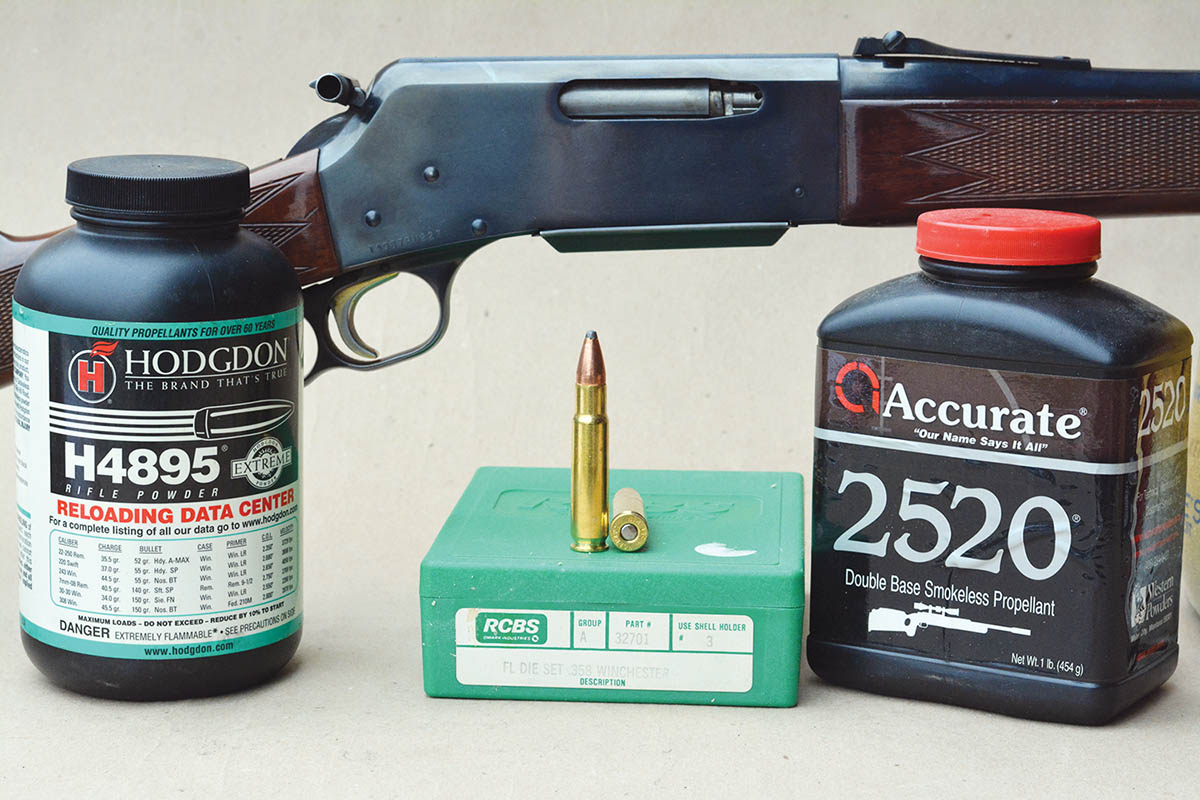
Q: I’m an old timer and purchased a Winchester pre-’64 Model 70 Featherweight chambered in 358 back in the 1960s. I hunted with it at that time, but kept it in high condition. When I realized how much collectors were paying for that rare caliber in the Model 70, I regretfully stopped using it during the 1970s. Then last year, I stumbled onto a Browning BLR 81 chambered in 358 Winchester at a gun shop and bought it. I installed a Skinner Sights aperture rear and purchased a quantity of Hornady factory loads with the 200-grain bullet. Then I found a brand new Ruger Hawkeye Hunter 358 with a 16.60-inch threaded barrel and purchased it on impulse, which was not a mistake. I have been very pleased with the accuracy of both rifles.
It has been decades since I handloaded for the 358 and would like to use the 250-grain Nosler Partition to hunt elk in our brush and timber country. But I’m worried about velocity loss with the shorter barrels of my two new rifles, as they are both shorter than the Model 70. Can you suggest a powder that will help keep velocities from dropping off? Data would also be helpful.
Thanks for putting out such a great magazine dedicated to handloaders!
Rick, Hamilton MT
A: We are glad that you enjoy the magazine!
Due to the medium bore caliber of the 358, in combination with its moderate powder capacity, you will not experience a large velocity loss due to the shorter barrels of your new rifles. I would suggest trying 46.5 grains of Accurate A-2520 or 45.0 grains of Hodgdon H-4895 powder with the 250-grain Nosler Partition. Both powders will reach 2,225 to 2,250 feet per second (fps) from a 20-inch barrel. The velocity loss in the new Ruger Hawkeye with a 16.60-inch barrel will not be significant. For what it is worth, the 358 Winchester is a great round when used in brush and timber, and it’s interesting to see it making something of a comeback.
Pressure and Velocity Variations Between Different Loading Manuals
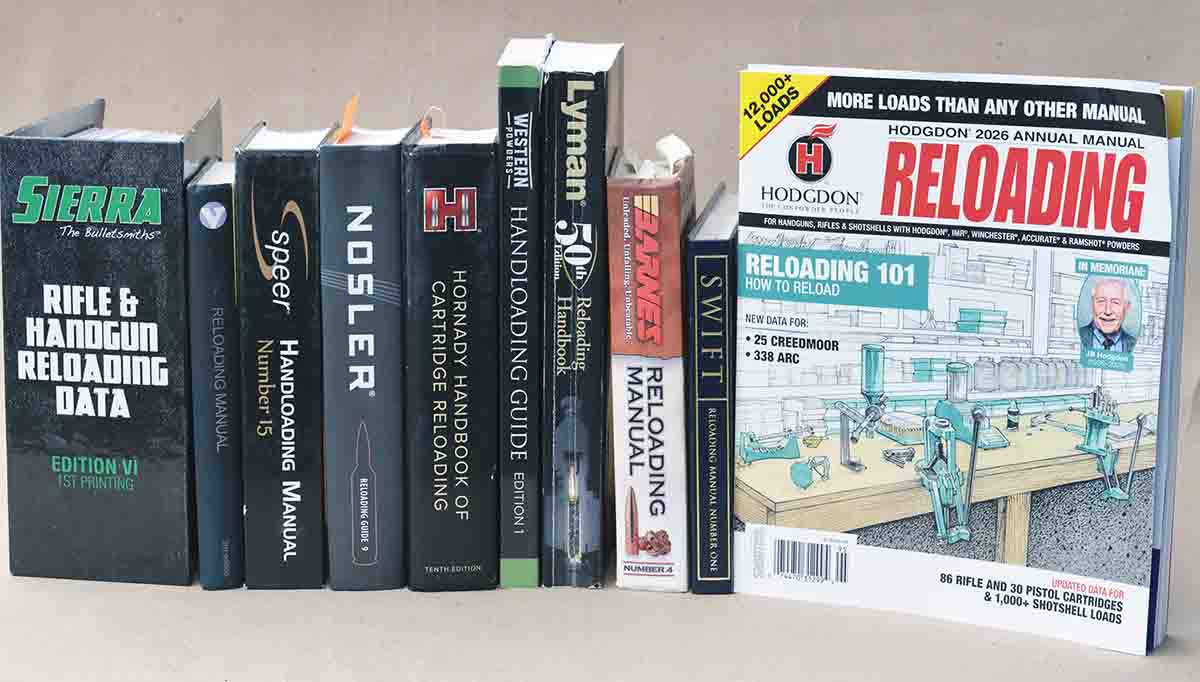
Q: I have several reloading manuals, but they are often conflicting and confusing when it comes to pressures, velocities and data. Although I have many questions, today I’m mostly asking about revolver cartridges. In thumbing through the Hodgdon Annual Manual Reloading, I can’t help but notice that my favorite revolver cartridges, including 357, 41 and 44 Magnum and 45 Colt, are listed in both psi and CUP pressure figures, even in the same chart with the same bullet weight. Other manuals do the same thing, including Lyman. Can you explain the difference and how those figures apply to me as a handloader?
If you can offer any insight into these two questions, I would be in your debt.
Farrell R., via Facebook
A: Your questions deserve greater discussion than space will allow today, but I can probably offer enough insight to answer your questions.
First, what is commonly known as “crusher pressure measurement” is used in conjunction with copper units of pressure (CUP). This is an older system of measuring pressure (from a Universal Receiver) that, upon firing, crushes a copper cylindrical insert that is of known metallurgy, which is then measured with a micrometer and referenced to a tarage table to determine pressure. Piezoelectric pressure measurement is a much more modern, precise and faster method that relies on electronics and a transducer mounted into the chamber wall that also contains a piezoelectric crystal that sends an electronic signal to a computer for conversion to pounds per square inch (psi).
While piezoelectric pressure measurement is much faster and more efficient, both methods take considerable time and money to test and establish data. In other words, it is very costly to update data in manuals. It is safe to say that they are changing and updating at a reasonable pace. Virtually all major manuals have switched to piezoelectric for all testing going forward, which explains why many manuals contain both CUP and psi data. Essentially, you are seeing a mix of old and new data.
Now, for your second question, Hodgdon uses an 8.275-inch pressure barrel for their 44 Magnum data. This barrel is not vented to simulate the barrel cylinder gap of a revolver. Therefore, it yields notably higher velocities than a revolver. Some reloading manuals actually use a “vented” pressure barrel to try to simulate the gas losses (and sudden pressure drop as soon as the bullet passes the gap) of a revolver’s barrel cylinder gap. Other manuals, such as Speer, first test loads in a pressure barrel, but then fire the same loads in a production revolver to establish real-world velocities that are ultimately published in the manual. Again, all that testing is very time-consuming and expensive. This is one reason that the data offered in Handloader and fired from production guns is especially valuable to shooters like you.
Is There a Substitute Powder for Alliant Unique?
Q: As you know, Alliant Unique powder has been hard or impossible to find for several years now, and it doesn’t sound like it will be available anytime soon. Some of us are completely out. It is such a classic powder for handgunners that it is leaving a real void. I use it primarily for mid-range bullet loads in 38 Special, 44 Special, 44 Magnum and 45 Colt. Is there a powder that can be substituted in terms of charge weight and still produce the same velocity?
Thank you.
Steve B., via Facebook
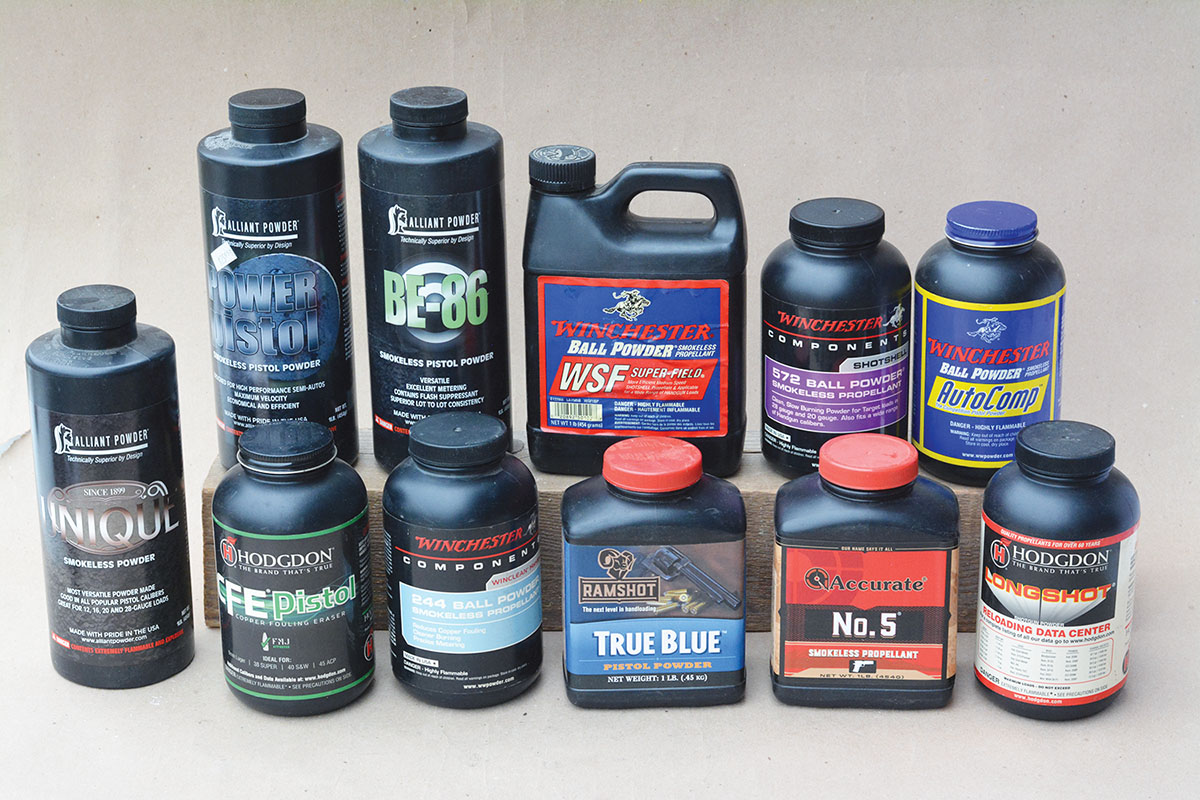
A: There is not really a powder that duplicates Unique in terms of data, velocities and pressure. However, there are many powders that have a similar burn rate and can be used to develop loads to duplicate the velocities that you were obtaining with Unique. In most instances, they are clean-burning, capable of producing excellent overall accuracy and performance for the cartridges and loads that you mention. The powder charge weights must be adjusted for each powder to stay within pressure guidelines and achieve the desired velocities. A few examples include Hodgdon CFE Pistol, Longshot, Ramshot True Blue, Accurate No. 5, Winchester Auto-Comp, W-572, W-244, WSF, Alliant BE-86 and Power Pistol (if you can find it) and others.
Thank you for contacting me, and keep reading Handloader for data on the above powders.