

Wildcat Cartridges
8mm JDJ
column By: Layne Simpson | June, 26
.jpg)
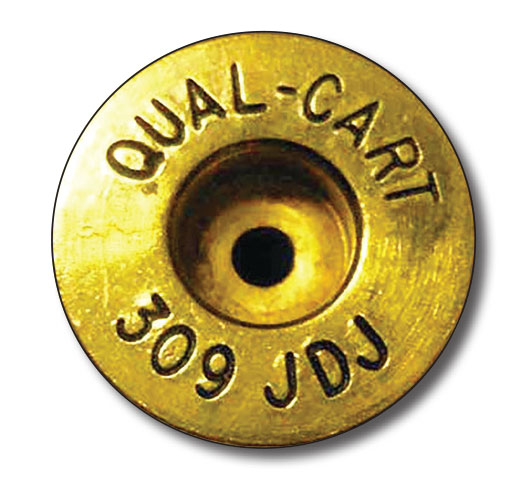
A little-known fact is that during the early 1960s, J.D. Jones worked with Lee Jurras in developing Super Vel ammunition, which was the first high-performance handgun ammunition to become available in the United States. In 1977, he founded SSK Industries and specialized in the development of an extensive line of powerful cartridges such as the 6.5 JDJ, 309 JDJ and 375 JDJ for the Thompson/Center single-shot pistol. An avid hunter of big game around the world, J.D. also created Handgun Hunters International and published a monthly newsletter called The Sixgunner.
During my very first conversation with J.D. Jones many years ago, I mentioned that I was looking for a rifle in 470 Nitro Express to use on a hunt for buffalo in Zambia. He did a great job of filling that slot in my battery with a custom rifle on the Ruger No. 1 action. I don’t recall where he found its beautiful express sights, but Holland & Holland could not have done better. Two good bulls fell to the spiteful barks of that rifle. It might be of interest to add that J.D. built several rifles on the No. 1 action in 577 Nitro Express, as well as the 600 JDJ, which is that case necked up for a bullet of .620-inch diameter weighing 900 grains.
Among the dozens of cartridges developed through the years by J.D. Jones, the 300 Whisper introduced in 1992 was his proudest achievement. Formed by necking up the 221 Remington Fireball case, it was intended for law enforcement and military use of suppressed AR-15/M16 rifles. Converting one was no more difficult than switching barrels. The 300 Whisper was commonly loaded with match-grade, high ballistic coefficient bullets weighing from 220 to 240 grains at a nominal subsonic velocity of 1,040 feet per second (fps). Jones registered his cartridge with C.I.P. (Permanent International Commission for the Proof of Small Arms) – the European equivalent of SAAMI (Sporting Arms and Ammunition Manufacturers’ Institute) but failed to have it approved by SAAMI as well. Then one dark and gloomy day, he learned that Advanced Armament Corporation (which changed the name of the 300 Whisper to 300 AAC Blackout) had joined forces with Remington and sponsored the cartridge with SAAMI. Jones also created the 338 Whisper, the 375 Whisper and the 458 Whisper. The 7.63 Mini-Whisper is on the 30 Mauser pistol case.
Looking forward to retirement, J.D. Jones sold SSK Industries to Lehigh Defense in 2019, and the name was changed to SSK Firearms. Bill Wilson, who owns Wilson Combat, purchased Lehigh Defense in 2022 and two years later sold the SSK Firearms operation to Geissele Automatics.
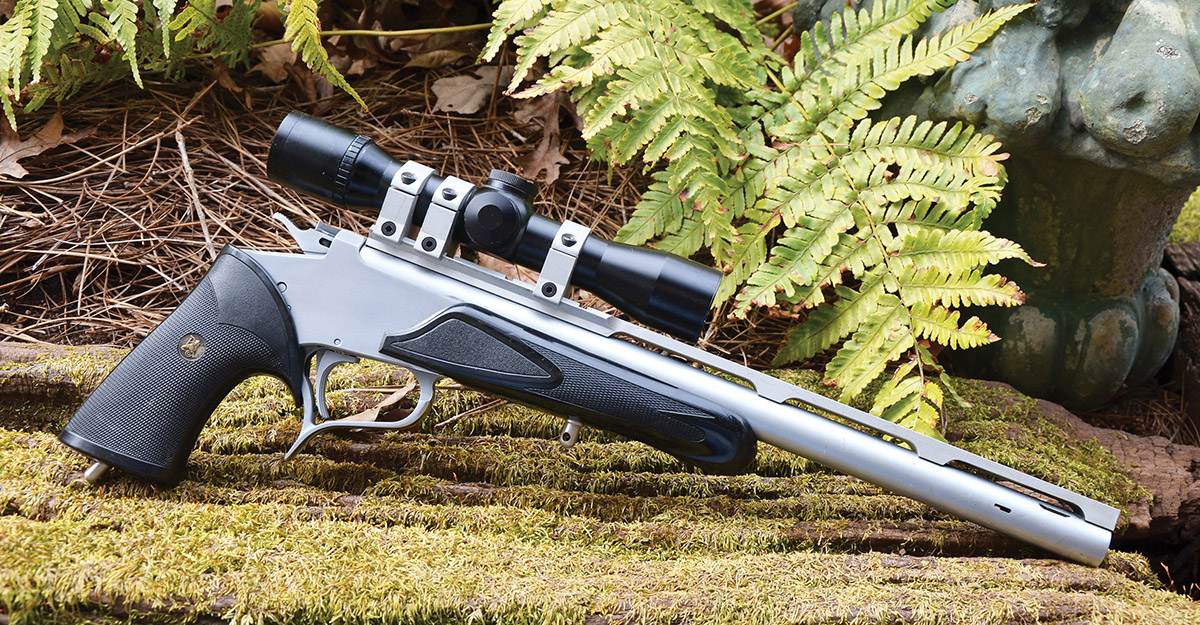
I have Contender barrels made by J.D. Jones for a number of cartridges ranging from the 257 JDJ on the improved 225 Winchester case to the standard 45-70 Government. I have spent far more time in the field with the 309 JDJ, but have hunted with others as well, and that includes the 8mm JDJ and the 358 JDJ. Except for the 1950s and 1960s military surplus invasions of inexpensive Mauser rifles in 8x57 mm Mauser, cartridges of that caliber have not become very popular among American hunters. Also-rans that immediately spring to mind are the 8mm Remington Magnum and the 325 Winchester Short Magnum. The same held true of the 8mm JDJ. The 358 JDJ was quite a bit more popular simply because American hunters prefer .358-inch bullets, not to mention the fact that Jones rechambered hundreds of customer-furnished Contender barrels made by Thompson/Center in 35 Remington. A long-time friend has hunted for many years with just such a barrel, and while it is not as accurate as my Shilen barrel in 358 JDJ, it has proven to be more than accurate enough to bring home lots of tasty venison.
With that said, the 8mm JDJ has proven to be quite effective on big game, and the serious handgun hunter who finds an SSK Industries barrel chambered for it in a gun shop or possibly on eBay is lucky indeed. A supply of 444 Marlin cases is available from Starline, and while the 8mm JDJ reloading die set is no longer offered by RCBS or Hornady, you might get lucky with a web search there as well. A custom die set made by Redding is another option.
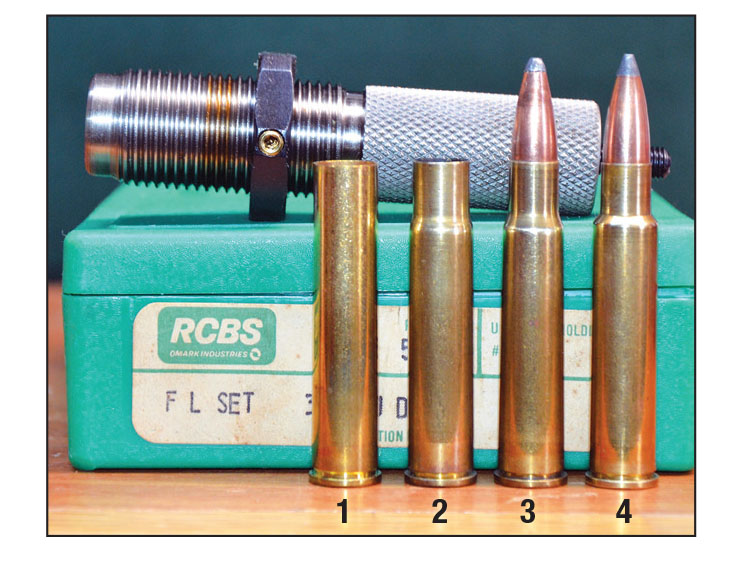
Cases can be formed in several ways. Beginning the show by pushing 444 Marlin brass through a full-length sizing die for that cartridge irons out minor dents, and trimming all cases to the exact same length is an equally good idea.
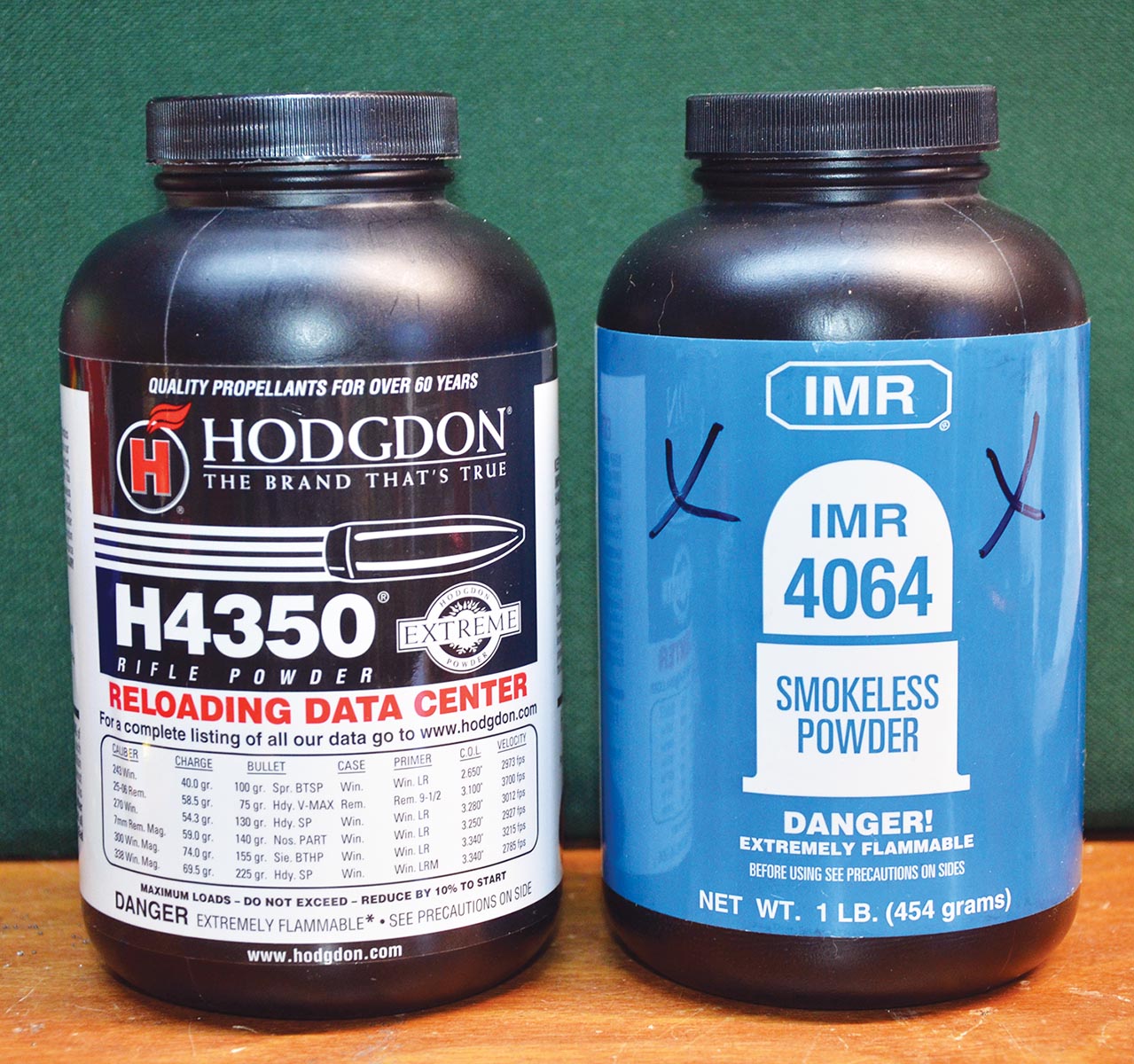
The cases are first necked down in my 375 JDJ full-length sizer, followed by a trip through the 8mm JDJ die. For fire-forming cases, 42.0 grains of IMR-4064 behind any 200-grain bullet works nicely. There is another way. Quality Cartridge makes 309 JDJ brass, and it is listed by Graf and Sons. An expander die from
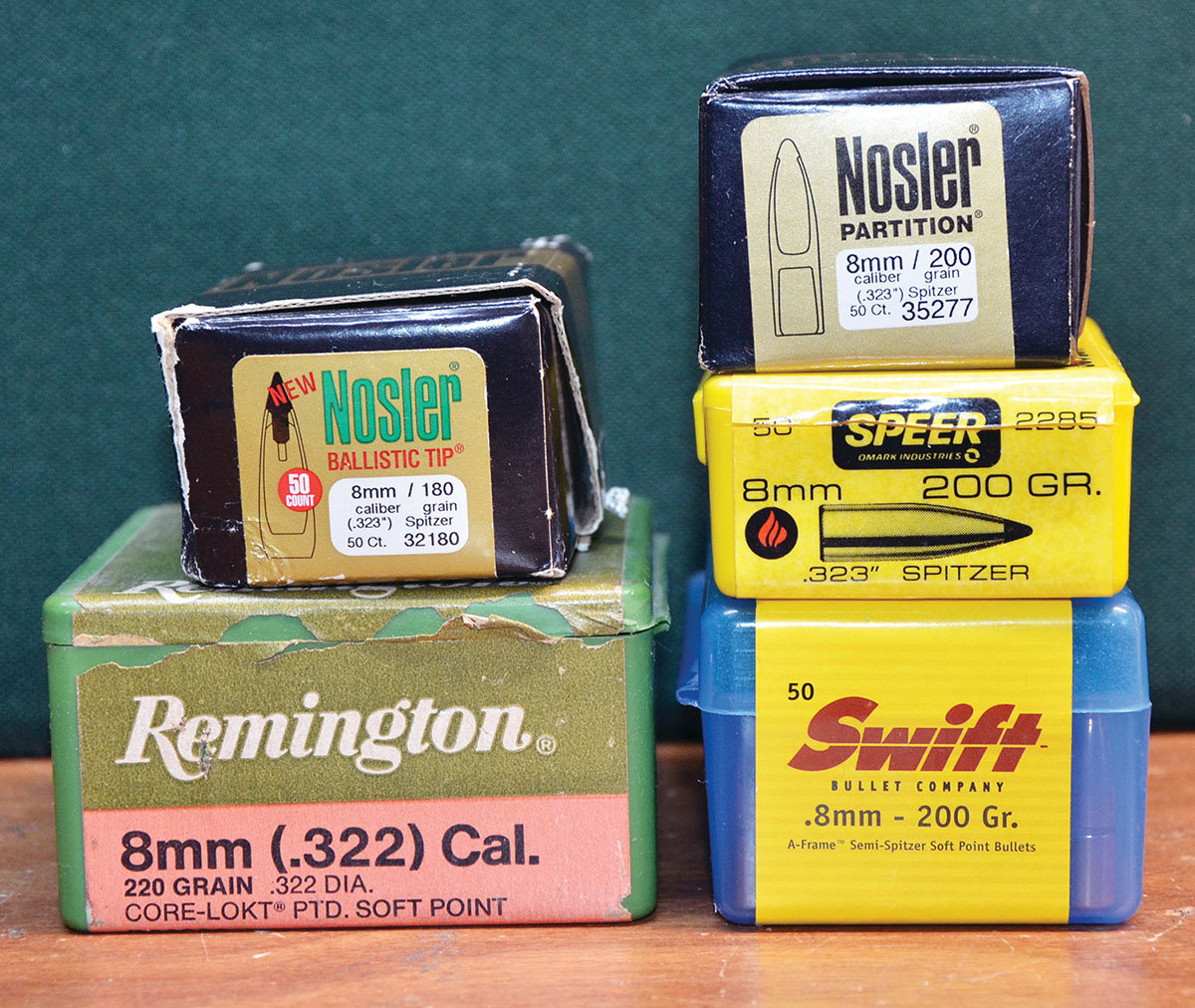
RCBS opens up necks for the 8mm bullet, or you can lightly bevel the mouth of the 309 case. Using a Q-Tip to apply a light coat of Redding Imperial Sizing Die Wax to the interior of the case neck, seat the Nosler 180-grain 8mm Ballistic Tip over the above charge of IMR-4064. Due to their boat-tail bases, they slip right in with zero case loss. The chamber throat of my barrel is long enough to allow seating all bullets with their bases no deeper in the case than its shoulder/neck juncture. Bullets still have a bit of a jump prior to rifling engagement.
Whitetail deer and feral pigs are the largest game I have taken with the 8mm JDJ, and for them I have mostly used the Nosler 180-grain Ballistic Tip. It has proven to be quite deadly. I have taken several black bears with the 309 JDJ, and the 8mm JDJ should be equally effective when loaded with the 200-grain Swift A-Frame or the Nosler Partition of the same weight.
.jpg)