It has been 18 years since the 6.5 Creedmoor was formally announced by Hornady Manufacturing. Simply stated, it was modern in every respect and filled a significant void resulting in it becoming hugely popular in the United States and many other countries. Previously, 6.5mm or .264-inch cartridges have not boasted of huge sales with U.S. shooters and hunters. Hornady’s little 6.5 played a significant role in popularizing that caliber with Americans, and as a result, many additional 6.5 cartridges have been introduced and well received. It has helped to renew interest in several older 6.5s.
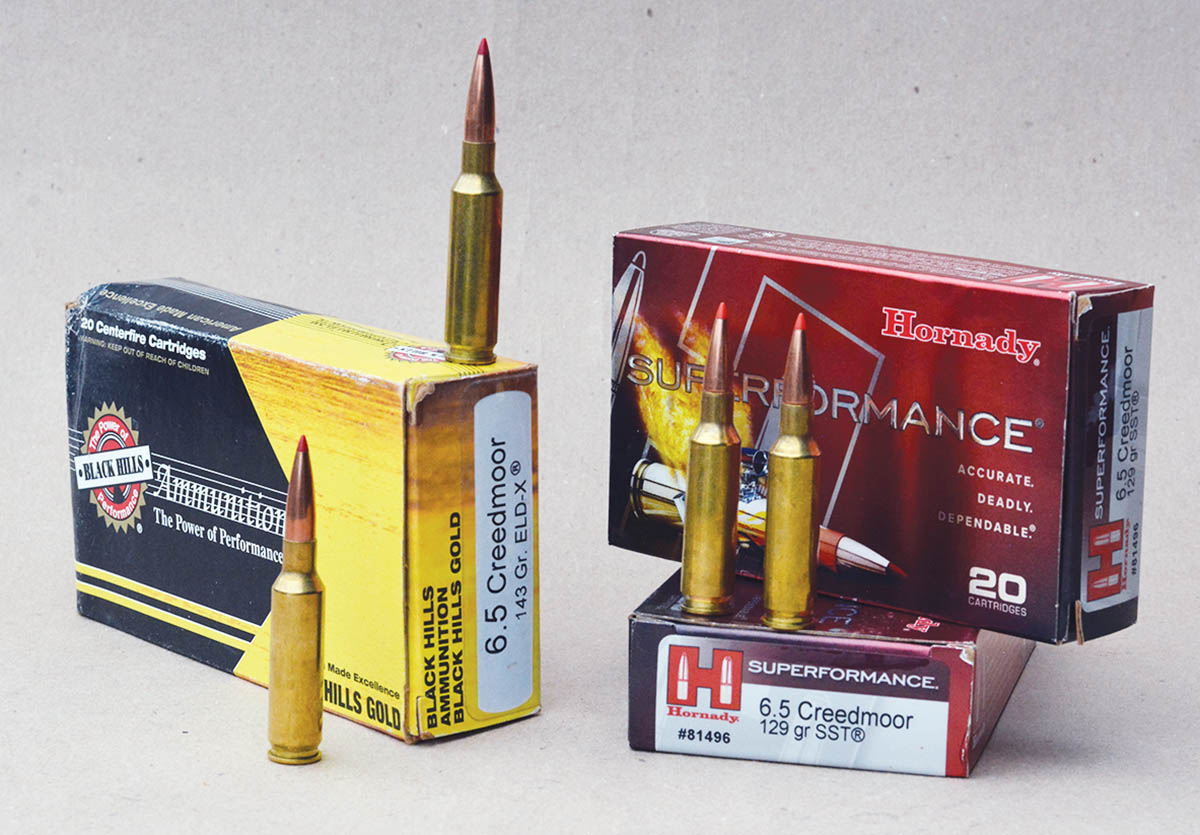
Most companies, such as Black Hills and Hornady, offer both match and hunting loads for the 6.5 Creedmoor.
The Creedmoor was designed primarily as an across-the-course long-range match cartridge by Hornady’s Senior
Ballistics Scientist, Dave Emary, and Dennis DeMille of Creedmoor Sports in 2007 and formally announced in 2008. It is based on the now nearly forgotten 30 T/C case, which is a very well-designed cartridge in its own right and is essentially an updated and modernized 308 Winchester that offered notably improved ballistics, accuracy, efficiency, etc. To create the Creedmoor, the shoulder of the T/C case was set back slightly and then necked to 6.5mm, along with other small changes. It is notable that the 6.5 Creedmoor was originally designed specifically for short action rifles and had a 2.800 inches overall cartridge length. That measurement has since been changed to 2.825 inches, which still allows it to function in bolt-action rifles with 308-length actions. The shoulder angle is 30 degrees, which serves to improve in-the-chamber powder burn efficiency, reduce throat erosion, lower extreme spreads and increase barrel life. 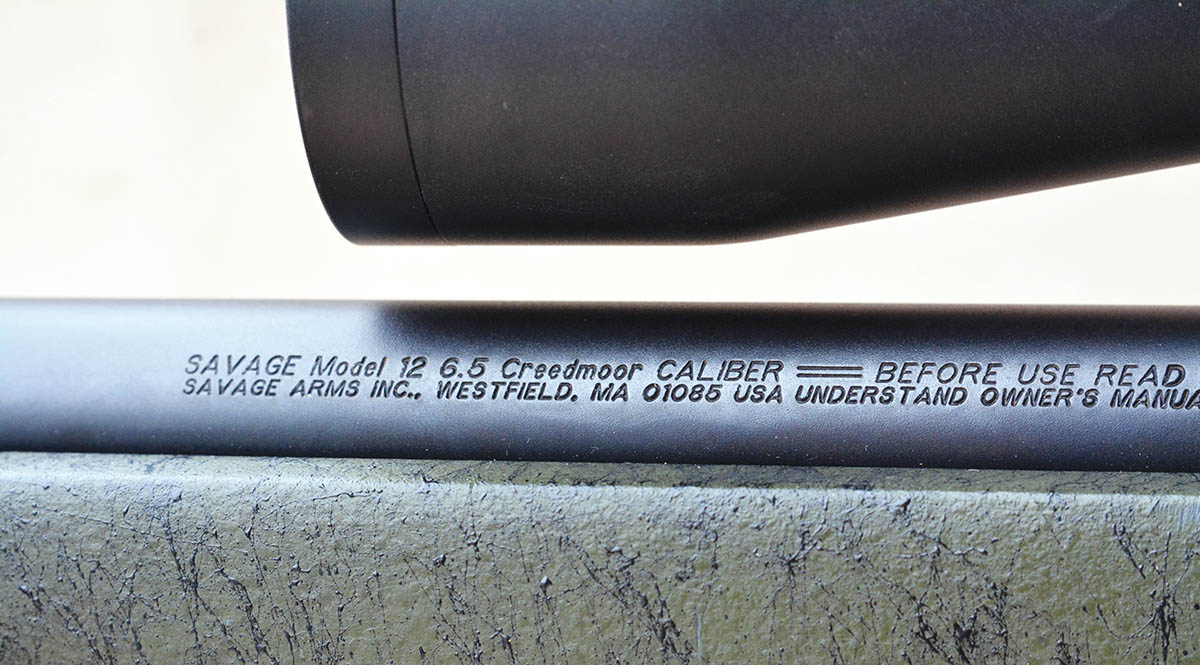
For most of the accuracy testing, Brian used a Savage Model 12.
To understand several of the most significant reasons why the Creedmoor has become so popular, we need to discuss the excellent 260 Remington, introduced in 1997 and based on a 308 Winchester case necked down to accept 6.5 bullets. While this cartridge became reasonably popular and is still appreciated by savvy riflemen due to its efficiency, modest recoil and long range ability, it was introduced just prior to current bullet design trends that feature heavy for caliber and ultra-high ballistic coefficients (BC) and used in conjunction with fast twist barrels. Remington (and Savage) initially used a 1:9 twist for the 260, which was perfect for period hunting bullets weighing 85 to 140 grains. Browning chose a 1:10 twist, while Ruger used the 1:8 twist. Remington eventually began offering that twist rate too, which is the same as the 6.5 Creedmoor and is best suited to the heavy for caliber high BC bullets.
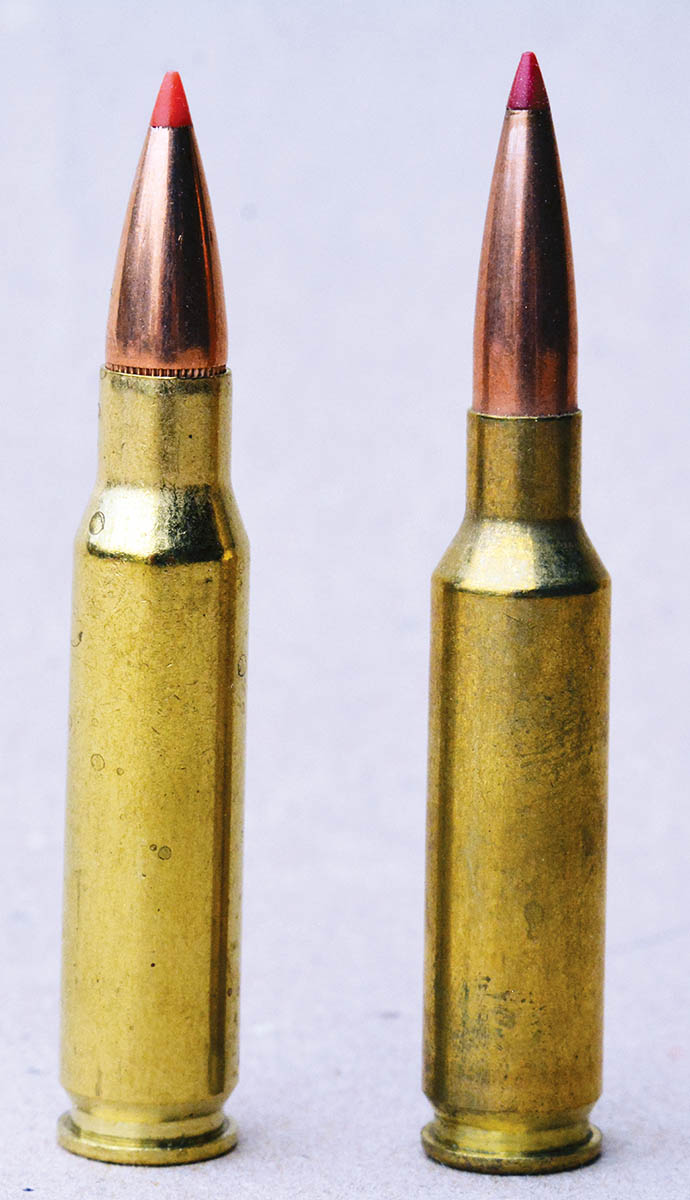
The 6.5 Creedmoor (right) was designed specifically to function in bolt action rifles with 308 Winchester (left) length actions.
This is a story in itself, but Remington unnecessarily introduced the 260 with a maximum average pressure of 60,000 pounds per square inch (psi) that left performance on the table, so to speak, while the Creedmoor was listed at 62,000 psi. Remington also retained the same 20-degree
shoulder angle used on the 308 Winchester. In spite of its lower chamber pressure and less efficient shoulder angle, due to its greater powder capacity (holding about 2.5 grains more water), the 260 offered a small ballistic advantage over the 6.5 Creedmoor. 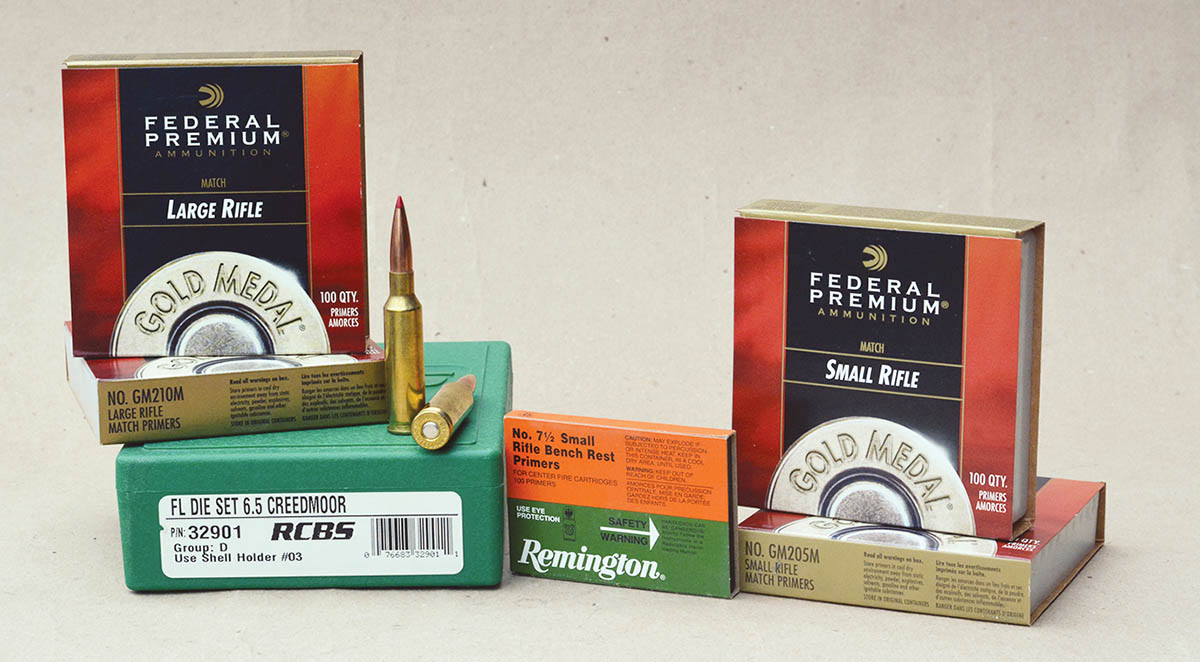
The 6.5 Creedmoor is offered with both large rifle and small rifle primer pockets. Cases with large rifle primer pockets were chosen to develop data.
In addition, featuring the 1:8 twist barrel from the beginning and the 30-degree shoulder angle that improved efficiency and lowered extreme spreads, the Creedmoor had a .115 inch shorter case length than the 260, while the two cartridges shared the same 2.800 inch overall length (but as indicated, the Creedmoor has now been increased to 2.825 inch). This feature resulted in bullets seating out further and allowed the Creedmoor to gain back some of its lost powder capacity due to its shorter case body. A more significant advantage was that target shooters could seat bullets out and tailor them to best match the throat length of each rifle to dial in a load for top accuracy. Interestingly, both cartridges have been tested by the U.S. military with positive reviews of each, although ultimately the Creedmoor was adopted by various branches of the military and government. Nonetheless, both cartridges still compete favorably in long-range matches. Frankly, if a shooter likes one of these two cartridges, they must like the other, although they may still prefer one over the other for various reasons.
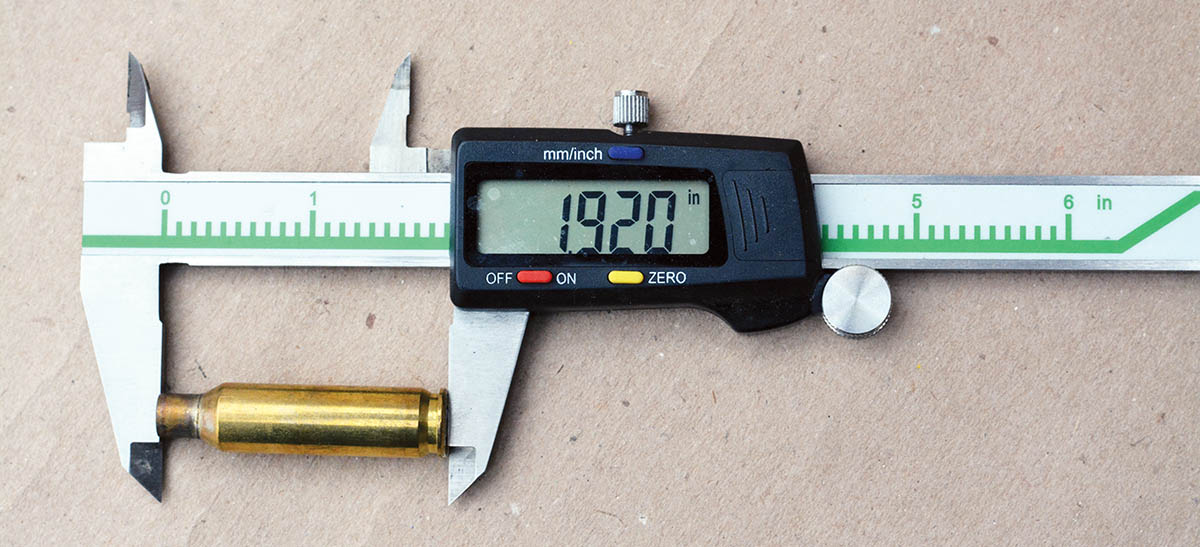
Maximum case length is 1.920 inches.
The popularity of the 6.5 Creedmoor was not instant. In fact, it only received a modest amount of press, and 3 or 4 years later, it was mostly unknown by the average shooter. I have been a proponent of the 6.5 cartridges and their virtues for several decades and never understood why Americans were slow to warm up to this completely modern 6.5mm cartridge. Admittedly, most of the foreign 6.5s never enjoyed significant popularity in the U.S., as they were viewed as odd, and U.S.-designed cartridges such as the 264 Winchester Magnum and 6.5 Remington Magnum only enjoyed limited popularity. When the 6.5 Creedmoor started to regularly win across the course matches and produced impressive groups at 1,000 yards, its fame began to soar. Shooters warmed up to the high BC bullets that retained outstanding down-range velocities that stayed supersonic at some very long distances in spite of moderate muzzle velocities. They also appreciated its modest recoil, low muzzle report, bench rest type accuracy and respectable barrel life.
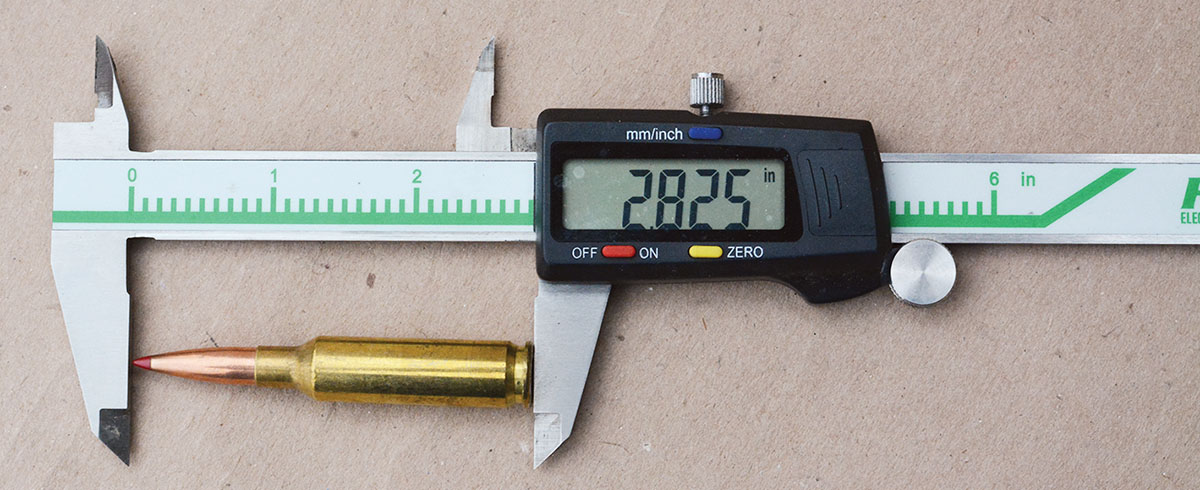
Maximum overall cartridge length for the 6.5 Creedmoor was originally 2.800 inches, but has now been changed to 2.825 inches.
Soon, it was so popular that it became difficult to find a 6.5 Creedmoor rifle for sale anywhere!
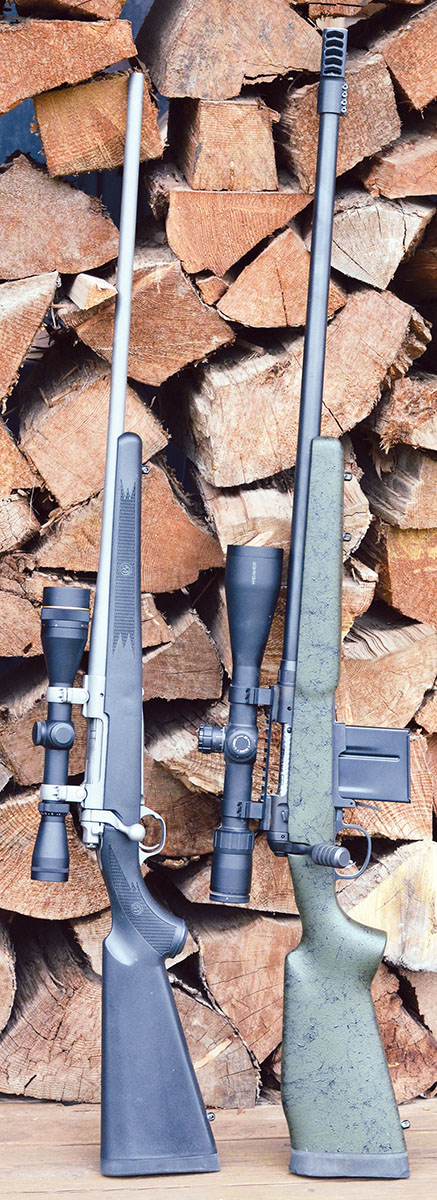
Brian used two test rifles, including a Ruger M77 Hawkeye All-Weather (left) and a Savage Model 12 (right).
We could say the rest is history, but Hornady further improved the Creedmoor with several very advanced ELD-X (expanding for hunting) and ELD-Match bullets, while Nosler offered various bullet weights in their AccuBond LR series. Almost all bullet manufacturers offer appropriately designed versions that have further enhanced the efficiency of the Creedmoor. There are even modern powders that have been engineered specifically with the 6.5 Creedmoor in mind; powders with a similar burn rate to 4350 (
IMR,
Accurate, and
Hodgdon) will generally produce the desired results.
We have seen many new rifle cartridges designed over the last 25 to 30 years, but many of those were just a flash in the pan, so to speak, when they were new, but soon failed for one reason or another and are semi-obsolete today. The Creedmoor has not
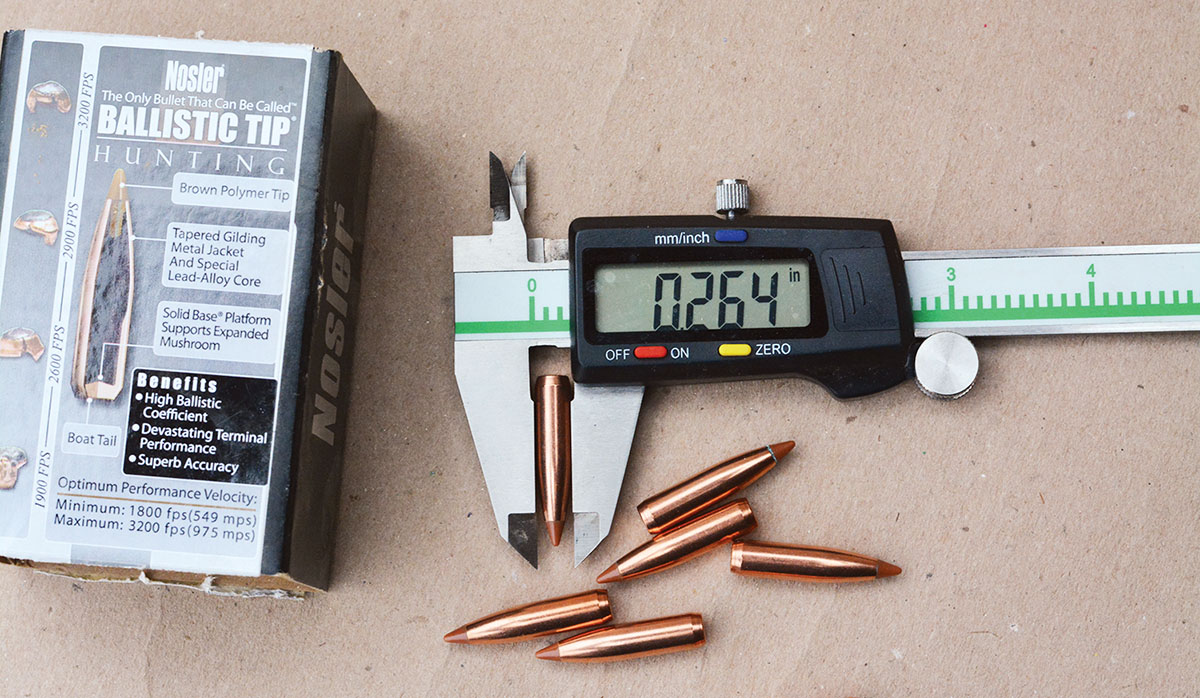
The 6.5 Creedmoor utilizes a 6.5mm or .264-inch bullet diameter.
only sustained its huge popularity, but it has also become the parent case for additional cartridges. With a huge selection of hunting bullets, it has become widely popular with both whitetail and mule deer hunters east and west and is often used on varmints (coyotes) and even larger species such as elk and moose (naturally with bullets designed for deep penetration).
Listed ballistics vary from one company to another. However, for reference from the company that designed this cartridge, Hornady lists the 95-grain V-Max at 3,300 feet per second (fps), 120-grain GMX at 3,050 fps, 120-grain ELD-Match at 2,910 fps, 129-grain SST at 2,950 fps, 140-grain ELD-Match at 2,710 fps, 143-grain ELD-X at 2,700 fps, and the 147-grain ELD-Match at 2,695 fps. I have tested select loads from today’s test rifles, and the above-listed velocities are pretty close to actual velocities in a production rifle with a 26-inch barrel. Incidentally, Hornady initially printed the exact load, including powder type and charge weight, on the boxes of factory ammunition so that handloaders could duplicate that performance (accuracy and velocity); for unknown reasons, it appears that that practice has been discontinued.
To develop the accompanying “Pet Loads” data, both Hornady and Nosler Custom cases were used. There was no practical difference in weight or capacity. Loads containing 85-grain through 129-grain weights were loaded in Hornady cases, while loads containing 140- through 160-grain bullets were assembled using Nosler Custom cases. Naturally, all cases were full-length sized, checked for length, trimmed, deburred and chamfered inside to aid with bullet seating. Flash holes were re-cut and de-burred. If loads are to be fired in more than one rifle, or used in the field for hunting, full-length sizing is suggested. Neck sizing remains popular with target shooters who are using rifles on the range and firing handloaded ammunition in just one rifle.
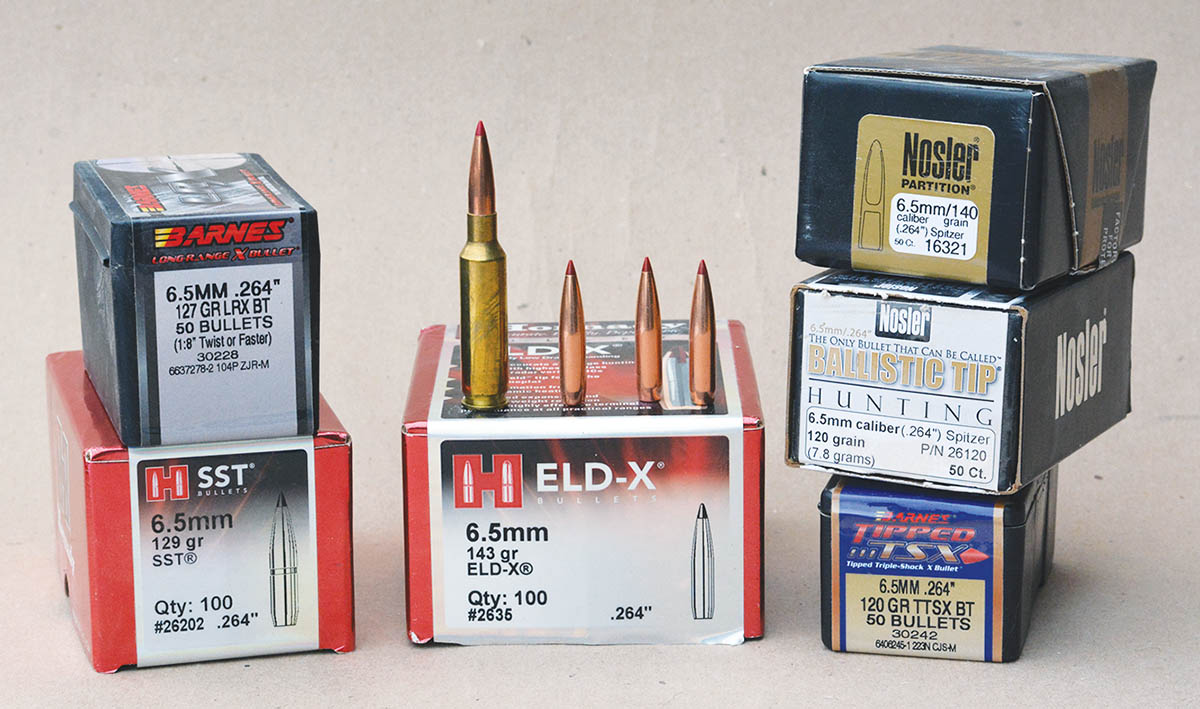
While the 6.5 Creedmoor was designed primarily for long-range target work, it has become popular with hunters and enjoys a huge bullet selection.
The accompanying data was fired in a
Ruger M77 Hawkeye All-Weather stainless with a 26-inch barrel; however, most of the accuracy testing was fired from a rather heavy
Savage Model 12 with a 26-inch barrel that has an outside diameter of .835 inch at the muzzle. This rifle has repeatedly given very good accuracy with a wide range of loads. Both feature the 1:8 twist.
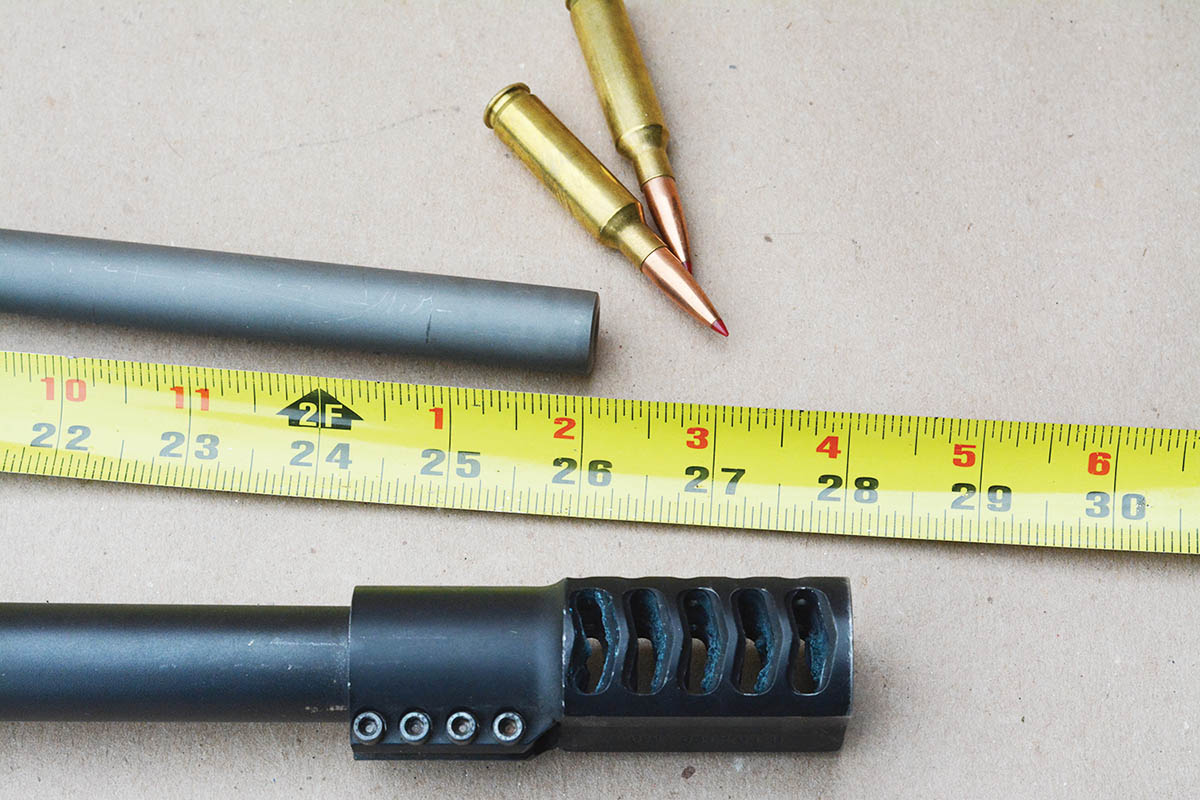
Both rifles feature 26-inch barrels.
Like any modern rifle cartridge, the more attention given to even small details will generally yield better handloads, accuracy and overall performance and reliability. After proper case preparation, selecting match-grade primers will serve to further reduce extreme spreads and shot-to-shot consistency. For developing the accompanying “Pet Loads” data, all cases were primed using the Federal Gold Medal GM210 Match Large rifle primers and seated with the anvil positively touching the bottom of the primer pocket and measured .003 to .005 inch below flush.
It should be noted that Starline Brass offers standard 6.5 Creedmoor cases with large rifle primer pockets. They also offer cases with a small rifle primer pocket (known as SR6.5CM) that retains the standard .080-inch flash hole size for more reliable ignition. (Note: Some other manufacturers that offer Creedmoor cases with small rifle primer pockets use smaller flash holes that can compromise ignition with some powder and primer combinations.) The demand for this case seems to stem primarily from fair-weather target shooters who report slightly lower extreme spreads, which is an advantage for ultra-long-range targets. My handloading data development with small primers is not complete and, therefore, is not included here today. It should be noted that in colder temperatures, some double-base powders may not ignite properly (resulting in hang fires). Especially when used in conjunction with the smaller flash holes, lower energy primers, and double-base powders. Therefore, if small primer Creedmoor loads are used in cooler temperatures, it is suggested to use cases with the .080-inch flash hole, select primers with higher energy, such as the Federal 205 and Remington 71⁄2, and choose a single base powder as they tend to ignite more reliably in cooler temperatures than double base propellants.
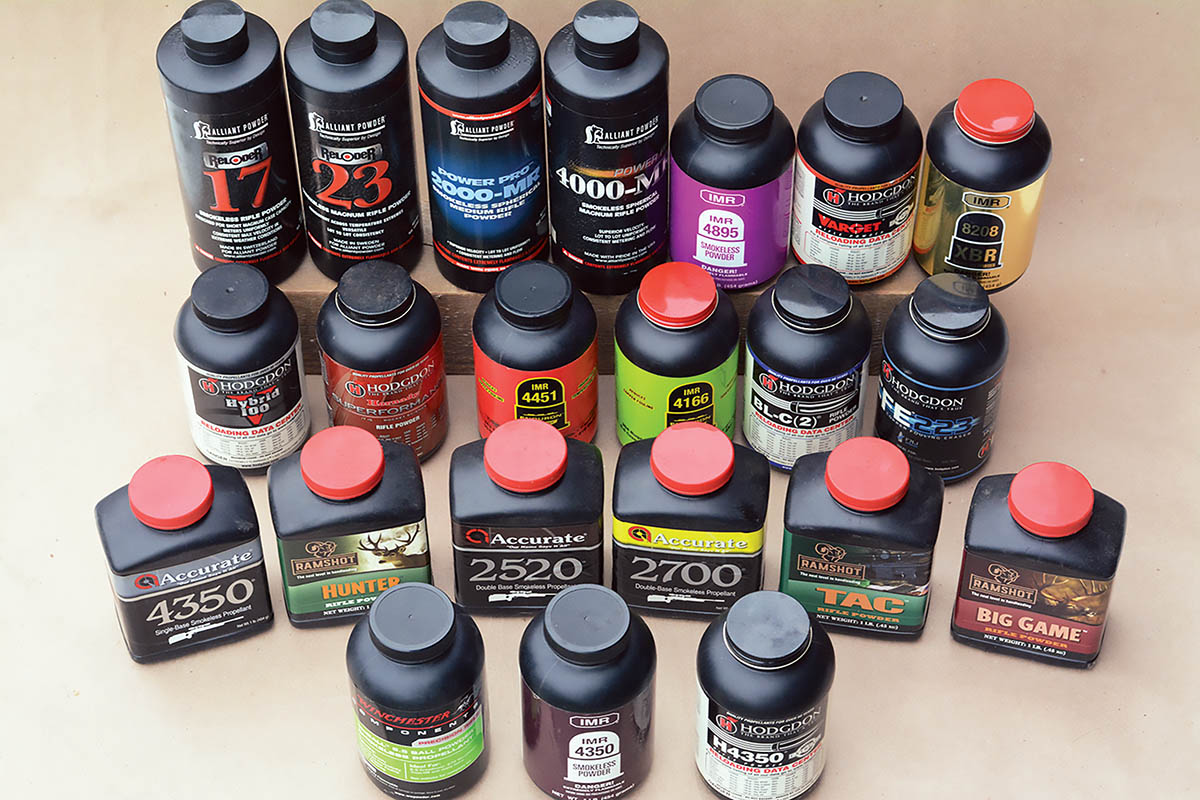
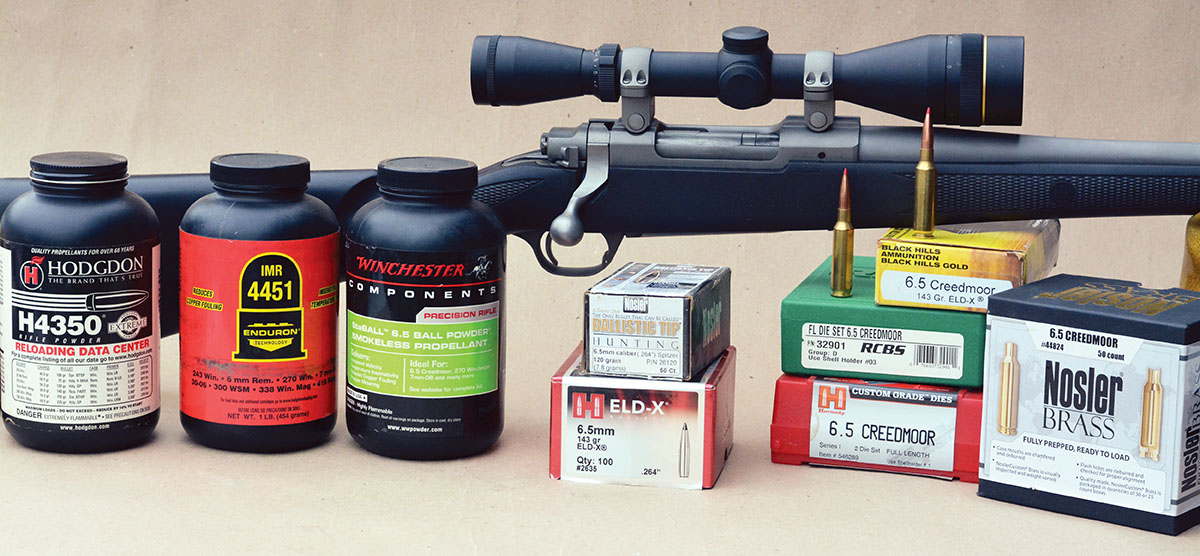
Brian used a variety of powders to develop 6.5 Creedmoor handloading data.
As indicated, suitable powders for handloading the 6.5 Creedmoor is extensive and there are many very good choices. For light weight bullets (85 to 100 grains) a few standout choices include
Alliant Power Pro 2000-MR, Reloder 17, Ramshot TAC,
Winchester W-760, StaBALL 6.5, StaBALL Match, Hodgdon Varget and IMR-4895. For 120- through 147-grain weight bullets Hodgdon Superformance, H-4350, Varget, Hybrid 100V, Winchester StaBALL 6.5, W-760, IMR-4451, IMR-4350, Reloder 17, Reloder 19, Reloder 23, Power Pro 4000-MR, Accurate 2700, A-4350, Ramshot Hunter and Big Game each provided good general results.
High volume shooters might consider using spherical (aka Ball) powders due to their outstanding metering qualities that serve to speed up the handloading operation, such as the outstanding Winchester StaBALL 6.5. Generally speaking, spherical powders have a notably lower retail cost when compared to extruded powders. Their overall performance has been continually improved, and they can deliver some really good accuracy and top velocities. Generally speaking, suggested start loads should not be reduced to keep extreme spreads in check and prevent possible hang-fires.
On the other hand, the consistent performance (accuracy and velocity) delivered by extruded powders such as H-4350, Varget, IMR-4350, Reloder 17, Reloder 23 and others cannot be ignored. With several worthy automatic powder dispensers offered by RCBS, Lyman, Hornady and others, each charge can be quickly weighed before charging the case, which helps to speed up the loading operation.
Handloaders should be aware that maximum loads should be approached with some caution. In short, the Creedmoor’s relatively modest powder capacity combined with heavy-for-caliber bullets can cause pressures to increase rapidly as loads approach maximum.
Although the Creedmoor was designed primarily as a match cartridge, the list of great hunting bullets is much longer and more extensive than the list of match bullets. Clearly, it has gained widespread acceptance with hunters. This is not a hunting article, so suffice it to state that choosing a bullet with the proper performance for the game being hunted will be crucial for success. In essence, the size, bone structure and weight difference between a small southern whitetail deer and a northern moose can be as much as 1,500 pounds or more. To get the desired results, choosing the correct bullet is paramount. For example, I used the ballistically similar 6.5x55mm Swede cartridge to take two moose in Sweden each with a single well-placed shot each, but used a bullet designed for deep penetration, which the Swede’s have been doing for many, many years with great success. For deer-sized game, there are many excellent bullet choices that offer rapid expansion and work reliably with the ever-popular double lung shot.
The 6.5 Creedmoor is a pretty remarkable cartridge that has sustained widespread popularity for approaching two decades, and rightfully so. It is a true target cartridge that offers outstanding accuracy, long barrel life and doubles for hunting big game. It is one of the easiest of all rifle cartridges to develop top-tier handloads.


.jpg)
.jpg)
.jpg)