

28 York
A Bigger Grendel
feature By: Patrick Meitin | June, 26
Creating cartridges that better 5.56 NATO/223 Remington performance from the AR-15 platform is a fashionable pastime among firearms enthusiasts. We see this in popular or newer AR-15 cartridges such as the 224 Valkyrie, 22 and 6mm ARCs, 6.8 Remington SPC (Special Purpose Cartridge) and 6.5 Grendel. The fantastic ARC (Advanced Rifle Cartridge) rounds offer exceptional long-range ballistics, which can also be said of the 224 Valkyrie. That said, I find the SPC and Grendel best for the hog hunting that inspires most of my AR use.
The original 6.8 SPC 115-grain load leaves the muzzle at 2,625 feet per second (fps) and produces 1,759 foot pounds (ft-lbs) of kinetic energy. With these numbers, the 6.8 SPC easily outperforms the 7.62x39mm Soviet cartridge and the 6.5 Grendel at ranges inside 250 yards. The 6.5 Grendel pushes 90-grain bullets to 2,900 fps, and 129-grain projectiles to 2,500 fps. The high ballistic coefficients of 6.5mm bullets give the Grendel an advantage over the 6.8 SPC when ranges exceed 250 yards, but the 6.8 SPC hits harder inside that mark.
Wayne York, owner of Oregunsmithing in Pendleton, Oregon, has now added the 28 York to the growing list of AR-15-compatible cartridges. The 28 York is based on the 6.5 Grendel case, creating what might also be labeled the 7mm Grendel. York is no stranger to creating successful wildcat cartridges. He used the basic 6.8 SPC case to create his 22, 24 and 25 York cartridges, applying the “improved” treatment by pushing the
shoulder forward and sharpening it to create highly efficient internal dynamics. York essentially abandoned the 22 York after Nosler later released the 22 Nosler, as the rounds were largely identical. His 24 (.243-caliber/6mm) and 25 York (.257-caliber) cartridges, though, remain highly popular chamberings in his tack-driving custom bolt rifles.
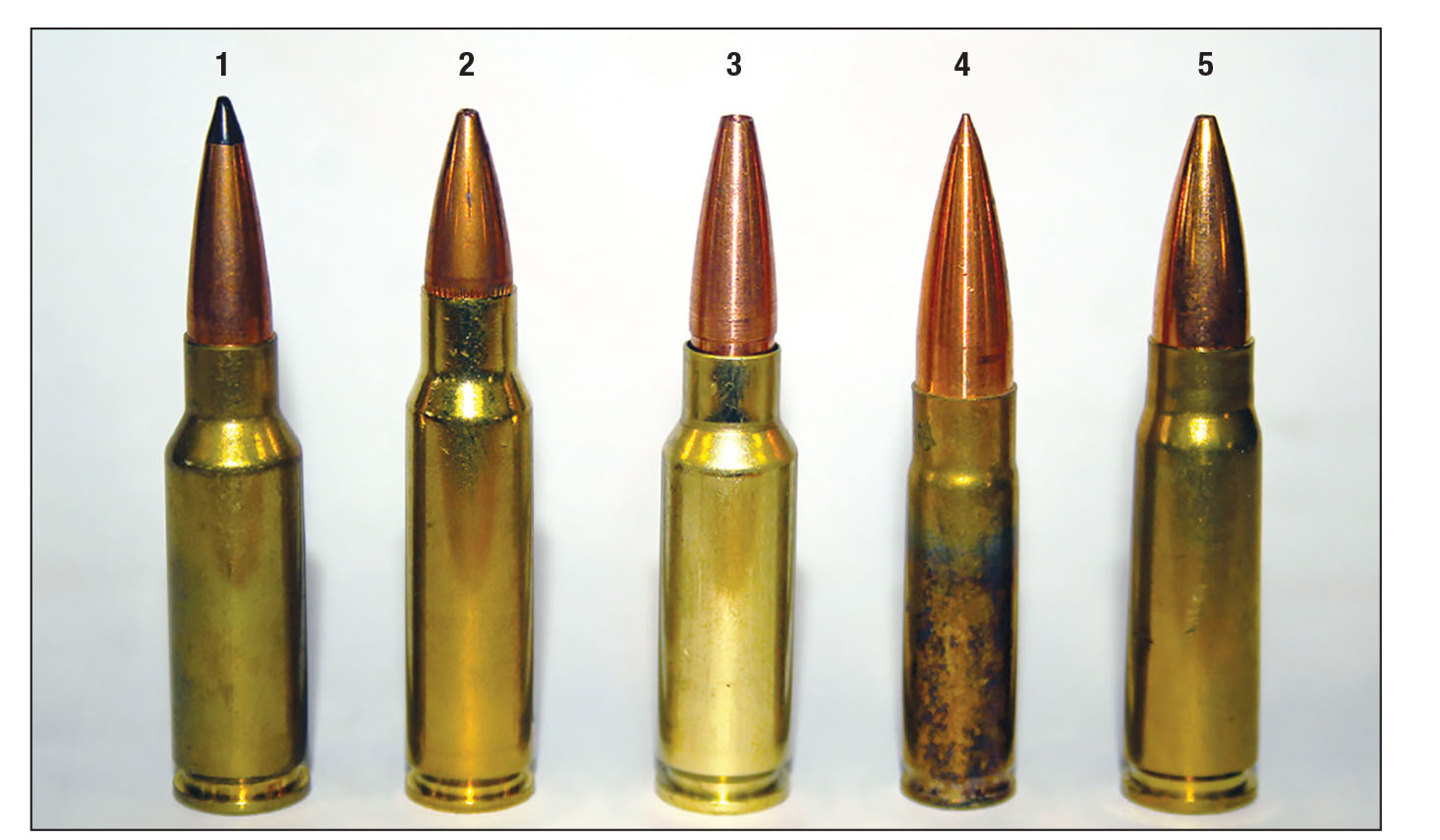
York chose the efficient 6.5 Grendel case as the basis for the 28 York, necking it up to .284-cal./7mm with no other changes. There really was nowhere to go with the Grendel case, as it was already fully optimized to wring maximum velocity and energy from an AR-15-compatible case. The outward advantage of the 28 York is its ability to run heavier bullets more efficiently than the 6.5 Grendel, resulting in a harder-hitting, deeper-penetrating cartridge for deer and wild hogs taken at moderate ranges. Whereas the 6.5 Grendel hits a point of diminishing returns at the 129- to 130-grain mark, where bullets begin to unduly intrude into powder space, the 28 York allows loading bullets up to 150 grains for supersonic loads, and up to, perhaps, 175 grains for subsonic loads. I say “perhaps,” as it was still left to be seen how the subsonic approach would sift out when testing began.
This is a completely new round lacking proven load data. This left me extrapolating from the available data. In this case, I chose abundant 6.5 Grendel recipes. After shooting commenced, it would occur to me that 7.62x39mm Soviet data should have been considered as well. I started with the assumption that the larger neck opening would result in lower working pressures for the same-weight bullets, though I hate to assume anything when handloading new cartridges. This resulted in a conservative approach to maximum loads.
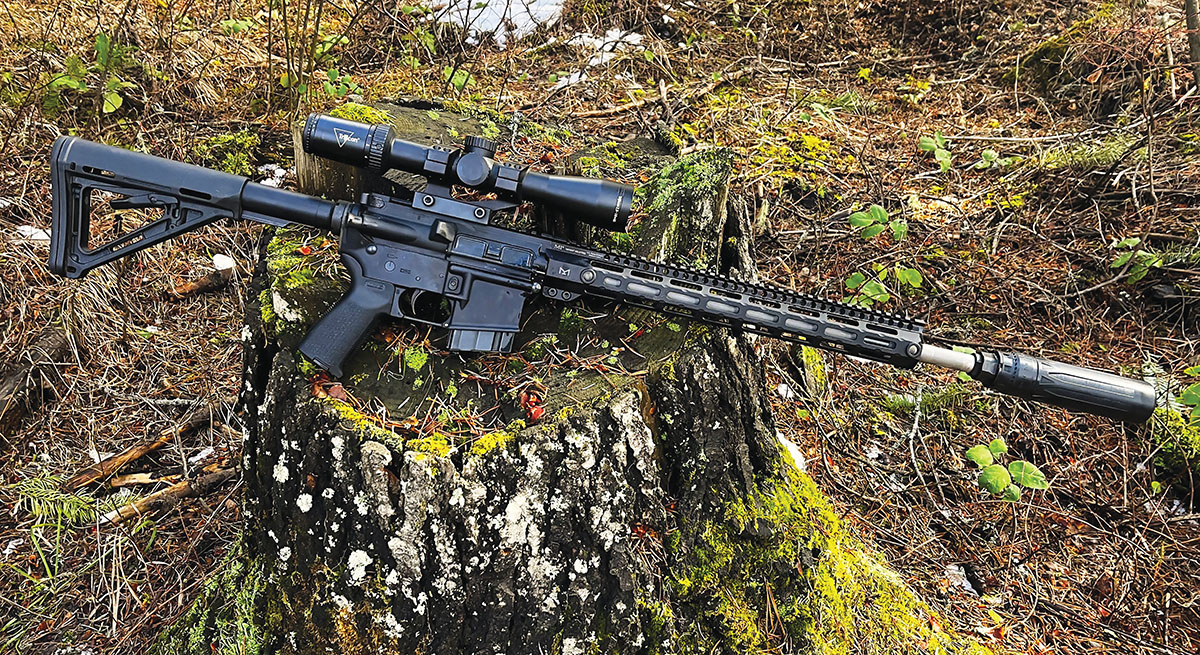
York built the AR-15 test rifle using quality parts. He started with a Midwest Industries upper with standard AR controls and a skeletonized handguard with nearly unlimited M-LOK slots, a full-length Picatinny rail and five QD sling-swivel attachment points. This was pinned into an ESG Gunworks LLC ESG-15 multi-caliber lower. The upper includes a standard dust cover, forward-assist plunger and case deflector. The pistol grip and buttstock are Magpul Industries standard-issue parts, including an MOE (Magpul Original Equipment) grip and five-position length-of-pull adjustable MOE buttstock. The trigger was a passible Mil-spec number.
Oregunsmithing is renowned for its precision barrel work, so York created the 18-inch stainless-steel tube from a takeoff barrel he had lying around. It is what I would term a heavy profile in relation to an AR-15 at least – and is threaded 5⁄8"-24 to accept the Dead Air Nomad Ti XC suppressor I typically utilize during rifle testing. The barrel includes a 1:8 twist rate. The gas block is non-adjustable, meaning it failed to cycle low-energy loads. I added one of my 10-round 22 ARC mags to keep things tidy off the MTM Case-Gard Shooting Rest.
Using a TRUGLO cantilever mount, a trim Trijicon Huron 2.5-10x40mm scope was added – an optic I’ve found well suited to AR-15 hunting rifles. This is a straightforward, capped-turret riflescope with excellent glass giving remarkable low-light transmission. I once used this scope to take a trophy Texas white-tailed buck at a laser-measured 268 yards with a 6mm ARC, and have killed dozens of hogs with it mounted on 6mm ARC and 6.8 SPC AR-15 rifles.
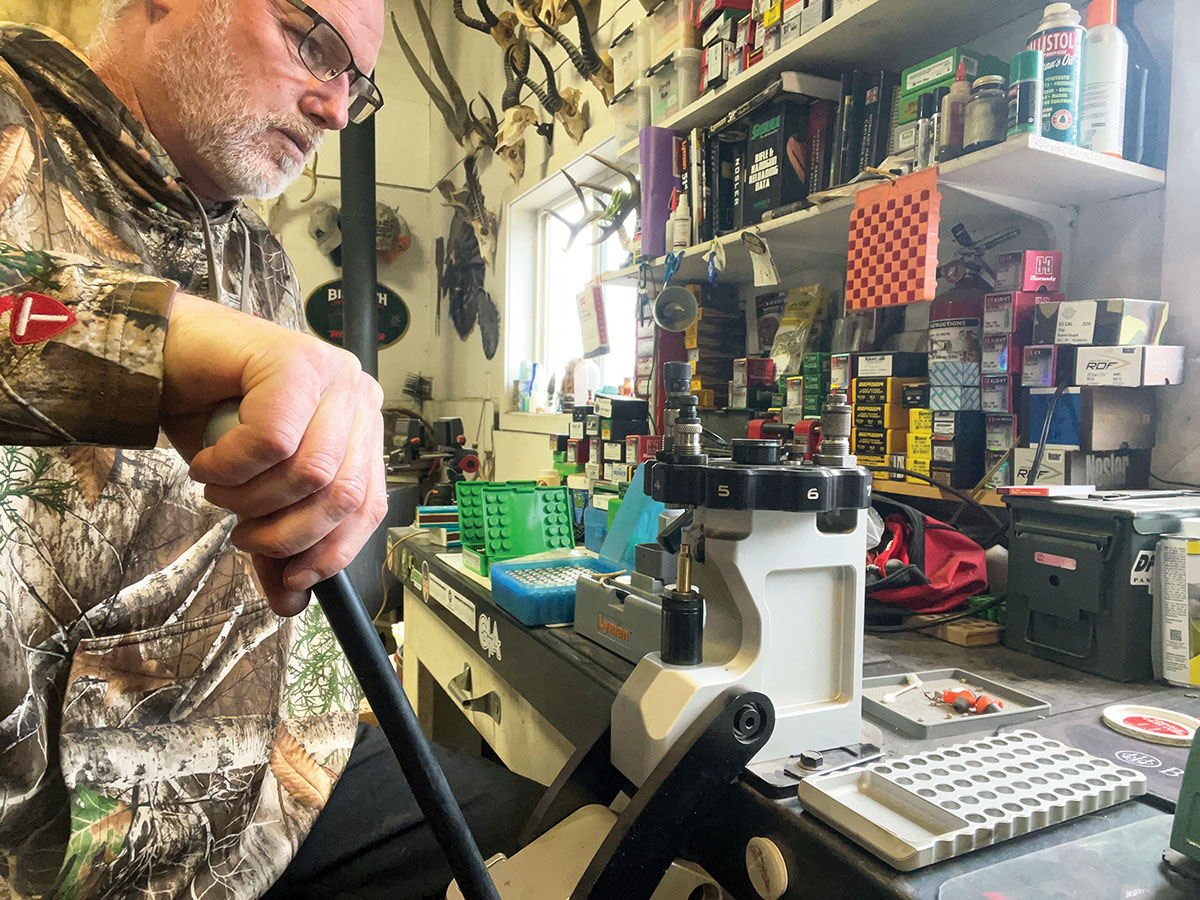
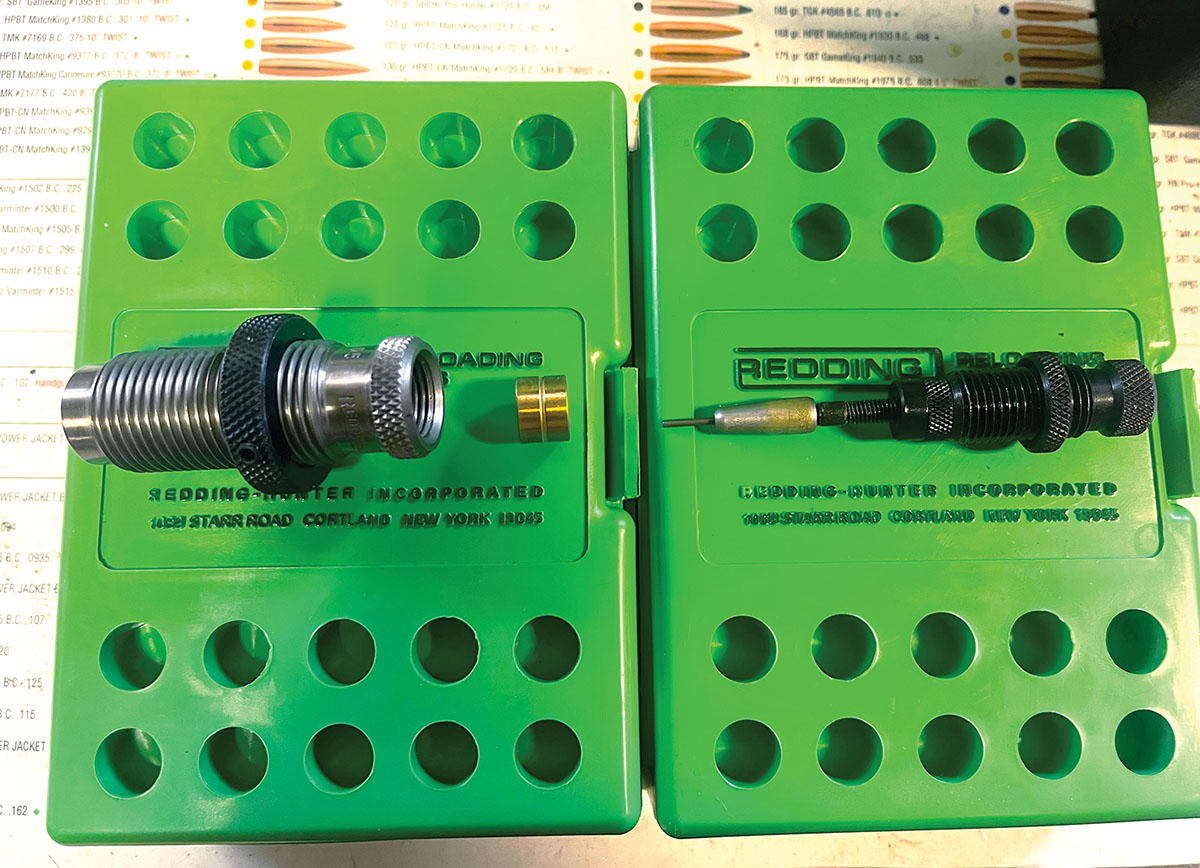
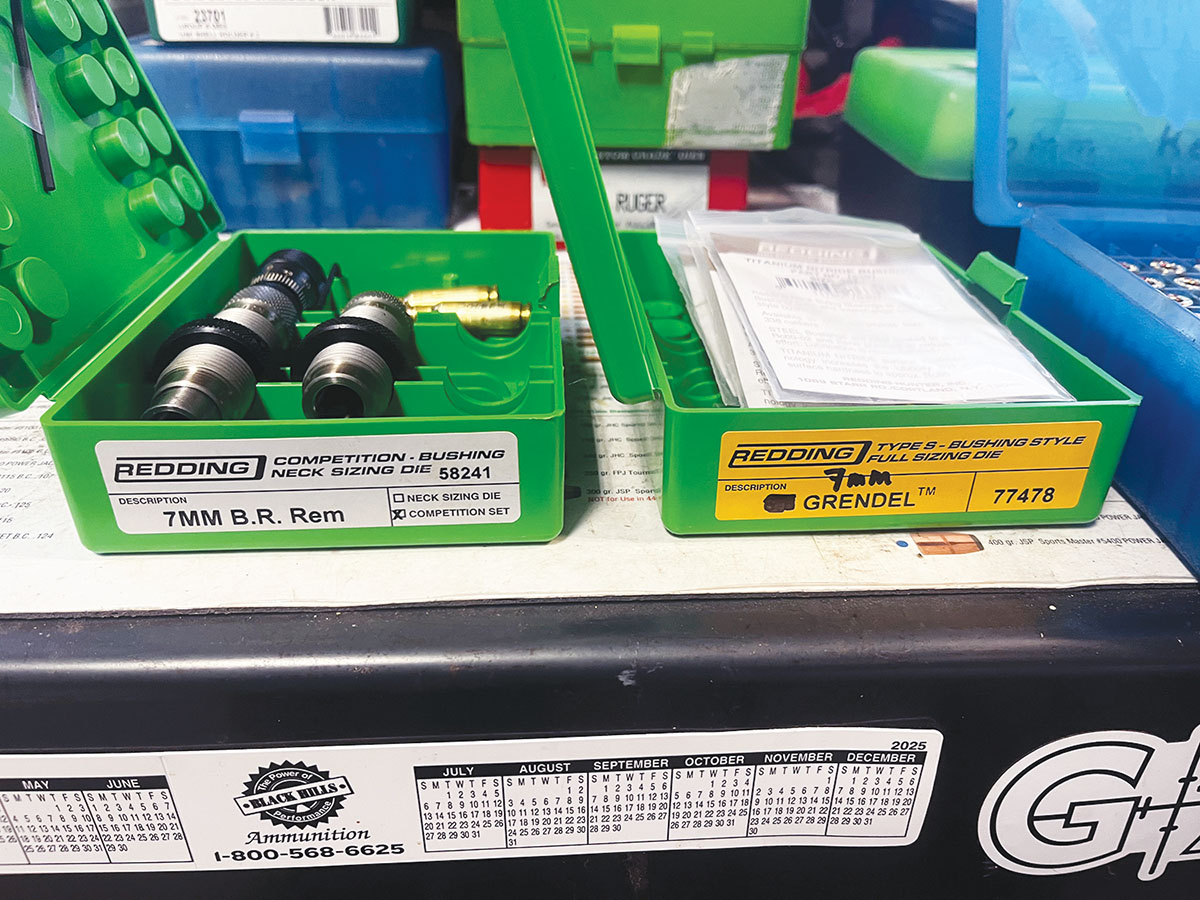
Creating 28 York cases is pretty simple, though it does require scrounging an assortment of die parts. For this, I consulted Robin Sharpless, the man with the answers at Redding Reloading Dies. We ultimately settled on a 6.5 Grendel Type S
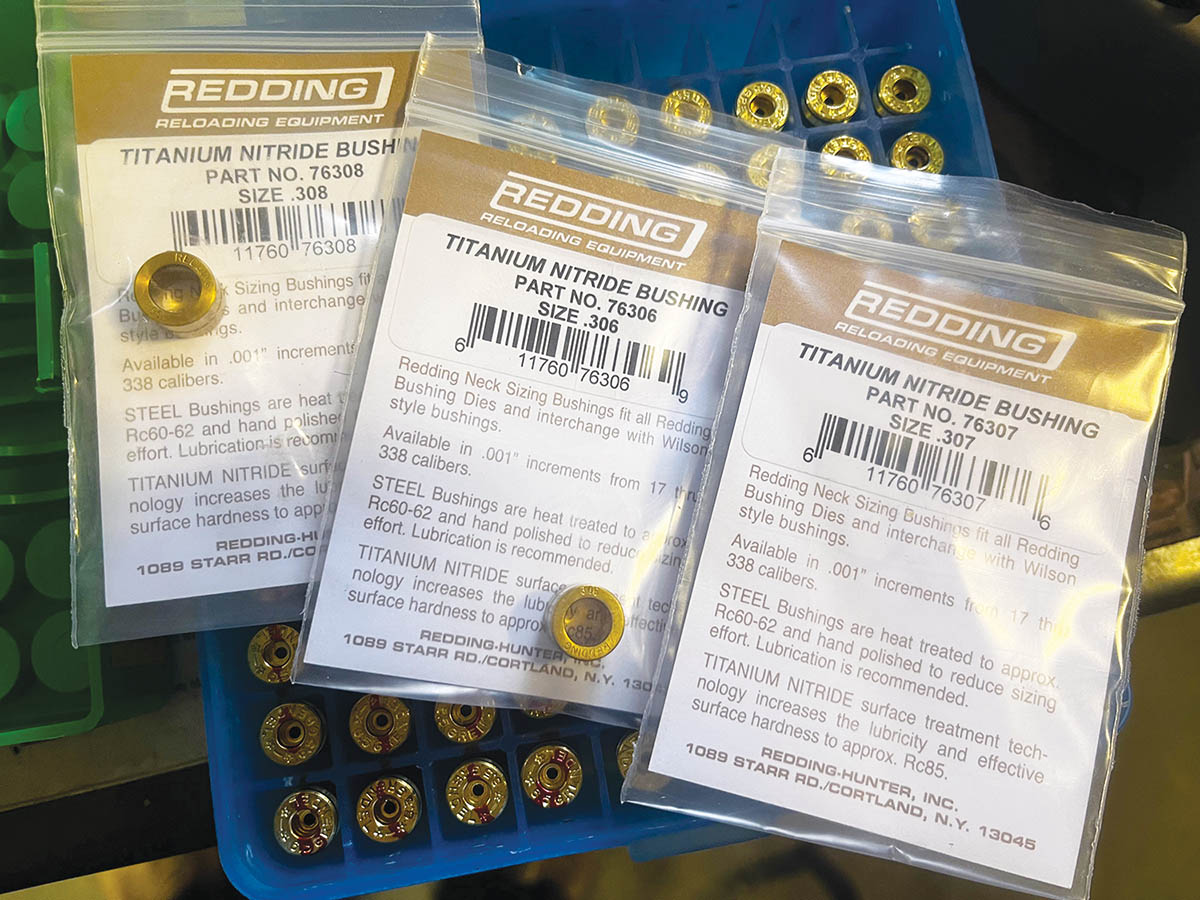
Bushing-Style Full-Sizing Die to create cases. Robin included Titanium Nitride Bushings in .306, .307 and .308 options, and a tapered expander to replace the standard expander ball. For seating, we chose a 7mm B.R. Remington Competition die set. I ordered a couple hundred high-quality Starline 6.5 Grendel brass to get started.
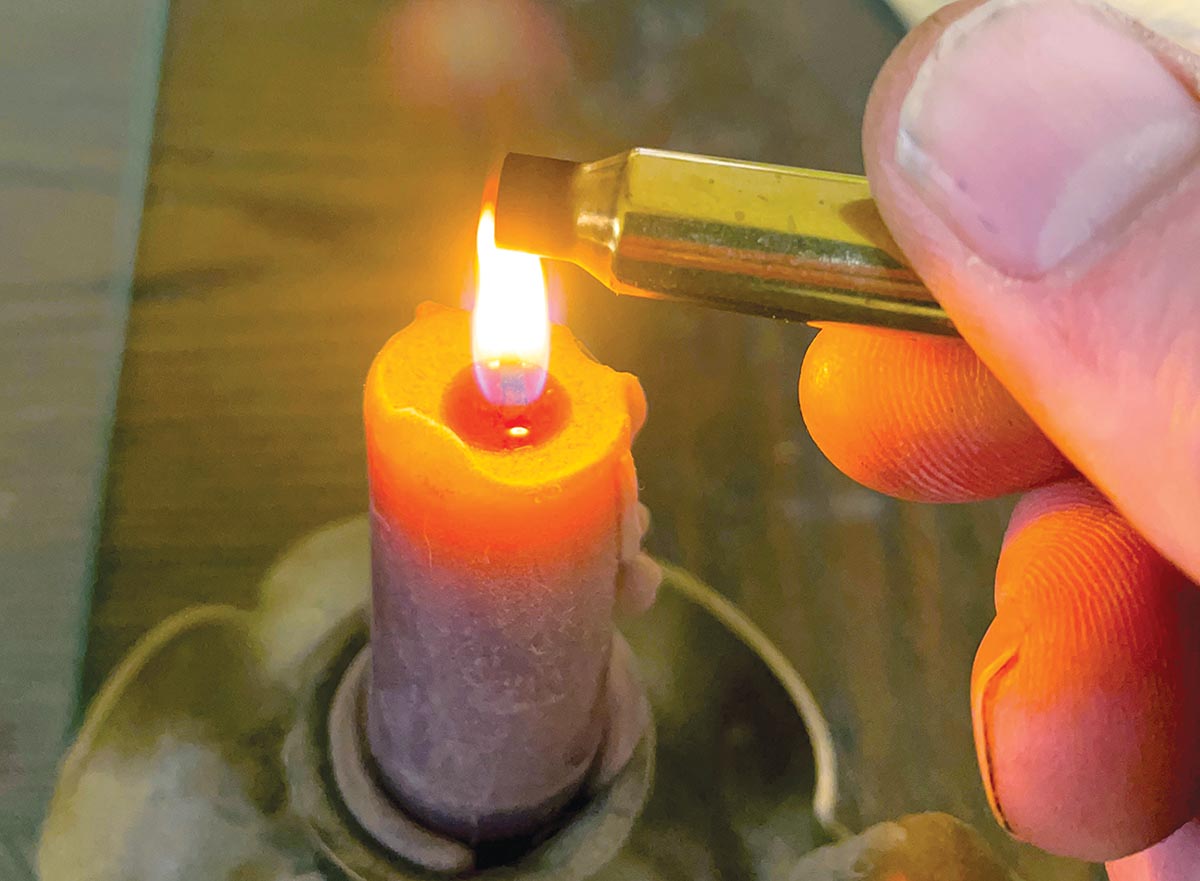
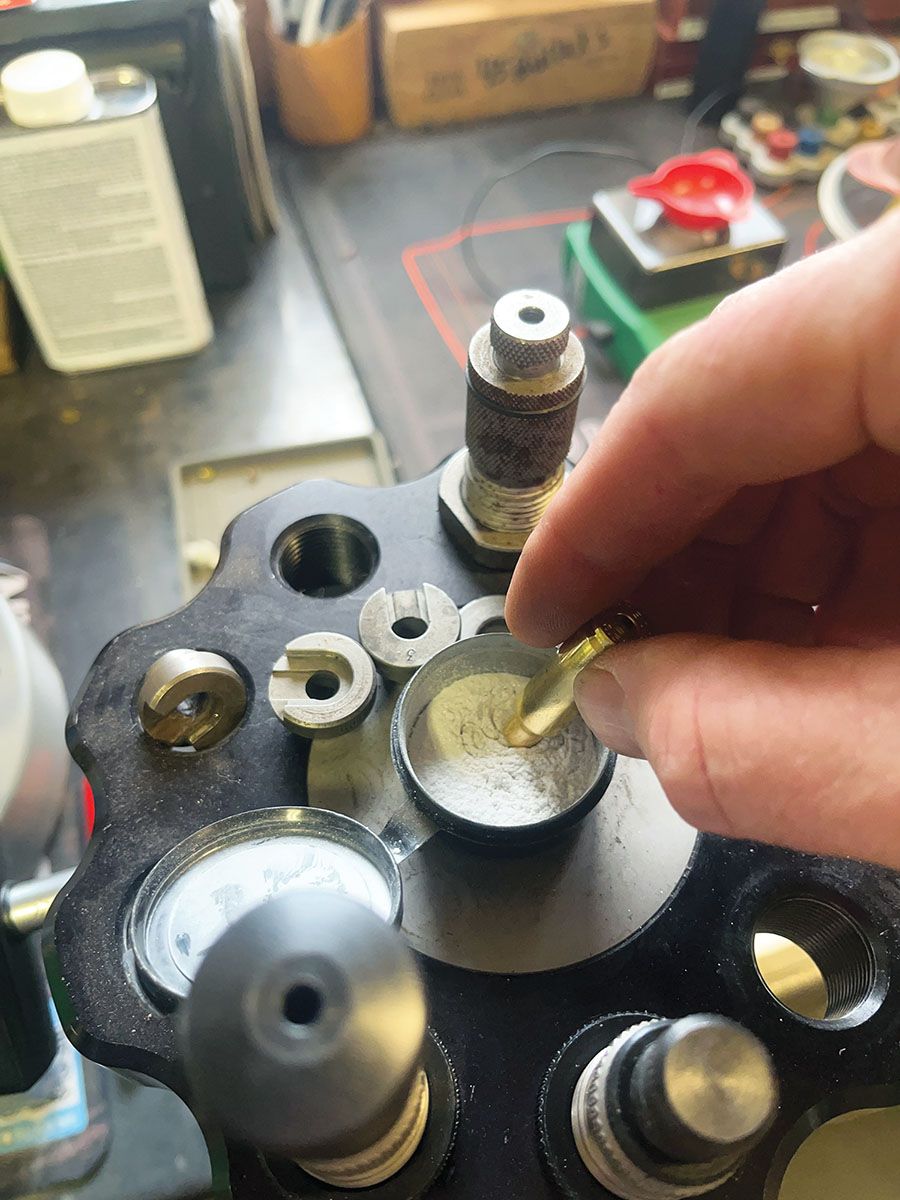
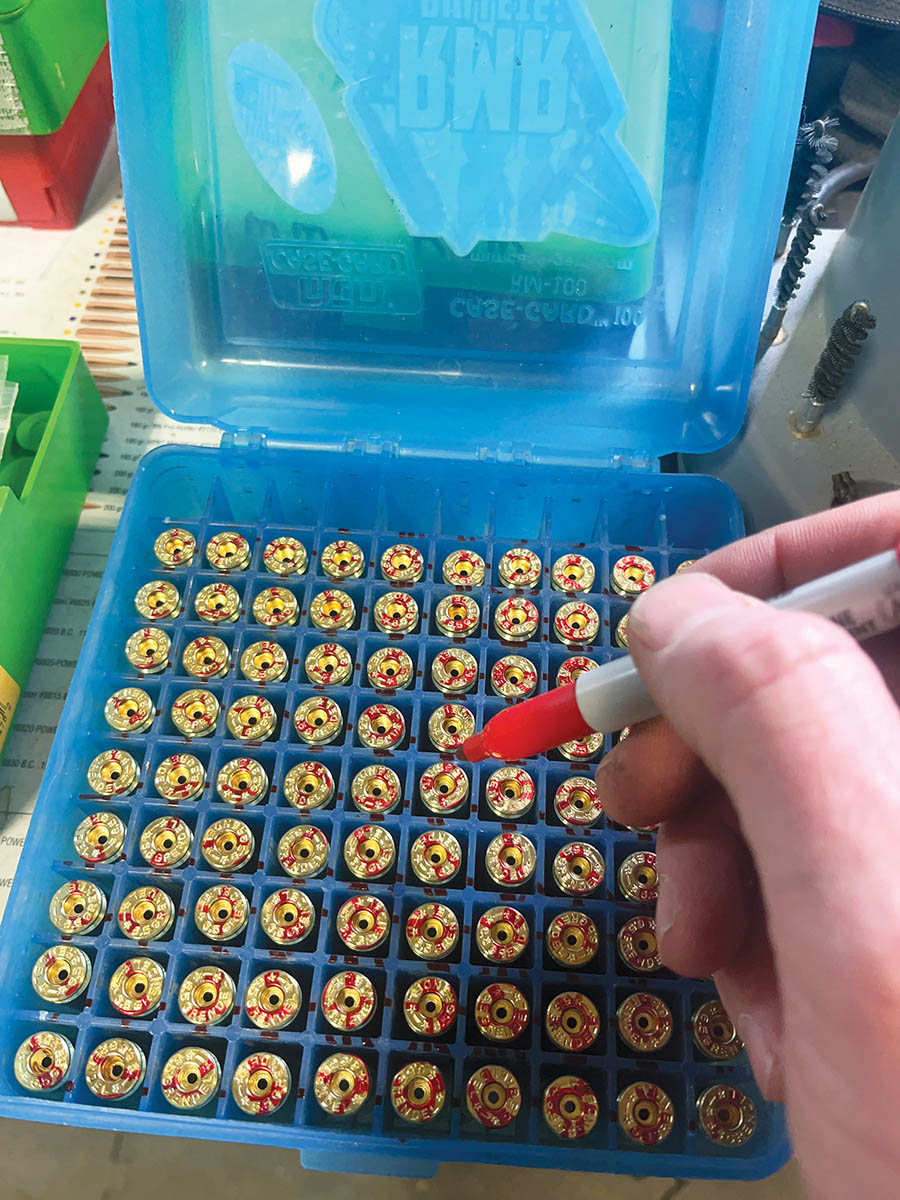
Auditioning the three Titanium Nitride Bushings, I found the .307 to my liking, providing ample neck tension without undue seating force. The bushing die was set up to push down precisely to the neck/shoulder junction, with no other alterations made to the 6.5 Grendel case. This operation requires some trial-and-error adjustments to avoid crushing shoulders during sizing. Blackening the neck area with candle soot and working in slow increments showed when I’d reached the precise point needed before locking the die down.
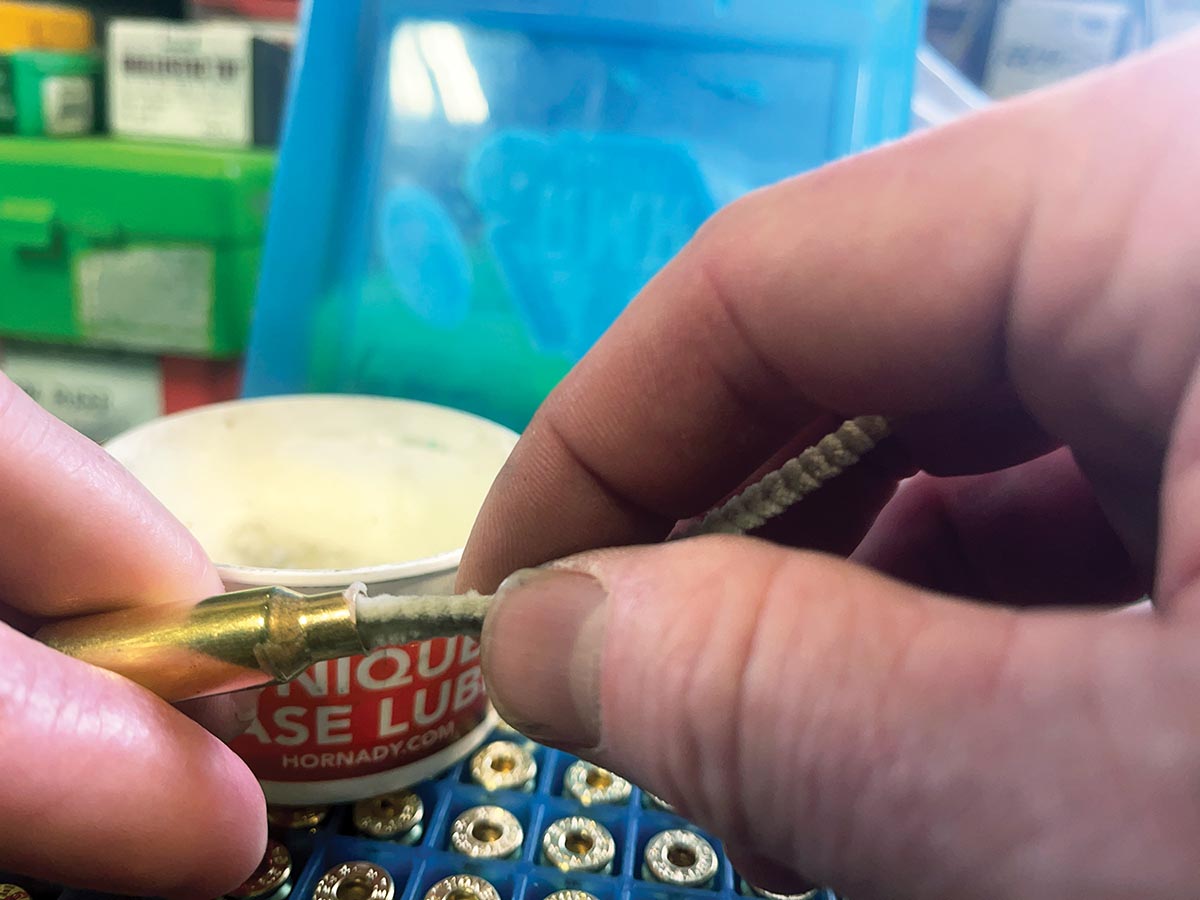
The tapered expansion ball made resizing a nearly effortless, single-stroke task. I tried two approaches to smooth sizing: swabbing the inside of the necks only with Hornady Unique case lube and dipping in Lyman Dry Case Neck Lube powder. The Unique case lube proved slightly slicker, but did require swabbing out necks after sizing. The expansion process creates a momentary catch before sliding through smoothly. The 7mm Bench Rest Remington seating die worked to perfection.
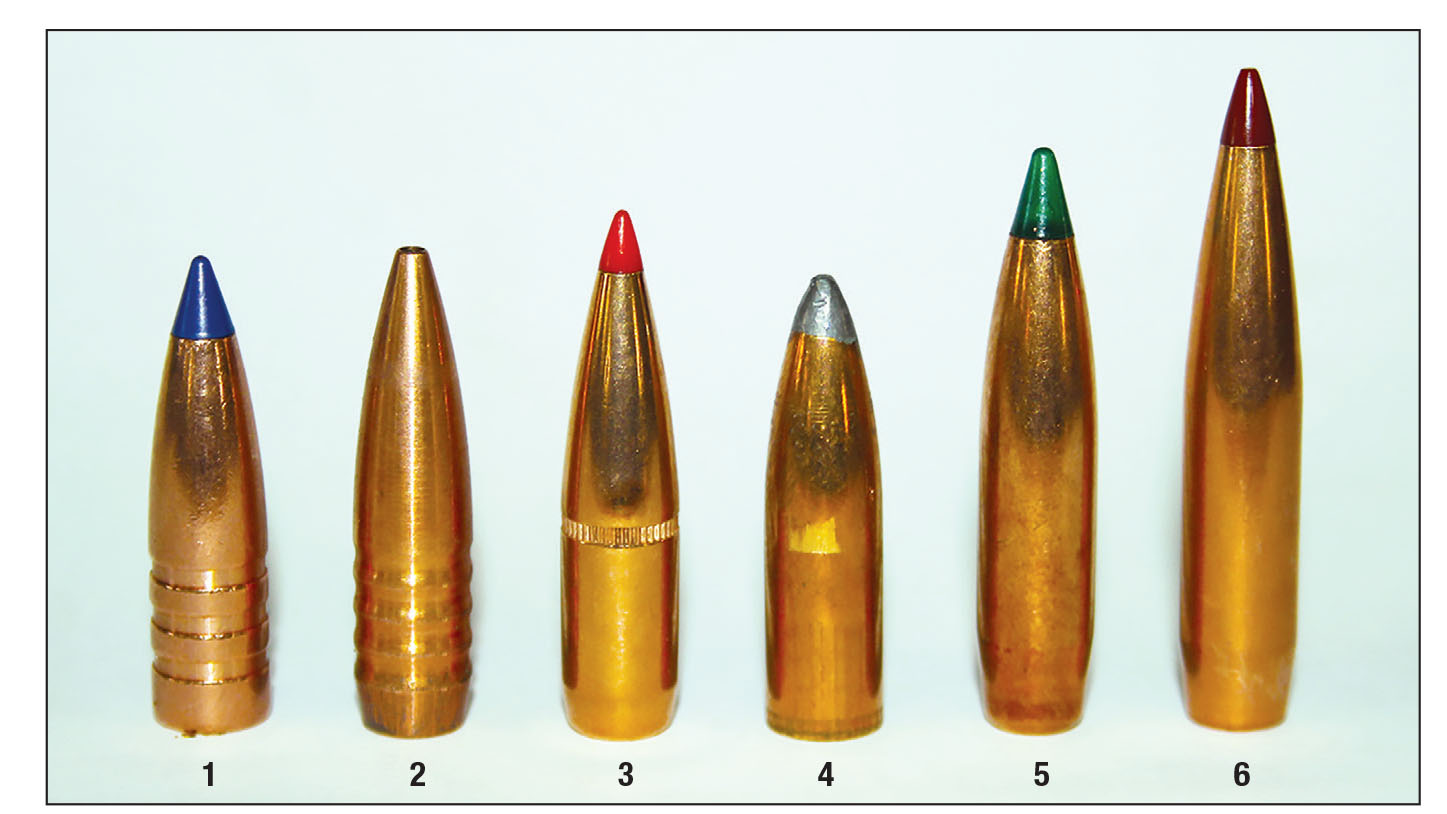
Having sorted these details, I created dummy rounds with Barnes 110-grain TTSX FB, Sierra 125-grain GameKing Spitzer and Nosler 150-grain Ballistic Tip Hunting bullets. These bullets resulted in overall loaded lengths of 2.58, 2.23 and 2.26 inches, respectively. To my delight, all fed, chambered, and extracted flawlessly in the test rifle. I might also note that every test load save subsonic loads fed without a single stoppage.
Moving to loading, I used Federal Champion No. 205 small rifle primers for ignition. Powders were chosen for supersonic loads based on 6.5 Grendel data. For subsonic loads, I leaned on experience gained with the 8.6 Blackout, but with no clue where to start.
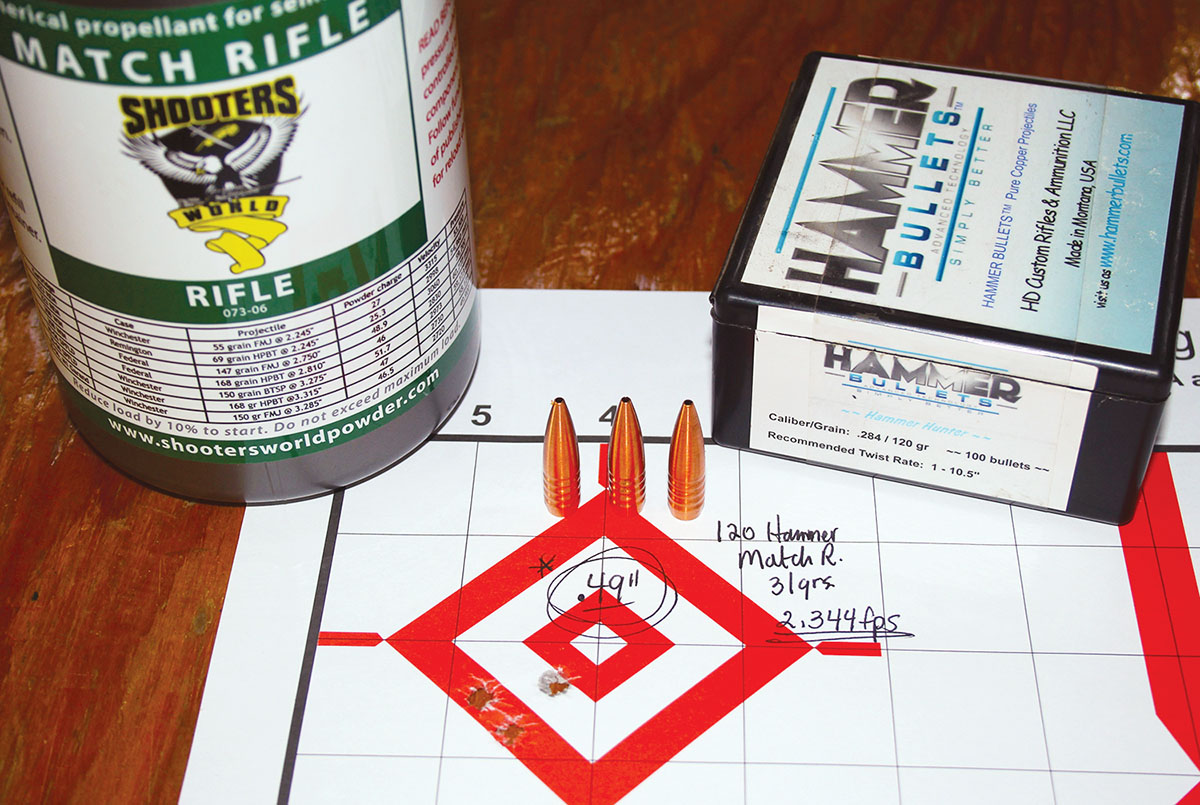
Starting on somewhat familiar ground, I chose two bullet weights that have proven excellent from the 6.5 Grendel monolithic copper bullets both. First up was the Barnes 110-grain TTSX FB, which I hoped would provide muzzle velocities in the neighborhood of 2,500 fps. The Barnes was paired with Hodgdon Benchmark and CFE 223, and Alliant Reloder 15. At 120-grains, Hammer Bullets’ Hammer Hunter was paired with Shooters World Match Rifle, Hodgdon Varget and Winchester StaBALL Match. At this weight, the 6.5 Grendel will hit 2,650 to 2,500 fps, that was my goal here.
Next, I tested Hornady’s 139-grain SST (the 129-grain SST is my go-to hog bullet from the 6.5 Grendel) and a Speer 145-grain Hot-Cor, which should expand well at Grendel velocities. The 139-grain bullet was combined with Vihtavuori N540, Hodgdon CFE 223 and Ramshot TAC. The 6.5 Grendel will push 2,350 fps at this bullet weight, which that was my goal. The Speer was paired with Vihtavuori N140, Hodgdon Benchmark and Alliant Power Pro Varmint, hoping for velocities of around 2,200 fps. The heavyweight in supersonic loads was Sierra’s 150-grain Tipped GameKing (though Nosler’s same-weight Ballistic Tip Hunting would also suffice). This also included a move to slightly slower powders, including Vihtavuori N150, Shooters World Tactical Rifle and Winchester 748. At this weight, I expected velocities to drop to around 2,100 fps.
After the smoke cleared, I was able to step back and evaluate the results, finding some obvious miscalculations in powder choices. Not a single load met my beginning velocity goals. I might partly blame this on the 18-inch barrel (my 6.5 Grendel holds a 22-inch tube), but I’d also observed that not a single primer showed the slightest signs of hitting maximum pressures. My first impulse was to assume I needed to increase powder charges, but then I quickly recalled that the slowest-burning powders (the same powders producing top performance in the 6.5 Grendel) had already reached maximum load density, with several heavily compressed. There was simply no room for additional powder (with some exceptions).
It became apparent that the problem was not charge weights, but powder burn rates within the dynamics of the 28 York case. Comparing recommended charges for the 6.5 Grendel and 7.62x39mm Soviet (which include very close case capacities) with like-weight bullets, I found the Grendel prefers powders with an average relative burn rate of around 165 on the LoadData.com burn rate chart, while the Soviet case thrives on powders with an average 130 burn-rate class. As the 28 York essentially splits the difference, it would appear that a burn rate between 140 and 150 would prove ideally suited to this cartridge. This bears out with the powders that performed best in testing, with some exceptions correlating to ball powders that allowed stuffing more powder into the case. Hodgdon Benchmark proved the best example. Charges of Ramshot TAC, a grain or two higher than tested, might also produce better results (proceed carefully!). That leaves powders not tested, such as Alliant Reloder 10x, Vihtavuori N133, Hodgdon 335, Ramshot X-Terminator and Accurate 2230 and 2460 sitting in the “just-right” burn-rate slot.
The existing data, instead of constituting wasted time, then serves as a basis for careful extrapolation from existing 6.5 Grendel and 7.62x39mm data. Such is the nature of working with wildcat cartridges.
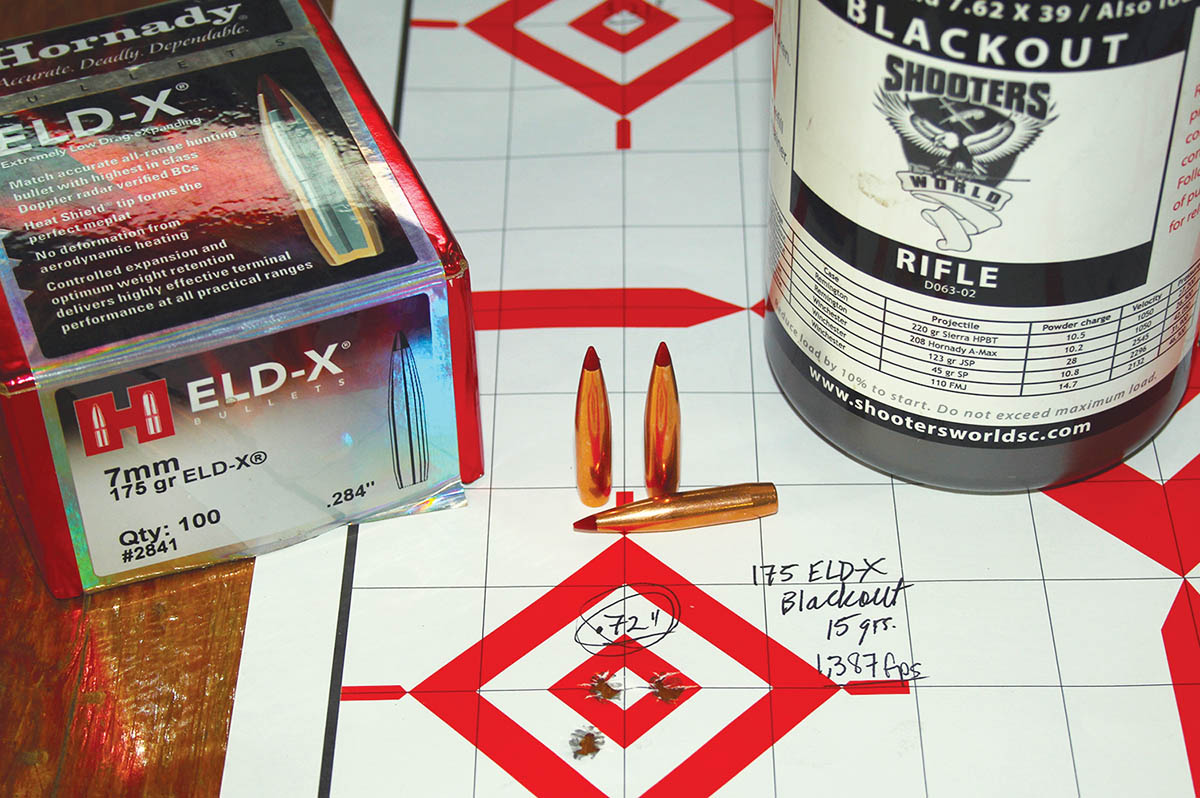
My attempt to create subsonic loads from Hornady’s 175-grain ELD-X bullets was a complete shot in the dark. Powders included fast Blackout standards like Accurate 1680, Shooters World SBR SOCOM, Hodgdon CFE BLK and Shooters World Blackout. I first tried 15 grains of each, seeking a starting point in the quest for the minimum required 1,125 fps mark needed to achieve subsonic velocities (the speed of sound is 1,125 fps at 68 degrees Fahrenheit at sea level). Breaking the 1,125 fps barrier creates a sonic crack, which constitutes much of the report heard while shooting firearms. I next tried 13 grains.
Perfecting subsonic loads could turn into its own in-depth project. Because I’m not particularly enamored with the approach for hunting, and not wanting to make a life’s work of it, I’m only able, again, to offer solid starting points. The provided data was collected at 37 degrees Fahrenheit, 70 percent humidity and 3,150 feet above sea level. Increase any of these factors, and velocity increases slightly. The two data points provided for each powder allowed calculating how much velocity is shed per grain of powder subtracted: approximately 85 to 86 fps for Accurate 1680, 115 fps for SBR SOCOM, 73 to 74 fps for Hodgdon CFE BLK and 101 fps for Shooters World Blackout. Based on those numbers, hitting the subsonic mark with the 175-grain bullet should involve about 12 grains of A-1680, 11 grains of SBR SOCOM, 11.7 grains of CFE BLK and 12.5 grains of Blackout.
A legitimate question might be, why not just shoot a 6.5 Grendel? Fair enough. First, the 28 York more efficiently handles heavier bullets by leaving less bullet in the case and more space for powder, while also opening the possibility of subsonic loads. Second, for those who enjoy new handloading challenges – what fun would that be?
.jpg)