

270 Remington Magnum Pet Loads®
A Proven Magnum That Keeps Getting Better
column By: Brian Pearce | April, 26
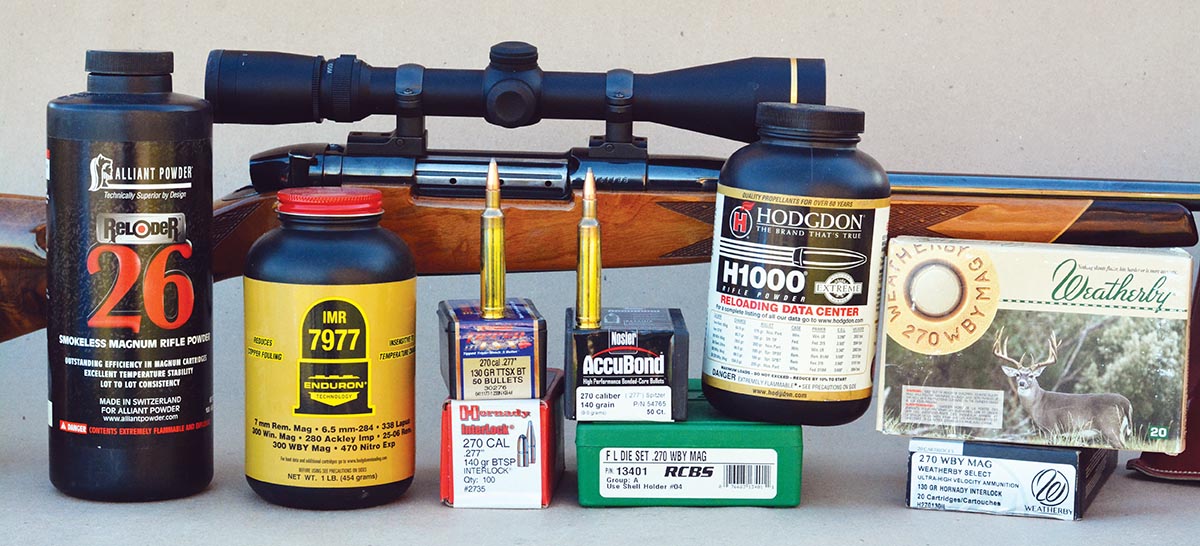
In spite of several new cartridges of the same caliber being developed over the past couple of decades, the 270 Weatherby Magnum is still outstanding and offers impressive performance for big game hunters. In addition to offering a super flat trajectory at practical hunting distances (more on that in a moment), it offers moderate recoil and is easy to shoot well. It holds the distinction of being Roy Weatherbys’ first cartridge that led to the development of many cartridges and literally served as the primer for a brand new company 81 years ago. Today, the 270 Weatherby is better than ever, especially if handloaded. With new powders, it can reach higher velocities, and when mated with modern hunting bullets, it performs better on game than ever before.
To quote Roy Weatherby: “On my first deer hunt in Utah in 1942, I wounded a buck with a 30-06, and after following the blood trail until dark, I finally had to give up. I had a sad feeling for that animal because I knew he was going to die a lingering death. I also knew that I would be trying to take another buck, and I didn’t think that was good conversation. That’s when I started thinking about getting a bullet to travel fast enough so it would disintegrate inside the animal’s body, and the shock would cause instant death even though the animal was not hit in a particularly vital area. Then, too, the animals would not suffer and the hunter would get the first animal he shot and wouldn’t be wounding one and taking another.”
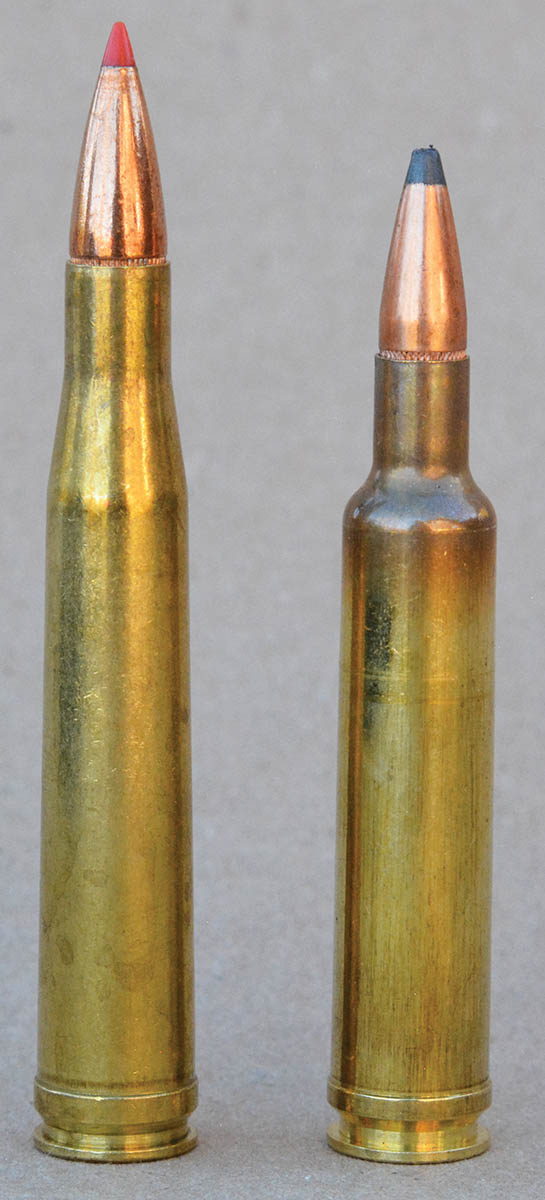
Roy immediately returned home and began working on a wildcat cartridge by blowing out the belted 300 H&H Magnum case, shortening it, and necking it down to accept .277-inch bullets. What is interesting about his decision to focus on that caliber is that the 270 Winchester had been introduced 18 years prior. While its acceptance among hunters was still growing, it was considered a state-of-the-art cartridge that offered a super flat trajectory for that era. You could say it was already sensational, and improving upon it would be difficult. But Roy set out to make it shoot flatter and hit harder. In spite of the limited availability of super slow-burning powders during that era, Weatherby was still able to push bullets to very impressive velocities. The long-lasting stellar reputation of the 270 Weatherby among deer hunters had begun.
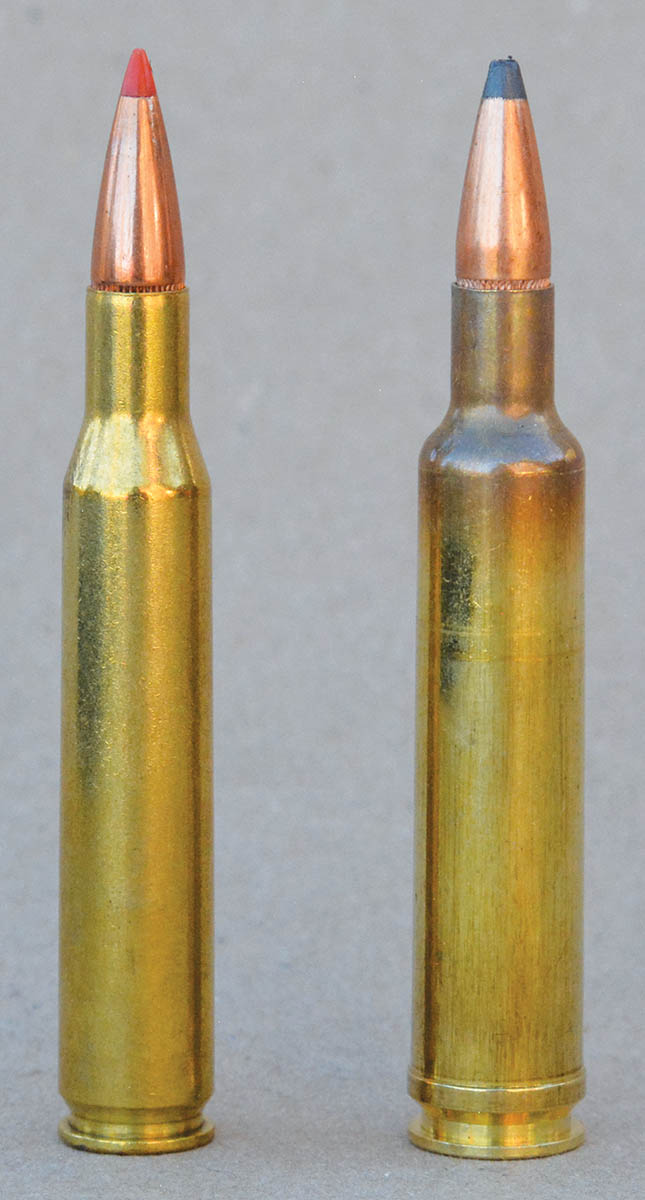
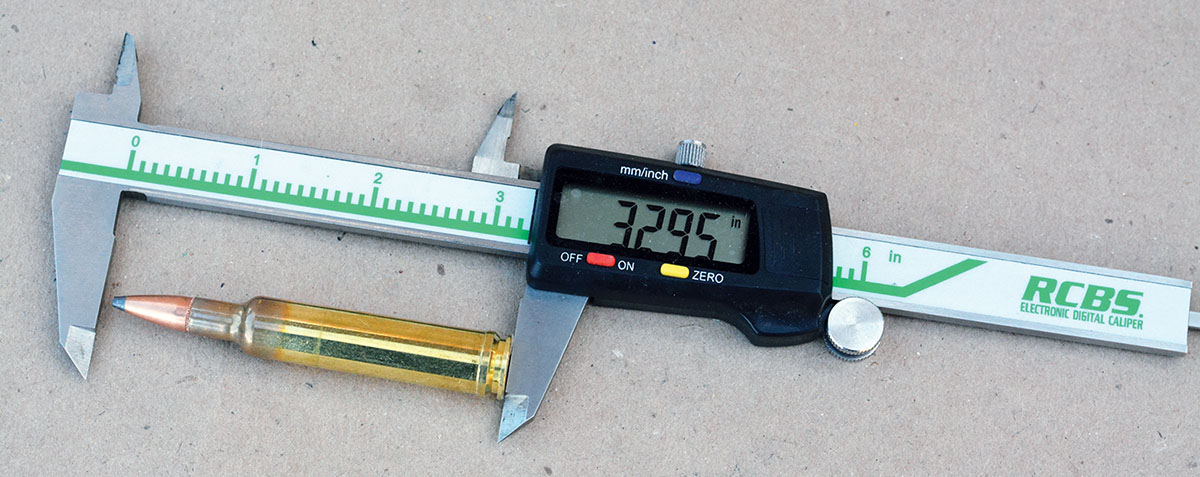
One of the unique design features of all of the commercially offered cartridges designed by Roy Weatherby includes a double-radius shoulder (a design that appears to have been developed in Europe at about the same time). There has been much speculation and debate over this feature; however, it accomplished several things. First, Roy moved the shoulder of his cartridges forward in an effort to increase case capacity, but retained fairly long necks on each of his designs. This shoulder was intended to increase powder burn efficiency within the chamber and reduce throat erosion, which it did in a similar manner to the familiar Ackley Improved shoulder. While I had the opportunity to meet Roy, I did not know him well. But a long-time employee told me that Roy felt that his shoulder design served to allow a more fluid gas flow and therefore gave more velocity. With all of that said, the last Weatherby cartridge introduced commercially with the double-radius shoulder was the 6.5-300 Magnum, which Roy had developed decades prior to its commercial introduction in 2016. More recently developed Weatherby cartridges, such as the 6.5 RPM and 338 RPM, feature a more standard 35-degree shoulder. Incidentally, the 270’s overall cartridge length is 3.295 inches, allowing it to function in standard 30-06 length (3.340 inches) actions.
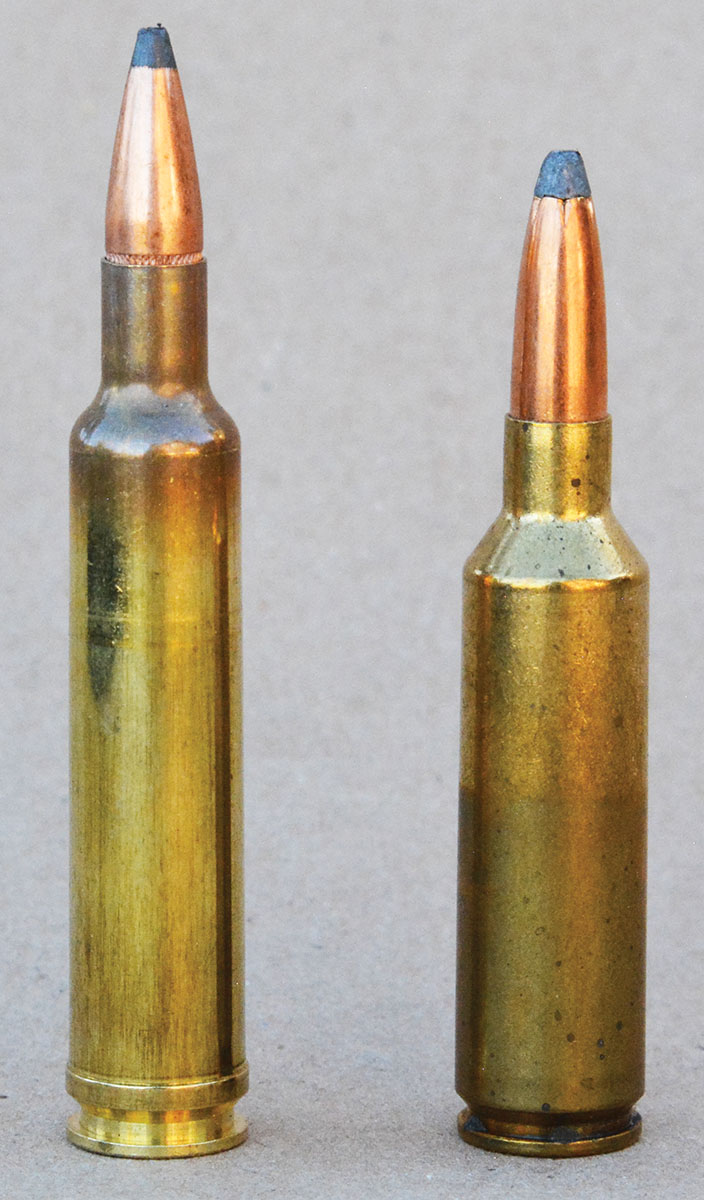
The following background history is necessary to help handloaders understand changes that occurred with the 270 Weatherby Magnum cartridge and rifles before choosing components and loads. The 270 was completed in 1943, while the 7mm and 300 Magnums were developed soon thereafter. Roy founded Weatherby, Inc. in 1945. Initially, he was a one-man operation that built custom rifles on Mauser 98 actions, Winchester Model 70s, and other actions and handloaded his proprietary cartridges to supply ammunition to customers.
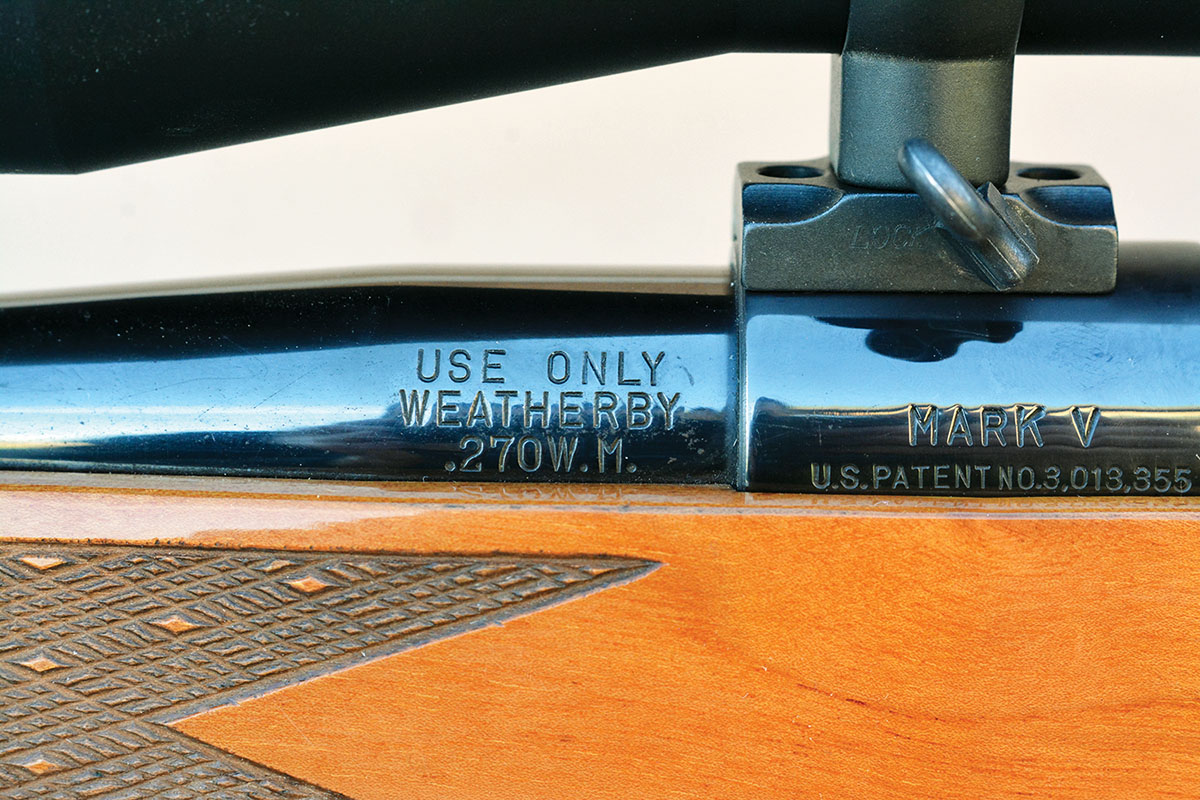
By the mid 1950s, Weatherby began designing the Mark V action with subcontracted production beginning in Southgate, California, during 1957-1958, but manufacturing was moved to Germany in 1959, with J.P Sauer producing rifles. By 1970-1971, Mark V production began in Japan, with Howa Machinery producing rifles; however, rifles built by J.P. Sauer still continued to be imported for the next year or two. Production in Japan lasted until 1994, when manufacturing was moved back to the USA under contract. While operations were still in California, Weatherby took over Mark V manufacturing for the first time, with production continuing today in the new Sheridan, Wyoming, plant.
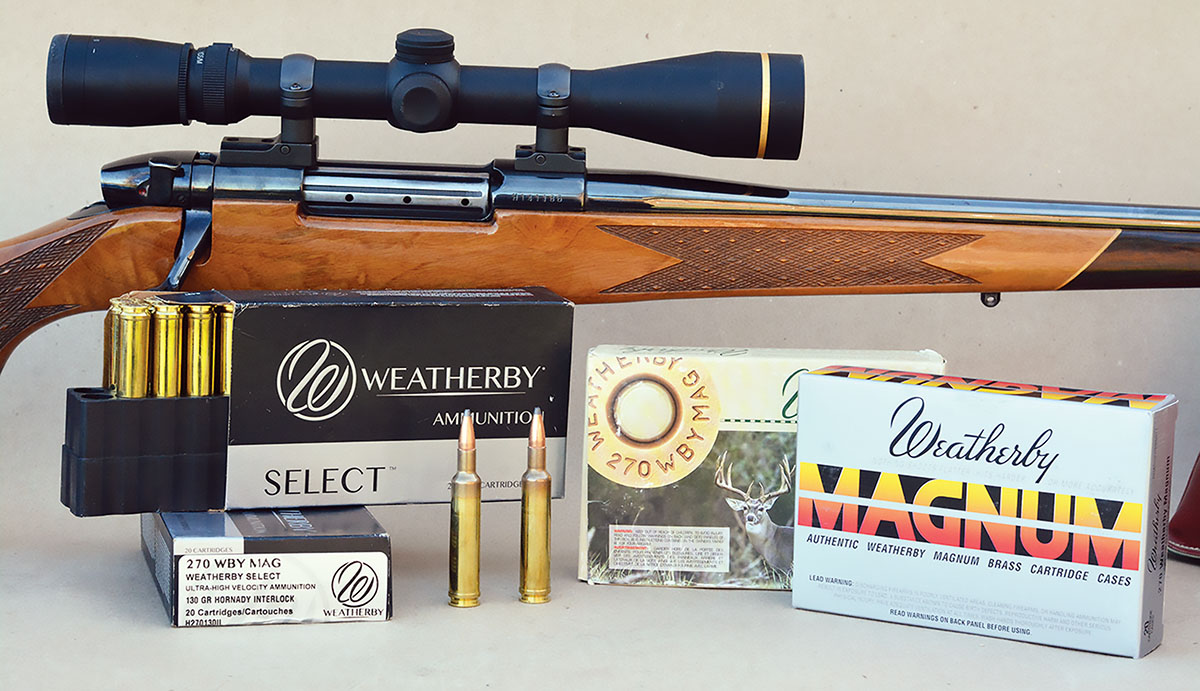
From 1945 until 1968, 270 rifles featured a very long 3⁄4-inch freebore throating. This helped Weatherby achieve top velocity figures. But as the focus changed to increase accuracy, the throat length was shortened to .363 inch in 1968.
Another important change was barrel twist rates. Initially, the twist rate was 1:12, which lasted until January 1973, when it was changed to a 1:10 twist that gave better accuracy and stabilization with all bullet weights. I have had some shooters claim that select rifles made prior to 1973 featured a 1:10 twist, which could be. However, I have wondered if those rifles have been rebarreled, or perhaps they were just early examples of the newer twist rate. Regardless, the 1:12 twist may not stabilize some recently designed high ballistic coefficient (BC) low drag 150-grain and heavier bullets, especially at long range. In previous testing of a rifle with a 1:12 twist and 26-inch barrel, stabilization of the 160-grain Nosler Partition was insufficient. Incidentally, relatively new high BC, low drag bullets that exceed 160 grains will not properly stabilize in either the 1:12 or 1:10 inch twist.
Early on, Roy began to realize that he needed an ammunition supplier and contracted with Norma of Sweden to make cases and load ammunition. This was especially high-quality ammunition, as the brass was top-notch and contained Hornady and Nosler bullets.
Handloaders tend to be scavengers and will save a dollar whenever possible by employing ancient brass found at yard sales and gun shows at a bargain price. It is important to know that sometime during the late 1960s, 270 Weatherby cases were made of thinner construction, resulting in notably greater capacity. The point being that if you have scrounged up older cases, they will produce significantly greater pressure than current cases with the same load. In other words, do NOT use the accompanying data with older cases, or high pressures will result. All data contained herein is from current manufactured cases.
While the 270 Weatherby was proprietary for nearly 50 years, in 1994 it became an industry-standardized cartridge and was approved by the SAAMI (Sporting Arms and Ammunition Manufacturers Institute) with universal chamber specifications and ammunition pressures. This resulted in other companies chambering rifles, including Ruger, Winchester and others. Additional ammunition companies began offering loads, which all helped to bring the cost down.
A few sample factory loads from Weatherby list 130-grain bullets at 3,280 feet per second (fps), 3,375 fps and 3,400 fps depending on bullet make and design. Various 140-grain bullets are listed at 3,300 and 3,320 fps, respectively, and the 150-grain Nosler Partition is listed at 3,245 fps. Nosler Custom lists a 150-grain Accubond at 3,080 fps. Space will not allow a breakdown of the velocities produced by factory loads in the test rifles, but suffice to say that all gave very close to their listed figures from the 26-inch barrel, with two loads slightly exceeding those velocities. Here is where it gets interesting; I was able to exceed the velocities of all factory loads with select powders while staying within the SAAMI maximum average pressure guidelines of 62,500 pounds per square inch (psi), or formerly 53,500 copper units of pressure (CUP).
In rough numbers, the above velocities are 300 to 400 fps faster than the 270 Winchester with comparable bullets and around 125 plus fps faster than the 270 WSM. We really can’t compare the 270 Weatherby with the 6.8 Western, as the latter has a much faster twist and is designed specifically for heavy-for-caliber bullets at lower velocities. However, if we compare it to the impressive 27 Nosler loaded with 150-grain bullets, the Nosler only has an approximate 100 fps velocity advantage. Regardless, several of the 270 Weatherby factory loads are only dropping around 21 to 22 inches at 500 yards with a 300-yard zero. Not many cartridges can boast of this type of performance in real-world field conditions, while producing modest recoil.
In testing factory loads and handloads in the two test rifles with 24- and 26-inch barrels (both of Japanese manufacture with hammer forged barrels and shorter throats), there was a consistent 75 to 100 fps muzzle velocity difference, naturally with the longer barrel offering the higher velocities. The accompanying “Pet Loads” data and listed velocities were obtained from the rifle with the 26-inch barrel, while select loads were checked for accuracy from a rifle fitted with a 24-inch barrel.
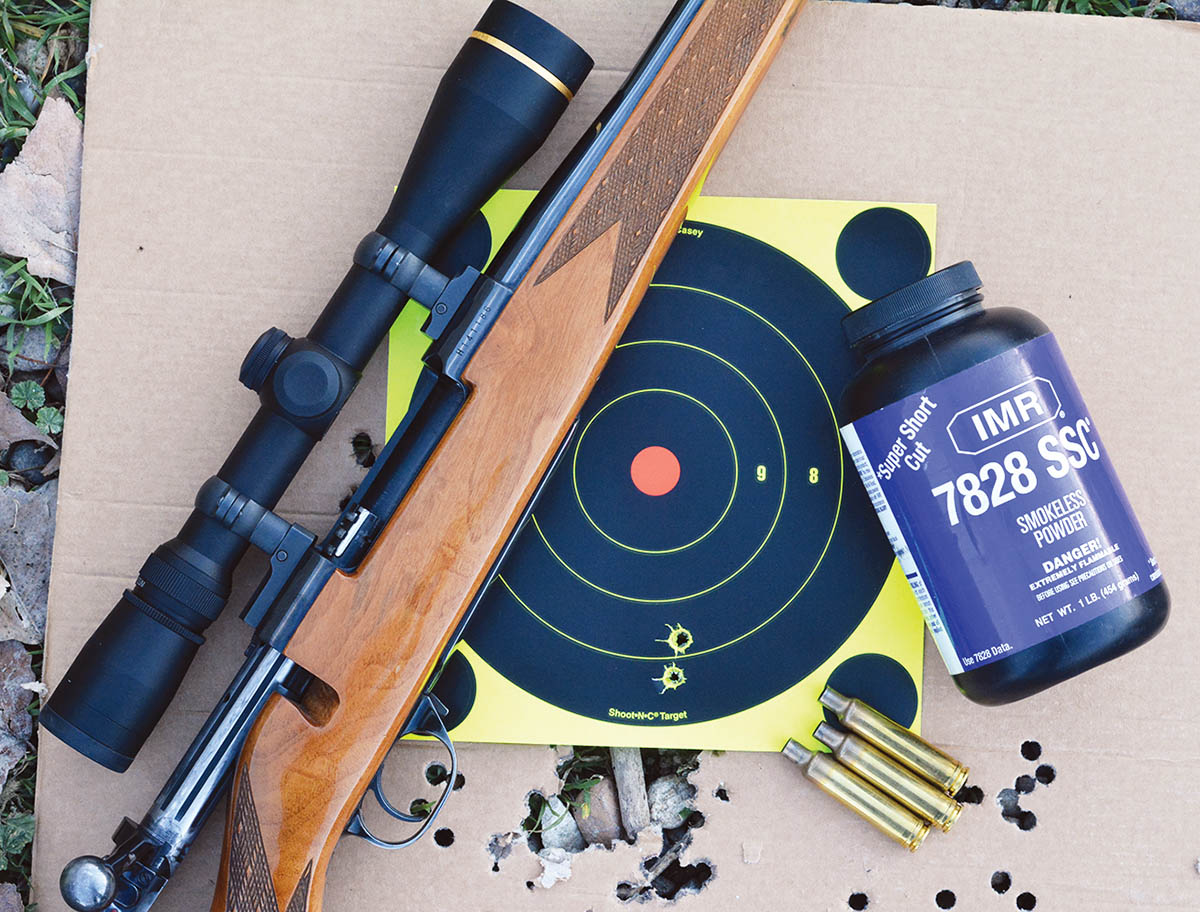
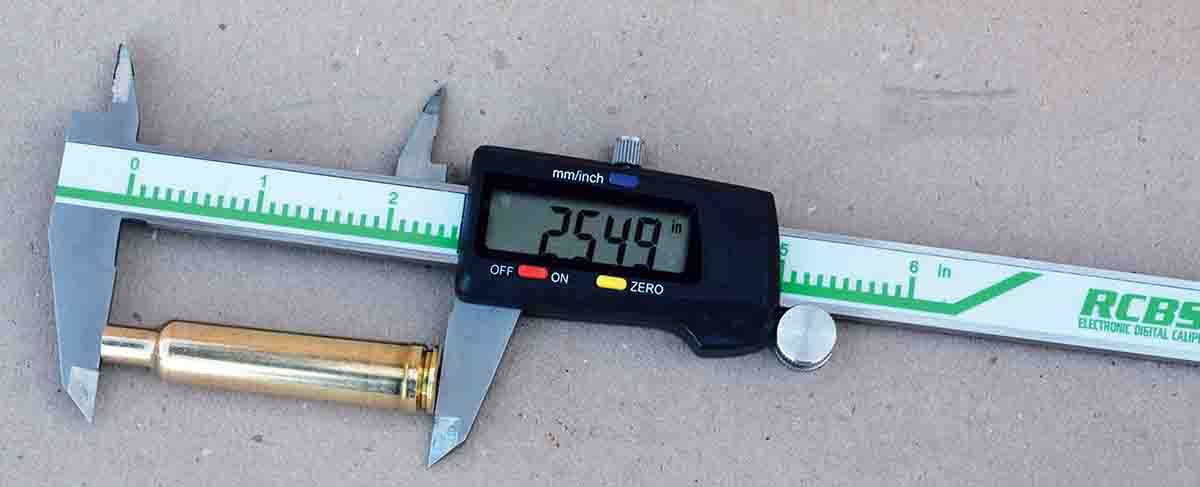
As indicated, new Weatherby cases were used to develop the pet loads data. Naturally, they were first full-length sized, checked for length, the case mouth chamfered and the flash holes de-burred. Incidentally, Nosler Custom offers cases that are fully prepared and ready to load. As the initial firing was completed, they were tumbled, sized, checked for stretching, etc., and then reloaded. After multiple reloadings, they tend to show signs of separation just forward of the head. Neck sizing cases will help eliminate this and extend case life; however, these loads will generally only chamber back in the rifle that they were fired in. Since my testing required firing handloads in two rifles, cases were full-length sized. or what it may be worth, it is strongly suggested to full-length size cases for ammunition that will be taken afield to ensure that they always chamber easily. Generally, I only reload a given case 3 or 4 times when full-length sizing is employed.
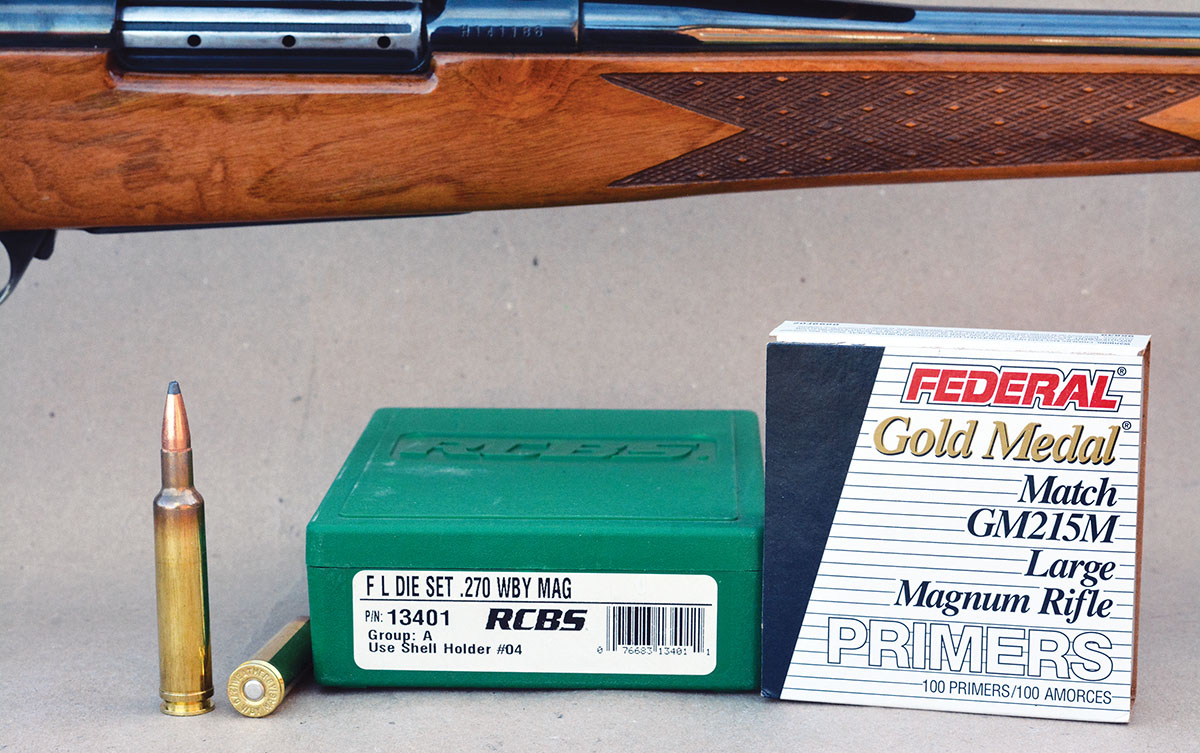
I have heard from fellow handloaders that hangfires have been a problem with the 270 Weatherby. When questioning those who reported this problem, it was almost always traced to two factors. First was the use of inadequate priming, which seems exacerbated when using 90- to 130-grain bullets, but can happen with heavier bullets too. In short, always use large rifle magnum primers. In today’s data, the high-energy (or hottest commercially available primer) Federal Gold Medal Match GM215M was used exclusively, and no hangfires were experienced with the accompanying data. The second factor is when spherical (aka Ball) powders are used, and starting powder charges are too low. I see this problem fairly often (in large capacity magnum cartridges), which explains why my start loads with spherical powders are not much below the maximum loads.
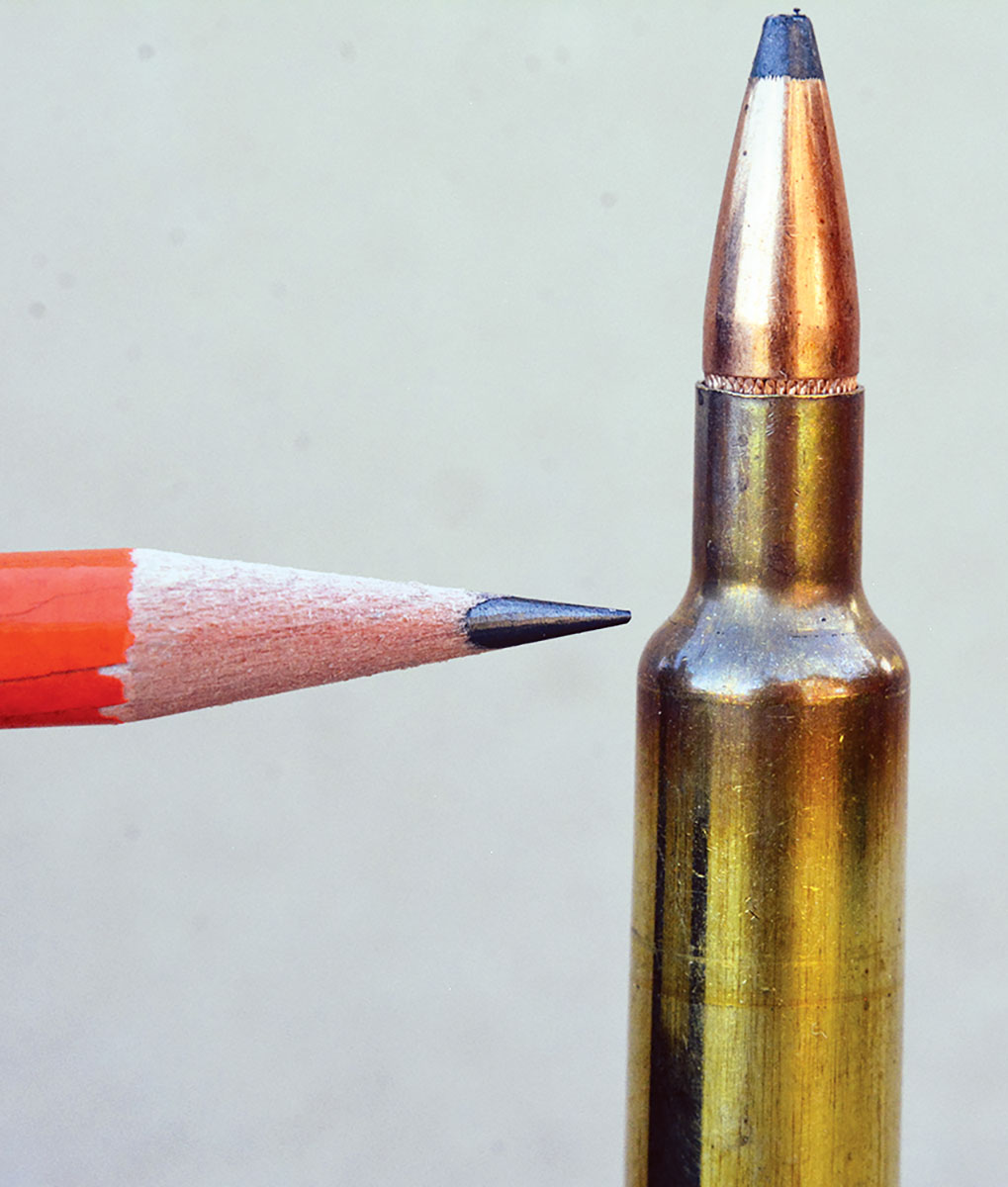
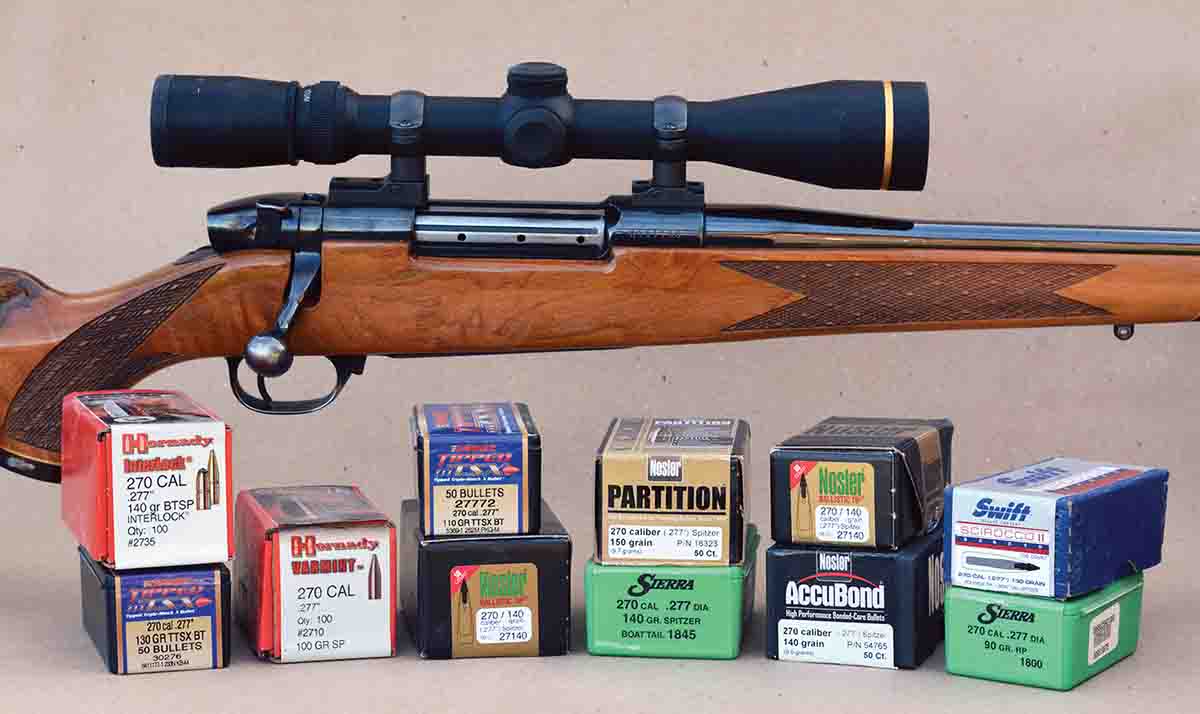
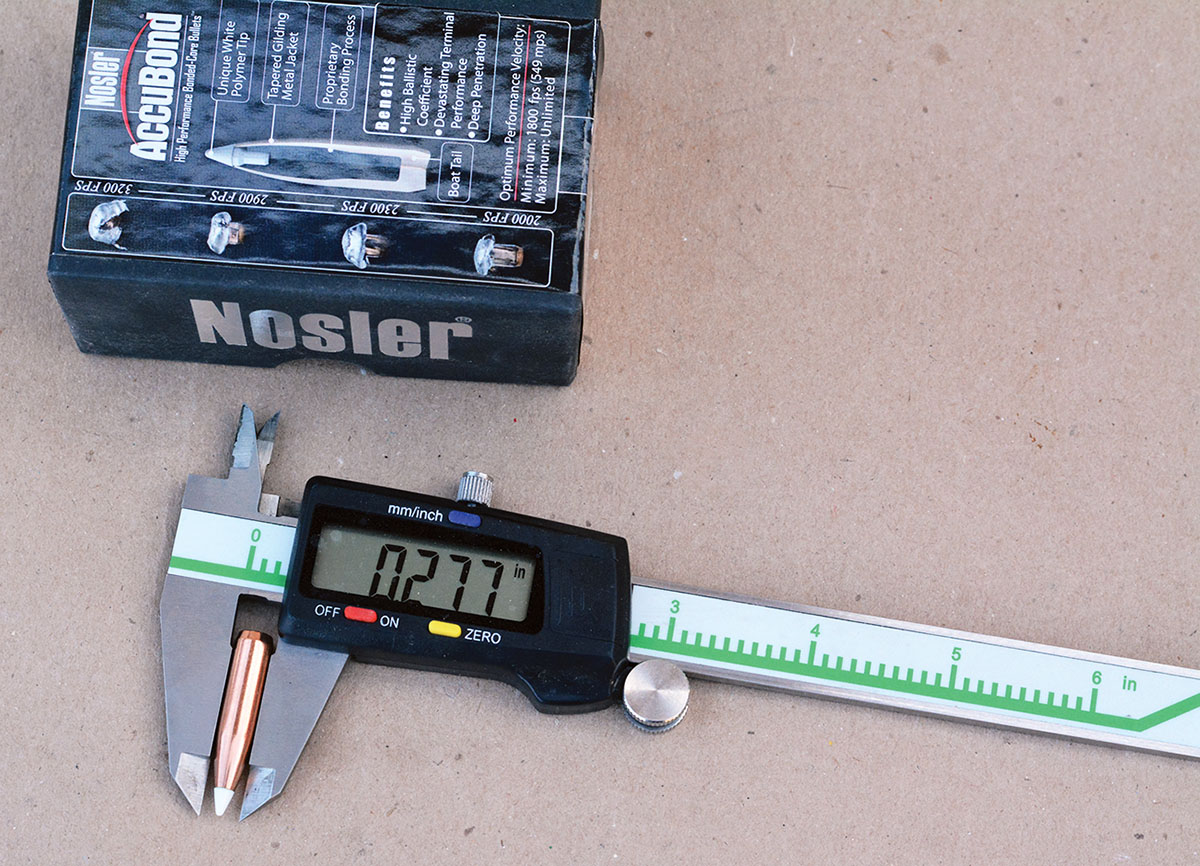
The same as the 270 Winchester, the most popular of all cartridges in this caliber, bullets in the 130- to 150-grain weights are the most popular in the 270 Weatherby. I have used the 130-grain Nosler Ballistic Tip bullet at 3,500 fps on whitetail deer, antelope and other game, and just as Roy intended, it is absolutely devastating when placed in the heart and lung area. If larger deer are hunted, various 140- to 150-grain bullets will give better penetration while still offering significant terminal damage. A couple of top choices are the 140-grain Nosler AccuBond and the 145-grain Hornady ELD-X. For elk and other similar-sized game, such as large black bear, moose and African plains game, consider one of the tougher constructed bullets designed for deeper penetration such as the Barnes 130-grain TTSX, Hornady CX, Swift A-Frame or Nosler Partition in the heavier weights. So loaded, the 270 is absolutely reliable on elk and other thin-skinned game. The wide selection of bullet options makes the 270 Weatherby better and more versatile than ever before.
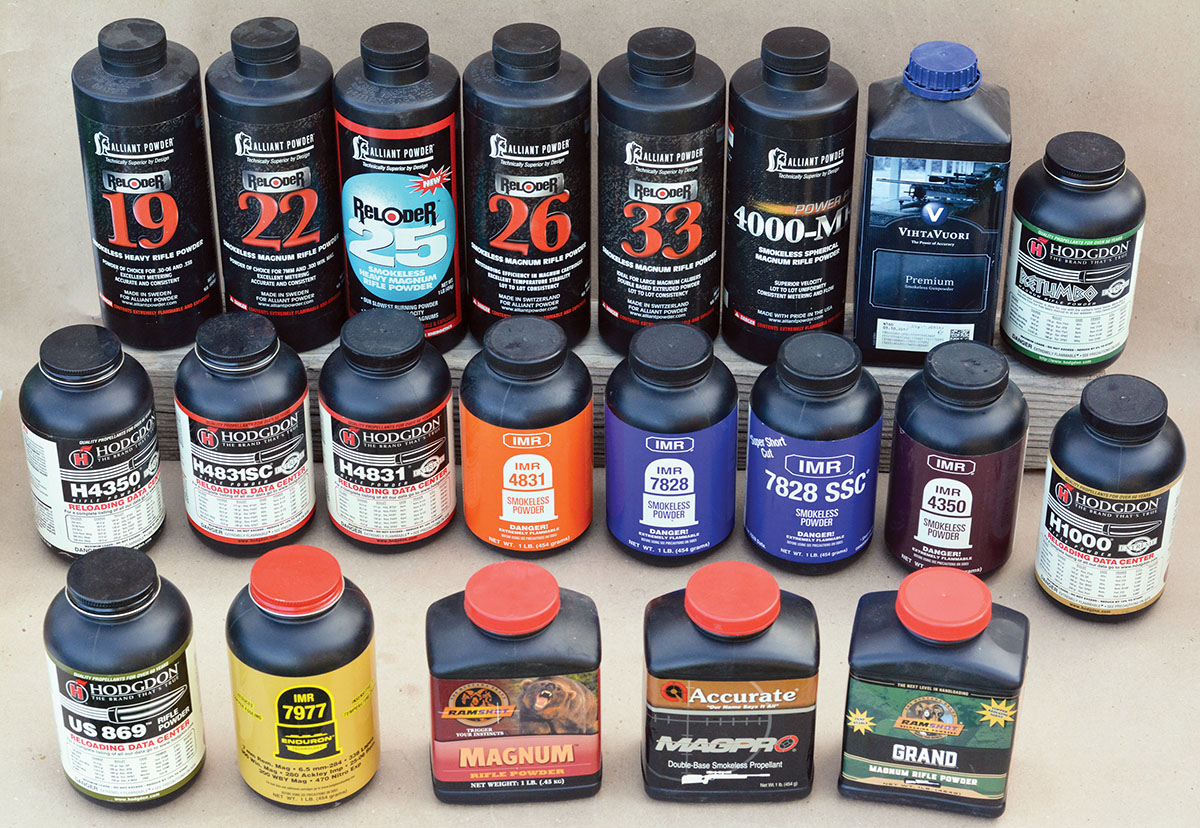
Due to the huge interest in long-range shooting and cartridges, many new powders have been developed that are ideal in the 270 Weatherby. Traditional powders with a burn rate that fall between 4350 to 4831 still work well and can be very accurate. However, there are several slower-burning powders that give higher velocities and offer overall outstanding performance while staying within pressure guidelines. While Hodgdon US869 and Alliant Reloder 33 were tried and gave respectable results, they were too slow for top velocities. Powders with a burn rate between Reloder 22 and Hodgdon H-1000 seem to be the best general choices for 130- through 160-grain bullets. I was especially pleased with IMR-7828ssc, Reloder 22, Reloder 25, Reloder 26, Hodgdon Retumbo, Ramshot Magnum and others. Some initial testing was conducted with Ramshot Grand and Winchester StaBALL HD powders, with both showing promise, but deadlines being what they are, that initial data is not included herein.
The .270 bore/.277 groove is a uniquely American caliber that has been a favorite among hunters for more than 100 years due to its flat shooting and modest recoil, while offering reliable terminal performance on game. It might be interesting to learn that many years ago, I was having dinner with Ed Weatherby (Roy’s son) when he was president of Weatherby, Inc. We discussed the Longhorn cattle he was raising at the time, and, naturally, the conversation turned to rifles, cartridges and hunting. As it turns out, the 270 Weatherby is his favorite cartridge. Speaking of favorites, noted writer, handloader, and experimenter Philip B. Sharpe also indicated that of all the Weatherby cartridges, the 270 is his favorite. While it is true that the 270 Weatherby has a shorter barrel life than the original 270 Winchester, it is respectable when fired in hammer-forged barrels. Frankly, a worn-out barrel should translate into considerable game on the ground, and most shooters will never wear one out in a lifetime. The 270 Weatherby stands on its own merit as a great hunting cartridge, and it played a pivotal role in the birth of a new company.
.jpg)
.jpg)
.jpg)