

Hunting Handloads for the M1 Garand
Modern Hunting Loads for a Classic Service Rifle
feature By: W. Blake Rodgers | October, 26
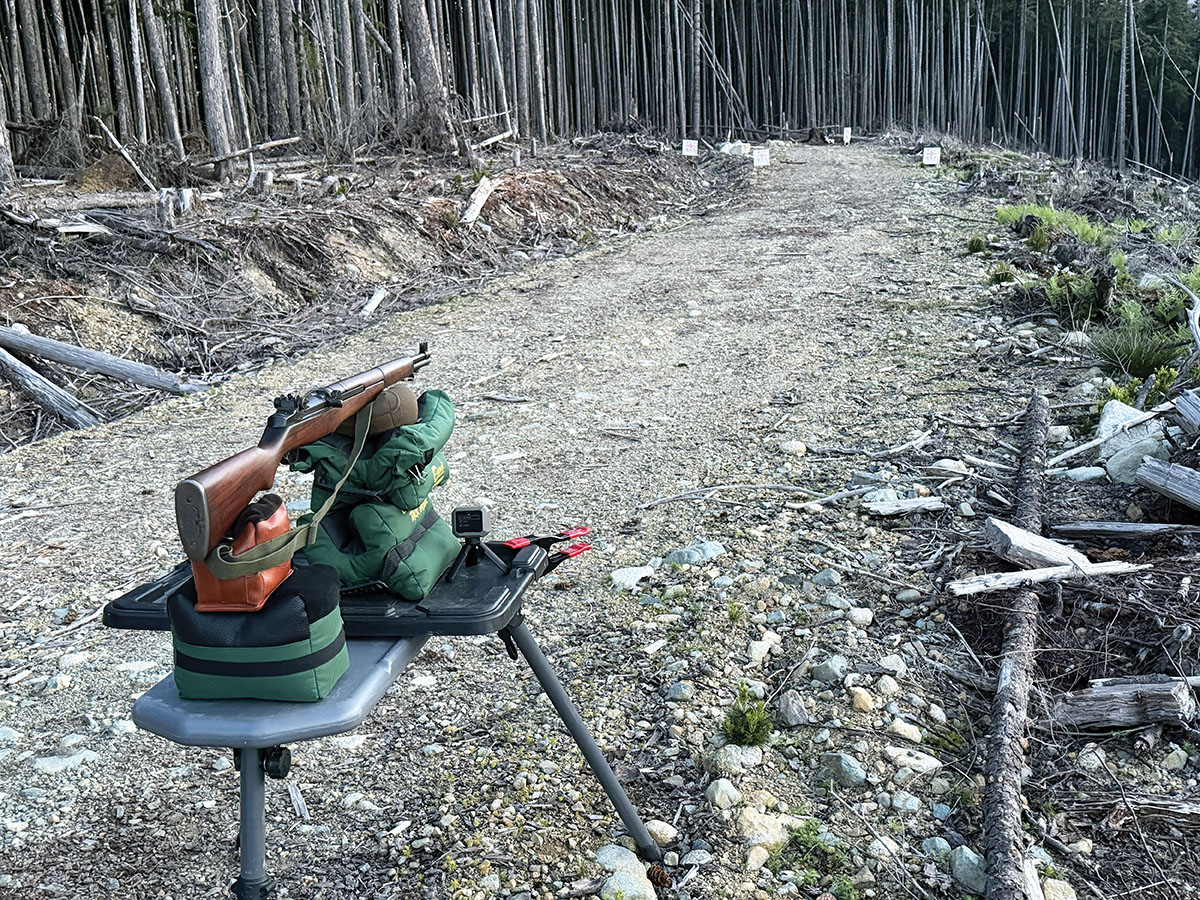
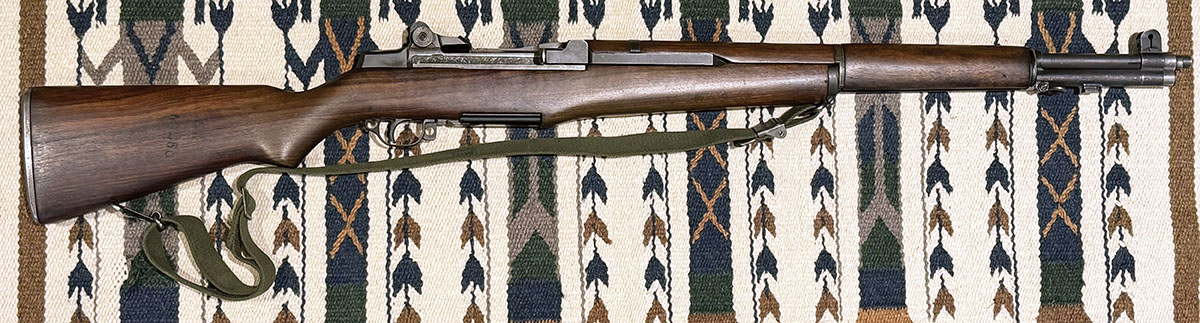
Almost every article written on the M1 Garand, including this one, cites George Patton’s assessment that it was “the greatest battle implement ever devised.” Designed by Quebec-born Jean Cantius Garand, the semiautomatic rifle, caliber .30 M1, became the primary infantry arm of the United States in the late 1930s and remained so for two decades. Chambered in 30-06 and fed by an eight-round en bloc clip, the gases from a fired cartridge drove the operating rod rearward, engaging the bolt inside the receiver. Two lugs rotate to unlock the action, allowing the bolt to slide back and eject the fired cartridge, then forward once more to lift and feed another round, rotating back into locked battery. The system was renowned for its reliability.
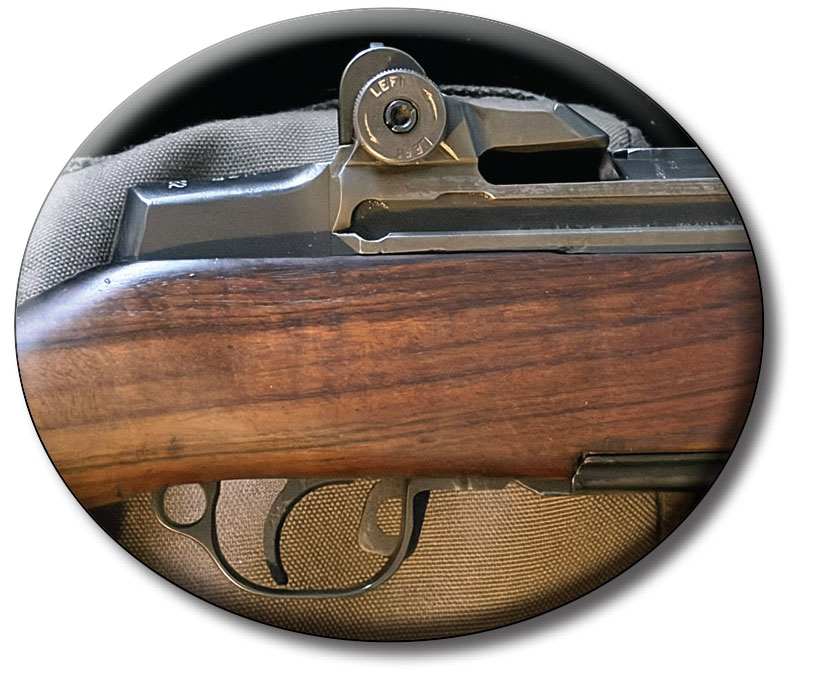
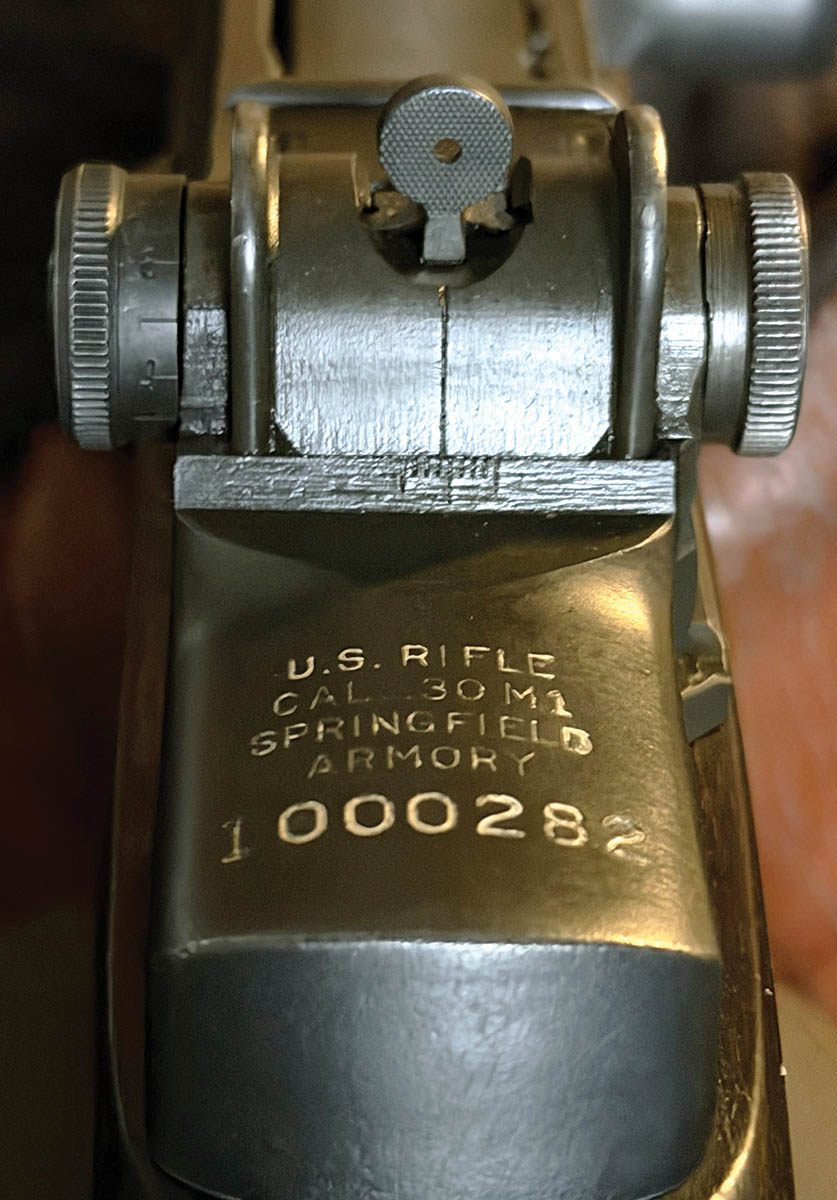
A few years back, I acquired a Springfield Armory M1 manufactured in 1942 that had somehow immigrated to Canada and set about learning its secrets. Practicing with factory M1-specific ammunition, I eventually became familiar with the fabled “ping” of the Garand’s ejected clip and, despite the limited acuity of my sixty-year-old eyes, I became well acquainted with the metallic “clang” of a steel plate ringing at a distance.
There are a number of articles describing handloads that serve well for punching paper, including an excellent work by John Barsness in Handloader (No. 316, October 2018) and another by Joseph von Benedikt in Shooting Times about five years ago. I won’t rehash all of the vital information that John provided in the 2018 article, except
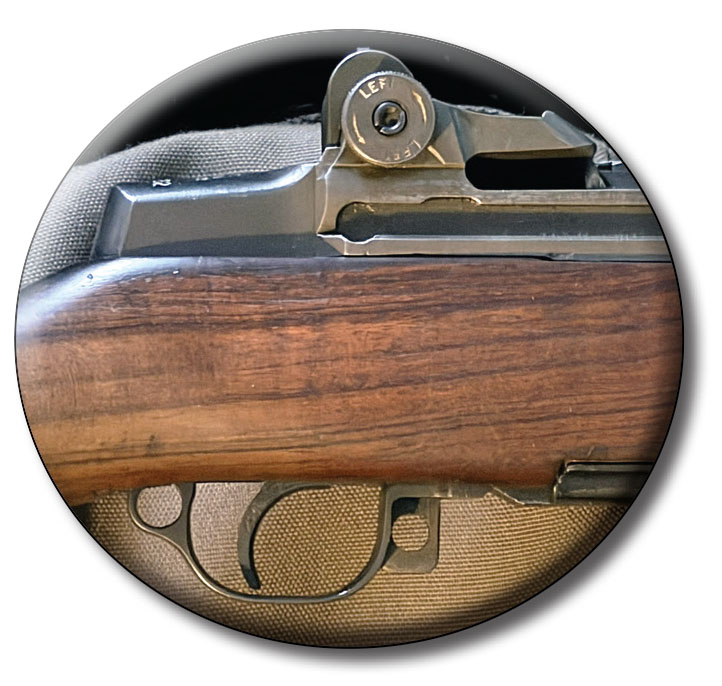
to emphasize that while the Garand is chambered in 30-06, it is not remotely similar to your off-the-rack hunting rifle in the same caliber. The operating system was designed to work at moderate pressures –
The take-home lesson from all this is that the rifle’s action was designed to function in moderation, with projectiles of moderate mass (never more than 174 grains) and powders burning at moderate speeds. The Garand was born as the ashes of the First War smoldered through the 1920s and 1930s, before the world-consuming conflagration of the Second exploded in 1939. IMR-4895 appeared in 1941, destined to
power the rifle carried by the men of the New World as they “stepped forth to rescue and liberate the Old World.”
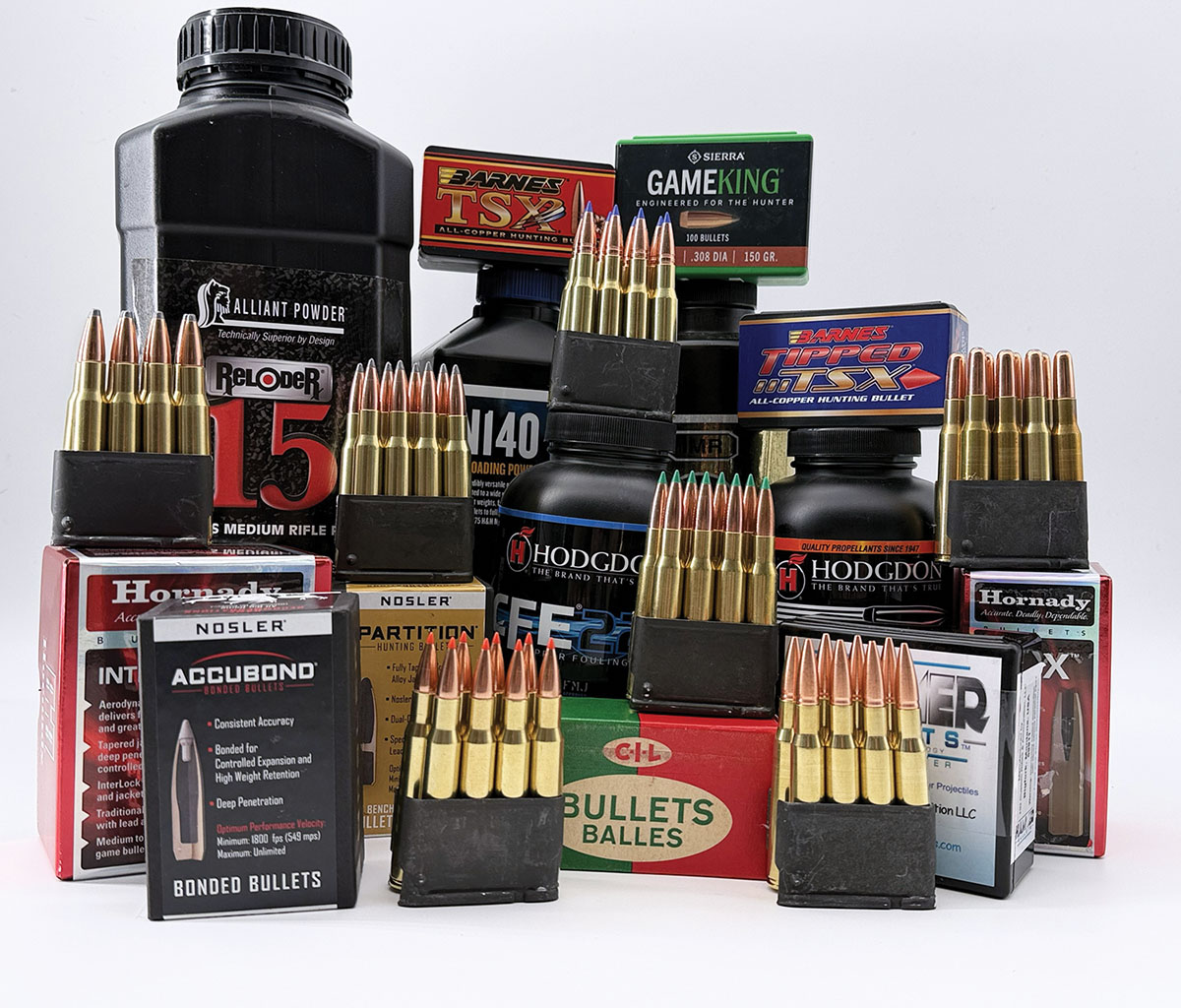
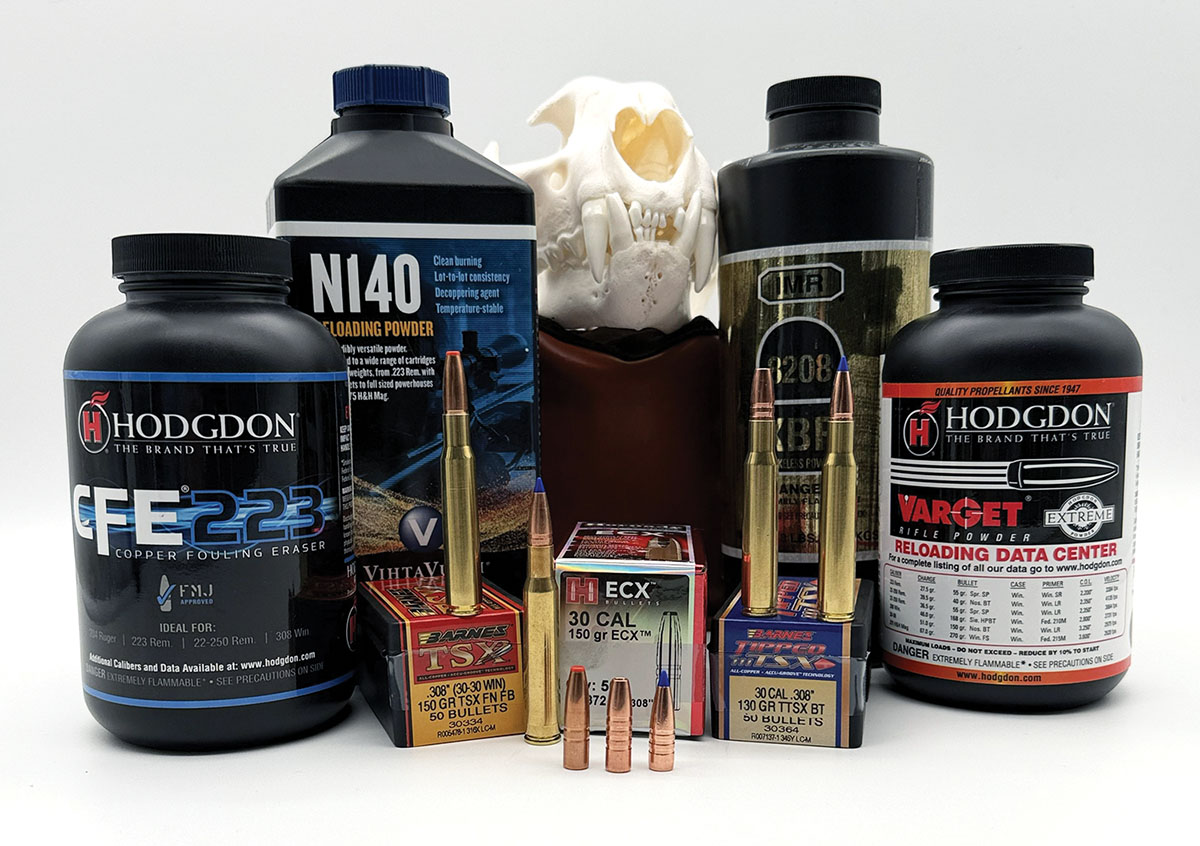
John and Joseph listed several other appropriate powders in their articles, including both 4895s, Vihtavuori N140 and N540, Reloder 15, Varget and Accurate 2495 and 2520. Before getting into a technical discussion of components, a couple of other Garand-protective points should be mentioned. Load the cartridges no longer than 3.300 inches, instead of the SAAMI (Sporting Arms and Ammunition Manufacturers’ Institute) maximum length of 3.340 inches, to avoid a pressure spike from a bullet starting too close to the lands. Primers must be seated deeply in the case pocket, lest a slam fire occur. (Been there, done that. Not fun, and you don’t want the T-shirt.) Consider raising the rifle to the vertical between shots; most powders do not approach case fill and significant fluctuations in muzzle velocity may occur as the powder “layers” in a recumbent cartridge.

Now, I am old, but even I am not old enough to have carried the M1 when I was in the army. (In point of fact, while the No.4 Lee Enfield remained the Canadian infantry rifle throughout the conflict, the First Special Service Force, a combined Canadian American unit, was armed with Garands in the Second War, and the Royal Canadian Air Force employed M1s for airbase defense during the early years of the Cold War.)
We all know the Garand was an excellent battle rifle and is great fun to shoot, but I am a hunter first and foremost. I very much enjoy chasing hoary deer with ageless rifles, iron sights and all, both to keep the playing field as level as possible and to give the old weapons a day in the autumn air. However, at nearly 10 pounds, loaded and scopeless, the Garand is not a rifle to be carried into the Muskwa after stone sheep, across the rolling grasslands of the Cariboo in search of bull elk, or spelunking through the salal-choked canyons of Vancouver Island seeking blacktails. It is well suited, however, for a blind sit awaiting forest whitetails, or baited boreal black bear.
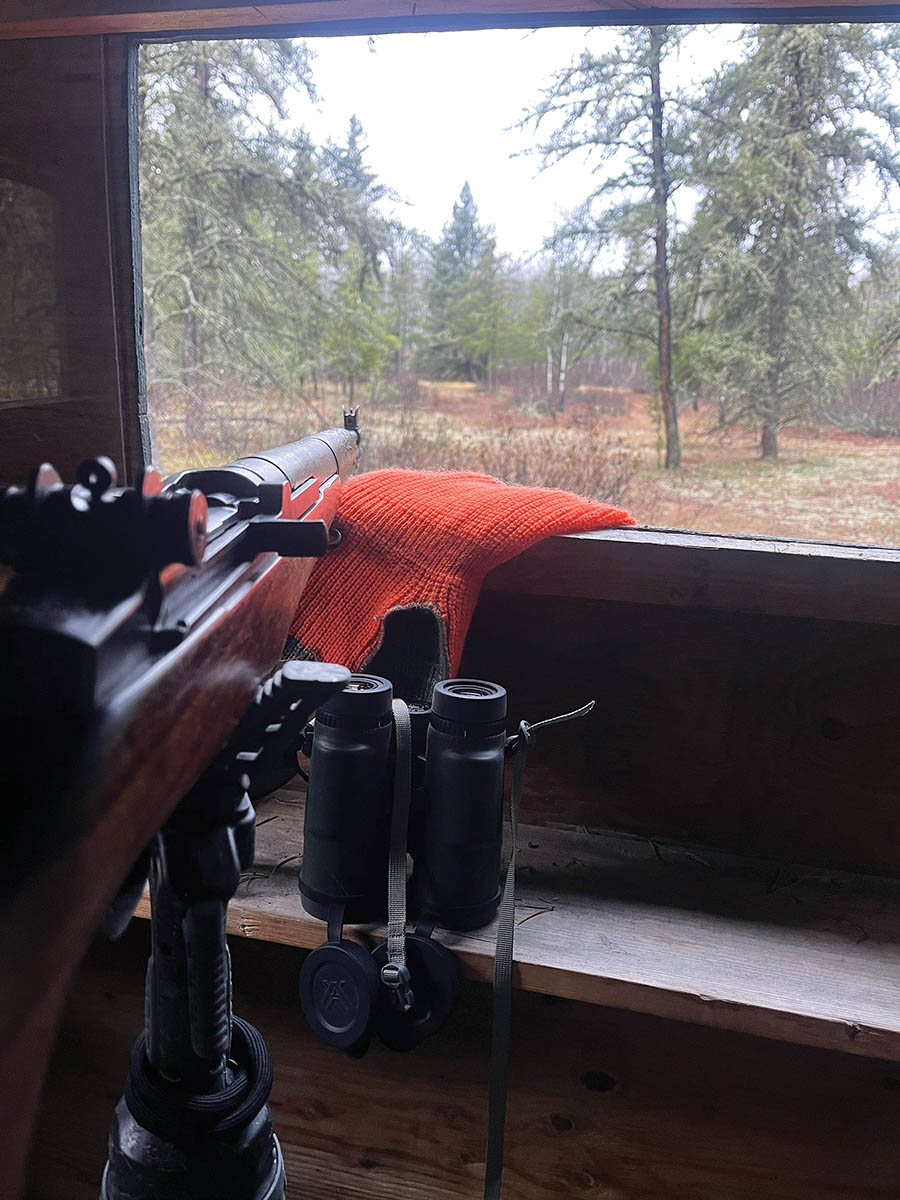
Some “Garand-safe” factory ammunition is produced, but in Canada, I could find only target rounds, nothing appropriate to hunting. Not a great deal has been written on hunting loads for the rifle and so, after settling on a place in Saskatchewan and a quarry, big-bodied northern deer, all that remained to be done was to work up appropriate rounds for the hunt. (A quick note on local regulations: Some semi-automatic rifles, including the M1, are permitted for hunting in parts of Canada. Traditionally, the Garand is loaded with an eight-round clip, but most provinces limit hunting rifles to five rounds and, as such, clips are modified so that they can only accommodate five cartridges.)
I consulted M1 Garand-specific sections of the Hodgdon and Hornady manuals. A slight digression is, unfortunately, required at this juncture. Component supplies in Canada have not yet rebounded to pre-Pandemic levels. For example, the loading manuals list Reloder 15 as an excellent choice. I am told, however, that Alliant is no longer shipping Reloder powders to the True North. RL-15 may be great in the Garand, but it is also my go-to powder for our own historic battle rifles in 303 British, and I could not divert my limited supply to feed a weapon born south of the 49th parallel. I also thought it would be interesting to try loads using more recently developed powders, and a variety of projectiles – including some mono-metal bullets. Obviously, “non-toxic” projectiles are increasing in availability as

states like California and countries like the United Kingdom ban the use of ammunition containing lead. Just this spring, British Columbia (my home province) has proposed a complete ban on the use of lead shot for all upland hunting, with a presumptive plan to phase out lead-bearing cartridges in all forms over time.
A quick note on the logistics of load work-up. The Garand’s receiver-based aperture sight is windage- and elevation-adjustable and calibrated out to 1,200 yards. In practice, the functional accuracy limit is a bit less than half that figure, around 500 yards in those whose eyes are not dimmed by age. To zero the rifle, start with the rear sight elevation knob (left) bottomed out and move eight clicks upward. This should pretty much approximate a 100-yard zero with the loads in moderation preferred by the Garand. Each click is 1 MOA. Windage is adjusted in like fashion using the opposite (right) rear knob.
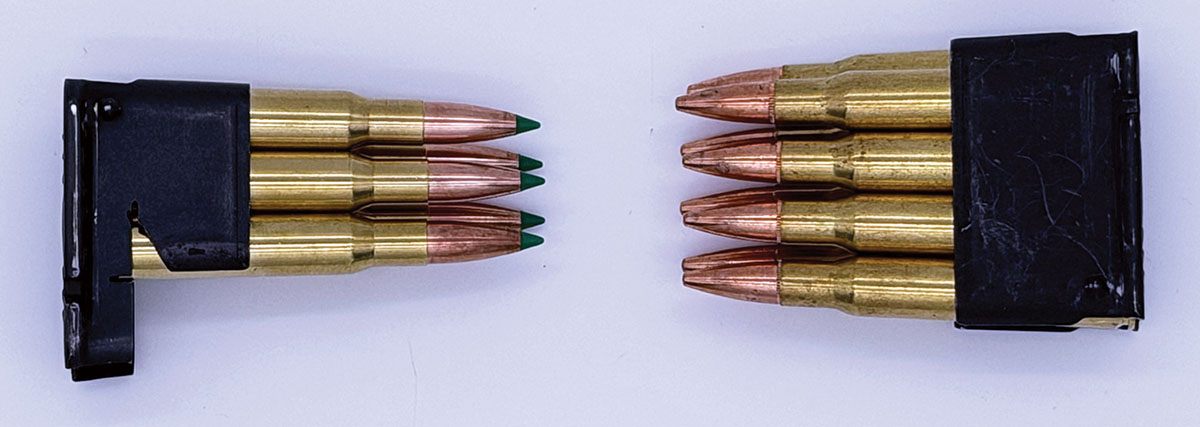
Data was collected shooting seated from a sandbag rest. The accuracy values quoted for 50 and 100 yards were based on 5-shot groups at the respective ranges (1 group at 50 yards; 2 groups at 100 yards), while the velocity was the average of fifteen rounds, fired in 5-shot strings, allowing the barrel to cool to ambient temperature between each string. Accuracy at 200 yds was assessed by the number of hits on an 8-inch steel target, out of 5 shots attempted. Even with a sight system as elegant as the Garand’s, peep sights are not forgiving of the frost that falls on an old man’s sight after sixty winters. The results reported are my own. Doubtless, younger eyes and steadier hands would achieve better groups, but you know,
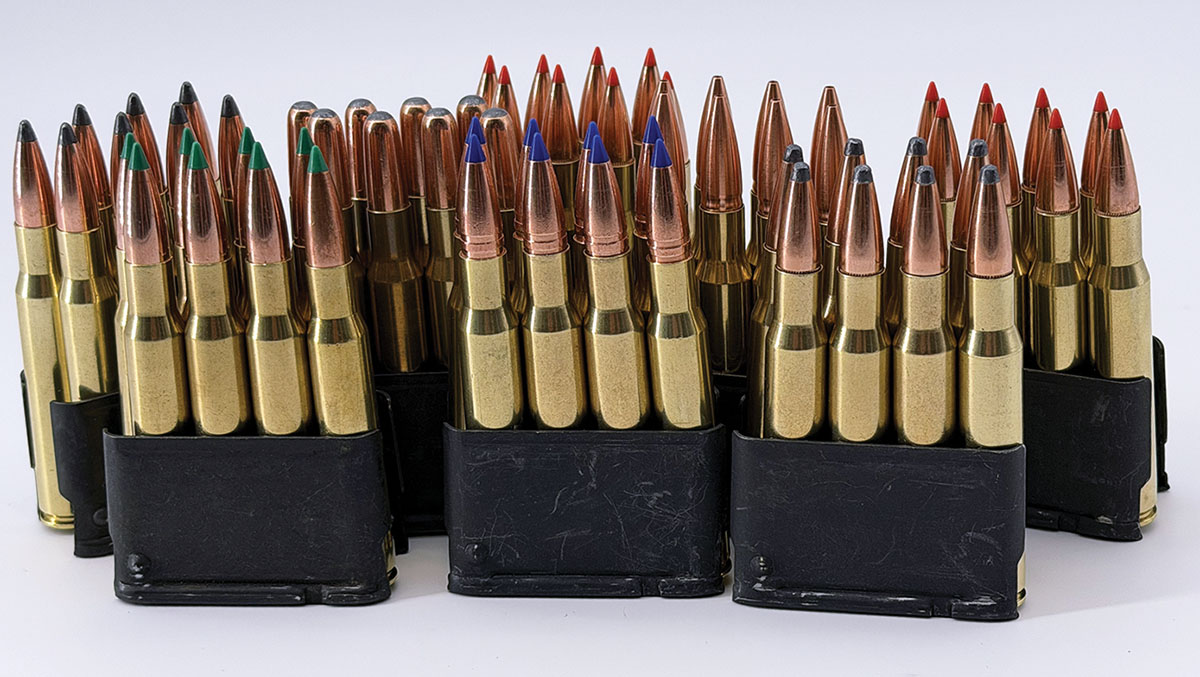
sometimes I wonder if the average Joe Golfer learns much by trying to duplicate the swing of Tiger Woods. Perhaps it is better to offer real-world results, as in the accompanying table.
In deference to any litigator who might read this article, please note that all load data is informational, specific to my rifle only, and should not be duplicated without first working up from lower powder charges. Most reloading manuals emphasize the importance of staying within the pressure curve safe zone for the cartridge and rifle. This is most easily done by loading an appropriate weight projectile with a charge of powder that produces M2-level velocity. Roughly, that yields a handload with a 150-grain bullet at 2,750 feet per second (fps) or less. However, I noted a bit of a disconnect between this rule of thumb and the Hodgdon recommendations, specifically regarding one powder I had available, CFE 223. Although the
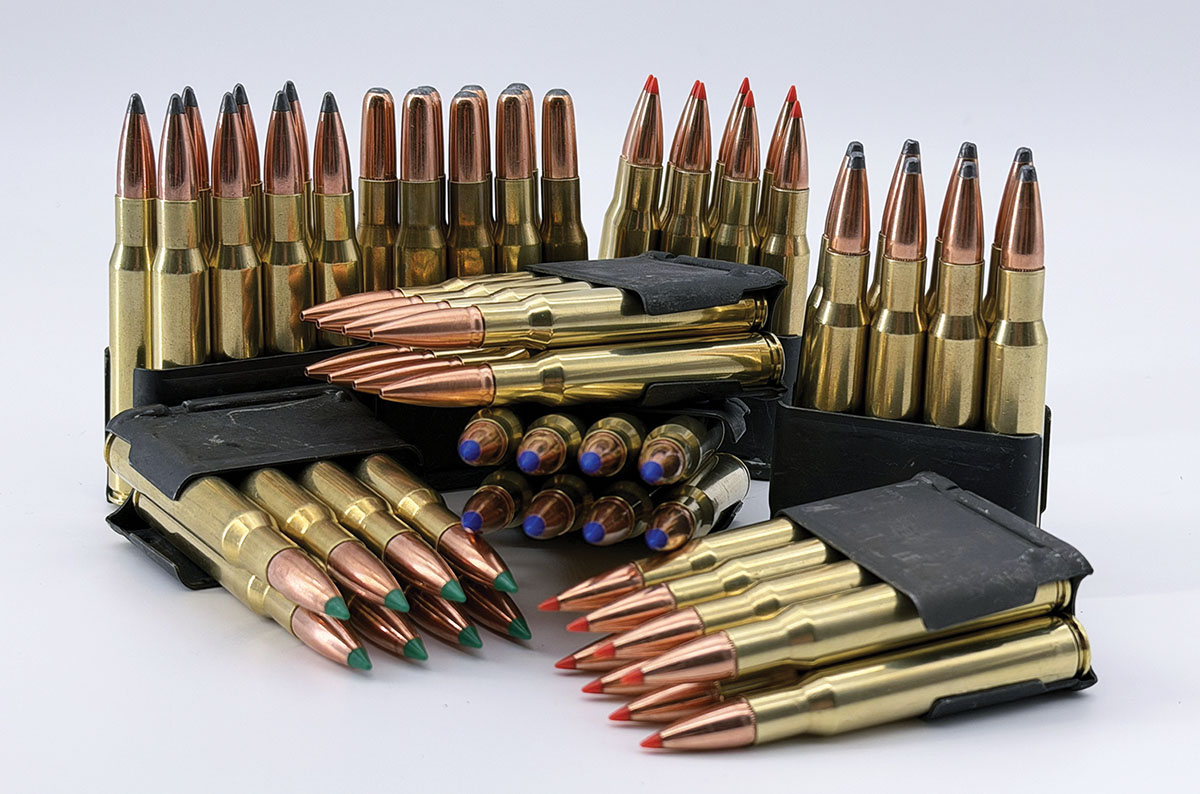
pressure recorded by Hodgdon was within the safety window, the resulting velocity exceeded 2,900 fps. Honestly, I did not want to trash my rifle, but I did think it important to reproduce some of the published data for safety. Thus, I ran three projectiles with CFE 223 at what was predicted to be approximately 50,000 psi. It produced speeds over 2,900 fps, without functional failures (in the course of around 50 shots with that charge weight).
Emboldened, if no wiser, I elected to try another, more modern powder that was not on the Hodgdon M1 recommendations list (IMR-8208 XBR). Reviewing the standard 30-06 data for traditional cup and core projectiles, and for monometal bullets, I chose very conservative charge weights that should keep the pressure no higher than 50,000 psi. The velocities produced were within the putative safe zone, and the rifle functioned flawlessly.
For the whitetail hunt, I eventually settled on 150-grain Nosler Ballistic Tip powered by Vihtavuori N-140, although almost any of the loads listed would have been adequate. My rifle did not seem to like the 150-grain TTSX, but shot all of the other monometal projectiles well. Interestingly, I found it quite accurate with the TSX bullet that was designed for use in the 30-30. At open sight ranges (with my eyes), the 0.184 G1 BC would not concern me at all.
The early deer season in the Saskatchewan forest zone is usually a pleasant time – and so it was last
October when my buddy, Joel Friesen, and I decided that I would pursue an old Roman-nosed deer with a wildly malformed right antler – apparently the result of a genetic abnormality –that he had seen on his game cameras. After three days waiting patiently in the area that the buck called home, I was able to draw a bead on the old warrior about 80 meters from my blind. But my gentle trigger pull was followed by a resounding “Click.” Apparently, when quietly charging the Garand in the predawn darkness, I had forgotten that bringing the rifle into battery requires a certain amount of force. After counting to ten (to account for the possibility of a hang-fire) and deciding that nothing would be gained if nothing was ventured, I cycled the action and let the bolt slam home. The buck looked up but did not bolt. Seconds later, the Ballistic Tip struck with audible force, piercing both longs and exiting. He piled up in the willows, fifty yards from where he stood.
The handloaded cartridge and the Garand performed faultlessly. We would expect nothing less from General Patton’s venerable, proven and elegant implement.
.jpg)