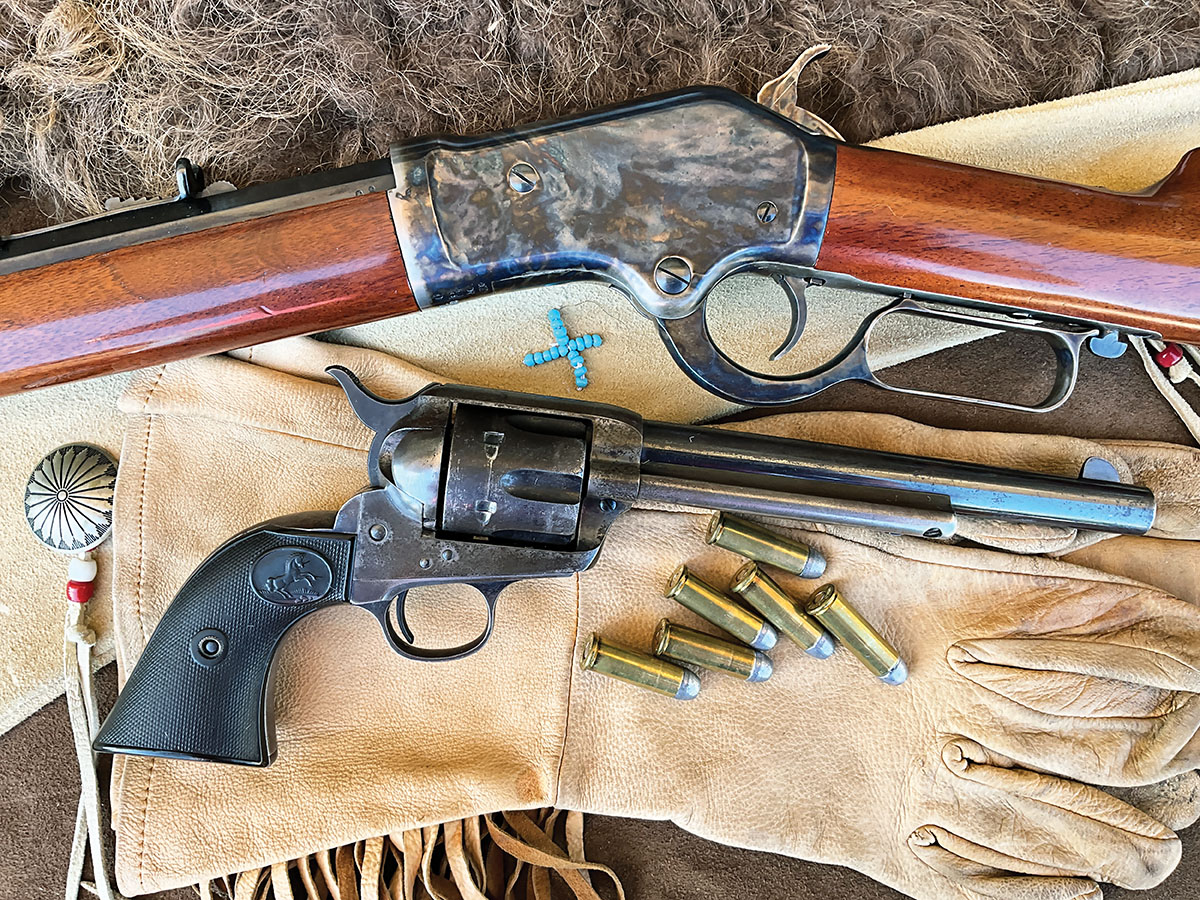
The Burgess rifle and Colt Frontier Six Shooter were a perfect match as both were chambered in 44 Winchester Center Fire (44 WCF).
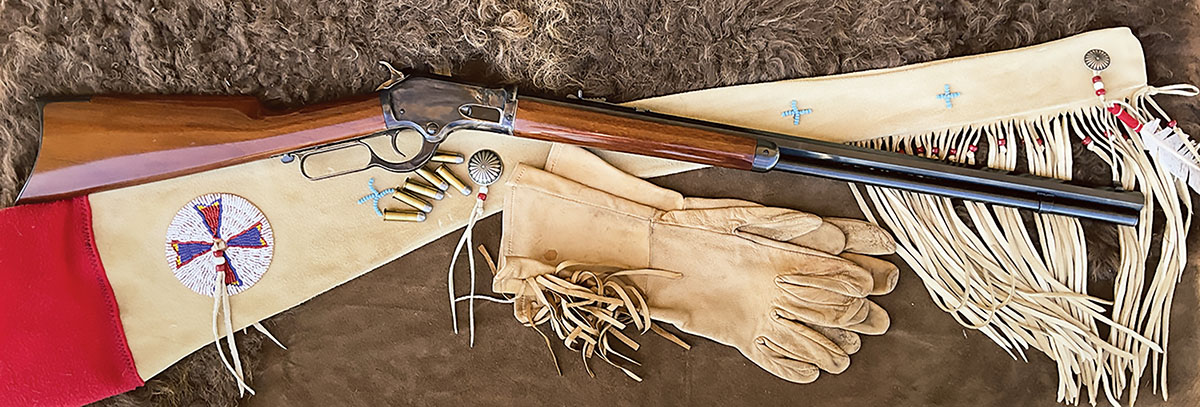
The Uberti 1883 Burgess is a faithful reproduction of the Colt Burgess rifle.
Colt handguns are legendary. The Colt Python, Boa, Cobra, Detective Special, 1911A1, Single Action Army…this list goes on and on. Few know that Colt once made a lever-action rifle that rivaled Winchester’s famous 1873. Even fewer know it was designed by a firearms genius who rivaled John M. Browning. He worked for Colt, Marlin and a slew of other companies, and had over 900 patents, including his famous folding shotgun. The inventor was Andrew Burgess, and the rifle is the Colt Burgess lever-action.
With a few exceptions, Colt focused on producing excellent handguns. In the 1880s, Colt was at the top of its game, producing the Colt Single Action Army, aka the Peacemaker; the Colt Model of 1877, christened the Rainmaker (32 Colt), Lightning (38 Colt), and Thunderer (41 Colt); and the Colt Model of 1878, which was given the awesome name the Omnipotent. Colt also had a line of smaller pocket pistols and an excellent line of shotguns. What it didn’t have was a line of rifles to complete the portfolio.
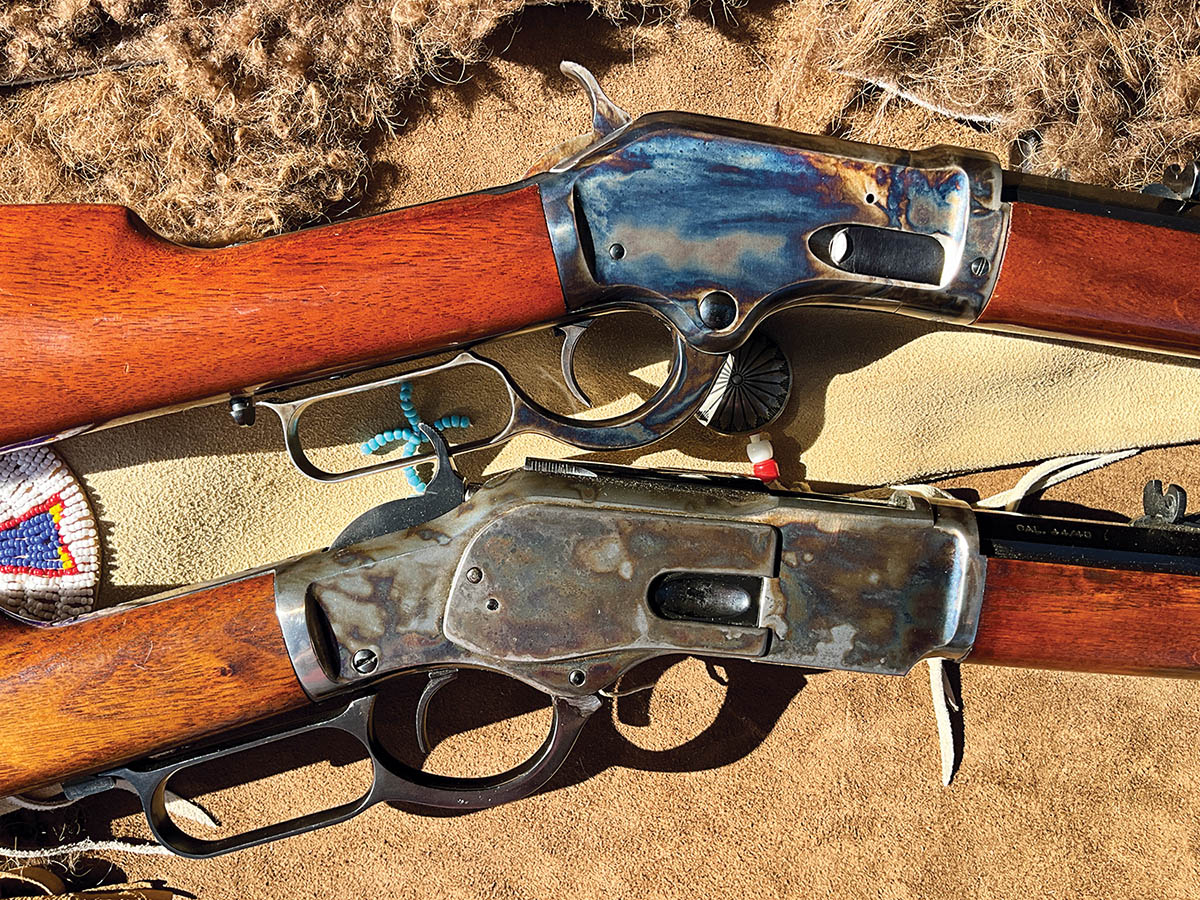
The Colt Burgess had a shorter receiver than the Winchester 73.
At the same time, Winchester was producing the Model 1866, Model 1873 and Model 1876. Their rifles were
so well-known that any lever-action, such as Whitney-Kennedy, Marlin and Burgess, was called a Winchester, regardless of the name stamped on it.Andrew Burgess had already partnered with the Eli Whitney Company to produce a lever-action rifle in 1878 that could chamber the military 45-70 rifle cartridge. He did so a full eight years before Winchester. With this pedigree, Colt contracted with Burgess to develop a smaller lever-action rifle to compete with Winchester’s hot seller, the Model 1873. Colt had been chambering their Single-Action Army and double-action Model of 1878 revolvers in the 44 WCF cartridge for years and branding them as the Frontier Six Shooter. Adding a rifle in the same cartridge made excellent business sense. Anyone making plans to navigate the wild and woolly West would look at using one cartridge in both long gun and revolver as a plus. Historians have stated that the 44 WCF killed more game and slew more men than any other cartridge prior to World War I.
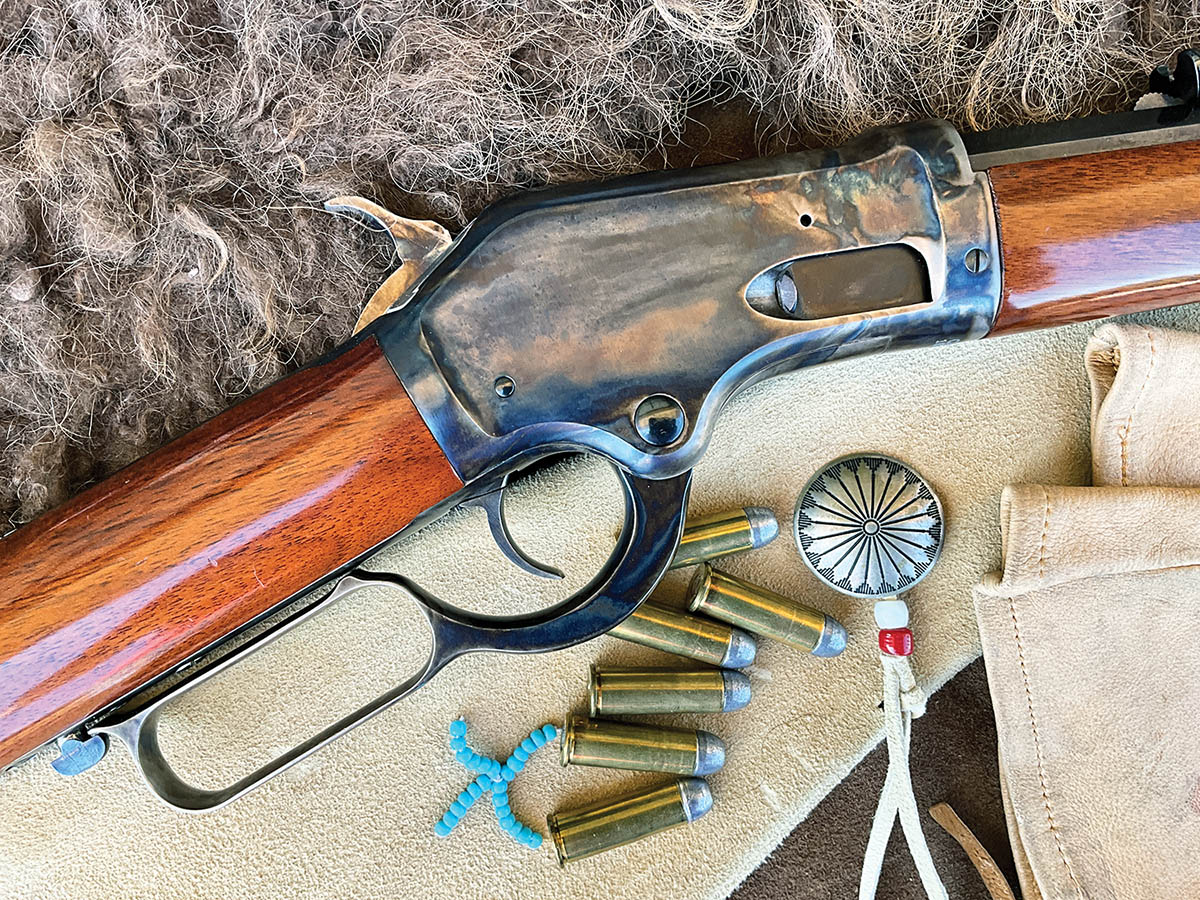
The disassembly pinhole on the Burgess receiver was another entry point for dirt and grit.
In 1883, advertisements heralded the new Colt Magazine Rifle in 44 Center Fire. True to form, Colt made no mention of it being chambered in the Winchester
cartridge. In fact, the ad did everything it could to not mention Colt’s competitor, saying that the new rifle used the same cartridge that was used in its “Frontier” pistols. As you may know, Colt branded three of its existing models, the Single Action Army, the Bisley (a version of the SAA but with target grips) and the Model of 1878 as “Colt Frontier Six Shooter,” with it clearly shown on the barrel. It was Colt’s way of marketing guns that used the Winchester cartridge without saying so. The ad also includes an image of the 44 WCF cartridge but labels it the Colt Magazine Rifle .44 Cal. The advertising department clearly was doing somersaults to avoid giving any credit to Winchester. Another advertisement later admits it uses the same cartridge as a Winchester rifle.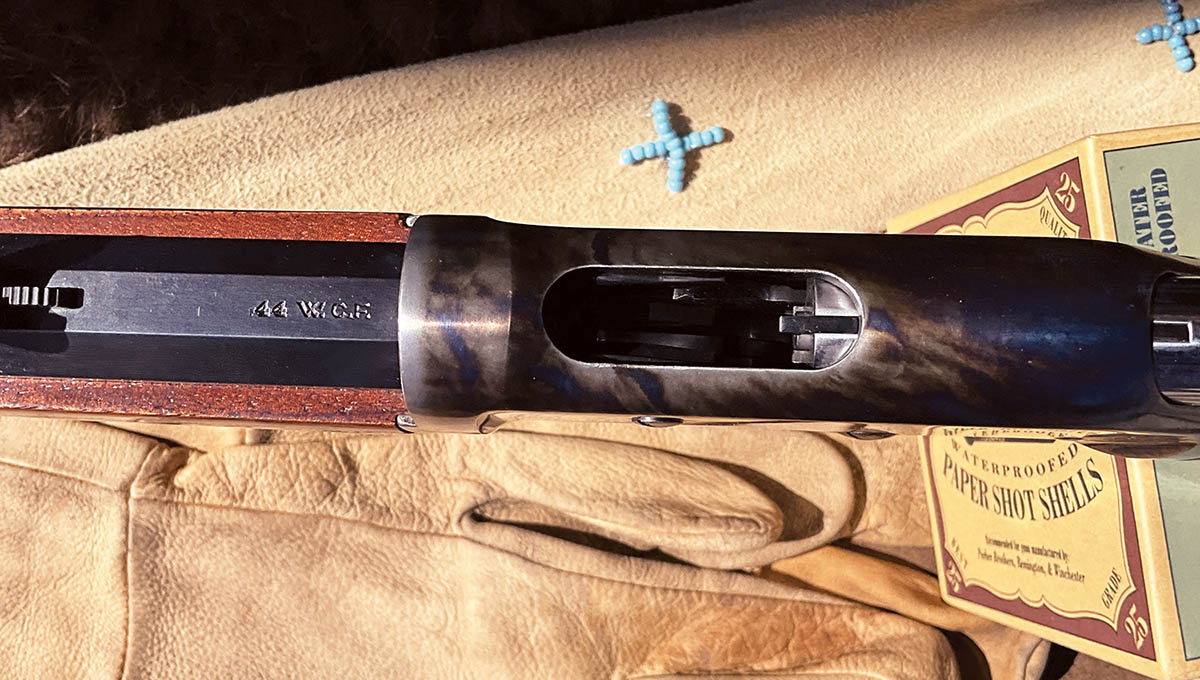
With no dust cover, the ejection port was an easy way for dirt and debris to get into the action.
The Colt Burgess was offered in three models, all
chambered in 44 WCF, and differentiated by their barrel lengths. The rifle had a 251⁄2-inch barrel, and varied from octagon, round and half round/half octagon. The carbine had a 20-inch round barrel, and the light (also called small or baby) carbine had a 20-inch round barrel that had been reduced in diameter.By 1883, Andrew Burgess was no stranger to lever-action rifles, having been designing them since 1872. We can assume he had looked inside the Winchester 1873; after all, what inventor wouldn’t be curious how someone else was getting the job done?
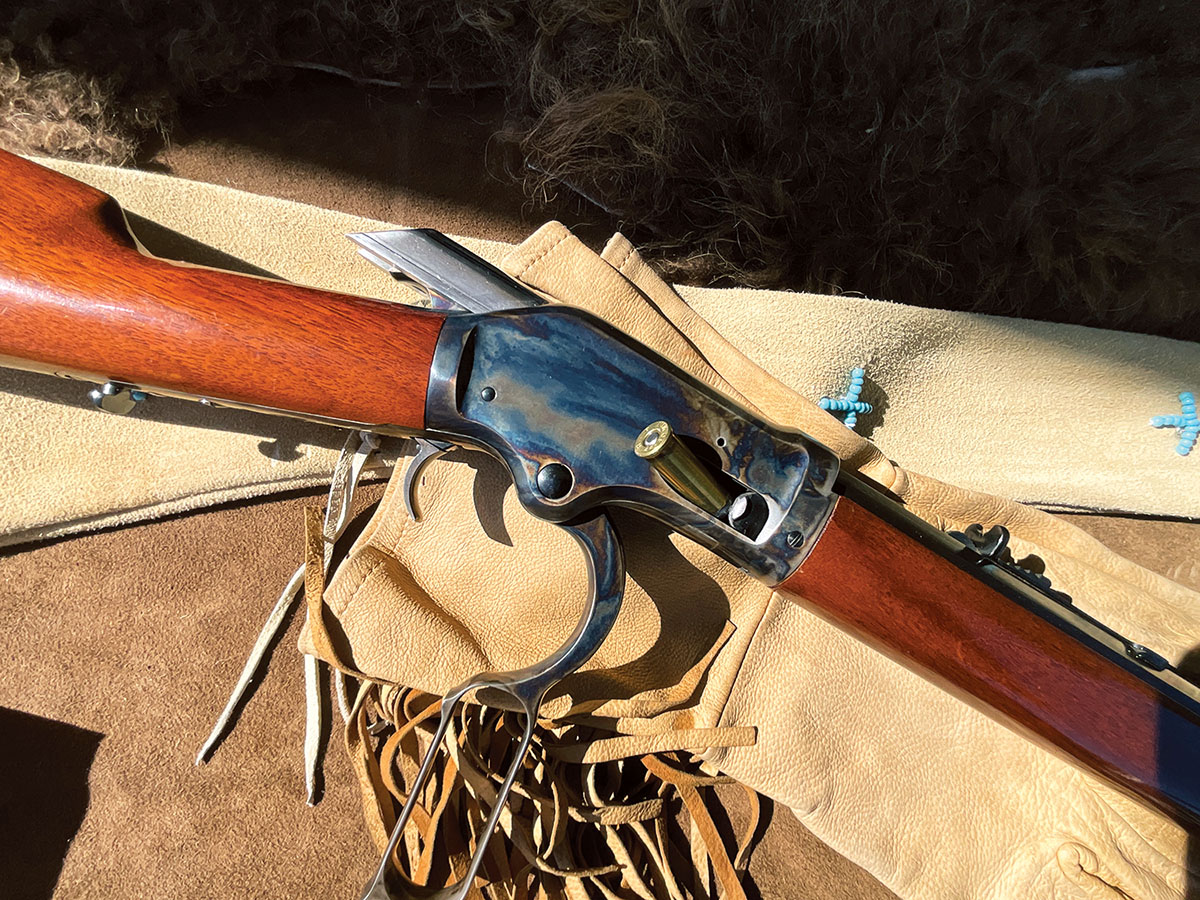
The loading gate on the Burgess is much easier to operate when compared to a Winchester 73.
To the average shooter, the Colt Burgess looks much like the Winchester 73, and even the Marlin 1881, but if you look closer, you will note that the receiver on the Colt Burgess is much shorter than the Winchester 73, making it more like the Winchester 1892. Yes, the Colt Burgess was a toggle-link action, as was the Winchester 73. While the 73 had two sets of links and pins set into the frame in line with the bolt thrust, the Burgess directed the bolt thrust down to the pin that held the lever in place, thus making the action shorter.
Overall, the Colt Burgess was very well made in terms of fit and finish, so why was the production so short, with only 6,403 produced before the line was shut down? Well, that brings us to the Colt/Winchester handshake legend.
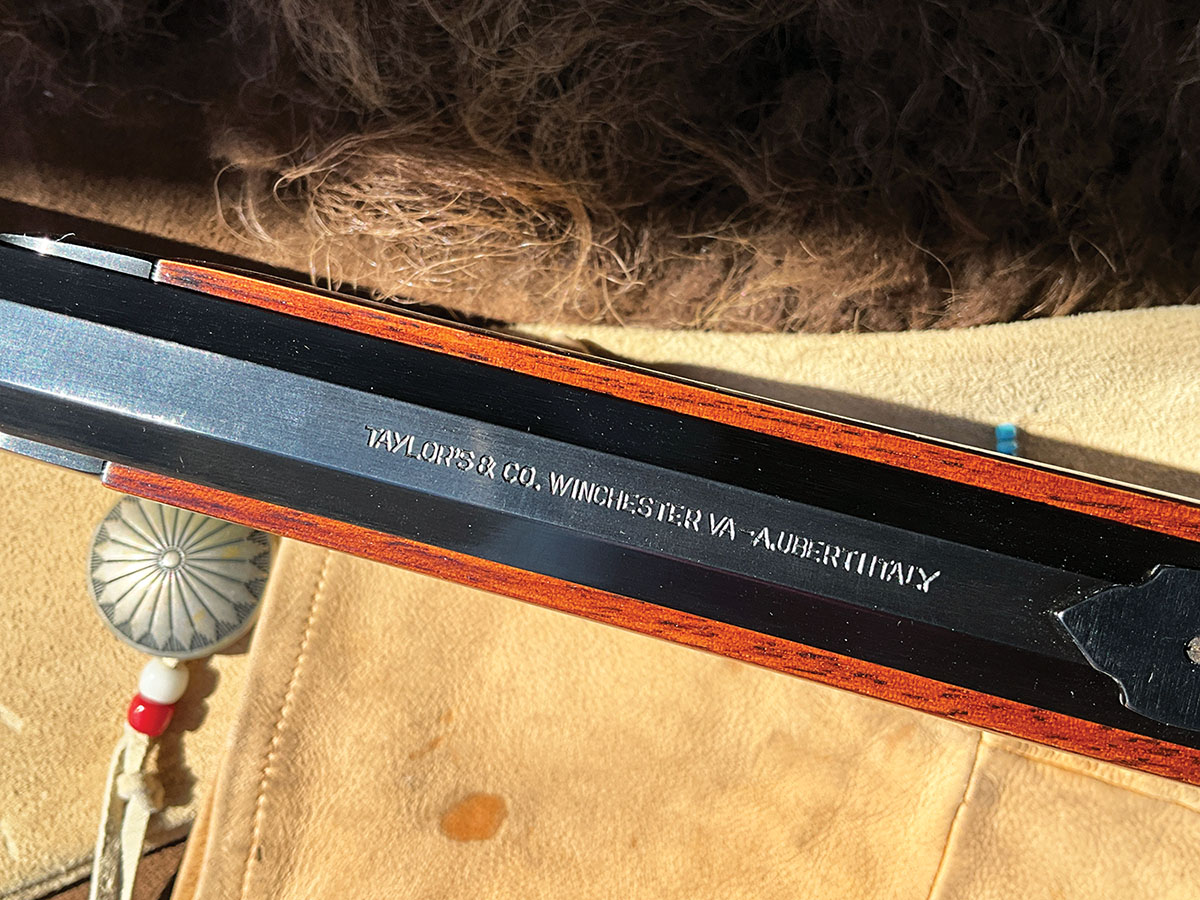
Taylor’s & Company proudly roll-stamped the 1883 Burgess barrel.
In the mid-1880s, Colt was riding a production wave. Their line included everything from economical pocket pistols to elegant shotguns. They were in the middle of a contract with the U.S. Cavalry to supply them with the ruggedly famous Colt Single Action Army, as well as supplying parts to repair the revolvers the army had been using since 1874. But Winchester was importing lower-
priced handguns and shotguns to compete against Colt.With the introduction of the Colt Burgess, some claim Winchester was hit hard financially. After all, Marlin and Whitney Burgess had already beaten them to the market with a lever action that could chamber the powerful 45-70 developed by the government to use in the Springfield Trapdoor rifle and carbine, and now Colt was chewing into their Model 73 sales. But Winchester was still one of the top three arms makers in the U.S. and was aggressively marketing lever-action rifles to the armies around the world, so I doubt they were terribly concerned, but business is business. Watch the pennies and the dollars will watch themselves, as the saying goes.
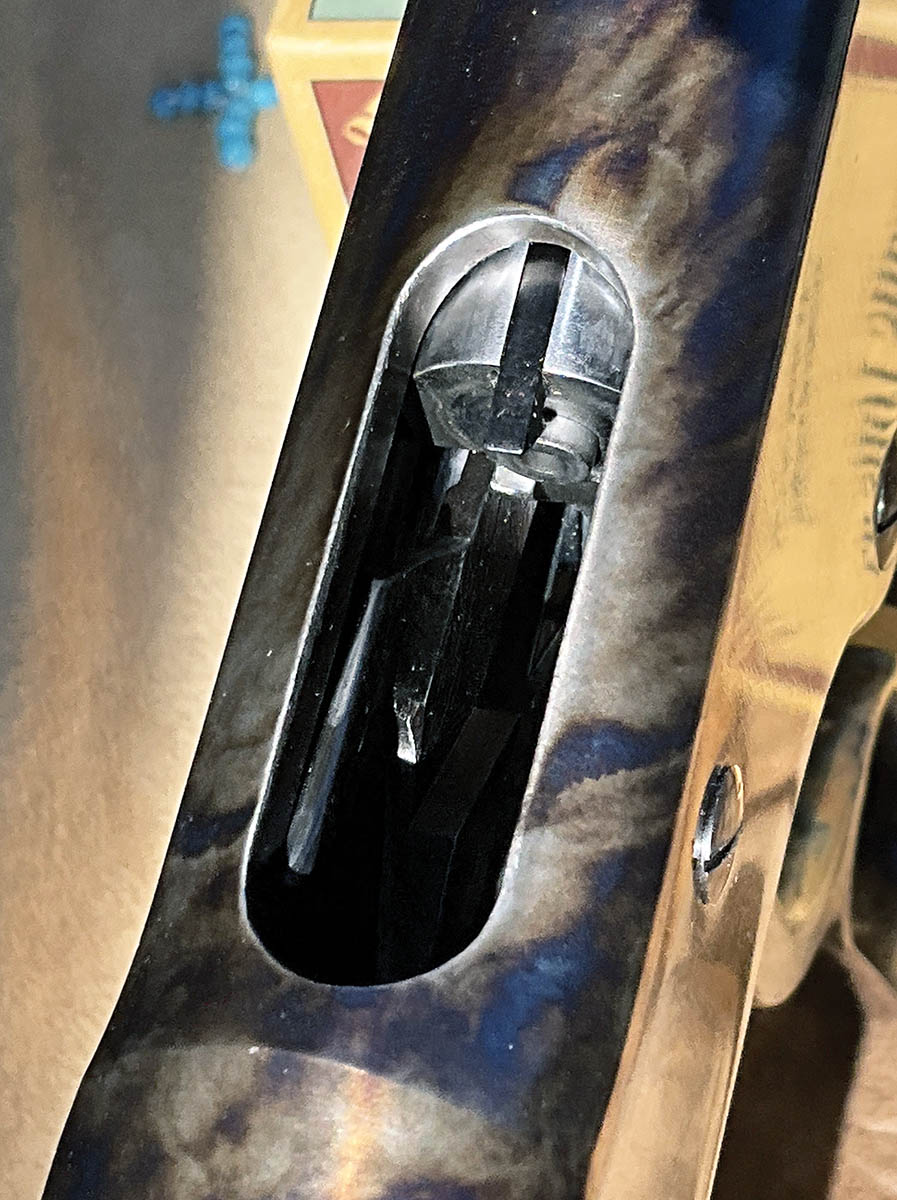
The firing pin bushing also acts as the ejector.
According to the story, Mr. Bennett, Vice President of Winchester, went to William Mason, Colt’s former Master Mechanic, who was then working for Winchester in the same capacity. Bennett requested that Mason prepare a few toolroom examples of slide-action rifles and two .44-caliber revolvers that Winchester could produce to compete with Colt. As told by Edwin Pugsley, General Superintendent at Winchester in 1955,
“Mr. Bennett went up to Colt with these two big guns in his satchel. He was cordially received by the President of Colt, and they talked about a little of everything, and finally Mr. Bennett said, ‘We would like it very much if you could help us out; we’re in a dilemma, and I know that if you would, you could help us greatly. We are thinking about going into the pistol business, and I’ve got a couple of models here, and if you’ll just criticize them and tell us where they are wrong from the trade standpoint, you’ll save us an awful lot of money and time.’ Mr. Bennett got the pistols out, and they discussed the various merits and demerits of the pistols, and then they got to talking about rifles in general. The President of Colt sent for whatever cost figures they had, and the two men worked over them all afternoon, and when they got through, Colt was surprised to find that they had never made any money in r’fles – there just was no money in rifles, and he had been able to prove to Mr. Bennett that he’d lose his shirt if he went into the pistol business. There was absolutely no money in the pistol business, and so as a result, Winchester never went into the pistol business, and Colt dropped the lever action rifles.” Is the story true? Maybe it was embellished. Colt did stop production of the Burgess, but they
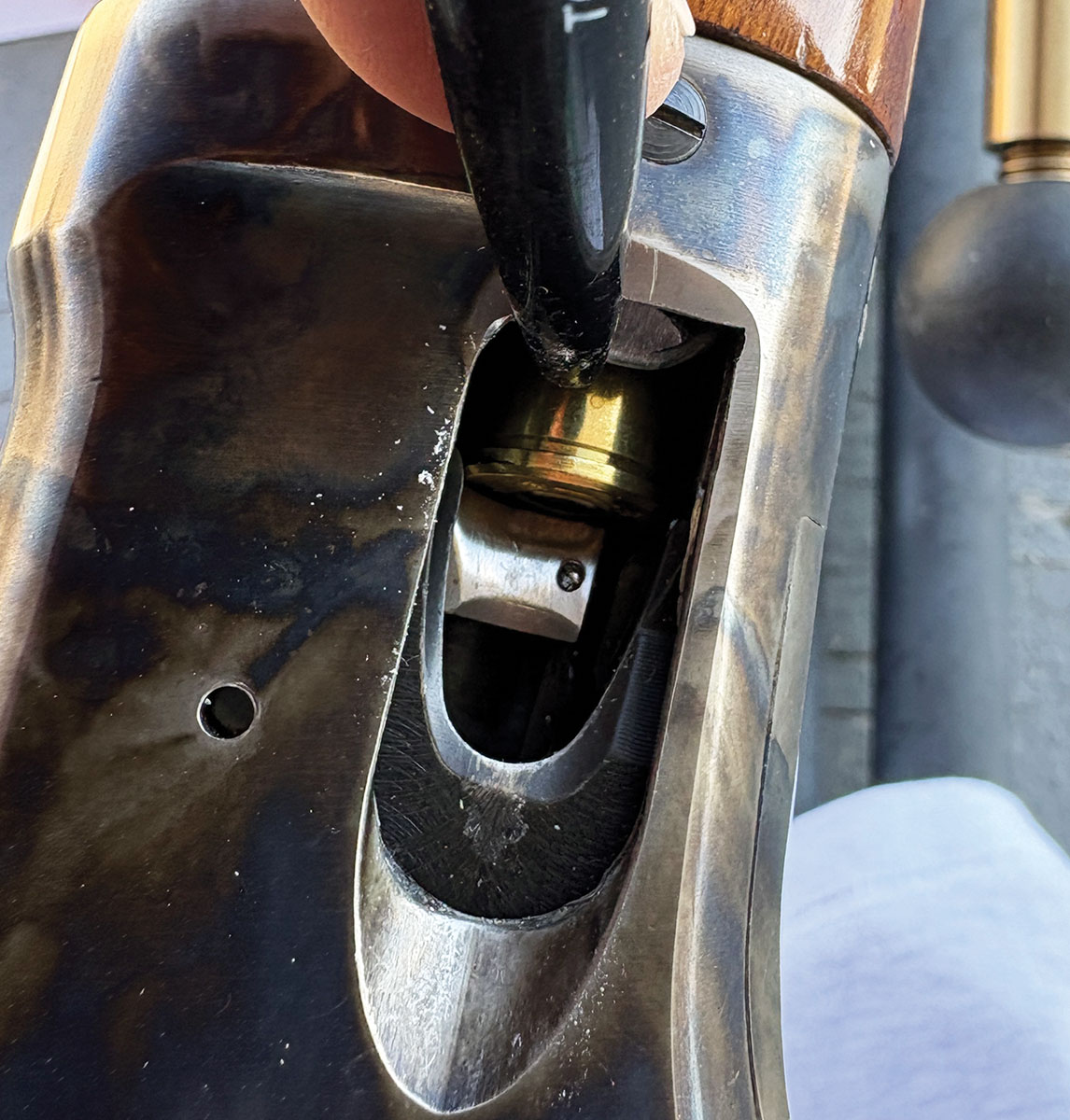
The Burgess has a cartridge catch to prevent accidental unloading.
commenced producing 200,000 pump-action Lightning rifles, so that isn’t staying out of rifle production. More likely, there were problems with the Burgess that would take too much retooling to overcome.
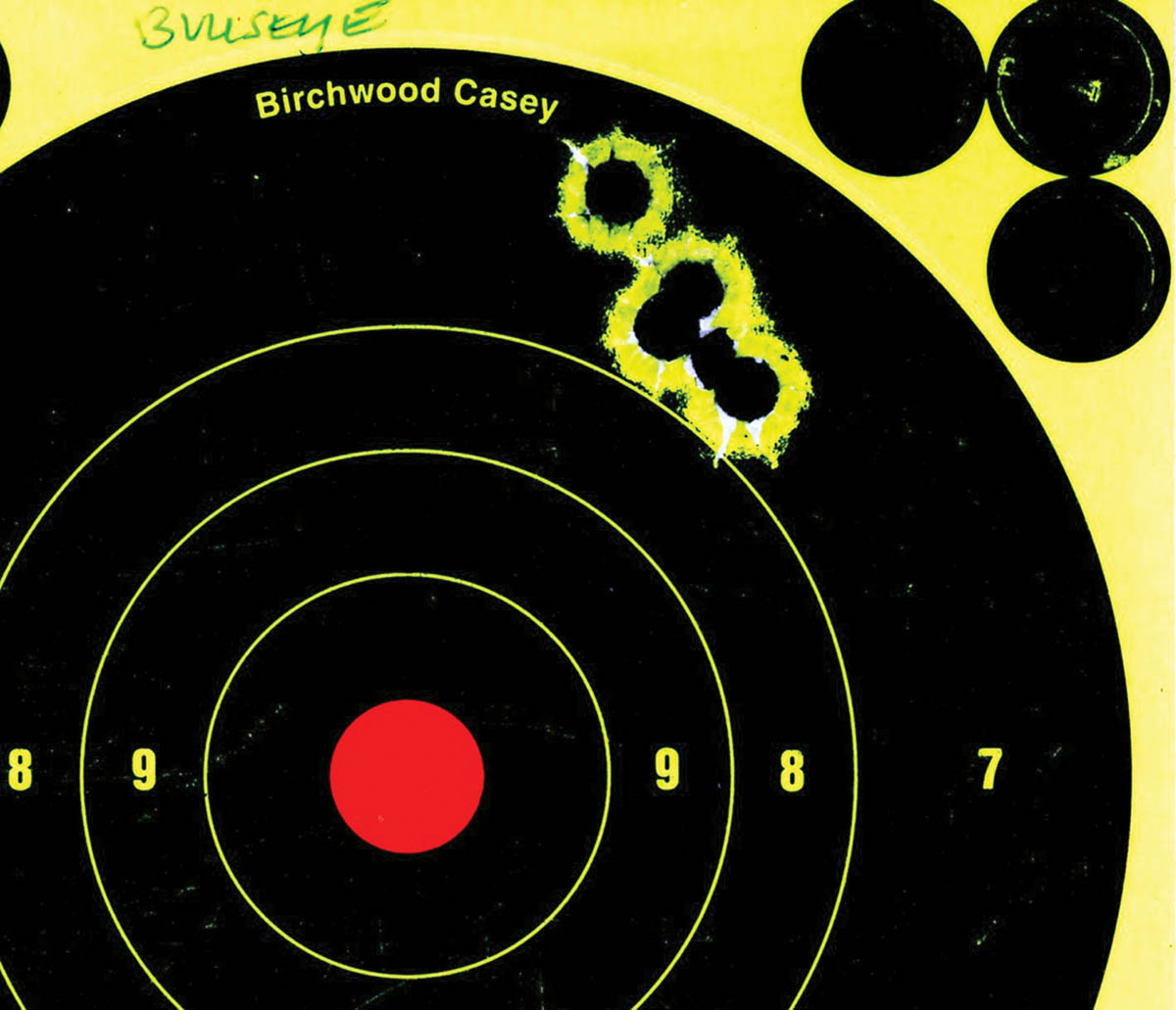
Bullseye lived up to its name.
One glaring issue is the lack of a dust cover over the ejection port. Winchester’s earliest models had this same issue, which allowed debris to work its way into the action, but in 1873, they added a sliding dust cover that opened automatically when ejecting a spent case. Colt must have missed that lesson in development. Another issue was how thin the forearm was next to the feed port. Unlike the simple spring King’s gate found on Winchester rifles, the Burgess used a complicated gate that slid forward under the forearm wood. It is rare today to find a forearm that doesn’t show splitting or breakage in that area. Perhaps one of the biggest design flaws is the circular ejector.
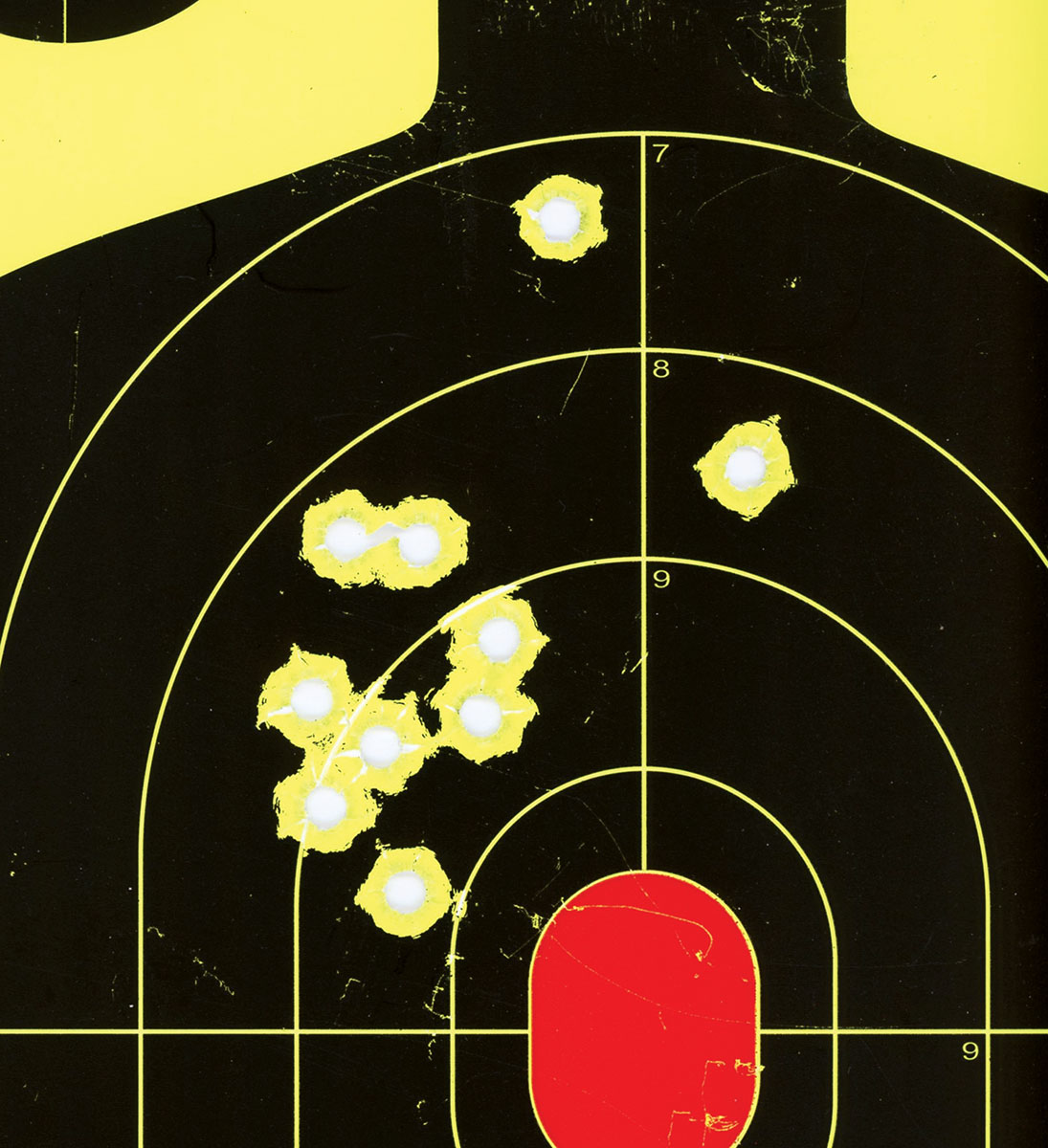
The HSM Cowboy loads fed and ignited perfectly.
Unlike other designs, the Burgess has a donut-shaped ejector surrounding the firing pin. It is almost identical in size to the cartridge primer, so it bears the brunt of primer thrust when the cartridge is fired. Repeated firing can cause the firing pin to peen, preventing it from moving fully forward when the trigger is pulled.
It is unfortunate that Colt didn’t continue improving the design and eliminating these issues, as the overall design was very good and easy to work with. In fact, the action came out of the frame as a cassette for repairs. In the final analysis, it doesn’t matter whether Colt and Winchester reached an agreement or whether Colt wanted to go in a different direction in rifle design. The Colt Burgess ended production in 1885, with just 6,403 rifles produced, making them rare in the collecting market, and those found are often well used.
About a decade ago, Uberti tooled up to make a run of Colt Burgess replicas, which were a hit with cowboy-action shooters and lovers of all things Colt and the Old West. These days, it’s almost as hard to find an Uberti 1883 Burgess as it is to find an original.
The Uberti 1883 Burgess rifle was offered in the original 44-40 and the 45 Colt. Some may ask why Colt didn’t chamber its rifle in 45 Colt to begin with, thereby avoiding the Winchester connection. We need to understand the changes in case manufacturing since the late 1800s. The original 45 Colt case had almost no rim or rebated area to allow reliable extractor action. That changed as case manufacturing went from folded copper and brass balloon-head cases to stronger, formed-brass heads with an extractor groove.
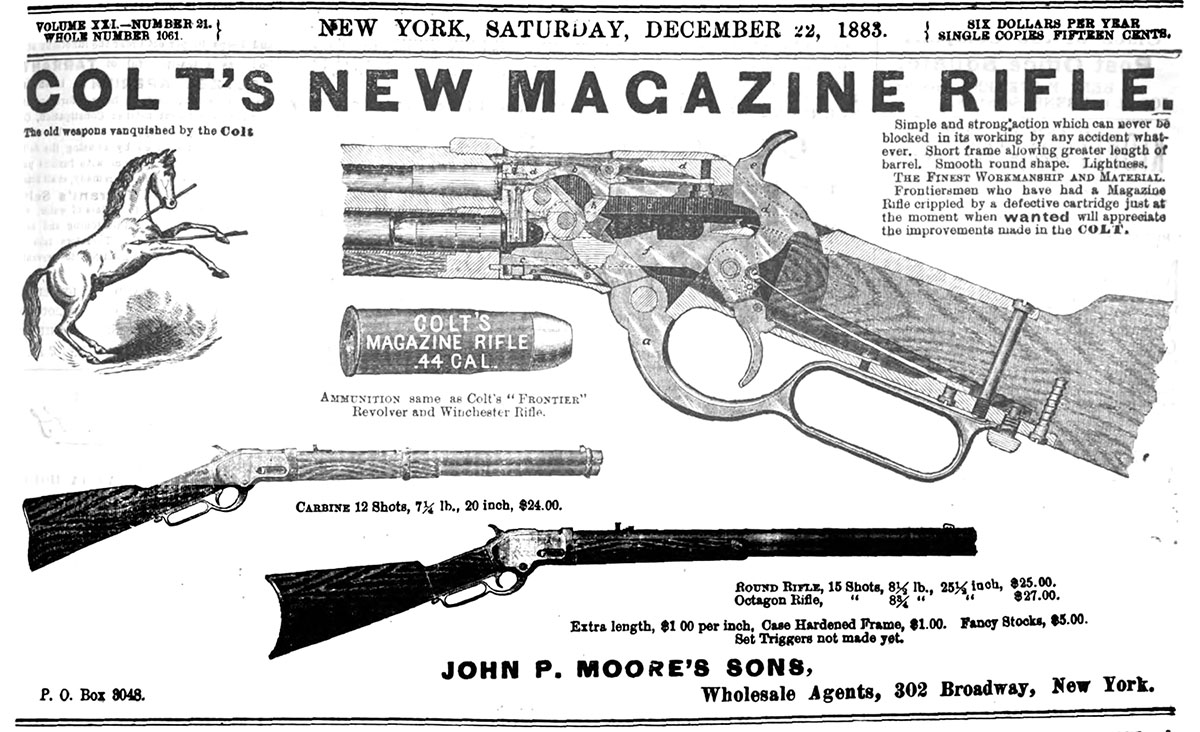
In December 1883, the Colt Burgess was advertised in the Army Navy Journal.
The Uberti 1883 Burgess rifle is a faithful reproduction of the original in most ways, including the lever toggle and bolt assembly. The few ways it isn’t like the original can be forgiven. For one, the Colt Burgess rifle didn’t have a magazine ring to secure the barrel and magazine. The butt-
plate and forend nose cap were also shaped differently. I can accept those things, as Uberti kept the Burgess rifle lower-priced by using components they also used on their popular reproduction Winchester 73. One thing they kept true to the original was the 25½-inch barrel. Since the Burgess receiver was shorter, they could add barrel length and still match the overall length of the Winchester with a 24-inch barrel. To many, the extra barrel length meant more velocity and better accuracy.The rifle I used for this article was new and never fired, but the action was smooth and easy to work. The brass cases were ejected almost in my lap, which is a welcome change from my Uberti Winchester that tosses the brass five to ten feet forward and to the right, which, in many Cowboy Action Shooting (CAS) matches, is beyond the reach of brass pickers. The ease of loading the cartridges was a pleasure compared to using a King’s gate on a Winchester, which abrades and cuts my already battered fingers, and the Burgess design has a catch that prevents the cartridges from popping back out. If I had a dollar for every time a loaded cartridge came flinging back out of my Winchester 73 while loading, I could pay for a nice steak dinner!
The biggest problem I had with the Uberti 1883 Burgess would also be the easiest to fix; the front sight blade was extremely difficult to see against the black background of a target. Since the rifle was on loan from a fellow CAS shooter, I resorted to balancing the rifle in a rest with my right hand while manipulating my bifocals with my left. I blame the poor grouping on my inability to separate the sight post from the target.
Taylor’s & Company was the U.S. agent for these guns, and in the example I played with, the extra quality control is evident. While it would take practice for a CAS competitor to match those using a Winchester 73, it would still be fun to have something just a little different and pair it with Colt SAA revolvers in the same cartridge. While they are no longer being offered by Taylor’s & Company, we can assume that if enough Old West lovers requested another run on Taylor’s & Company social media platforms, it would come to pass.


.jpg)
.jpg)