

38-40 Winchester Sixguns Pet Loads
Why the 38-40 Still Earns Respect
feature By: Brian Pearce | August, 26
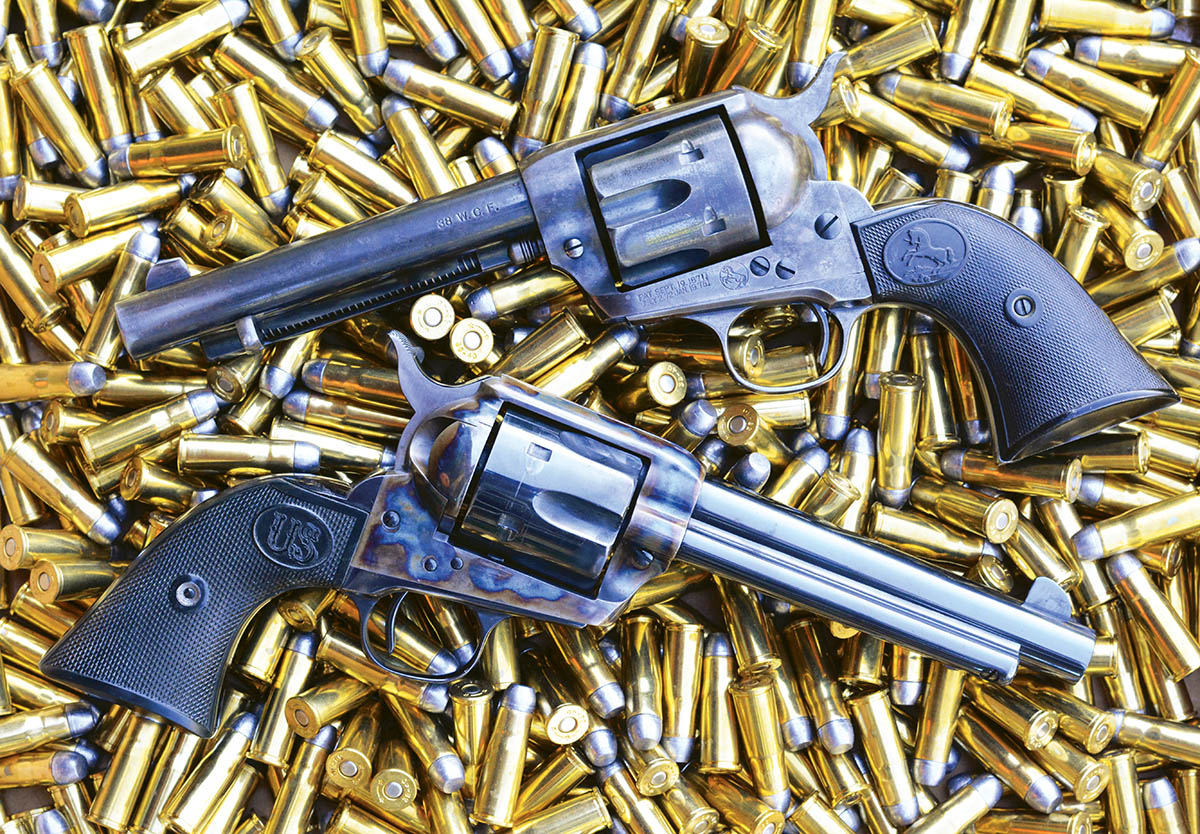
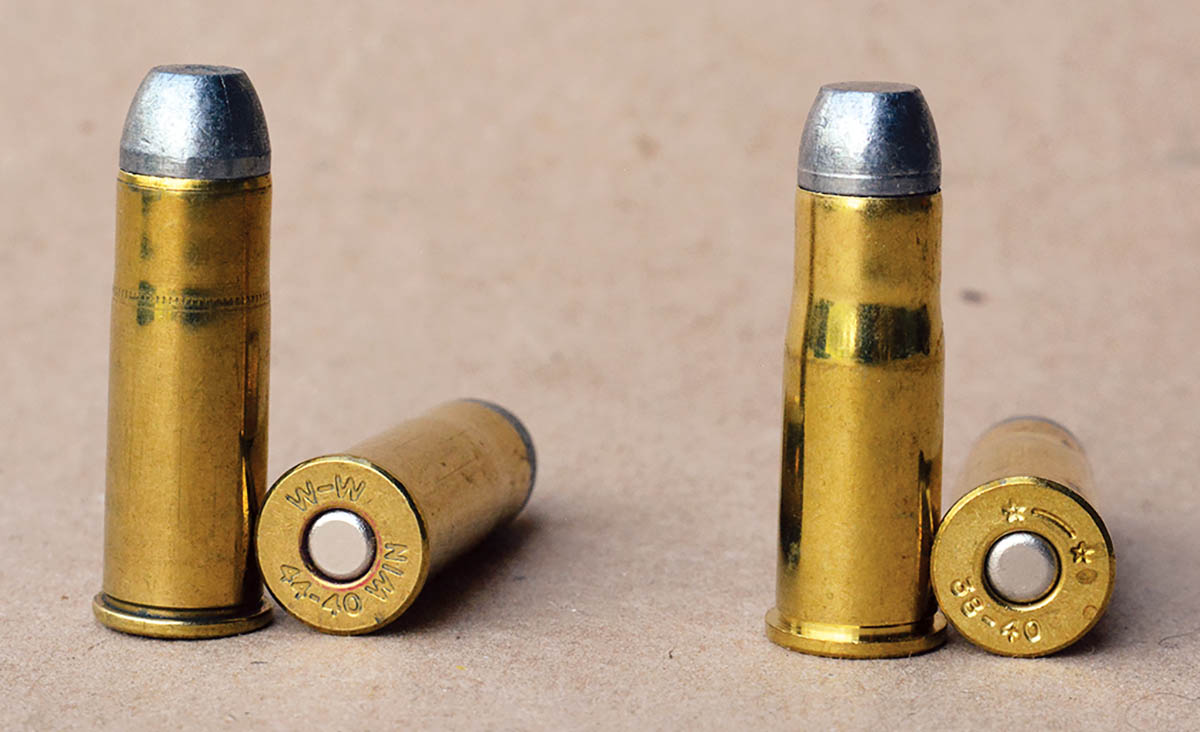
The 38 Winchester Center Fire, or more commonly known as 38-40 Winchester, was developed by 1879 and first listed in 1880 in conjunction with the Winchester Model 1873 rifle, with records indicating that the first rifle was shipped in 1880. It was based on a necked-down 44-40 Winchester case, with early loads containing 40 grains of black powder that pushed a 180-grain inside, lubricated lead bullet to 1,324 feet per second (fps). While it was a distinctly different cartridge than the 44-40, the ballistic differences were not substantial. Nonetheless, it became popular for many years and was chambered in additional rifles from Winchester, Marlin, Colt, Remington and many others.
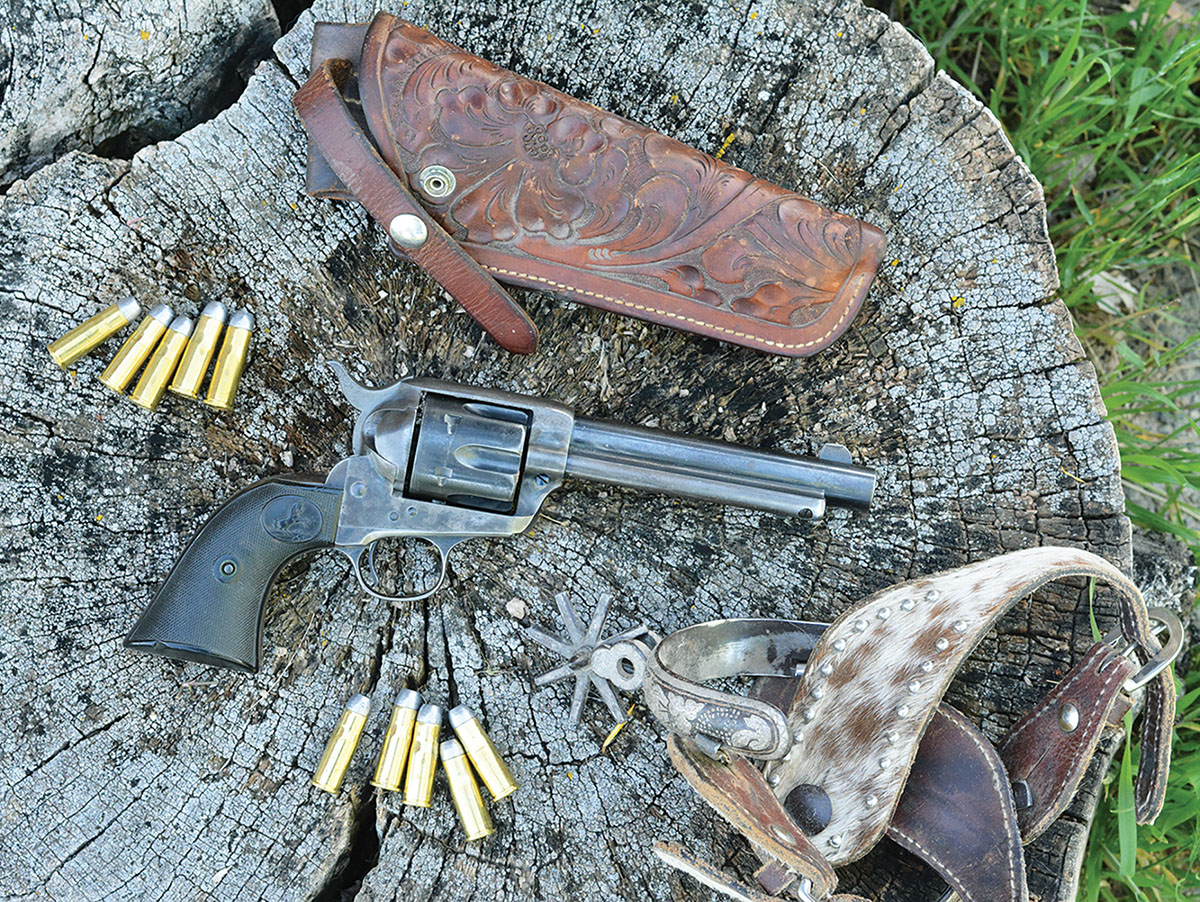
Colt began chambering their famous Single Action Army for the 38-40 as early as 1886, which became the 3rd most popular caliber in that sixgun, with the 45 Colt and 44-40 holding the 1st and 2nd places. Colt also offered the 38-40 in their 1878 Double Action, New Service, Shooting Master; Smith & Wesson even offered it in their New Model No. 3, and other sixguns, including their famous Triple Lock. Guns so chambered were manufactured for 60 years, when the Great Depression, followed by World War II, put a stop to their manufacture, along with many other guns and cartridges. With a resurgence of interest in vintage guns and cartridges, by the 1990s Colt, Ruger and USFA offered sixguns, while Uberti offers Colt and Winchester pattern guns.
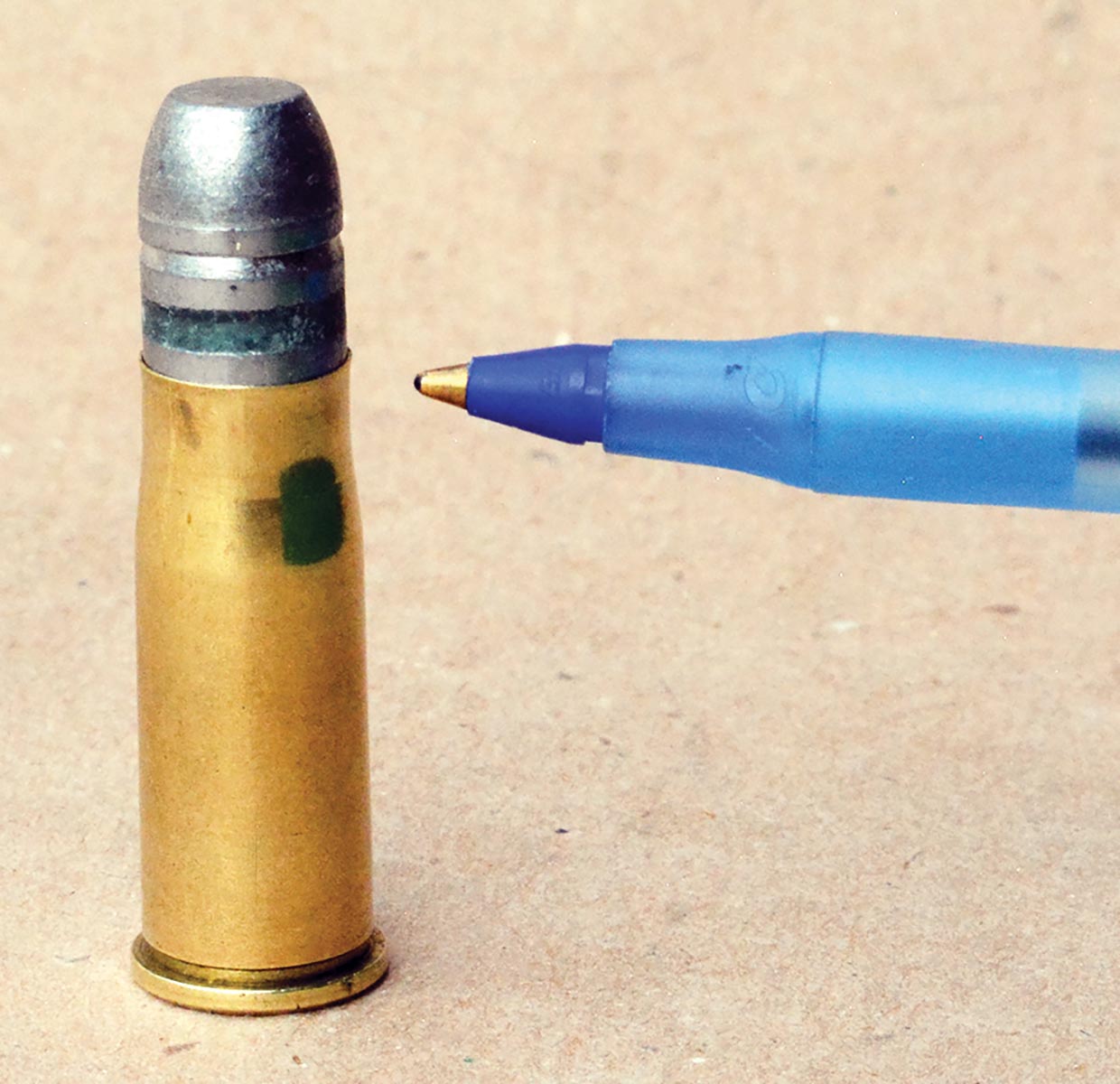
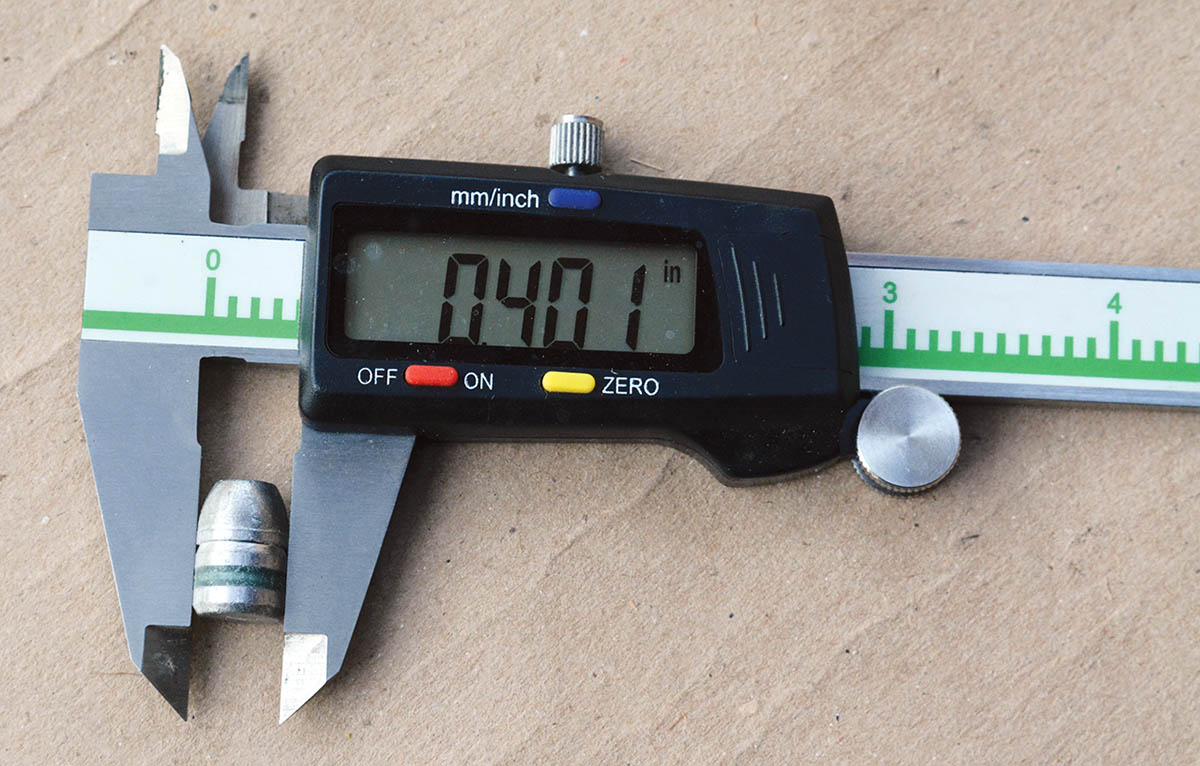
One mystery that surrounds the 38-40 is its name designation. During that era, cartridges were often referred to by caliber, powder charge and bullet weight. Since the bullet diameter is .400/.401 inch, it should have been called the 40-40 or 40-40-180 Winchester. I can only speculate that the “forty-four Winchester” or 44-40 (which was actually a .43 caliber) was still relatively new, and it could have been easily confused with a cartridge called the “forty, forty Winchester”! Regardless, the groove diameter was .401, the bore diameter .394/.395 inch minimum/maximum, and there is no measurement to support it as being a .380-inch caliber cartridge.
Early smokeless powder loads for the 38-40 more or less duplicated black-powder load ballistics; however, Winchester soon realized that the performance of the 38-40 could be enhanced when fired in strong rifles such as their Model 1892 and the Marlin Model 1894. Sometime prior to 1905, they began offering a Special High Velocity loading that pushed either a 180-grain jacketed softpoint or full-metal-jacket bullet to 1,776 fps, but warned that this load (or any Special High Velocity load) should not be used in 1873 rifles or any revolver. Lighter 150- to 165-grain bullets were also offered and pushed to even higher velocities. However, by 1938, a 145-grain load was offered that gave a muzzle velocity of over 2,000 fps. This is pretty remarkable when we consider that 30-30 loads from that era only offered a small power advantage.
In the post World War II era, all Special High Velocity loads were discontinued and the industry standardized with a 180-grain JSP bullet pushed to 1,330 fps from rifles, or 975 fps from revolvers. These loads could still be potentially problematic when fired in black-powder era revolvers (generally produced prior to 1900), such as the Colt Single Action Army, 1878 Double Action, Smith & Wesson and others. As a result, around 1980, ammunition companies reduced the velocity down to 1,160 fps in rifles while still claiming 975 fps in revolvers, but that was clearly a flawed figure. Soon, the velocity figures listed for 38-40 revolvers were completely eliminated from ballistics charts.
The new reduced load resulted in a different problem. The pressures were just too low, and the jacketed bullets began sticking in the
bore of many older sixguns, especially those with a large barrel cylinder gap. In checking Winchester loads manufactured approximately 10 years ago in a Colt SAA Bisley Model with a 43⁄4-inch barrel, the velocity was just 650 fps. Again, this is just too low a velocity and pressure for a 180-grain jacketed bullet to reliably exit the bore. It should be noted that jacketed bullets take more pressure to be pushed down the barrel reliably when compared to a cast bullet. For example, if a jacketed and a cast bullet of the same weight are loaded with identical powder charges, the cast bullet will give notably higher velocities in spite of the pressures being more or less the same.
As the sport of cowboy action shooting soared, companies responded with factory loads containing cast bullets, which can be loaded with 650 to 700 fps without concerns of sticking bullets in the bore. With that said, I much prefer 700 fps as a minimum velocity in revolvers (although some data in the accompanying chart is around 650 fps). Companies such as Black Hills Ammunition offer 180-grain Cowboy loads with a listed muzzle velocity of 800 fps.
During its heyday, the 38-40 was a respected field cartridge in both rifle and sixgun. I have known many men who used sixguns on game with the former heavier loads or handloads and spoke well of their performance. Noted gun writers Elmer Keith and Skeeter Skelton both used the
Colt Single Action Army in their early years of sixgun shooting, hunting and experimenting. Both spoke well of it when handloaded with cast bullets. Keith even employed a 210-grain cast bullet from a 40-60 Winchester mould and 260-grain bullets from a 40-82 mould. Perhaps one of the more notable endorsements came from the famous Oregon rancher and professional hunter, Gard Sawyers, who took at least 115 mountain lions and 243 bears with a Colt 38-40 sixgun. Humorously speaking, many would-be experts claim the 38-40 fired from a rifle (with a 180-grain bullet at 1,330 fps) is not even adequate for hunting deer-sized game, but tout the 10mm Auto with a 180-grain bullet at 1,200 to 1,300 fps as ideal for hunting deer and even protection from a charging grizzly!
Like the 44-40, the 38-40 features a rather thin case and, being a bottleneck design, requires a little finesse throughout the reloading process. The amount of case lube applied should be very light, or cases will dent hydraulically when sized. Spray-on case lubes from RCBS, Hornady and Lyman work perfectly as they offer plenty of viscosity for the thin case, prevent denting, and serve to speed up the reloading process. As always, the lube should be removed after sizing. Water-soluble lubes can be washed off, and the cases allowed time to dry before proceeding – or they can be wiped clean, tumbled in media, or other methods to remove the lube.
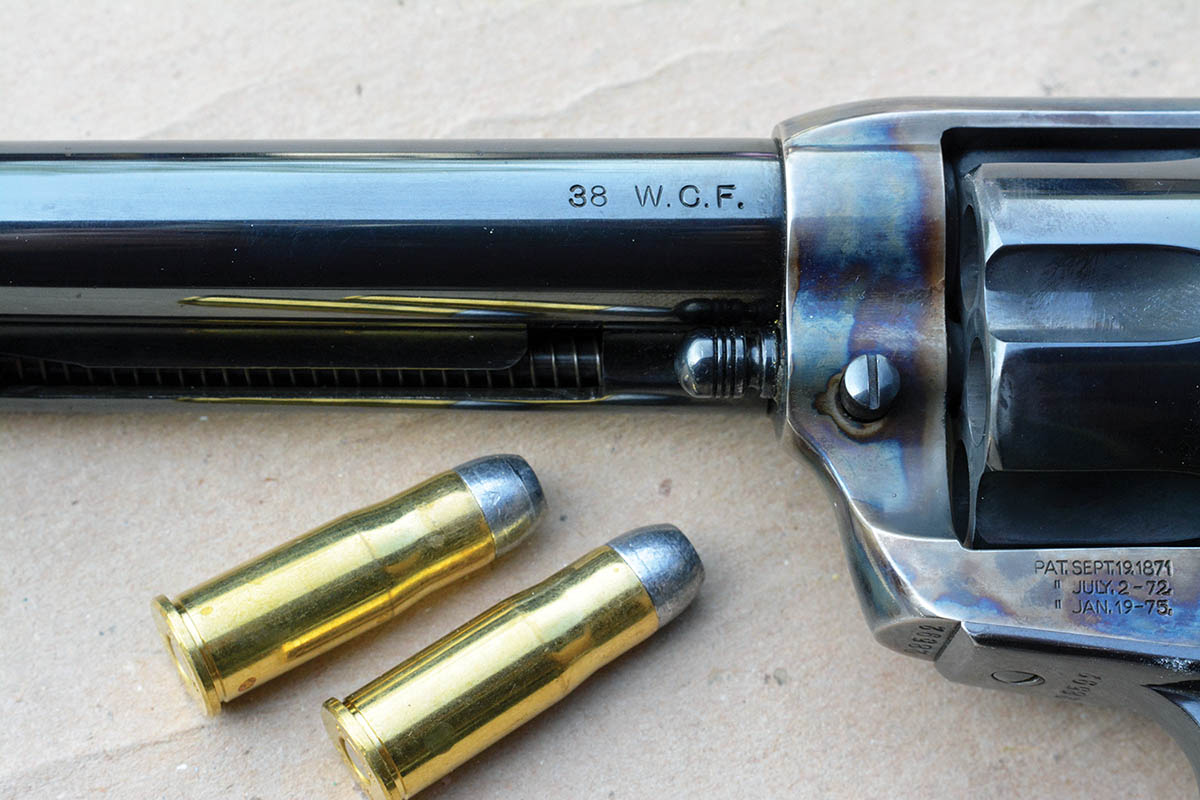
Most 38-40 sixguns have rather long chambers, which results in the case shoulder being moved far forward upon firing, leaving a very short neck. Most modern dies will not fully resize the case to blueprint specifications, as they do not set the shoulder back to its original position. This is not a problem; rather, it generally works the case less and extends its life. Full-length sized cases will virtually almost always chamber correctly in sixguns (and rifles). However, when handloading for a gun for the first time, it is suggested to full-length size a fired case and insert it into the chamber to be certain that it drops in without resistance. In the rare instance that it does not, the die might need to be returned to the manufacturer with sample fired cases for a minor correction. RCBS Cowboy dies were used herein, and they worked flawlessly. However, the expander ball was changed to one that measured .398 inch for increased bullet and case neck tension with both jacketed and cast bullets.
For best results, cases should be from the same manufacturer, preferably of the same lot number, and uniform in length. This is important, as cases of varying lengths make it virtually impossible to obtain a uniform roll crimp. If the case is short, the crimp will be too light or even non-existent. This can allow bullets to “walk” out the end of the cylinder during recoil, or at least, will cause extreme spreads to increase and will rob accuracy. In some instances, a too-light crimp might not allow some powders to ignite properly. If the case is too long, it can buckle at the shoulder when the bullet is seated and crimped. At the very least, there will be a bulge just below the crimp, and the cartridge will not chamber.
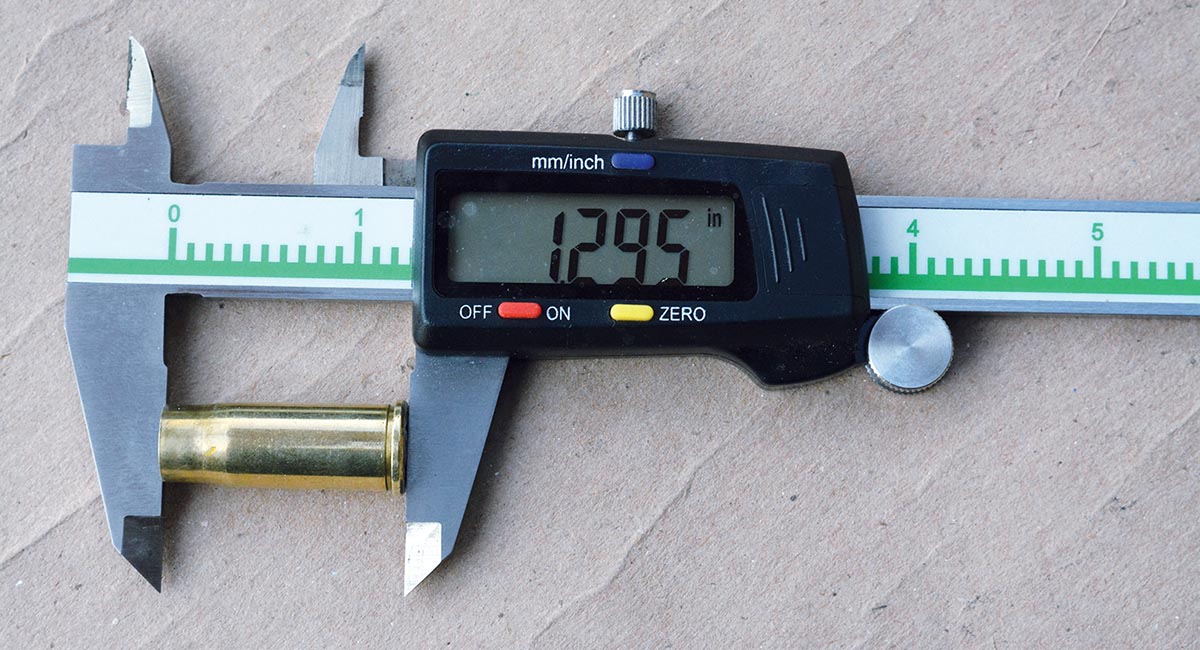
Traditionally, Winchester and Remington were the only domestic suppliers for 38-40 ammunition and cases; however, Remington discontinued the 38-40 many years ago. Winchester cases will probably need to be trimmed to a uniform length prior to loading. Starline Brass began offering cases a couple of decades ago that are available factory-direct. They are notably stronger, allow a heavier crimp and greater bullet pull, are robust and more uniform than any cases previously offered. Starline cases produce less pressure with identical loads. They have truly made the 38-40 easier to handload and were used exclusively to develop the accompanying pet loads data.
Regardless if jacketed or cast bullets are used, the case mouth will need to be expanded to prevent bullets from hanging up on the case mouth and ruining the case while being seated (and explains why all dies are a 3-die set). Case mouth expansion should be very minimal; just enough to allow the bullet to seat freely. Over-expansion will shorten the case life with premature splitting, but also reduces the bullet and case neck tension.
I have tried several sets of 38-40 dies from various manufacturers, with good results from all. When seating bullets, most dies will allow the crimp to be applied at the same time. However, as indicated, this takes a bit of finesse and proper die adjustment. Assuming that all cases are the same length, to adjust the seat/crimp die, adjust the die body up so that the crimp cannot be applied when the cartridge is fully inserted. Then adjust the seater plug in small increments (seat and repeat) until the bullet is seated to the desired overall cartridge length. This is usually at the upper edge of the crimp groove. Then, back the seating plug out so that it will no longer touch the bullet, and adjust the die body down until the crimp just begins to engage the case mouth when the cartridge is fully inserted into the die. Continue to turn the die down in small increments and repeat until the correct amount of crimp is applied. Again, do this in small increments of adjustment until the perfect crimp is achieved. Now lock the die body in place and raise the ram with the loaded cartridge inserted into the die. Then screw the seating plug down until it firmly contacts the bullet and set the lock ring. If adjusted properly, the next cartridge should seat the bullet and crimp it in place in a single step.
Most dies will come standard with the traditional roll crimp; however, when loading cases that are of mixed manufacture or are not uniform in length, the Lee Factory Crimp die is a great option and can produce good results. For those that want to use jacketed bullets designed for the 40 S&W and 10mm Auto that are void of a crimp cannelure, a C-H Tool & Die Cannelure Tool is a good option to modify bullets with a cannelure (and was used with the accompanying jacketed bullet data). Another option is to use a 40/10mm taper crimp die, but they generally need to be shortened to accommodate the larger 38-40 case and its short neck. Nonetheless, this approach will not produce as heavy a bullet pull as a correctly designed bullet with a deep crimp groove designed for a roll crimp.
Incidentally, Winchester has not offered 38-40 jacketed softpoint bullets with a cannelure as a component for many years; however, Northern Precision Custom Bullets offers 150- through 180-grain .400-inch jacketed bullets with a proper crimp cannelure. Unfortunately, sample bullets did not arrive in time to be included in the accompanying “Pet Loads” data, but the data should be compatible with other jacketed bullets of the same weight.
The accompanying data was developed for sixguns designed specifically for smokeless powders. This includes all post World War II guns from Colt, USFA, Uberti and Ruger, but also includes Colt Single Action Army revolvers produced after 1900, or with a serial number of 192,000 or higher. The gun should be in good condition. If in doubt, have it inspected by a competent gunsmith familiar with these guns. The Smith & Wesson First Model Hand Ejector, Colt New Service and other heavy frame double action guns are suitable for standard pressure handloads. Do not use any of the “Pet Loads” data in black-powder era Colt Single
Action Army, Colt 1878 Double Action, black powder-era Smith & Wesson top break revolvers or other period guns.
A few rather conservative +P loads are included that are only suitable for USFA Single Action Army pattern guns, Uberti Cattleman, Ruger New Model Blackhawk and Colt New Service.
Two 38-40 sixguns were used to develop “Pet Loads” data. The primary test gun was a USFA Single Action Army pattern gun with a 51⁄2-inch barrel. As a cross-reference gun to check for proper chambering of handloads, overall function and accuracy, a Colt Single Action Army with a 51⁄2-inch barrel manufactured in 1903 was used. Both guns shared similar groove, bore and throat dimensions and proved accurate. Incidentally, most 38-40 sixguns feature .400- to .401-inch throats and .400/.401 inch groove diameter, which is a good combination for accuracy.
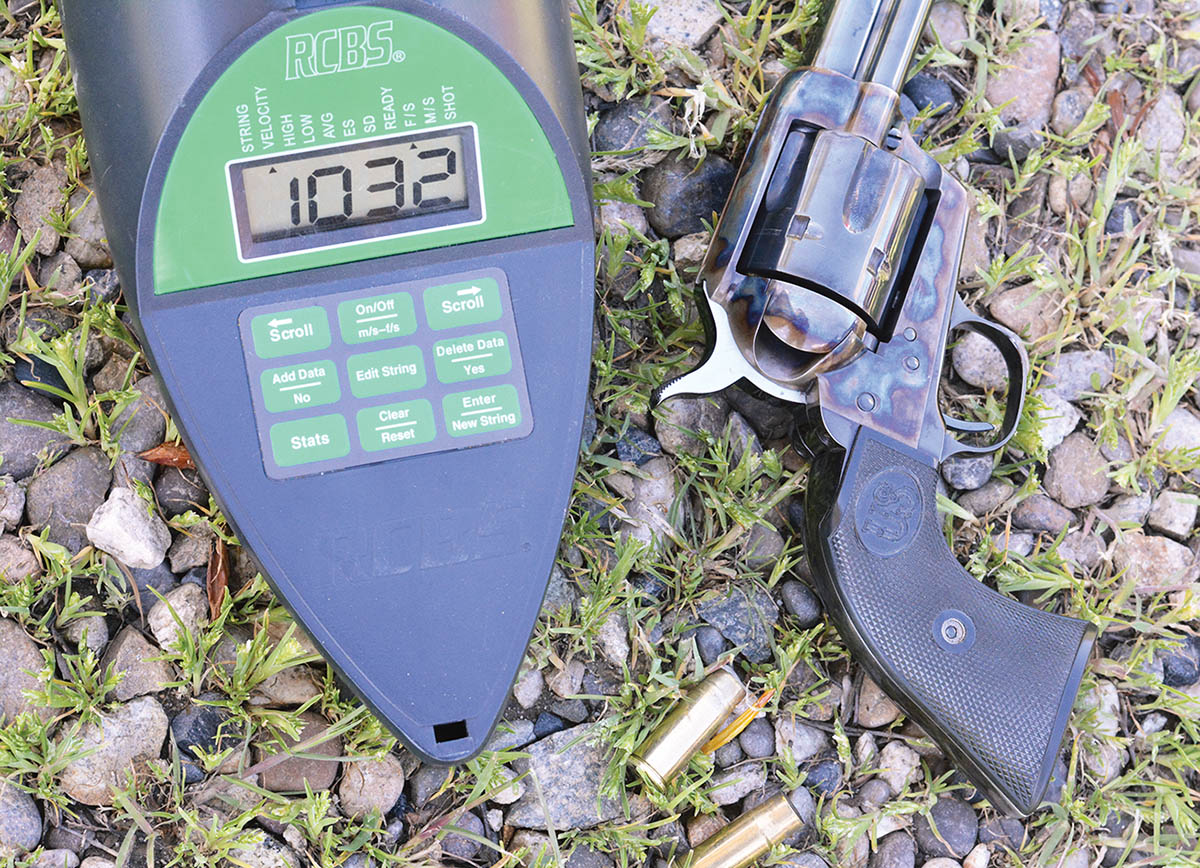
Cast bullets are the best general choice for 38-40 sixguns and were the focus of the accompanying “Pet Loads” data. There are light loads for cowboy action shooters, but data was also developed to get respectable performance for field use, etc. The maximum average pressure as established by the SAAMI is 14,000 copper units of pressure (CUP). Except for loads that are noted with a “+P,” all data is within the SAAMI pressure guidelines. Using modern propellants, 180-grain bullets were easily pushed to 900 fps, while select powders reached 1,050 fps.
By mentioning Keith’s 38-40 handloads with 210- and 260-grain cast bullets (that were assembled using black powder), some shooters will probably inquire about the possibility of using heavyweight bullet loads. There are a couple of problems, but the first one is reason enough to
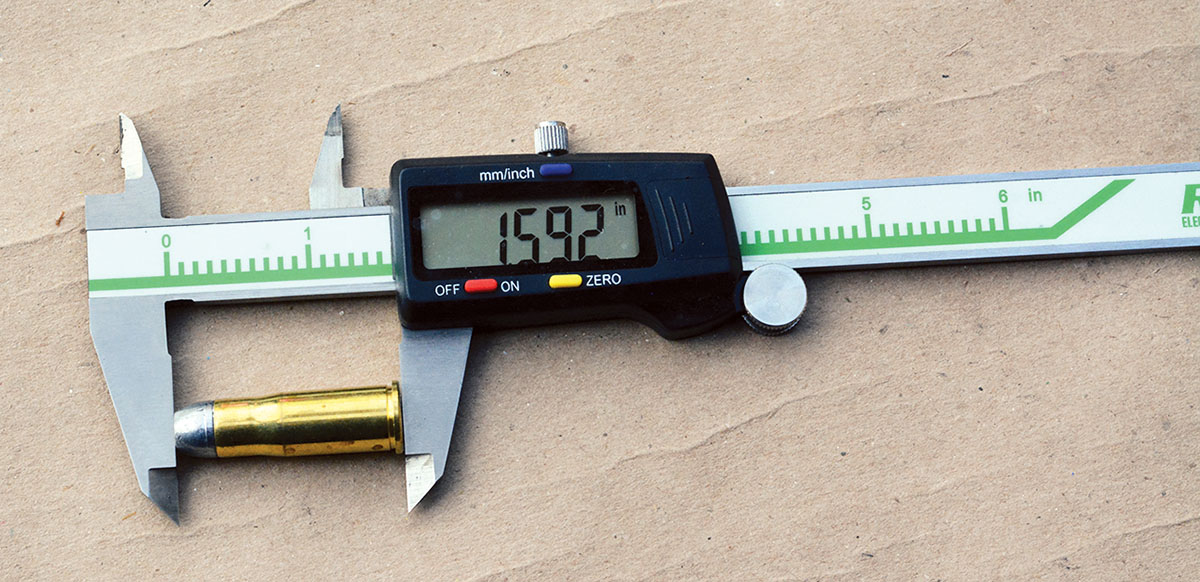
illustrate why I chose not to use heavyweight bullets (with the exception being the 200-grain Hornady XTP-HP). The previously mentioned short neck and long sloping shoulder associated with the 38-40 places the grease grooves of heavy bullets below the neck. In other words, the lube is not sealed inside the case neck; rather, it can melt and contaminate the powder charge. To use a heavyweight bullet would necessitate a custom bullet mould designed specifically for this application and might require a cartridge overall length that exceeds the industry standard of 1.592 inches. For these reasons, I stayed with more traditional weights weighing 170 to 185 grains and designed specifically for the 38-40.
Although I have been shooting the 38-40 for decades, in developing the accompanying “Pet Loads” data, I was abruptly reminded that there is considerable data out there that is truly bad, really bad. Some data will stick bullets in the bore; other data produces unacceptable extreme spreads. In my testing, some data uses extruded powders that leave unburned granules in the chamber when cases are removed, making it hard to chamber cartridges. This results in other problems, including dented cases. The point being my data was developed with powders (both traditional and modern propellants) that burn clean, are not
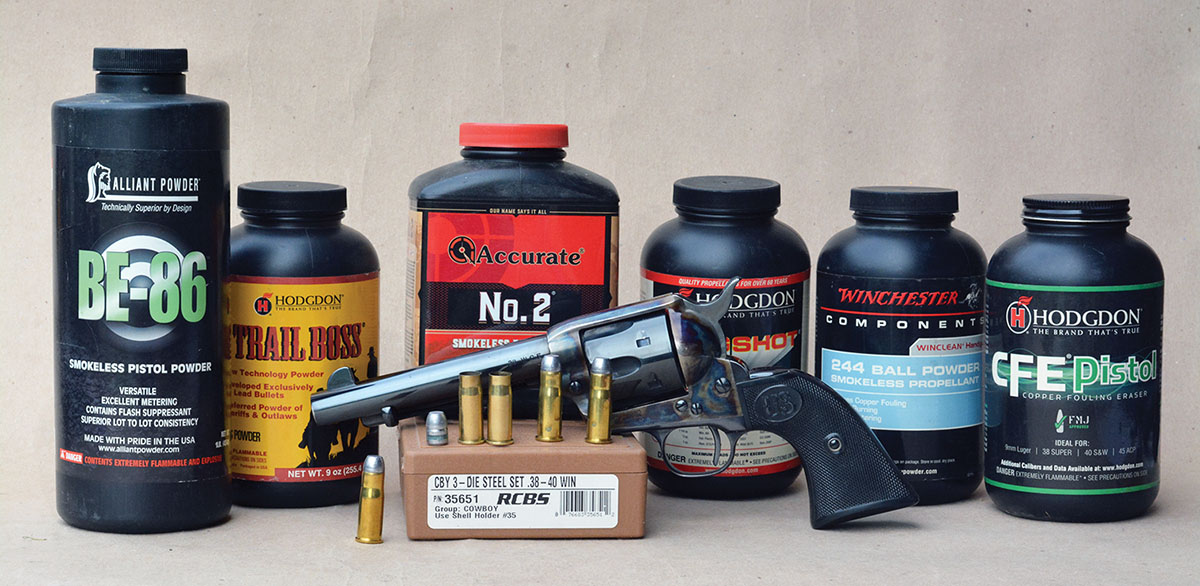
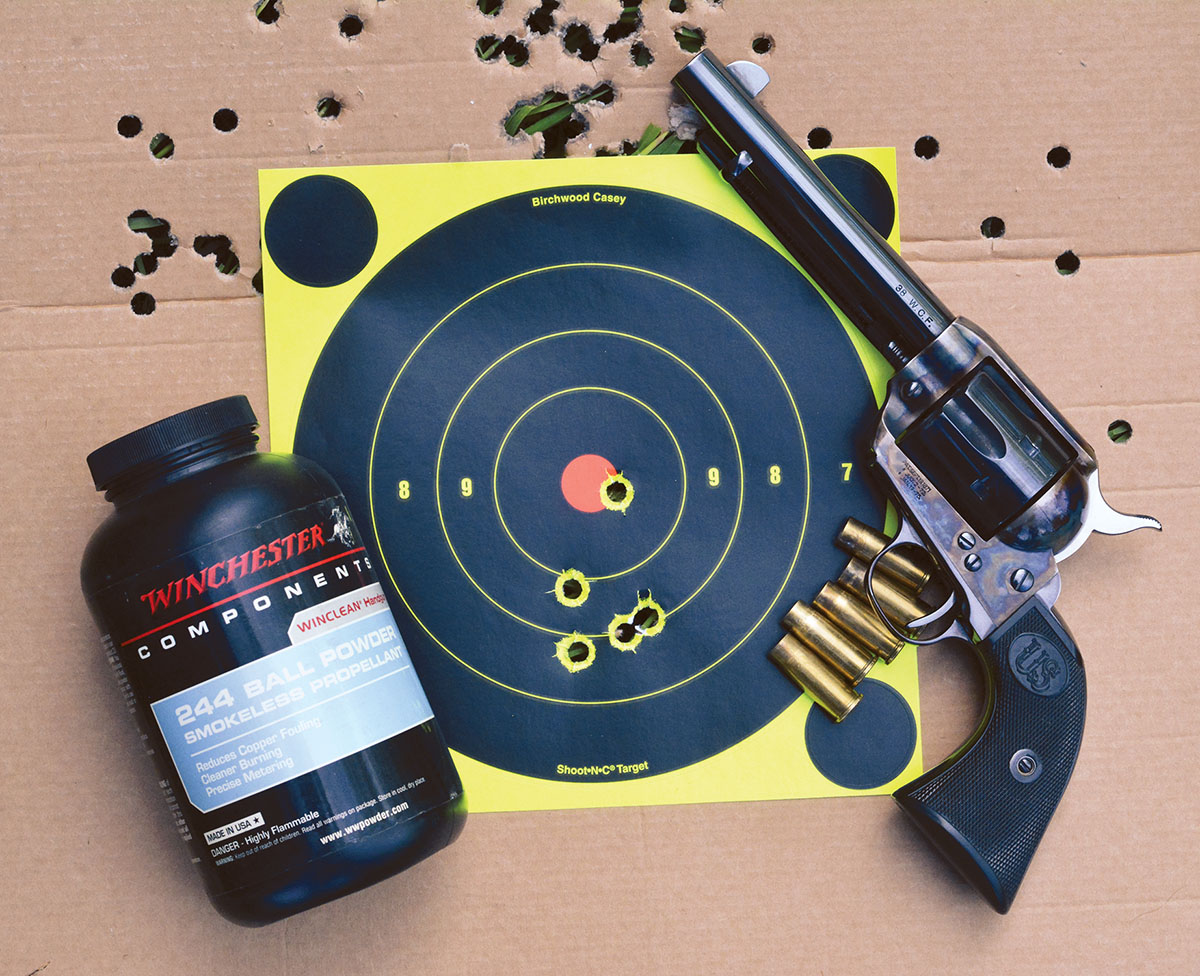
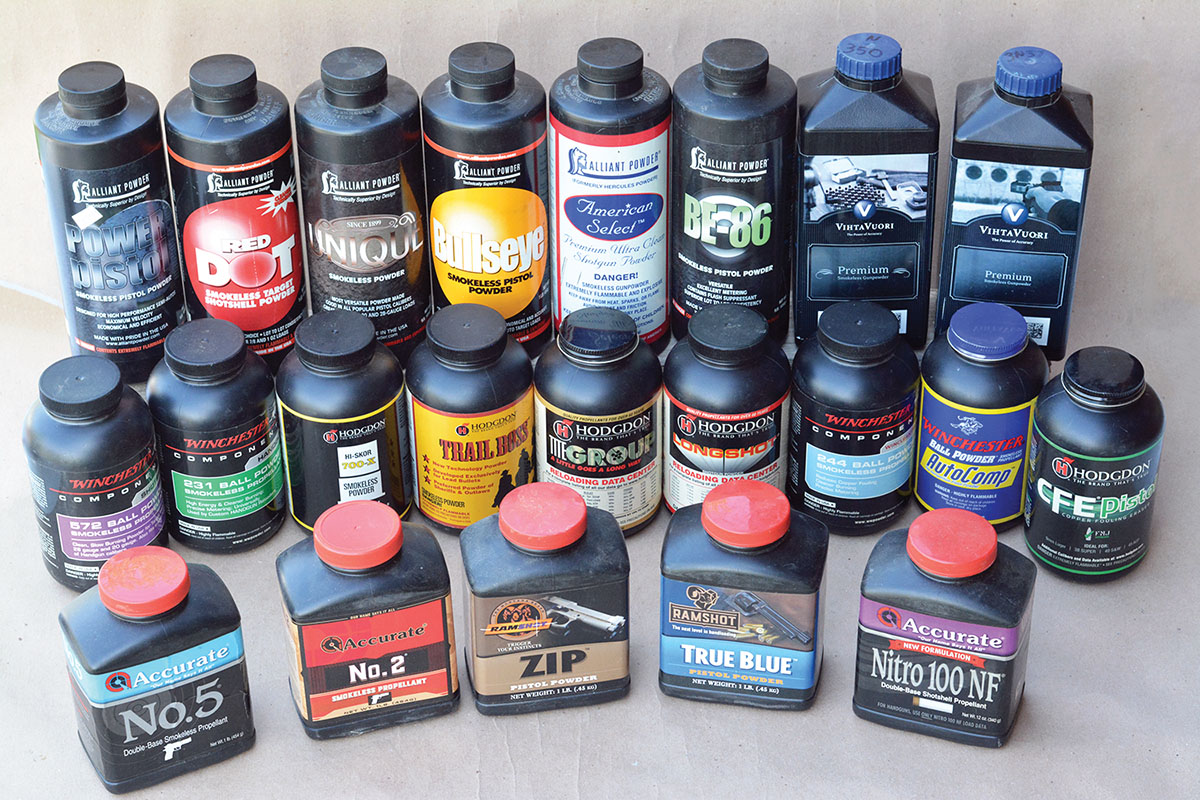
position sensitive, and give good overall results. However, data should be used exactly as shown, and suggested start loads should not be reduced. Generally speaking, the most accurate loads were with maximum or near maximum powder charges. A few standout powders included Winchester W-244, AutoComp, Alliant BE-86, Power Pistol, Hodgdon Longshot, Titegroup and Accurate No. 2.
Reports from fellow handloaders often express frustration at handloading the 38-40, but with just a little finesse in various reloading steps, along with good data, it is not a problem at all. Regardless, it is a true old west cartridge that is rich with history and a proven record among hunters and period lawmen. There are some great, classic sixguns that make it even more appealing.
.jpg)
.jpg)