

Reloader's Press
338 Lapua Ruger Precision Rifle Long-Range Loads
column By: Jeremiah Polacek | August, 26
Several years ago while attending a media event in Wyoming, the opportunity arose to shoot alongside Robert Brantley, who had recently won the King of 2 Miles competition. Ever since that trip, shooting steel at long range has been in the back of my mind. The trouble is that Extreme Long Range (ELR) rigs are very expensive, to say the least, and the gunsmiths that build them are equally expensive and at least twice as rare as the rifles themselves. Even harder than finding a rifle is finding a place to shoot such extended ranges. Thankfully home is not far from several places where if desired, targets can be placed beyond the 1,000 yard mark with relative ease and if one does not mind the hike, there are even a few places to shoot safely to a mile or maybe even a bit further.
With the opportunity there and thoughts of environmental effects on bullets and the ring of steel several seconds after squeezing the trigger all on the brain, it was decided to start this adventure. Having shot out to a mile previously I knew that most cartridges are capable of shooting past a mile, having stretched the legs of 6.5 Creedmoor to a mile. I knew that a big magnum would be the way to go. Something that was designed for shooting that far and something that was not quite as exotic as the Cheytac cartridges or as expensive as the big 50 BMG. The natural answer was the 338 Lapua Magnum. Rifles in this chambering have come down in price and are much more available these days, as well as good projectiles. Plus this cartridge has not been covered in the magazine recently so it was a win-win.
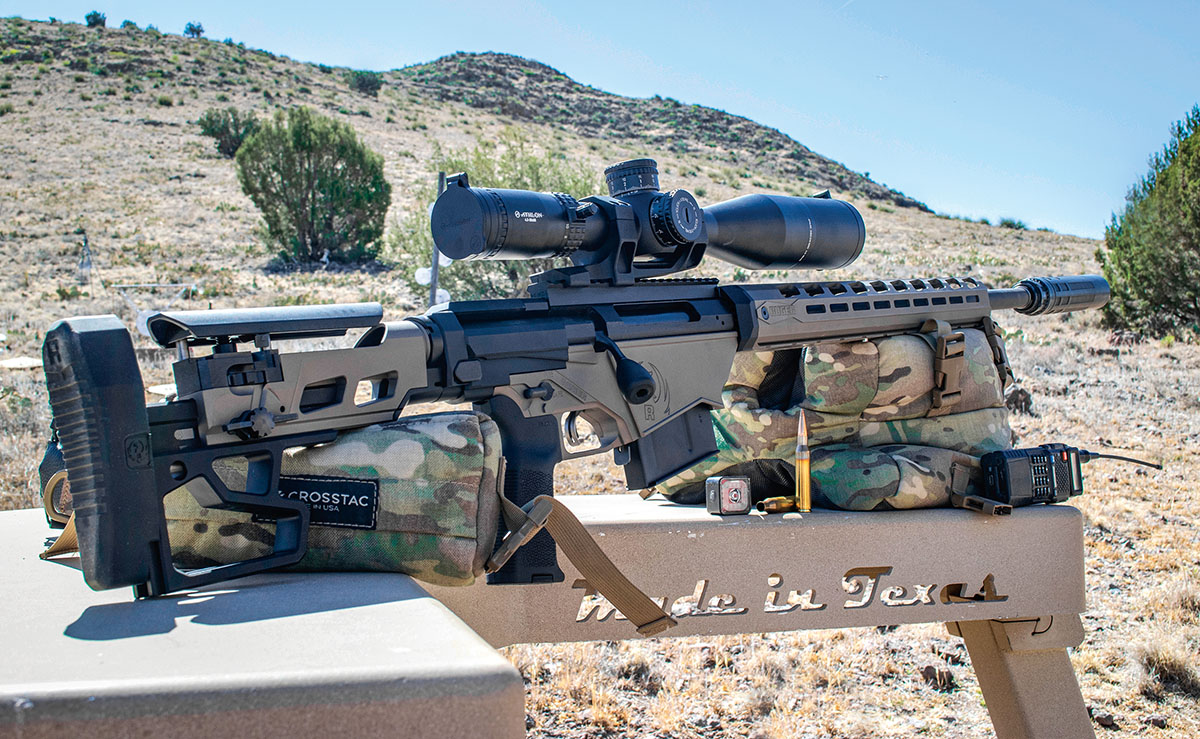
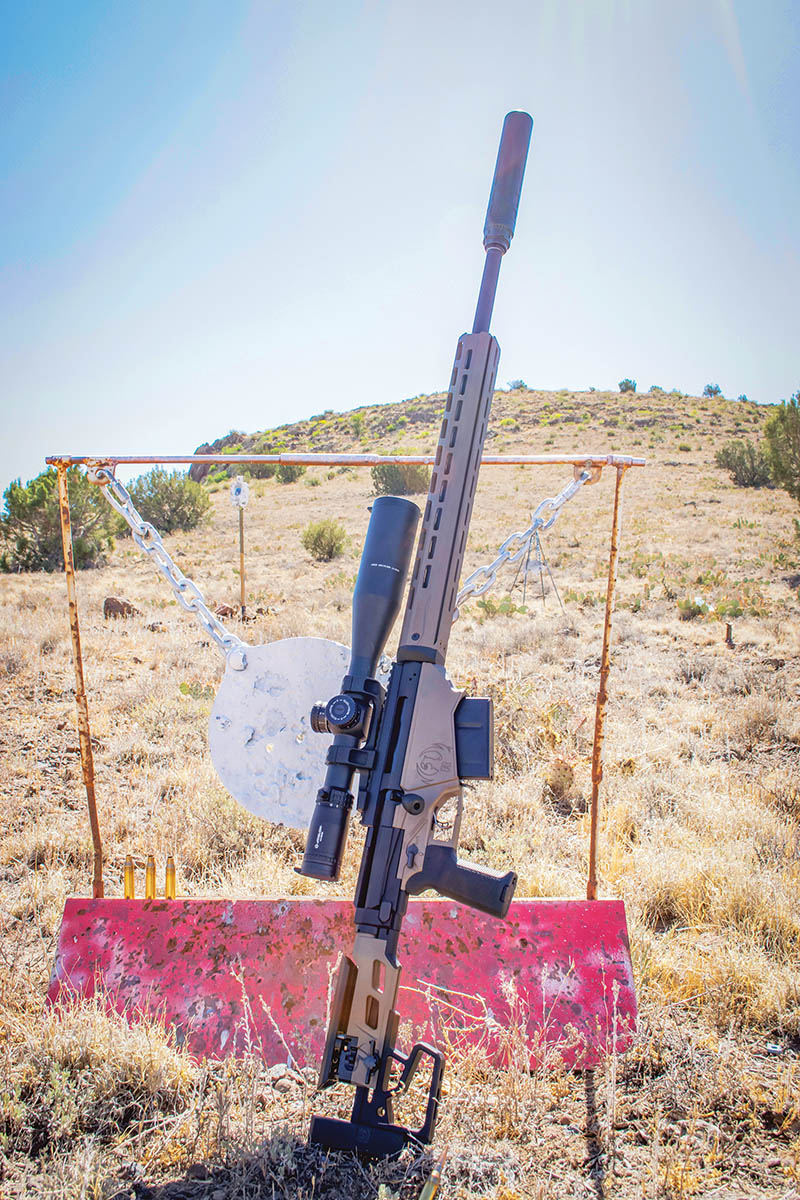
After much debate I settled on the Ruger Precision Rifle as being budget friendly and readily available. The only concern was accuracy, which makes all the difference in the world when shooting at long range. Thankfully handloading can help a lot in the accuracy department. Not wanting to leave such a critical metric to chance, much research was conducted on how to proceed forward to squeeze every bit of performance possible out of this Ruger Precision Rifle.
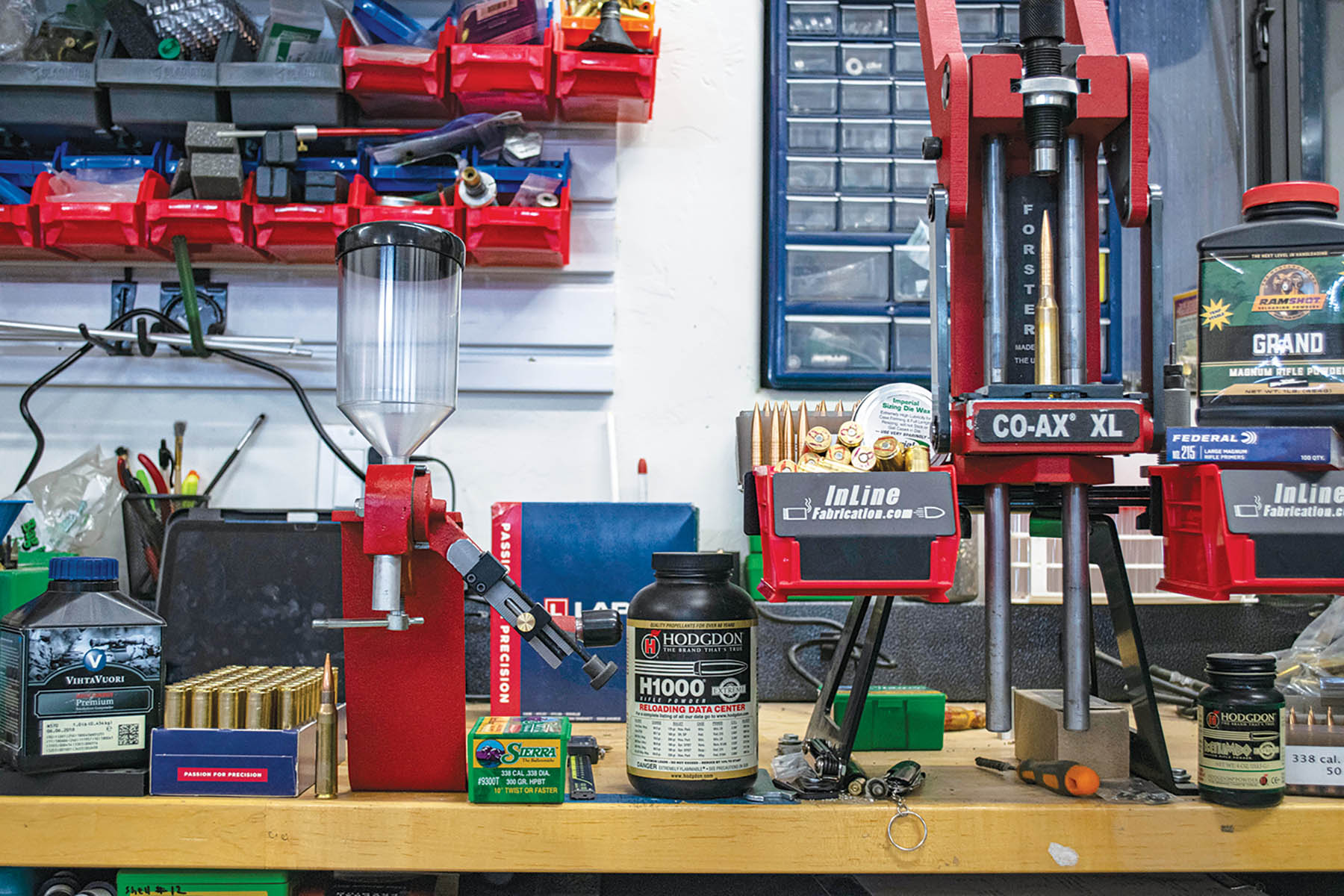
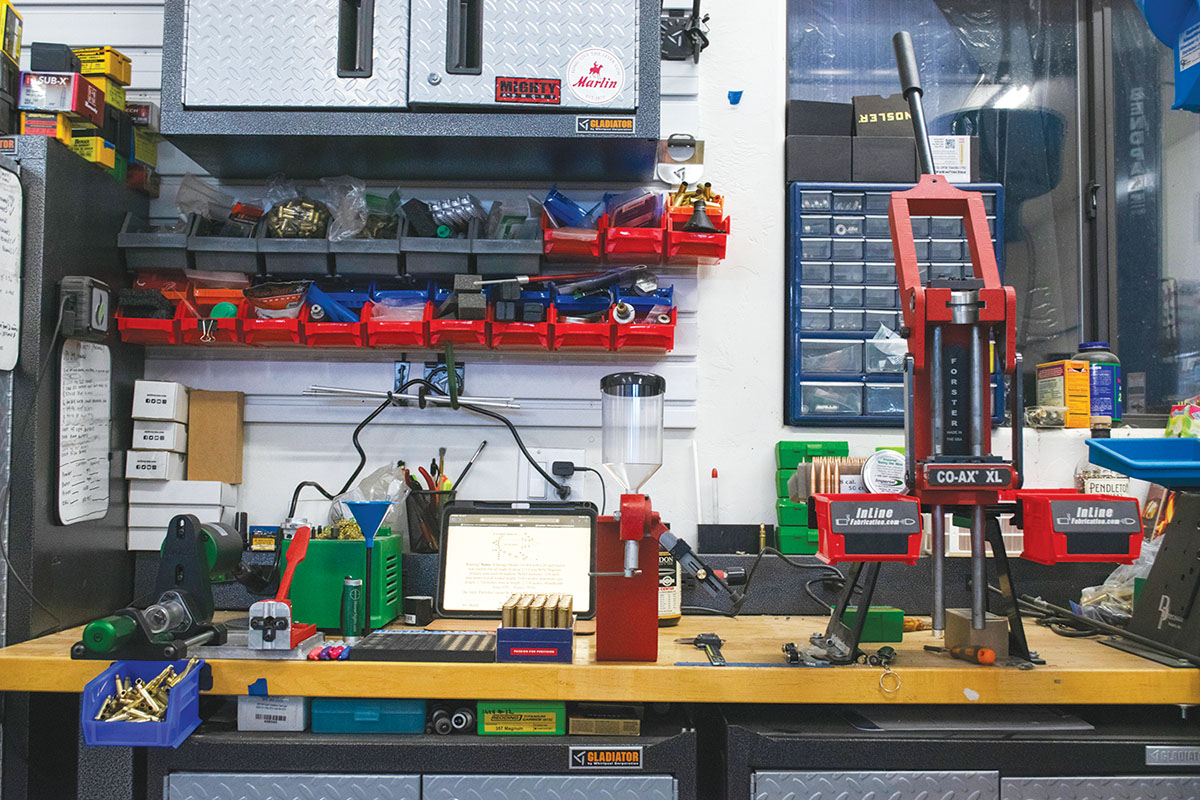
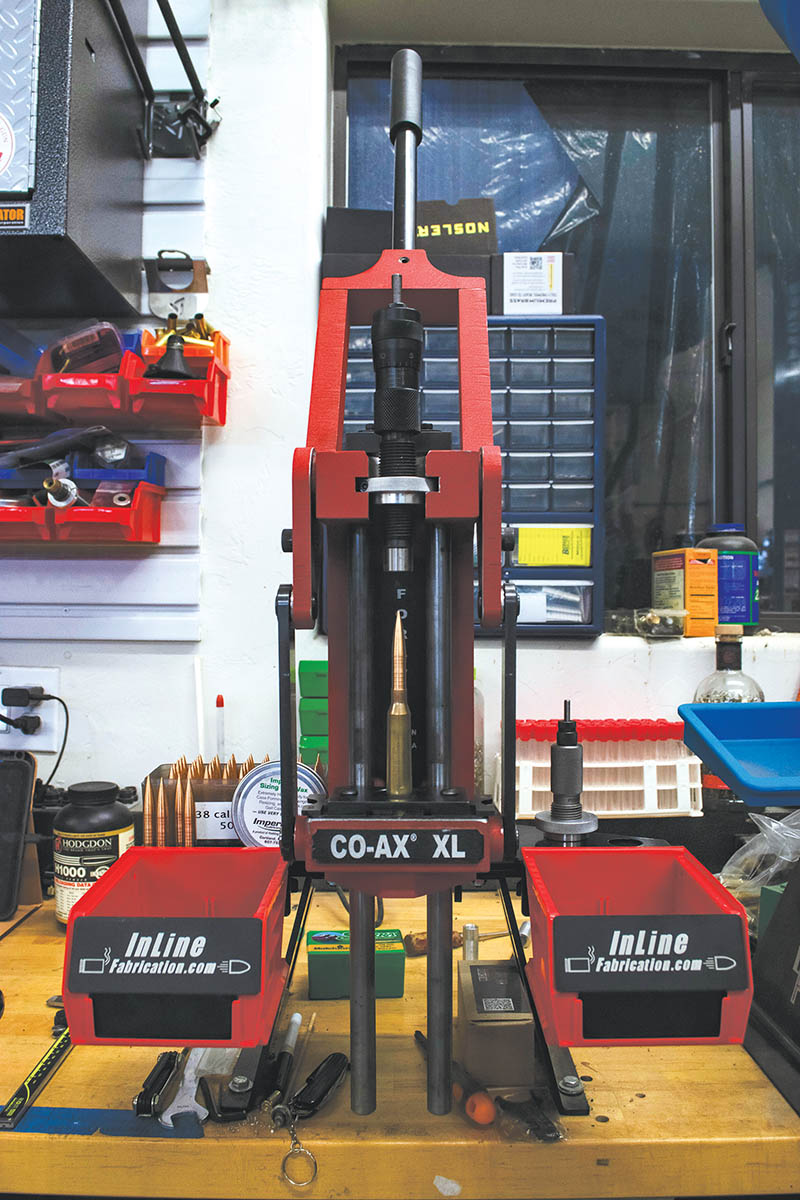
My first thought was Forster given the excellent performance of the Co-Ax used in Handloader (No. 356, June 2025) while working up loads in the 6mm GT. Thankfully they had a the Co-Ax XL available, which was specifically designed for loading big ELR type cartridges with the same precision put into the original Co-Ax Press. After chatting with the good folks over there I was thoroughly convinced that was exactly what I needed if I wanted to squeeze as much precision as possible out of my rifle. While 338 Lapua can be loaded on most standard-sized presses having the extra leverage and the ability to go up in size to any ELR cartridge of my
In addition to the Forster Co-Ax XL, I also ordered a set of benchrest dies in 338 Lapua, as well as some bullets that Forster is now distributing for Peregrine Bullets. I selected the 290- and 305-grain Glider Monolithic bullets for testing. The Glider line has been used by previous winners of the King of 2 Miles competition and if it’s good enough for two miles it’s certainly good enough for one mile!
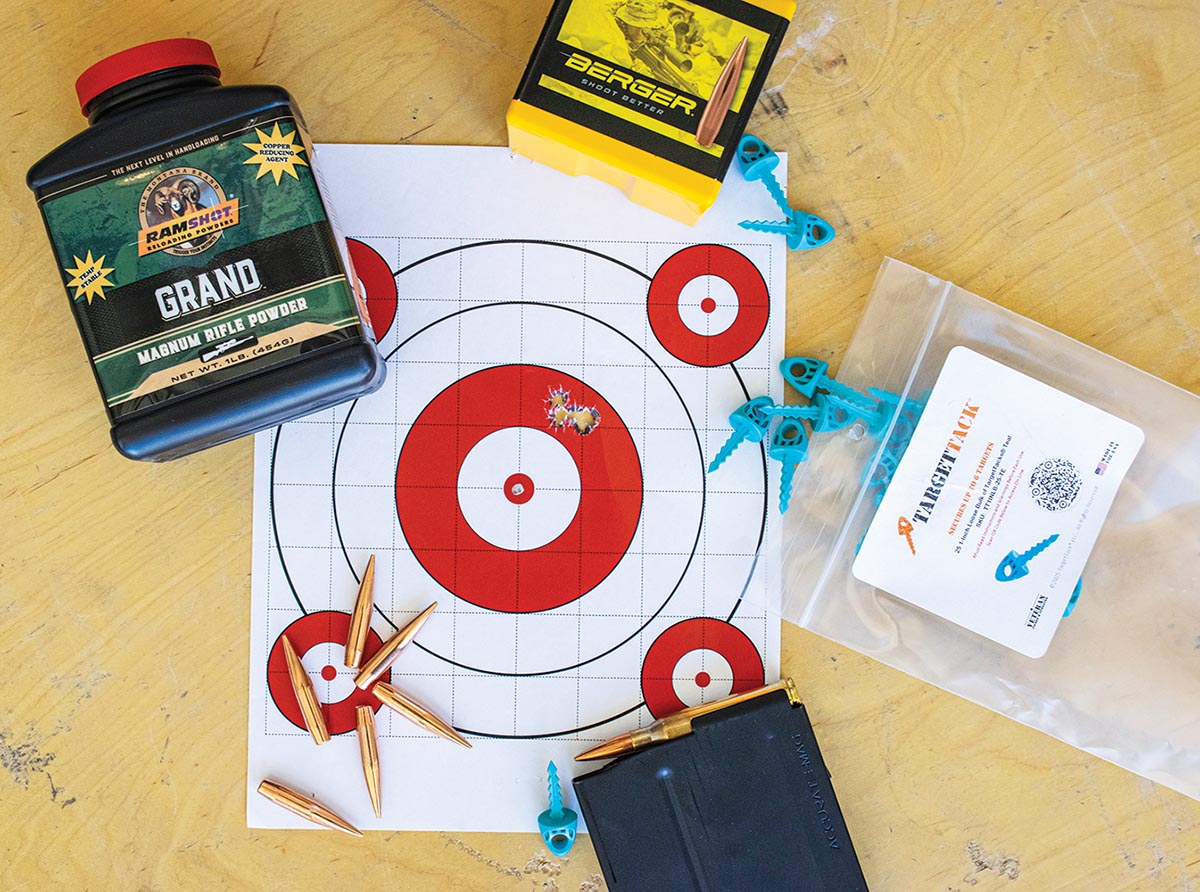
Great care was taken during the reloading process to ensure everything was as precise as possible from the powder being weighed on a TRX-925 Precision Reloading scale and slowly trickled down to a single kernel, which with magnum powders are heavier than the resolution of this scale. Care was also taken to ensure bullets were started and seated concentrically and displayed minimal total indicator runout, which in testing has proven to effect precision of a given load and rifle combination.
After assembling loads and patiently waiting weeks for good weather, the waiting got the best of me and I decided to test the loads I had painstaking crafted with love and precision, kind encouraging words throughout the reloading process. The wind was howling by the afternoon hours but the mornings were relatively calm. Certainly not good conditions to test in but at least it helped keep the barrel cool and the mirage down. While waiting for better weather the factory muzzle brake was removed from the Ruger Precision Rifle and replaced with a Dead Air Nomax 33 Suppressor. Which during testing greatly enhanced the experience by reducing muzzle blast, noise and felt recoil. I was rather dreading shooting over 150 rounds that I had assembled. At the end of the day my
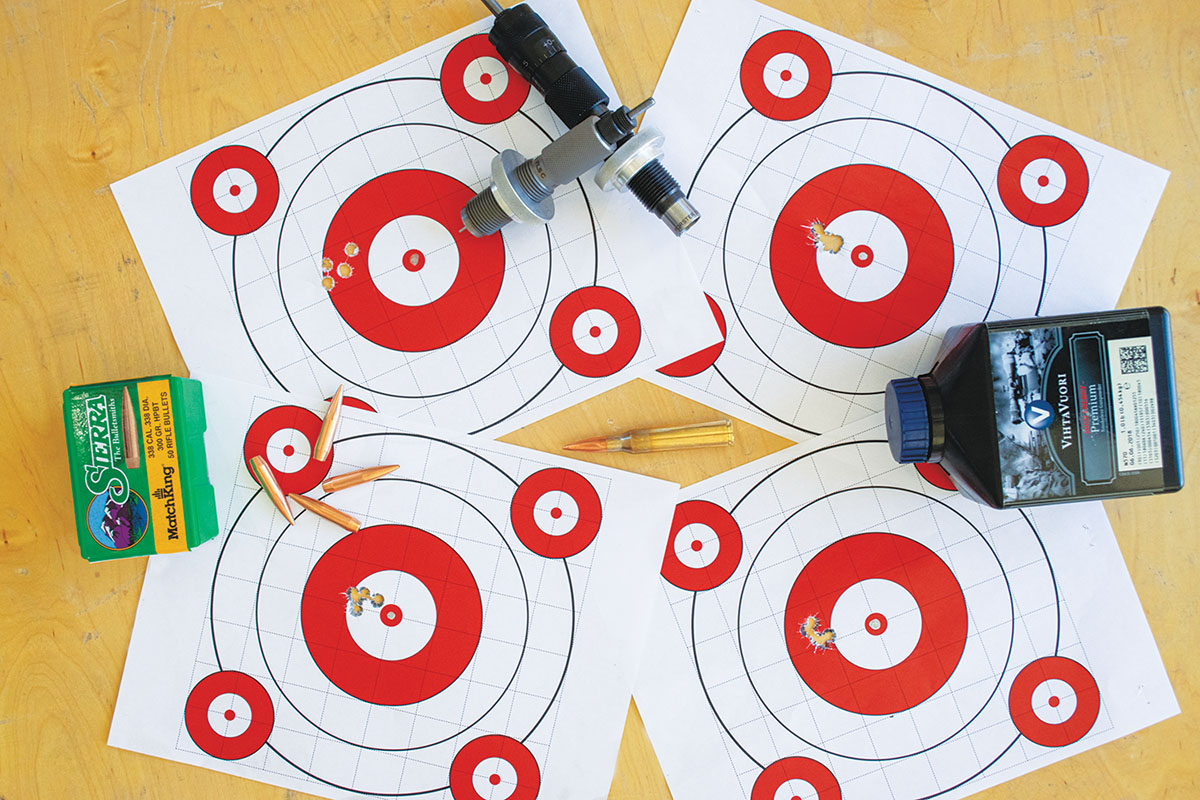
After much testing I was extremely pleased and impressed by the performance of the rifle as a benchmark for accuracy. Two factory loads were tested, as can be seen in Table II. While the rifle proved accurate it was amazing to see just how much of a performance gain there was by handloading. Being a firm believer in large sample-size testing and repeating tests, I loaded 20 rounds using a start charge of Vihtavuori N-570 powder and 300-grain Sierra MatchKings. After testing all the handloads those 20 rounds were shot, five at a time at 100 yards. The results were extremely impressive and can be seen at the end of Table I. This serves as a testament to what a difference good loading practices can make in the overall precision of your rifle.
Generally speaking, the larger the cartridge the harder it is to achieve good standard deviations, extreme spread and precision in the platform. However, this rifle and reloading setup put up some of the best groups I have shot in the .338 caliber. After sorting out some loads and reloading the high quality Lapua cases, once again the rifle was taken to the range but this time for fun. With steel placed out to 1,000 yards the rifle was loaded and the fun began; ringing steel at 400 yards seemed too easy with this rifle, optic and load combination. At 500 yards it was time to start dialing for elevation and windage, the Athlon Ares 4.5-30x 56mm optic was an exceptional pairing with this rifle and tracked true, offering plenty of magnification and reticle to self-correct misses. By the end of the day the 1,000-yard steel had been rung more times than a church bell on Sunday.
It is still a long way from 1,000 yards to a mile (1,760 yards). However, given the performance with the rifle and handloads we can be confident in the capability of this platform and reloading setup. Running ballistic calculators shows that many of the loads in Table I will stay supersonic well past the 2,000 yard mark and will entirely avoid the transonic zone at one mile. Which is something I have fought with previously and preferred to avoid which thankfully I now can with ease. As a whole it was extremely satisfying to see the fruits of my labor come together and know that the extra care and attention to precision in the reloading process paid off. It is just more proof that what you put in does matter and it makes a difference.
.jpg)