

Bullets & Brass
Smokeless Loads for Black-Powder Rifle Cartridges
column By: Brian Pearce | August, 26
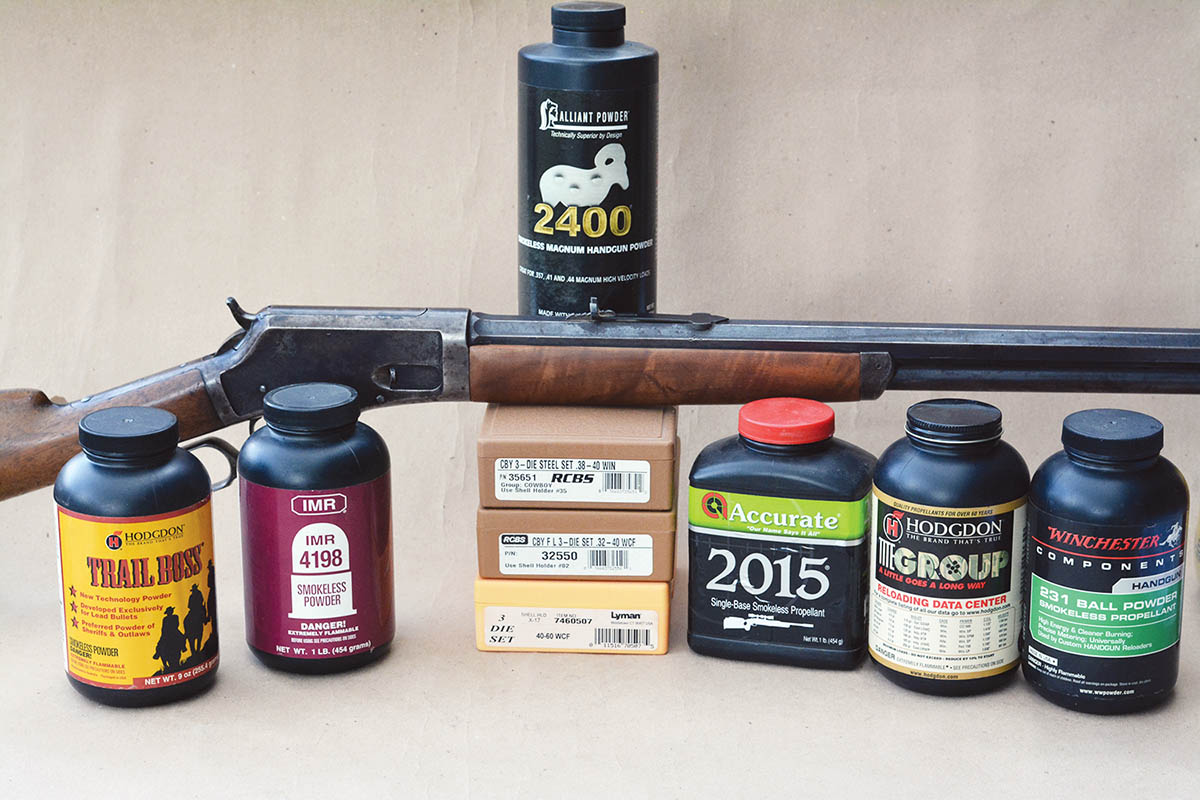
Q: I own a Colt Lightning in 38-40 WCF and would like to shoot it using smokeless powder loads if possible. Most of the data I have found, such as from Hodgdon, is for use in revolvers at around 700 to 800 fps. I also own two other rifles that I would like to shoot with smokeless powders, including a Whitney Kennedy in 40-60 WCF and a Marlin Model 1881 Lightweight chambered in 32-40 WCF.
I have a copy of an article written by Ken Waters many years ago on the subject of shooting black-powder-era rifles with smokeless loads. He outlines weak and strong single shots, as well as weak and strong repeating rifles. For the Colt Lightning, he lists 17.0 grains of 2400 powder or 15.0 grains of SR-4759 with 180-grain cast bullets. For the Whitney Kennedy,he lists a 210-grain cast bullet with 10.0 grains of Unique, 18.5 grains of 2400, or 15.5 grains of SR-4759. For the 1881 Marlin, his suggested load is a 165-grain cast bullet with 12.0 grains of 2400.
These guns are in good condition. Over the past 30 years, I have fired each rifle with a smokeless load, but only a couple of rounds each, as I wasn’t sure it was entirely safe to do so.
I believe I have read that the composition of gunpowder has changed over the years, so I am asking, in your opinion, never having examined these guns, if these are light, safe loads. If you could recommend some newer powders or have any loads you have used in these calibers, I would be grateful for your input. I have no interest in shooting these guns with a maximum load; I just want to shoot and enjoy them.
Thank you in advance for your help.
Stephen O., via email
A: After owning those three rifles for 30 years, it is certainly time to begin handloading and put them to work. Yes, you can fire your rifles with select smokeless powder loads that are generating modest pressure levels.
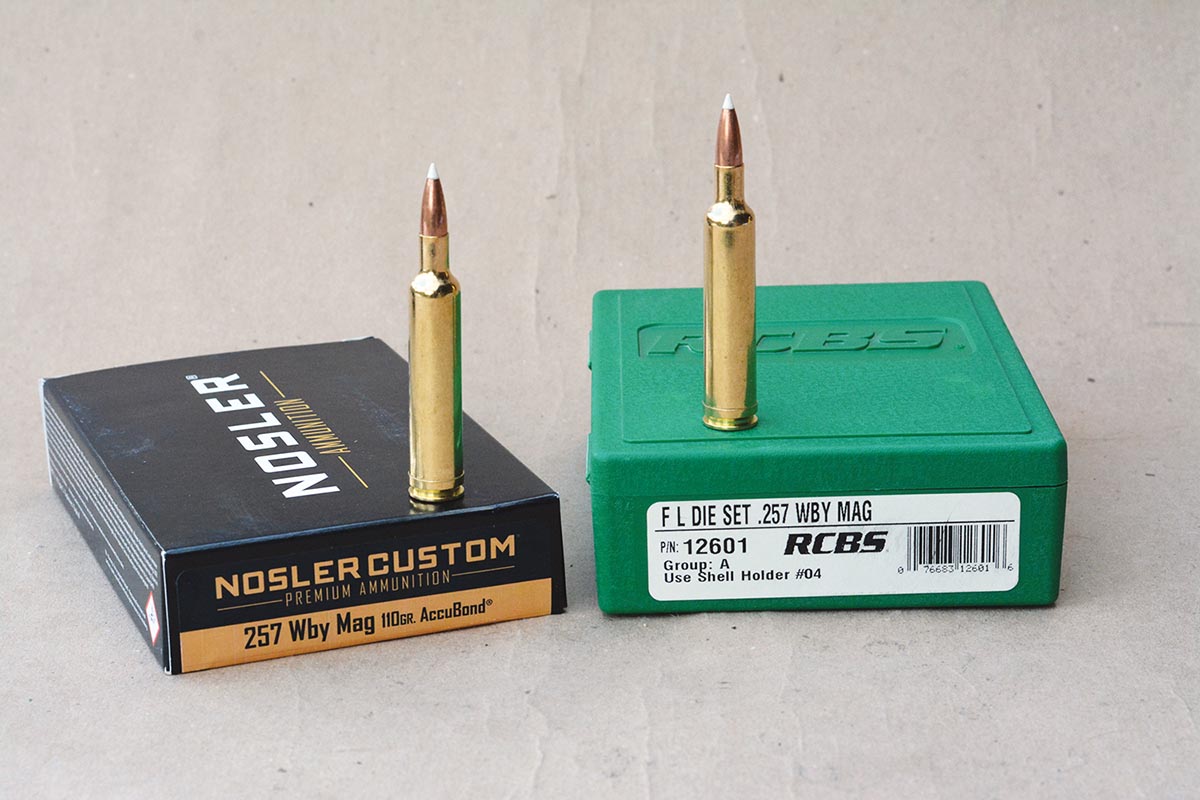
If you are going to use 2400 powder in your Whitney Kennedy 40-60 WCF with 200- to 210-grain cast bullets, I would suggest starting with 18.5 grains and working up to 20.0 grains. I am not suggesting a maximum load; rather, you will probably see lower extreme spreads and improved accuracy with the heavier powder charge. Again, I’m guessing that you probably do not have 2400 powder on hand, so I will offer some other options. Using the 200-grain cast bullet from Lyman mould 403168, try 14.0 grains of Hodgdon Trail Boss powder for 1,350 fps, 31.0 grains of Accurate A-2015 powder for 1,300 fps, or 24.0 grains of IMR-4198 for 1,400 fps.
For your Marlin 1881 32-40, the 12.0 grains of 2400 used in conjunction with a 165-grain cast bullet that you mentioned will work fine. A couple of optional loads include the 165-grain bullet from Lyman mould 319247 with 7.0 grains of Trail Boss powder for 1,100 fps or 18.0 grains of A-2015 for 1,350 fps.
I’m betting that you are going to enjoy shooting those great old rifles!
Heavy High BC Bullets for the 257 Weatherby
Q: I had my Weatherby Vanguard 257 Magnum re-barreled with a 1:7.5” twist. I hope I can load the new long, high ballistic coefficient (BC) bullets for it, given the 3.5-inch magazine box and the Weatherby free-bore. Am I correct? I would like to know before spending a lot of money on bullets for load development. It would seem that a long, high BC bullet at a pretty good velocity from this round and the rifle would work well. Thank you for any insight you can offer.
Eric V.S., Apple Valley CA
A: Early 257 Weatherby Magnum rifles featured a 1:12 twist, but that was soon changed to a 1:10. The 1:10 perfectly stabilizes most bullets weighing 80 to 120 grains that are typically pushed at 3,870 fps and 3,305 fps, respectively, in factory loads. With an unusually flat trajectory at normal distances that deer and similar game are taken, along with modest recoil, the 257 has become one of Weatherby’s most popular calibers.
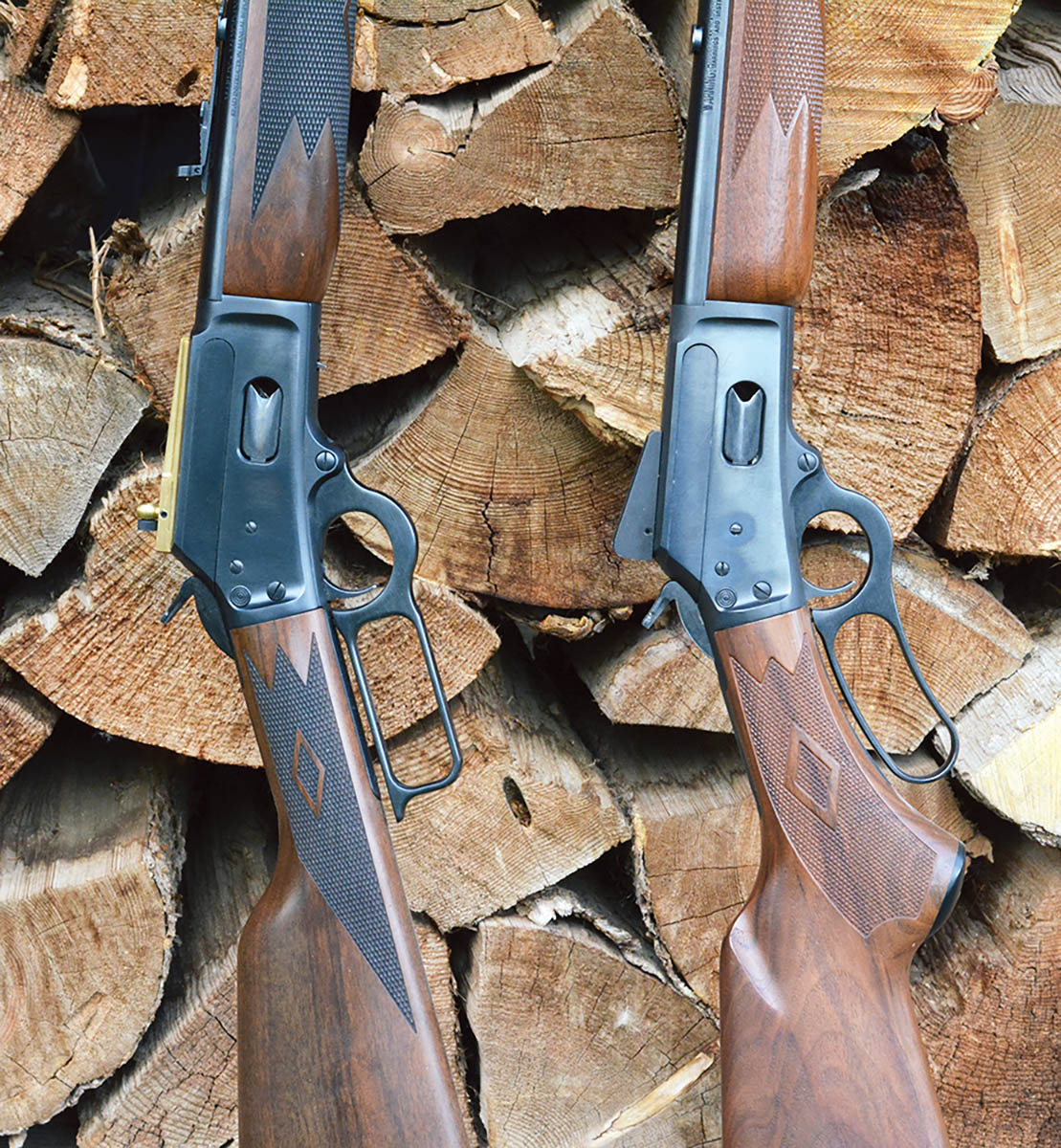
You don’t mention any bullet in particular that you want to use, so a couple of examples include the 128-grain Hornady ELD-X with a .633 G1 BC, the Berger 133-grain Elite Hunter with .613 BC, or the 135-grain Hybrid Target with a .625 BC. While these bullets are not listed with maximum velocity figures by their manufacturer, generally they will achieve ideal stabilization at 2,900 to 3,100 fps or maybe 3,200 fps with your twist rate. Testing and experimenting with how they perform in your rifle is important.
Stock Conversion for a 1894 Marlin
Q: I plan to purchase a Marlin Model 1894 Classic 44 Magnum fairly soon. However, I’m not a huge fan of the straight buttstock. I prefer the pistol-grip-style stock. I have lever guns in both configurations, and the straight-stock versions collect dust, while the pistol grip variants get used all the time. I almost purchased a Marlin 1894 Trapper 44 Magnum with its pistol grip stock last week, but I am really a blue steel and walnut kind of guy rather than stainless steel.
I have read that the Marlin 1894 Classic can be converted to a pistol grip. Is this feasible? There are no gunsmiths in my area that can do this work; they only assemble AR-type
rifles and have no real gunsmith experience. If this is a feasible project, can you suggest someone to do the work? What all is involved in this conversion?
Thank you in advance for your time. I have been subscribing to Rifle and Handloader magazines for many moons, and they are both excellent publications.
Vito C., via email
A: To do this conversion is not really difficult, it requires a new trigger guard plate, finger lever and stock. However, the gunsmith should know how to time the new parts and action for flawless function.
Original JM Marlin parts and Marlin parts produced in the Remington plant in Ilion, New York, may not work with a Ruger-manufactured Marlin 1894 Classic without considerable trial and error and gunsmithing. However, Ruger manufactures all of the above parts (for other models), and they should readily work with a new 1894 Classic. The difficult part will be in obtaining them from Ruger/Marlin.
As to suggesting a gunsmith, I am always hesitant for several reasons. Most Marlin specialized gunsmiths have a fairly long waitlist (several years). However, I would suggest contacting Bobby Tyler at Tyler Gunworks (info@tylergunworks.com or call 806-344-8456) to discuss your project. He is factory-authorized and has even partnered with Ruger to make all the fancy-grade walnut stocks for Ruger special projects, like the John Taffin Ruger Bisley 45 Colt Perfect Packin’ Pistol and others. The point is that Bobby should be able to obtain those parts factory direct and is capable of making this conversion.
Thanks for taking the time to read our magazines. I hope your project goes well.