

In Range
Lawyers, Guns and Money
column By: Terry Wieland | August, 26
Ever since, I’ve wanted to borrow that title for a column, but the right circumstances never presented themselves. Until now.
By the way, borrowing titles is common; it is not plagiarism and is generally considered, by everyone from Shakespeare on down, to be a compliment. But I digress.
As I write this, the Illinois legislature is in the process of passing into law a bill that would require every round of handgun ammunition in the state, whether bought, sold or kept in storage against the zombie apocalypse, to have digital identification. Reports on the exact details vary, so I will describe this in very general terms.
Effective January 1, 2027, the law would come into effect. As of that date, anyone found with a single round of ammunition that does not comply would be guilty of a felony. The digital serial numbers of ammunition would be held in a data bank administered by the state police. Presumably, the state cops have nothing better to do – Preventing crime? Investigating crimes? – then create another big, beautiful bureaucracy which will accomplish absolutely nothing as far as I can see, except create more government jobs for more otherwise unemployable in-laws.
What’s a handgun round, anyway? These days, it could be anything. For that matter, what’s a handgun and what isn’t? You see my point.
So, let’s see now. How do our three subjects fit into this boondoggle?
Well, first, the governor of Illinois, who is presumably behind this, is a lawyer.
Guns? That’s obvious. The State of Illinois already has its FOID (Firearm Owner Identification) in place, and you need one to buy ammunition.
Money? Ah, money!
This bill, if enacted, is going to cost everyone money, one way or another. Ammunition makers, assuming they figure Illinois is a large enough market to warrant it, will be the first, since they will have to adopt the technology, then create separate product runs for Illinois.
Winchester has an ammunition plant in East Alton, just across the river from St. Louis, and has been there almost from the beginning. In the event they stay, but continue to produce non-digital ammunition for other jurisdictions, will they be liable under the state law, for the time that non-complying ammunition is in Illinois before being shipped out? Can’t find an answer to that.
Then there are the gun shops throughout the state that have non-compliant ammunition on their shelves. What do they do with it? They can sell it before January 1, but any Illinois resident who buys it will have to use it up quickly.
Years ago, this idea was mooted by the state of California, always in the vanguard of pointless government interference, and it was noted at the time that the technology existed to do it. The idea was dropped because even the anti-gun zealots admitted it would be impossible to enforce and would accomplish very little in the way of combating crime. In fact, as I recall, they concluded it would only create a new class of crime and criminals – guys found with a handful of 9mm without serial numbers.
Which brings me to the real question, and that is how it will affect handloaders.
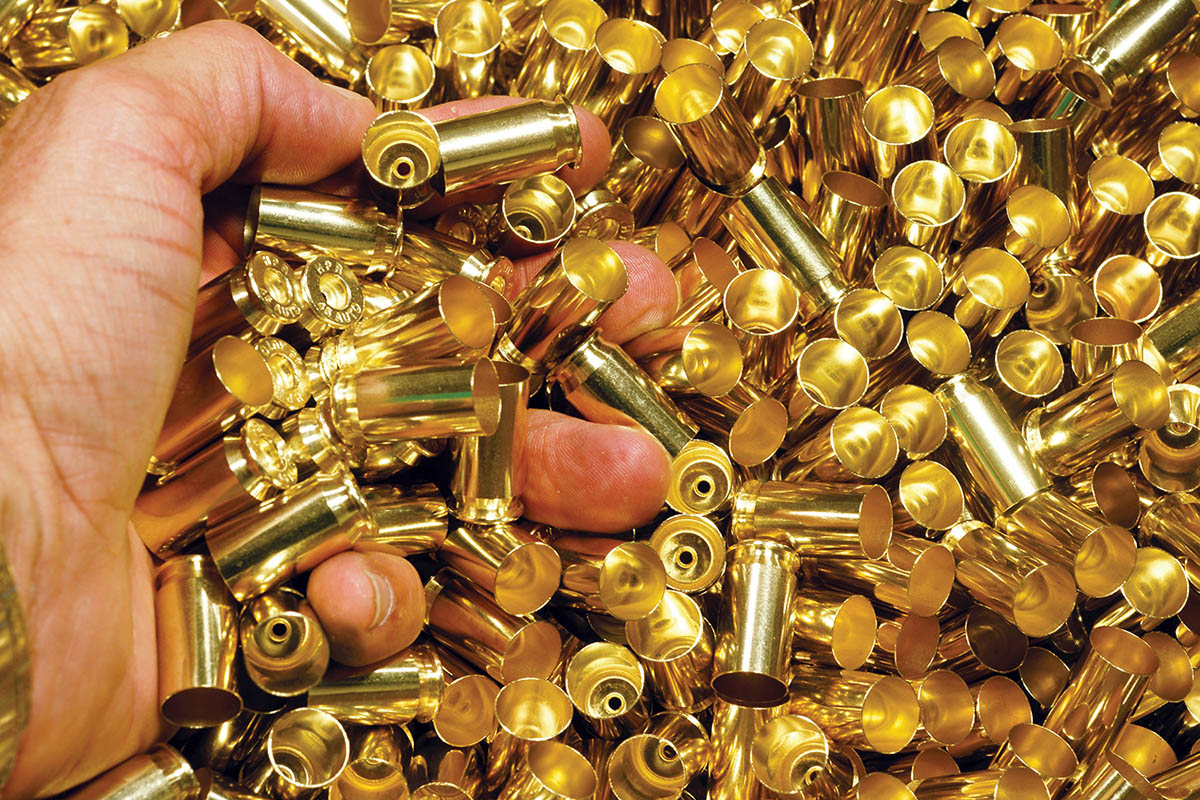
Leave aside common calibers like 9mm, 45 Auto and the like. What about handguns of old, where ammunition has to be hand-made or you don’t shoot? Where the brass is often formed from other brass, or it comes from Europe, or was produced 25 years ago, and we are still using it up? Or brass for an oversized Montenegrin revolver that is formed from a rifle cartridge like the 45-70?
Is this brass, and any loads anyone has put together since, immediately illegal? So, it would appear.
I haven’t been able to find any information relating specifically to either .22 rimfire ammunition, shotshells or rifle cartridges that are now used in handguns. I’m thinking here of 35 Remington in a Contender. Going the opposite way, what if you have a rifle chambered for a pistol cartridge, there are lots around now, but no pistol for it, and you are found in a public place with your carbine and box of 45 Auto. What then?
Assuming the ammunition companies go along with this absurdity and actually make the stuff, it would almost certainly encourage other jurisdictions with like-minded anti-gun lawyer-politicians to pass similar laws. After all, they’ll say, the ammunition is now available, so we are just going with the flow. Think California, New York, Connecticut and Massachusetts, for starters.
This is a far-fetched idea, but manufacturers could decide the simplest route is to serial-number all their ammunition. That way, they would not need separate production lines, and any state that didn’t want to adopt a similar law could just ignore the markings.
Now, what about foreign ammunition makers like Fiocchi and Prvi Partizan, who bring in calibers American companies don’t make, such as 7.63 Mauser (for the Broomhandle) or 455 Webley? What are they supposed to do?
In one of the speeches related to this, either the Illinois governor or the mayor of Chicago, I forget which, blamed Chicago’s crime rate on guns and ammunition finding their way there, circumventing the FOID law, from surrounding states like Missouri, Iowa and Kentucky, which allow their citizens to – gulp! – own guns and exercise their Second Amendment rights without the hand of Big Brother to keep them in line. If only these backward jurisdictions were as progressive and far-sighted as Illinois, they imply, crime would magically disappear.
Try as I might, I can’t think of a scenario wherein digitalized ammunition would help law enforcement solve a crime, except maybe a drive-by shooting where empty cases are flung far and wide on the pavement. Is it just me, or is it highly unlikely a gunman would use his FOID to buy ammunition from the corner gun shop before going out to whack rival gang members?
It strikes me that anyone with a brain would not do that, and anyway, the one thing sure to spring up in the wake of the new law will be entrepreneurs who fill their trunks with unmarked ammunition and bootleg it in back alleys.
Which brings up yet another question: Suppose I need to cross Illinois on my way somewhere. I might have a gun in the car, which would be legal because of laws related to interstate travel by non-residents, but what about my ammunition?
As you can see, this is not a simple problem, and I’ve lost count of all the questions. As a resident of the freedom-loving state of Missouri, where I can walk around with a gun in my belt, concealed or otherwise, the Illinois law does not affect us except, possibly, indirectly, in all the areas mentioned above.
Finally, back to money: Up to five cents per round or per bullet will be charged to pay for this boondoggle. When politicians say, “up to,” you know the maximum will be charged. The reference to “bullets” is worrying, because this means, going by actual definitions, that a box of 100 cast bullets for your 38 Special will now cost five bucks more. They use “round” and “bullet” interchangeably, which, of course, they are not; but there sure is a distinction if you handload.
As I write this, the NRA annual meetings in Houston are two weeks away, and I’m hoping to be able to ask some of these questions and get at least some tentative answers as to what the ammunition companies might do.
There is, however, one positive, unequivocal statement I can make without fear of contradiction or being proven wrong: The one thing that will definitely come out of this is more work and more money for more lawyers, happily going at it hammer and tongs on both sides.
Meanwhile, to paraphrase the late, great Mr. Zevon: Send lawyers, guns and money, Dad, get me out of this!