

From the Bench
Redding’s Hefty New Dies
column By: Art Merrill | August, 26
Handloading precision ammunition depends upon consistency, and consistency hinges upon minimizing variables to the greatest degree possible. Regarding resizing cases and seating bullets, removing variables means ensuring our reloading dies do not move when subjected to the considerable force we apply to them. Dies can move if we fail to firmly lock them down on the press with their lock rings, and they can move if the press itself flexes under pressure.
For these reasons, beefy is better, and my heavy, cast-steel O-frame press has been my go-to for reloading precision ammunition for four decades. Do aluminum presses, open (C-type) presses, turret presses, arbor presses or hand presses flex under the pressure of resizing cases? Maybe, maybe not, but my hefty O-frame press is the go-to because I have every confidence it absolutely will not flex.
However, have we ever considered whether resizing dies themselves can flex under pressure from the press ram? Theoretically, it is possible, which is a reason why today’s reloading dies are universally made of steel rather than of something softer and easier to machine. While standard 7⁄8"-14 reloading dies may flex so little that it can’t readily be directly measured at the reloading bench, can they flex enough to affect group dispersion at extreme long range?
Confidence plays as key a role in precision reloading as does consistency. We must be confident that our tools are capable of producing ammunition so consistent that any errant shot at the range or in the field can be attributed to the shooter. Redding Reloading Equipment already has a deserved reputation for making high-quality precision reloading dies (and other reloading tools), so they must have done considerable head-scratching trying to figure out how to improve on them. What Redding ended up doing overtly was to make them beefier, and doing so has covertly infused them with confidence for the precision shooter who handloads high-performance cartridges.
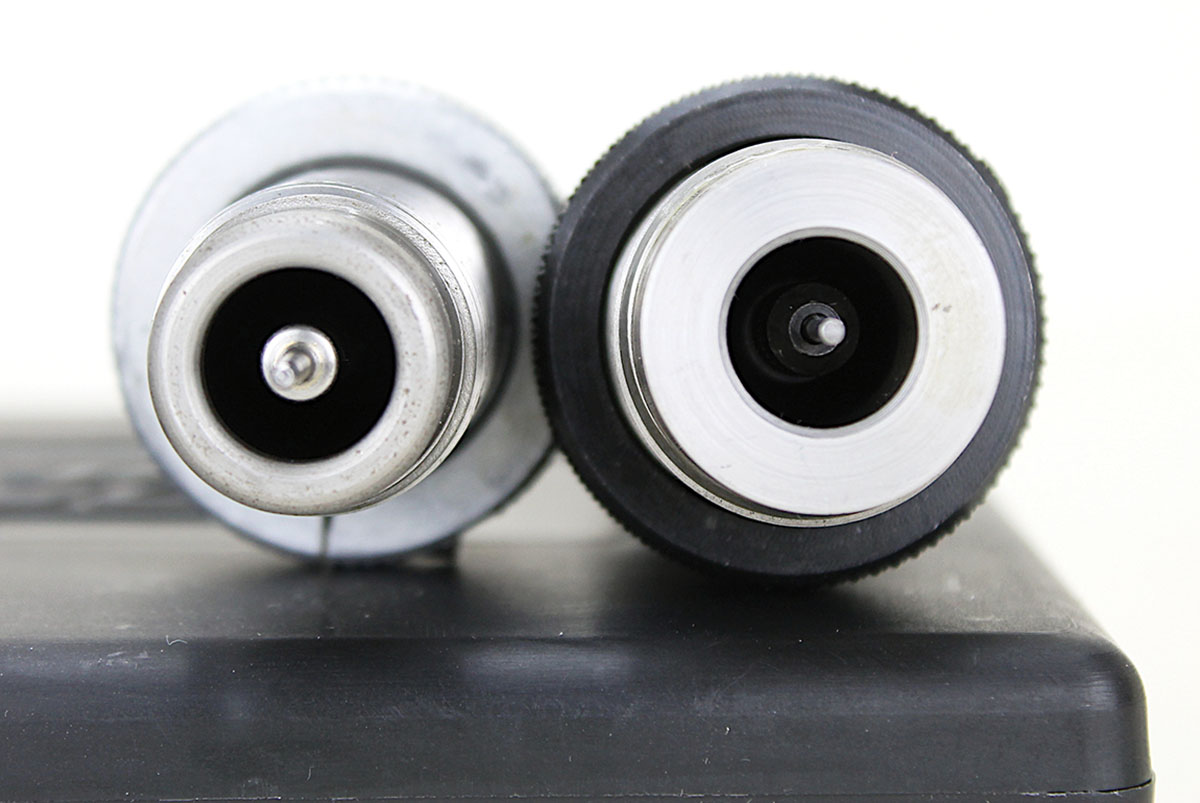
Typical reloading dies measure 7⁄8 inch in diameter; Redding’s Z Series dies are widened out to a full one inch. It doesn’t sound like much, but that little bit adds considerable mass to the Z Series die walls, and when it comes to press-forming metal anything – say, Mach 3 aircraft
titanium wing panels on a 40-ton press or a brass cartridge case in a steel resizing die - more mass offers less opportunity to flex. For some calibers, Redding says its Z Series dies are twice as strong as standard 7⁄8"-14 dies.
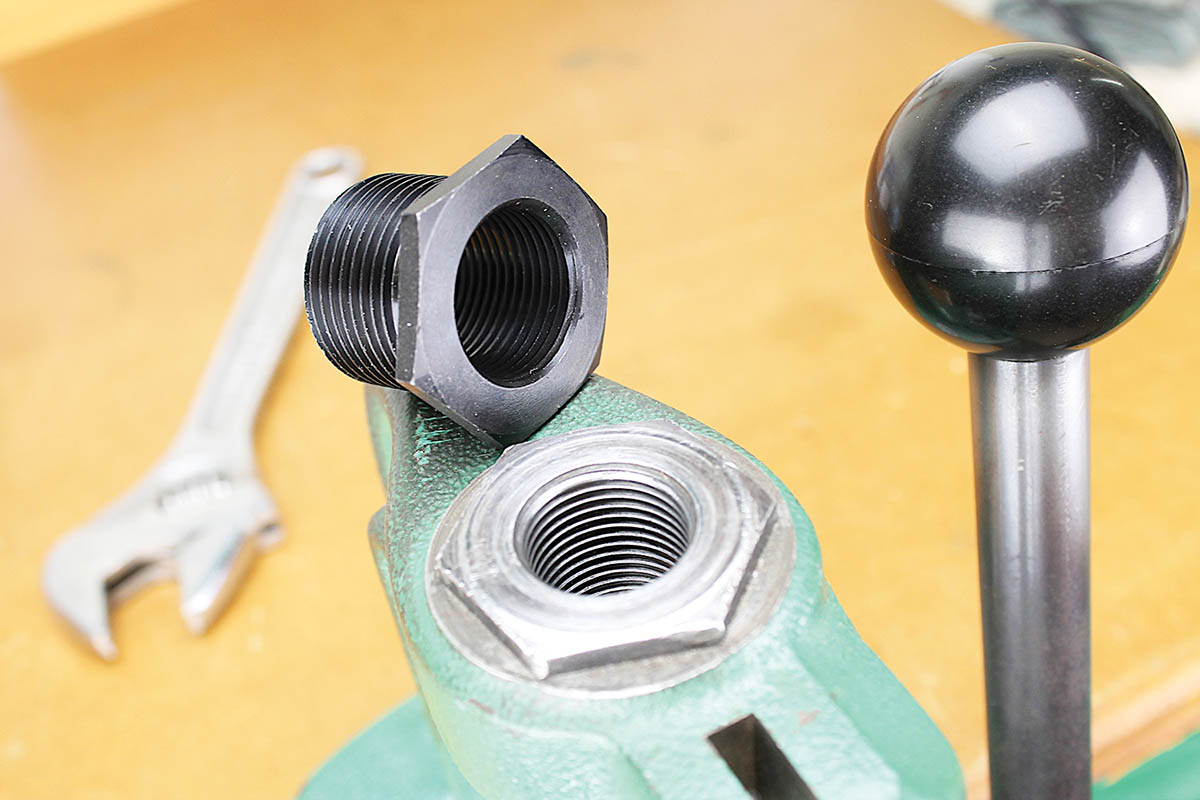
Since most reloaders have only used common 7⁄8"-14 size reloading dies, many look past the 7⁄8"-14 bushing screwed into the top of their press top, not even wondering why it is there. These new Redding dies will fit most presses by simply turning out the 7⁄8"-14 bushing and screwing into the press the 1"-14 bushing offered by Redding as an accessory to take the Z Series dies.
Redding marketing literature says the Z Series die bodies are “larger, stronger and more robust,” and Redding adds that its own testing has proven that the increased strength of the Z Series die reduces sizing effort and “provides more consistent sized case dimensions.”
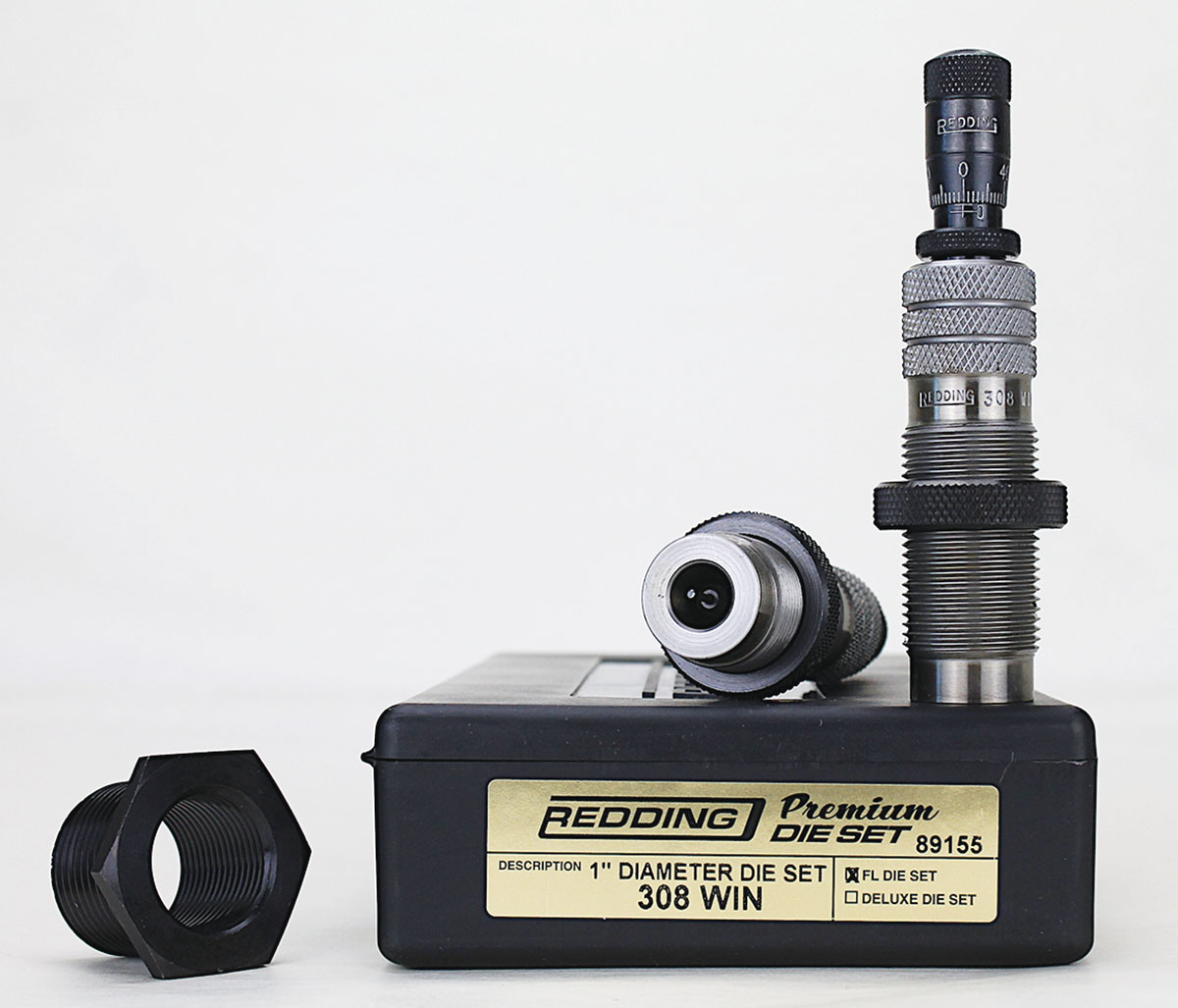
Robin Sharpless at Redding kindly loaned me a set of 308 Winchester Z Series dies to evaluate, and here I compare its full length resizing die to two other makers’ 308 Winchester full length resizing dies I have at my bench; one of them we can consider a “standard” die any ordinary Joe Hunter handloader might buy, the other a bench rest resizing die.
As for “robust,” we can confirm that visually (but to quantify that, I weighed all three resizing dies on a postal scale and measured their wall thickness at the bottom opening) the result is:
.jpg)
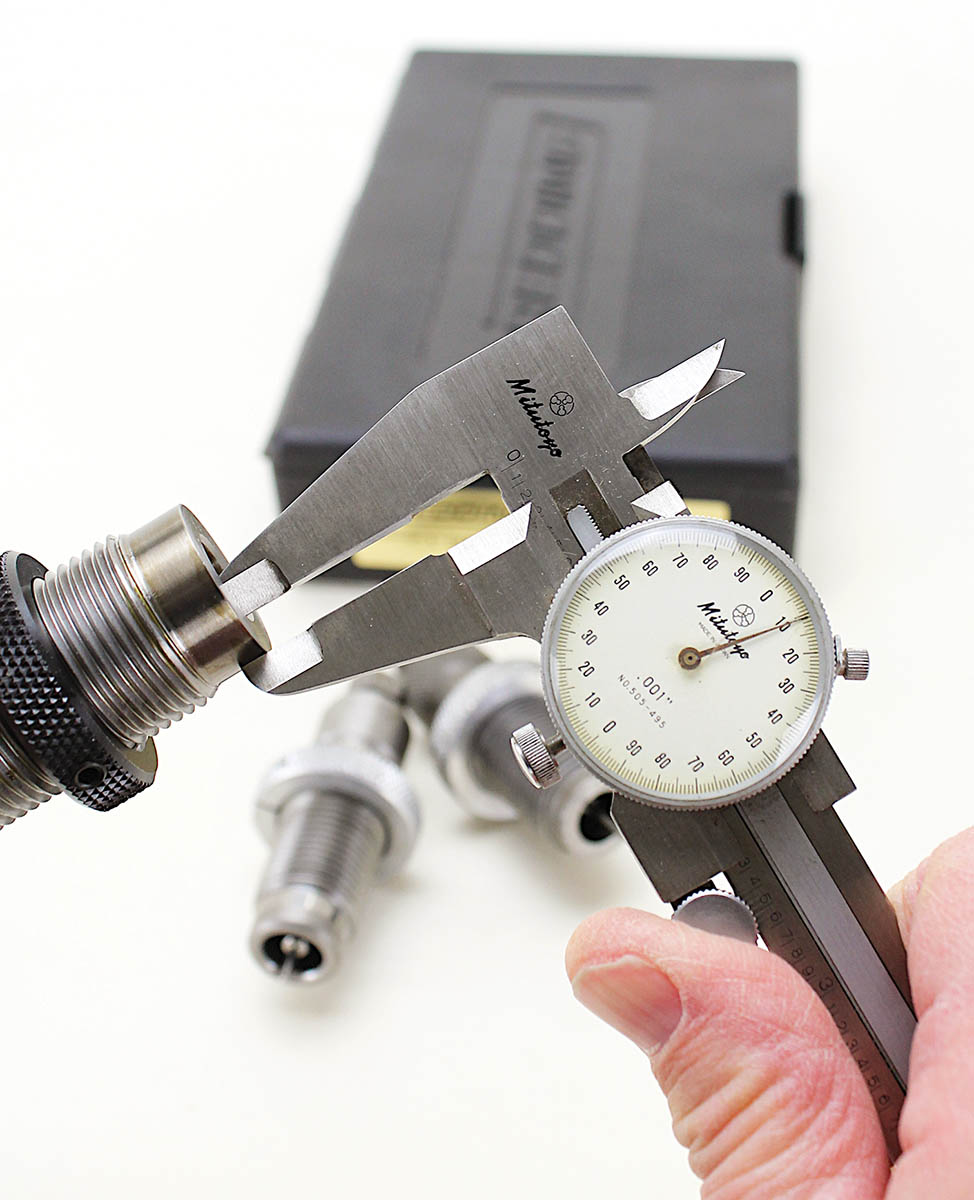
I have no ready way to objectively measure the resizing effort applied to my press ram. For a subjective evaluation, I resized ten 308 Winchester cases in the standard resizing die, and then ten more in the Redding Z die. In the time interval required to change out the bushings and dies, my “muscle memory” had moved on to other things, and I honestly couldn’t decide whether I could feel any difference in resizing effort between the two dies.
To evaluate whether Z Series dies do, indeed, provide “more consistently sized case dimensions,” I considered resizing cases of the same lot number in all three different makes of dies and measuring case diameters at the mouth, shoulder and just in front of the web. But that seemed like a lot of wheel reinventing, and instead, I asked Robin how they determined that at Redding.
“It was done by firing the same lot of brass in the same rifle under the same conditions to create a test package of brass,” Robin said in an email exchange. “Then these were divided and sized in the Z Series dies and also in standard Redding full-length dies. The two samples were measured on an optical comparator for body dimensions, as well as using the Redding Instant Indicator Comparator for shoulder position with the datum line [shoulder] contactor. Charts were made for each sample, and the difference was clear from the numbers.” Wheel reinventing avoided.
Z Series dies are available in 33 calibers ranging from 257 Weatherby Magnum to 375 H&H Magnum; die sets include a carbide sizing button and Redding’s excellent micrometer bullet seater. Most offerings are in more powerful or uncommon or precision competition calibers such as 26 Nosler, 7-6.5 PRCW and 338 Lapua Magnum. The only Z Series calibers listed at the Redding website I would consider pedestrian are 308 Winchester and 30-06 Springfield. Z Series are full-length resizing dies, but neck bushings are available for some calibers. A 1"-14 threaded head is available for Redding’s own turret press, as is, of course, the 1"-14 bushing for other makers’ presses.
Redding, as a practice, doesn’t list prices on its website, but an online search turned up Z Series die set prices running from $134 (on sale) to $350, depending on cartridge and where you find them. Especially if you handload for shooting at extended ranges, the confidence in consistency that Redding’s Z Series dies can provide makes them an asset at the reloading bench and on the target.