

Hunting Loads for Vintage 16-Gauge Guns
Breathing New Life Into a 126-Year-Old Shotgun
feature By: Gary Lewis | August, 26
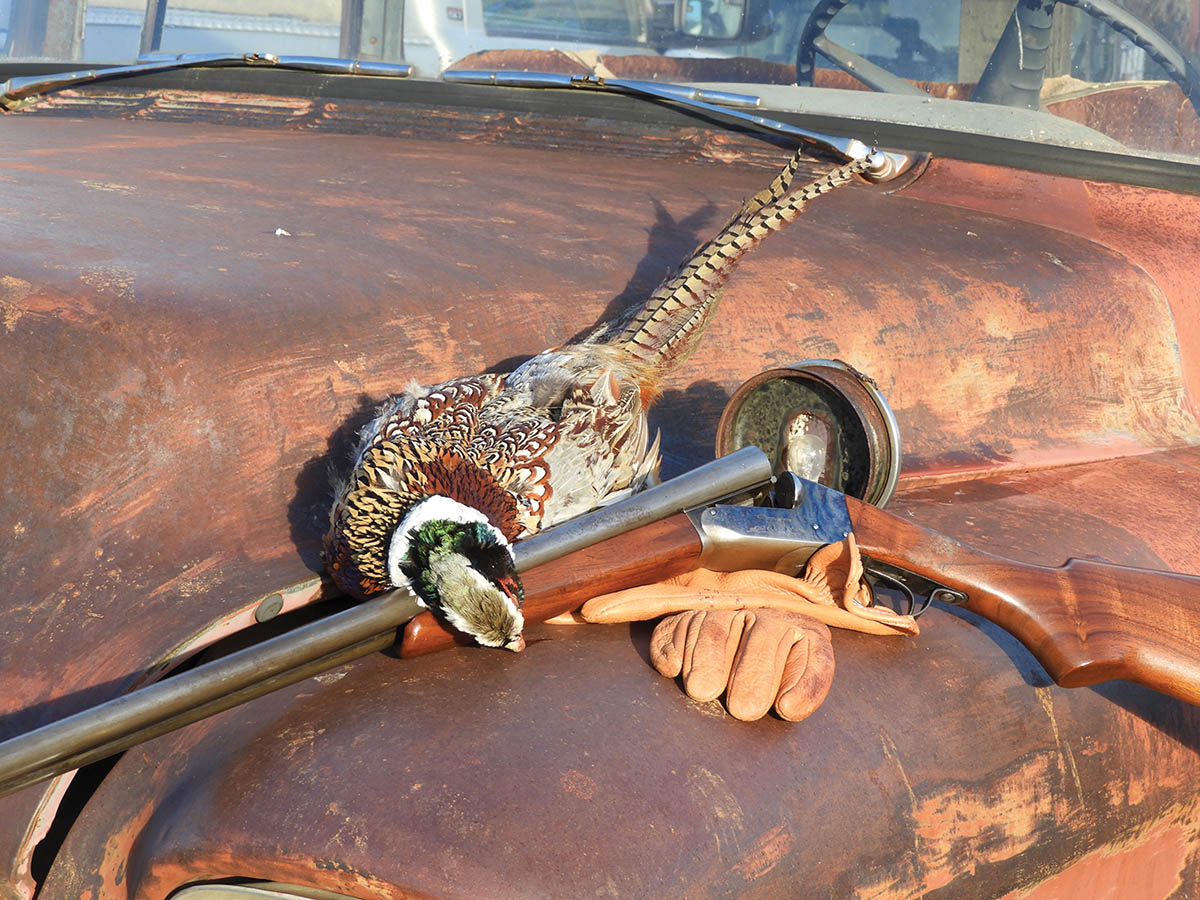
If I read the setter’s body language right, the bird would flush right to left. Walking toward the dog, his tail rigid, body taut, I heard the pheasant before I saw it. Time seemed to crawl. The rooster floated across in front of me right to left, and I swung out in front of it and squeezed and saw the bird crumple over the Damascus barrels. Just like 1905. Just like 1919, after World War I (the War to End All Wars). Just like 1946, after World War II.
Maybe several generations of pheasant hunters are looking down from the happy hunting grounds. Perhaps they nod approvingly. I betcha I shoot this gun at least as well as they did.
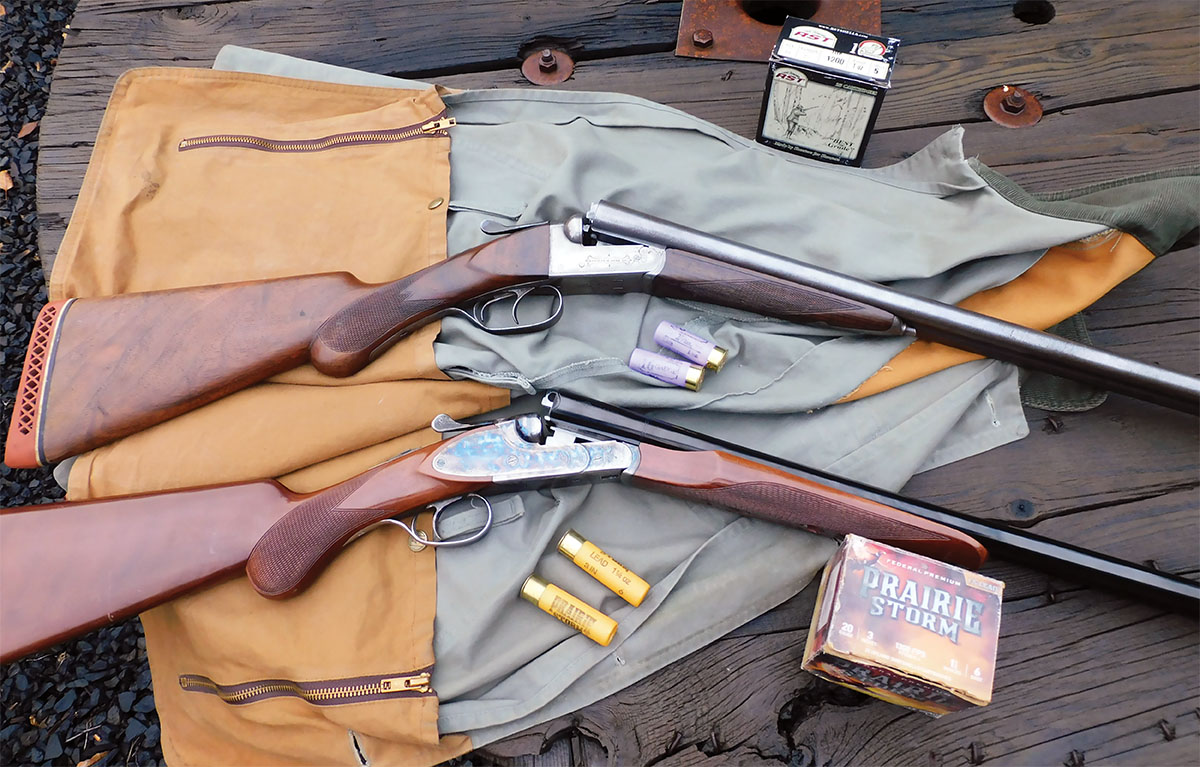
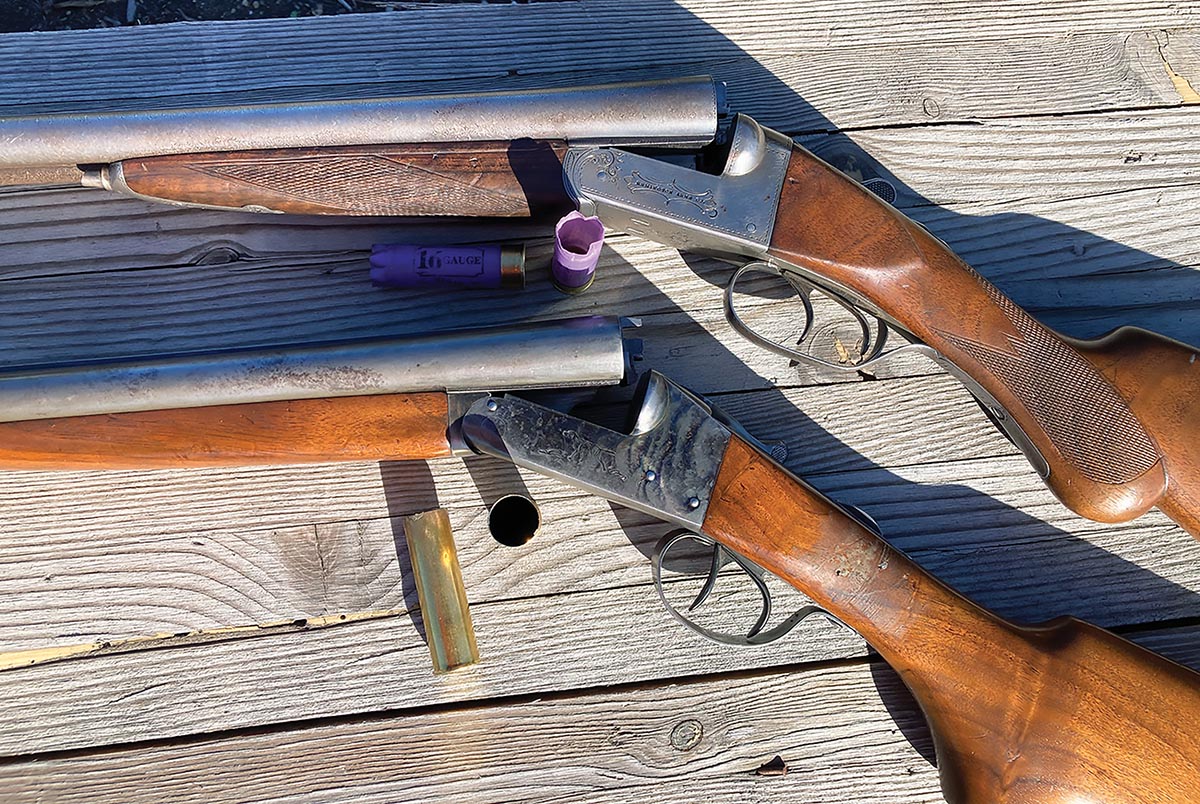
I was carrying a 16-gauge Remington Arms Company side by side manufactured in 1900 when bird hunters were still shooting black powder. The 126-year-old double might as well have been custom ordered for me; it fits me that well.
My friend Matthew McFarland had a hard-to-get supply of 16-gauge RST low-pressure loads and brought me four boxes before the hunt – No. 7s for targets and No. 5s for pheasant and partridge. From the first time I shouldered the gun, the wood came right to my cheek, and the rib disappeared, the little gold bead the only thing between my eye and the target.
The stock is English walnut fitted sometime in the past with a recoil pad, the 30-inch barrels crafted of three-bar Damascus steel.
On the first hunt with the old Remington, I had shot RST low-pressure No. 5 loads and made some of the longest shots of my life on French partridge. On subsequent hunts, the old gun proved itself on several roosters and a few quail. It became apparent I would soon run out of ammunition, and if I was going to keep the old gun in the field, I would have to load for it. What I did not realize was that I would soon be inheriting a Western Arms Long Range 16 gauge and
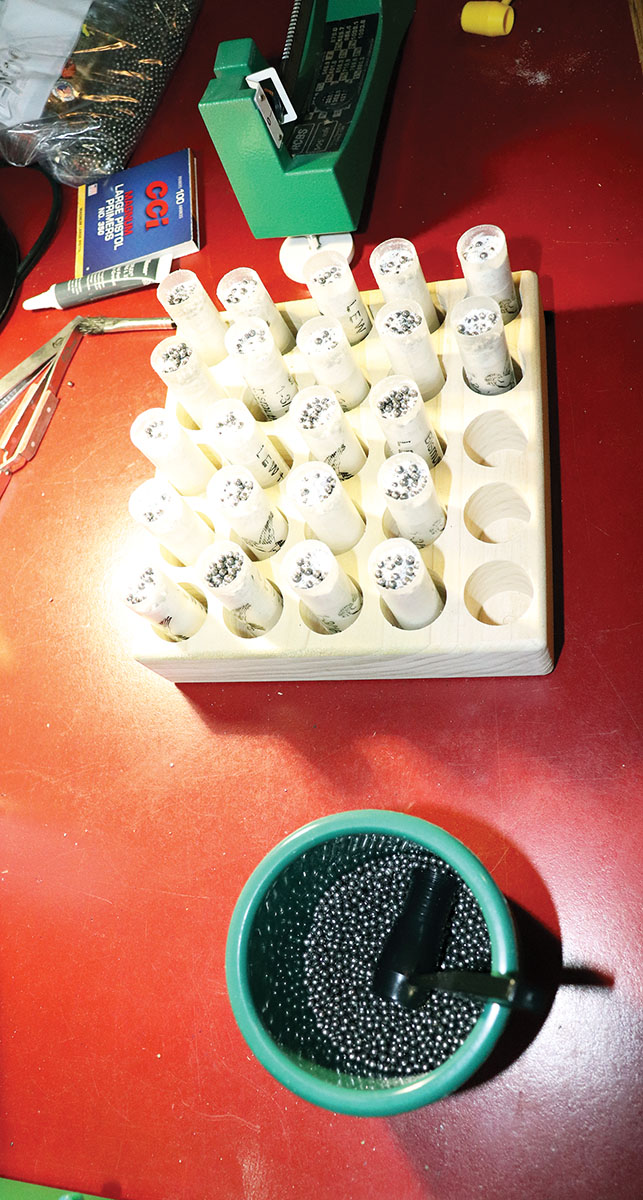
other vintage 16-gauge shotguns.
To build a library of hunting loads for the Remington, the Western and the others, I enlisted the help of my friend Matthew McFarland. Over several evenings in late winter and
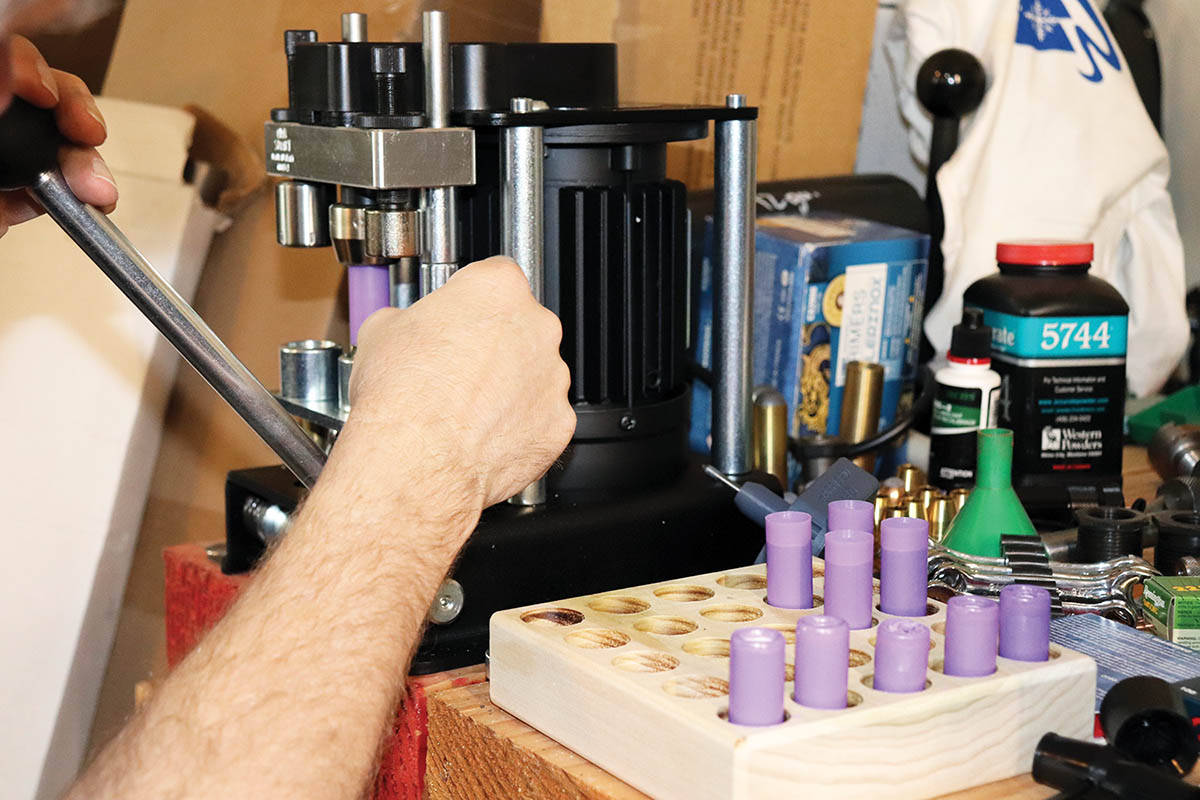
early spring, he helped me craft loads for doves, quail, pheasant, ducks and wild turkey. The first test of these 16-gauge handloads was out of the right barrel of the Western Arms Long Range gun, preparatory to a spring turkey hunt. The pattern was right for height at 25 yards, but two inches left, although with enough pellets in the vital head/neck zone.
The next field test was the next day, when I smoked a wild turkey at 32 yards (holding slightly to the right). A couple of days later, I drove to the Central Oregon Shooting Sports Association range east of my home in Bend, Oregon, where the wind howled out of the southeast such that I was unable to mount the prepared 40-inch butcher paper targets in the 2x4 frames without them ripping out.
For the next two hours, I fought the wind gusting up to 25 miles per hour (mph) and learned some interesting things about my guns and handloads.
Pheasant Load
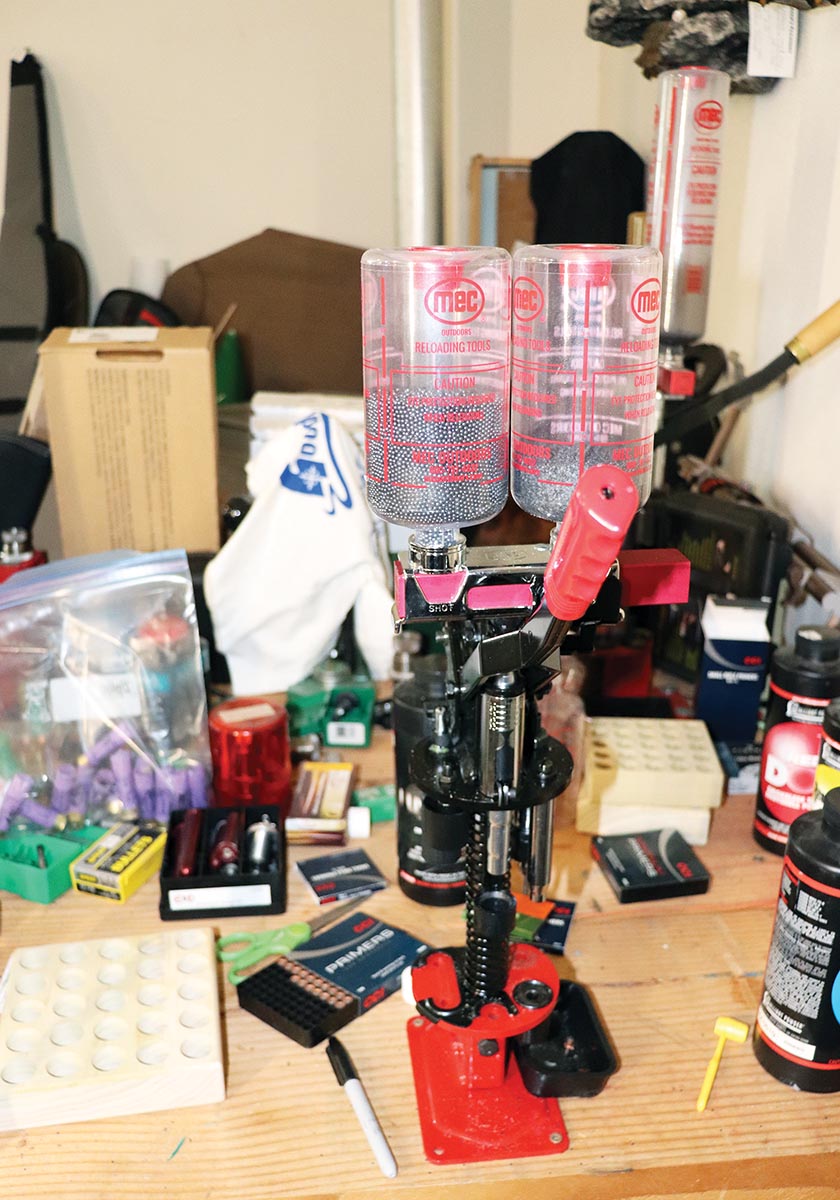
I imagined a versatile round for chukar and pheasants, a low-pressure load of number 6 shot, and for these, we would use the once-fired Cheddite cases. The recipe called for Longshot, which necessitated a powder change in the 600 MEC Jr. Ejecting the spent primer, I filled the case with 17 grains of Longshot, added a WAA16 wad, and then
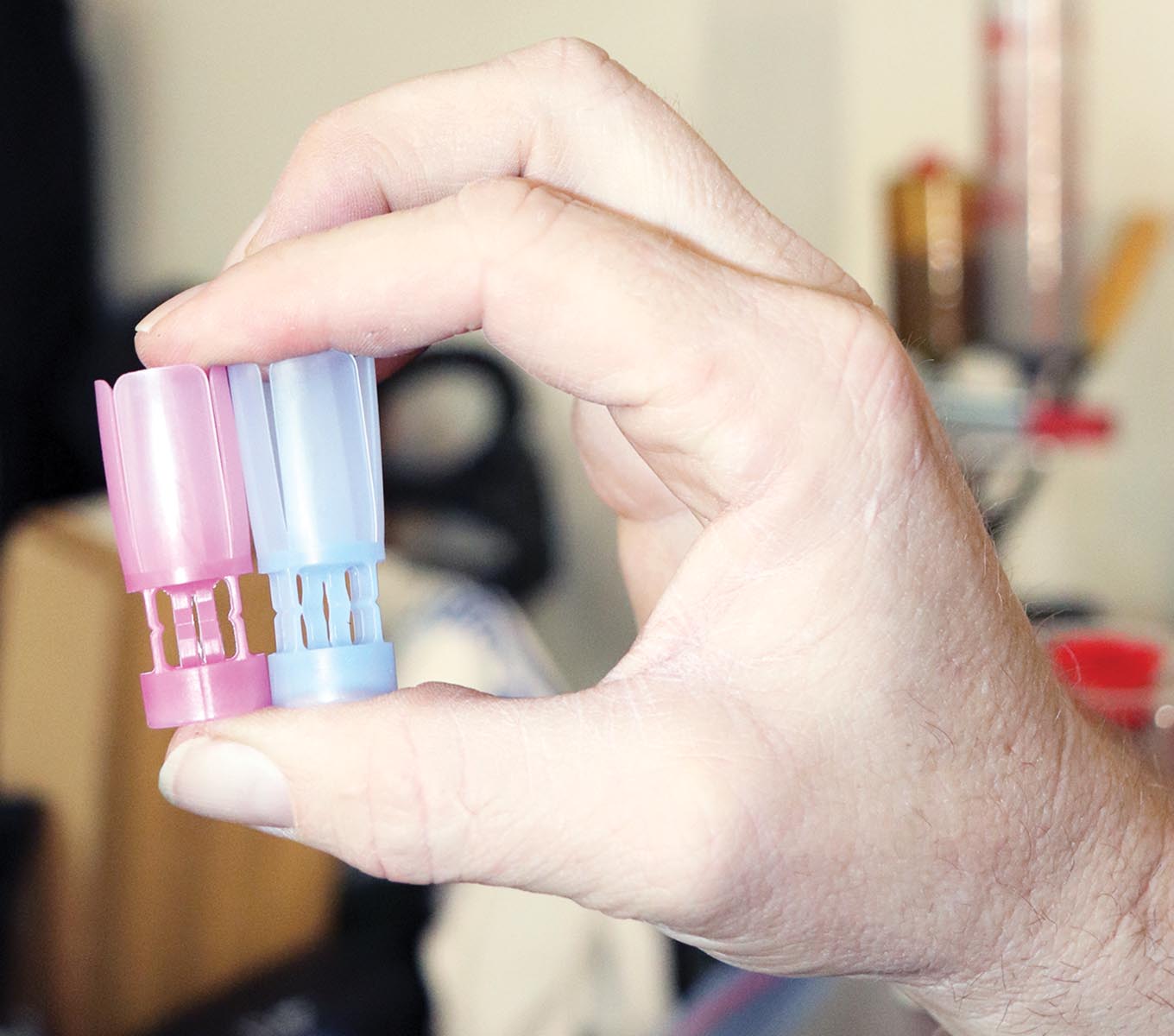
pulled the lever for one ounce of No. 6 lead shot. The Cheddite hull had a six-point crimp, so we finished the load, crimping on the neck and friction-finished with the OMV Smart.
At the Range:
The first shot was at 20 yards at a turkey target from the left barrel of the Western Long Range gun. The pattern struck center high, and I counted 13 strikes in the vital head/neck of a turkey. I then shot at a clay pigeon, but then, upon loading the gun, I found the once-fired Cheddite brass had deformed and did not lock up easily in the old gun.
Notes:
This is a good field load, but I will discard the rest of this batch due to the deformed brass.
Vintage Turkey
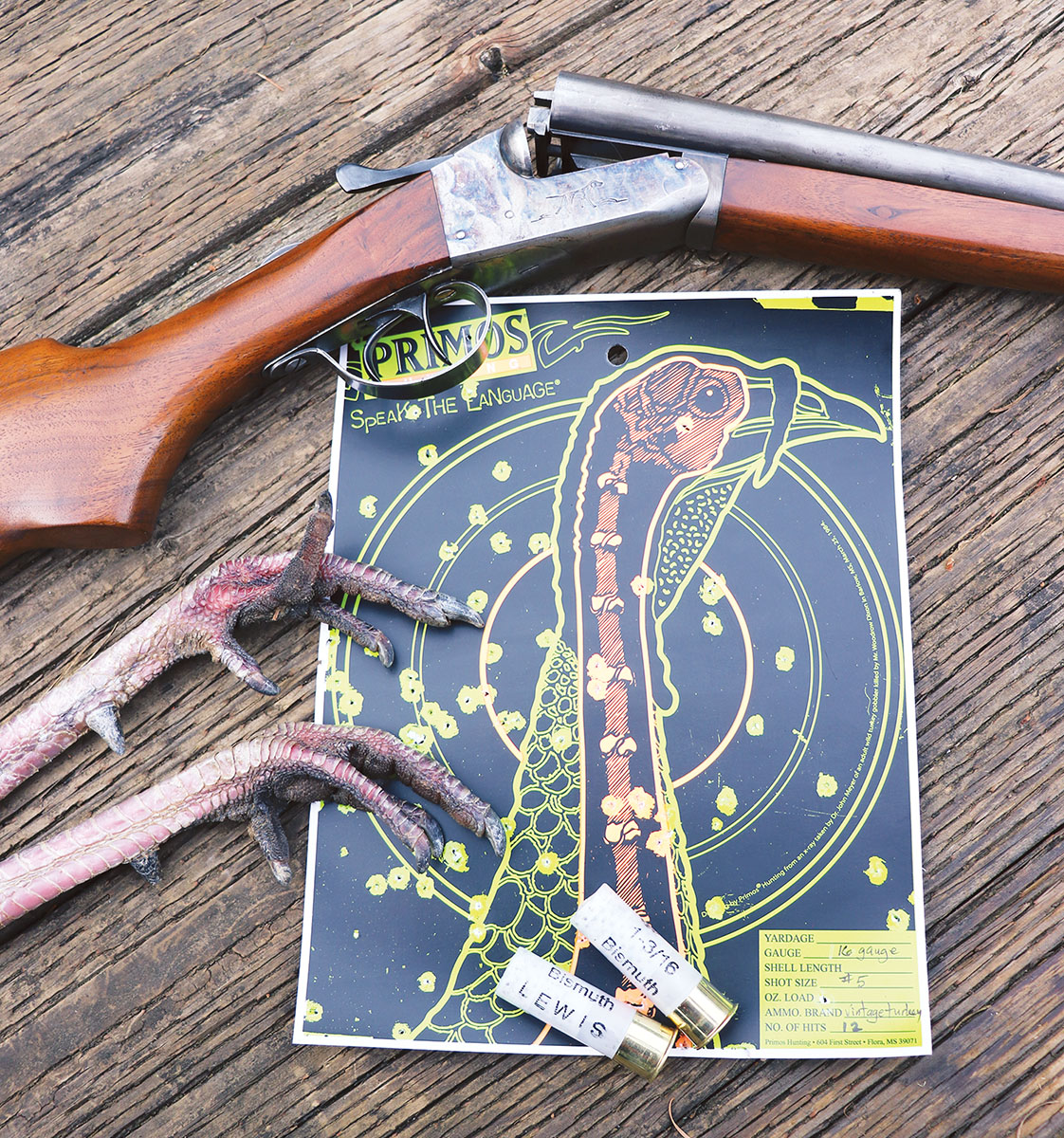
The goal was to put together a box of turkey loads suitable for killing wild turkeys out to 30 yards from the twin tubes of an antique gun. The evening before, 16-year-old Molly McFarland, whose favorite thing is killing alligators, had roll-printed custom labels with my name on the hulls. Matthew opened a drawer marked Bismuth and pulled a bag of shot out of the better bismuth bureau. These would be bismuth loads, also suitable for mallards or, for that matter, killing hard-flying wild roosters.
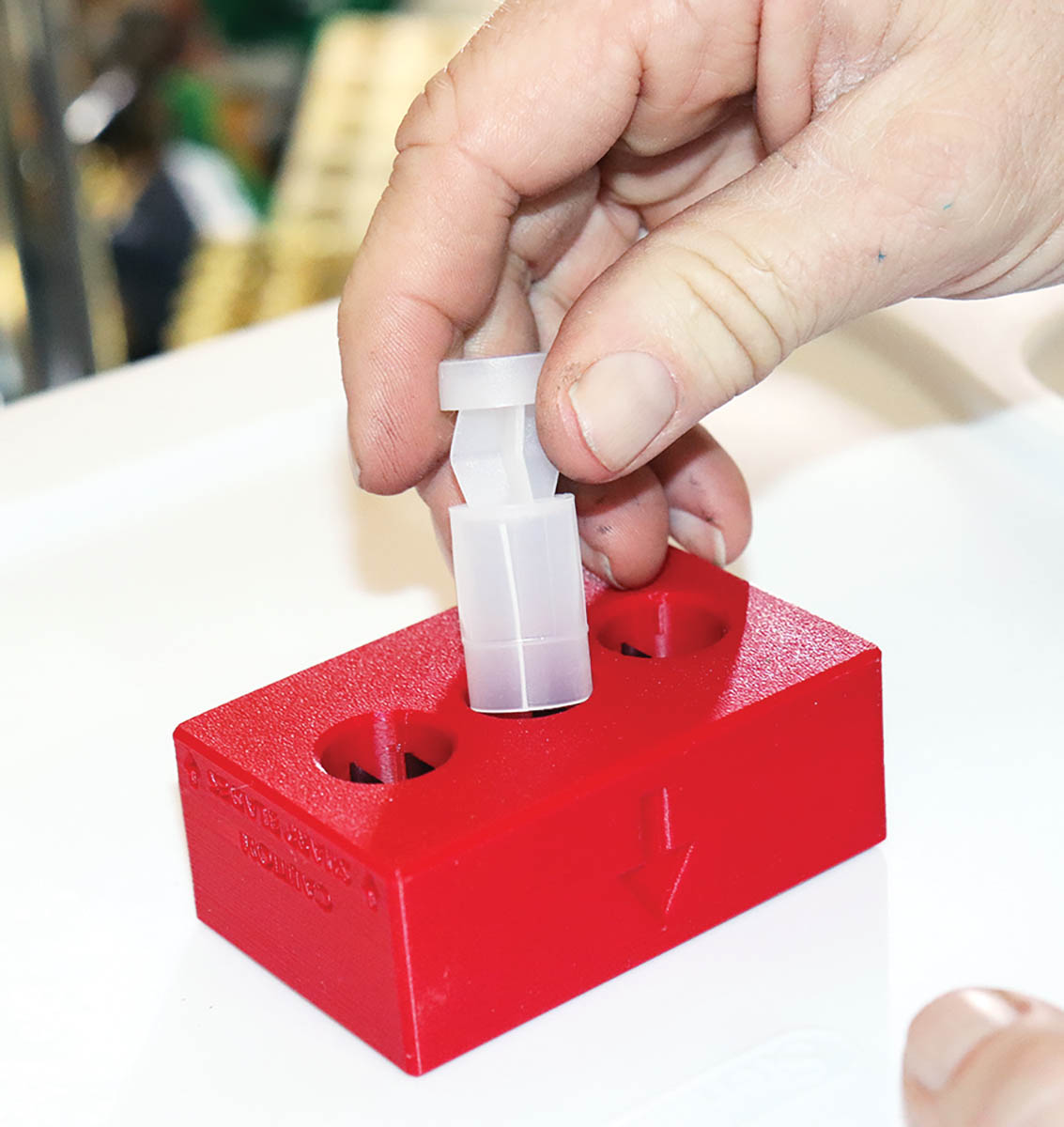
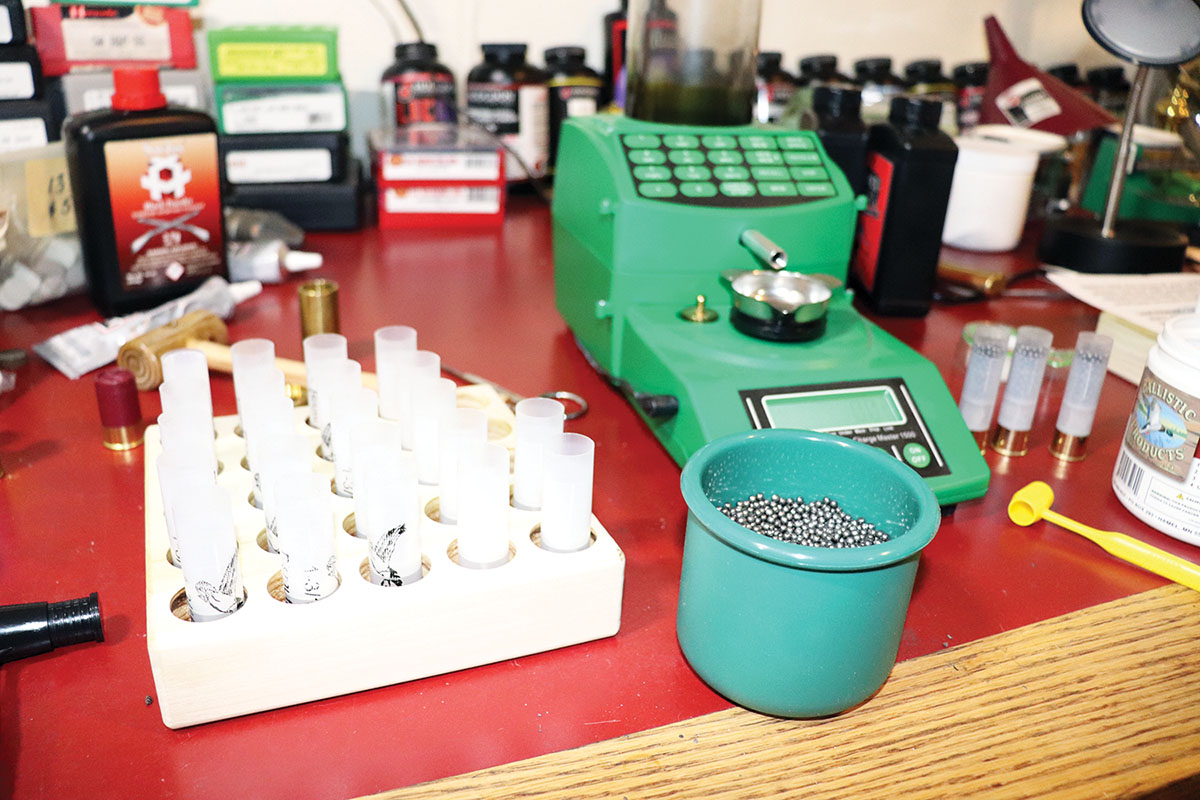
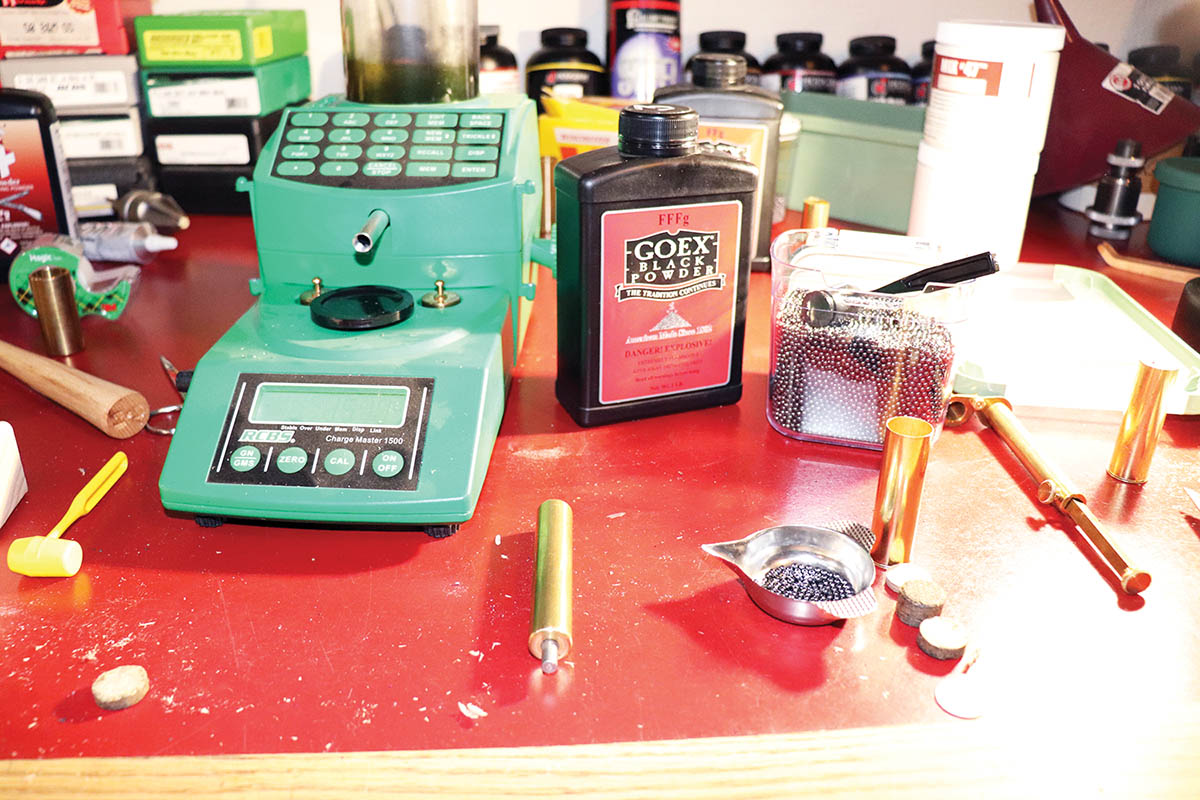
We started with a pre-primed Cheddite 2.75-inch 16-gauge hull, added 19 grains of Longshot and a CPTS wad. I had to put slits in the wad using a razor blade cutter. Simply push the wad in as far as desired and pull out a perfectly slitted wad. For shot, we weighed out 13⁄16 ounces of No. 5 Bismuth shot, then added 15 grains of Mix No. 47 buffer. As it turned out, we liked slightly less than the 13⁄16 ounce and subtracted a few pellets for a perfect fit (500 grains) of shot and buffer. To thoroughly mix the buffer, Matthew would set each uncrimped load on top of his polisher. Other vibrating objects would work just as well.
I finished each load with a 6-point star crimp, then burnished it on the OMV Smart machine. The assembled load is a smart-looking charge that should inspire fear in a longbeard out to 30 yards.
Before the Hunt:
I patterned the first round out of the Western Long Range gun and noticed a tendency of the right barrel to print left. At 25 yards, I had 12 pellets in the vital area, while I consider 8 pellets the minimum.
On the Hunt:
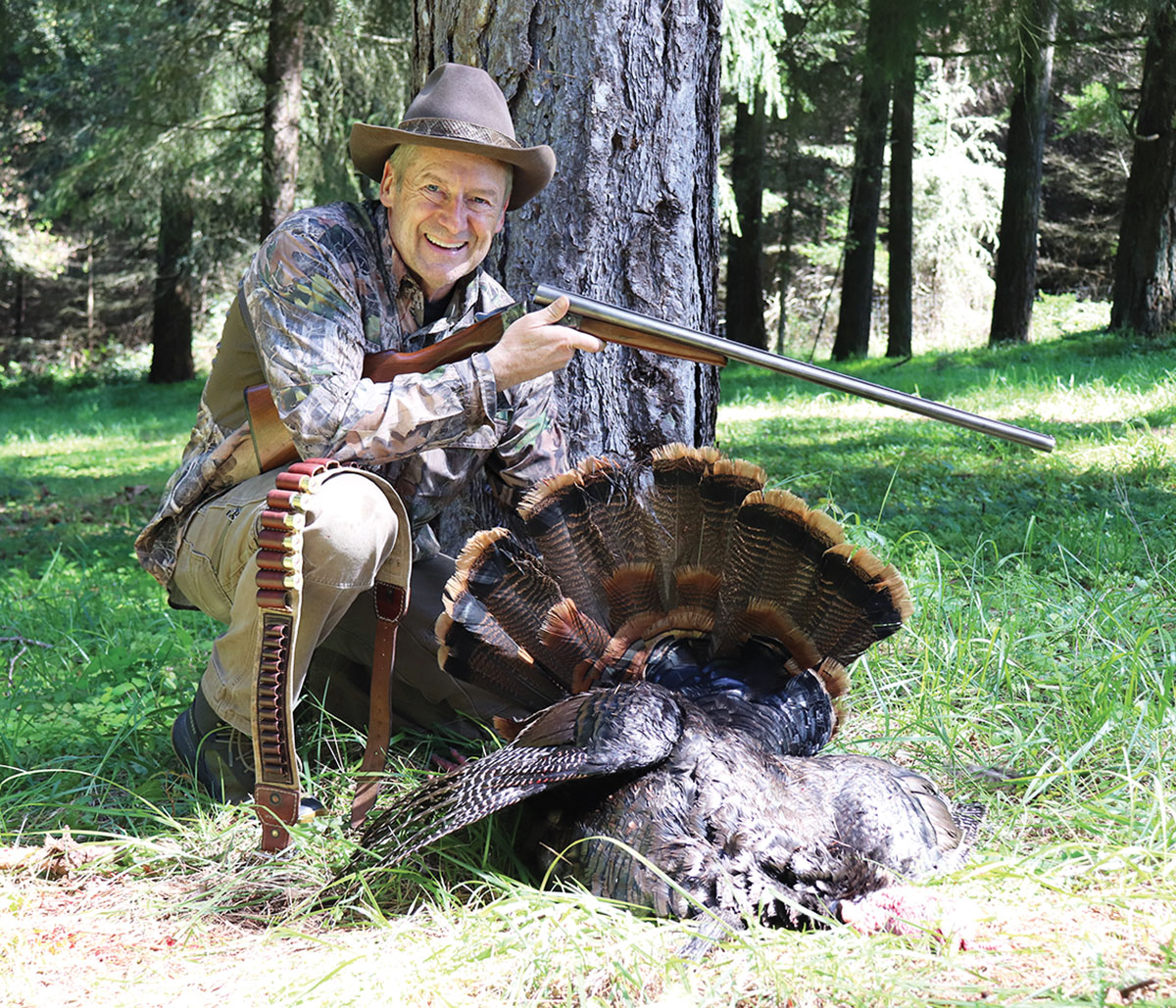
I had an opportunity to shoot a big gobbler at what seemed to be 30 yards (actually 32 yards), held a couple of inches to the right, and squeezed the trigger. The bird dropped in its tracks, a worthy trophy with a 93⁄4-inch beard and 3⁄4-inch spurs.
Later at the Range:
Shooting at 30 yards (with a 20-mph crosswind) seemed to confirm that the right barrel of the Western Long Range prints left. When I switched to the Remington, I was able to center the target (when the wind slowed for a moment).
Notes:
This is a good load for wild turkey and, as it patterns high in the Remington, would be profitable for ducks or wild roosters. I would put the maximum effective range for turkeys at 30 yards and am confident past 50 yards on passing partridge.
Black Powder
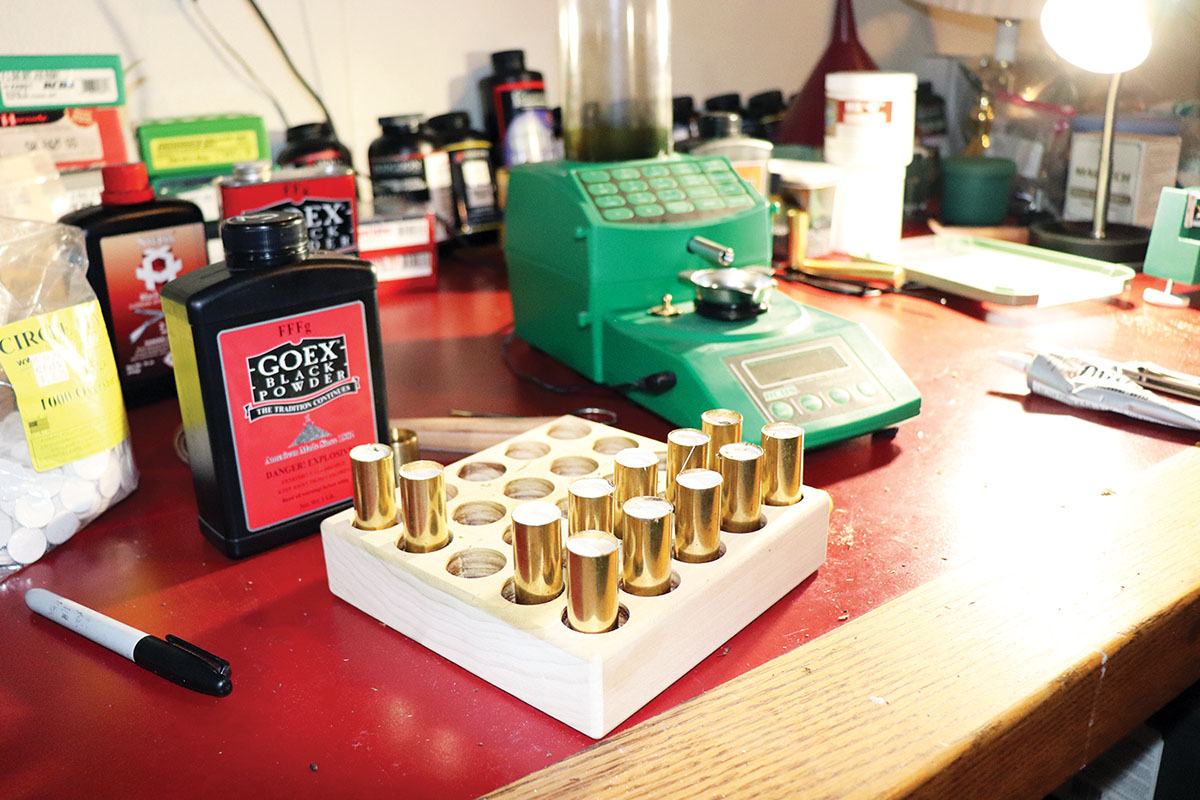
As a longtime black-powder shotgunner, I have an affinity for No. 6 lead shot, with which I have killed ruffed grouse, chukar, pheasant and several gobblers. While that is cool, there is nothing cooler than smoking a bird with black powder, then ejecting the tinkling brass cases onto the rocks with all that smoke rolling out of the breech.
Matthew primed a dozen Magtech special brass cases using magnum large pistol primers. Sitting in front of a loading block with a dozen cases yawning up at
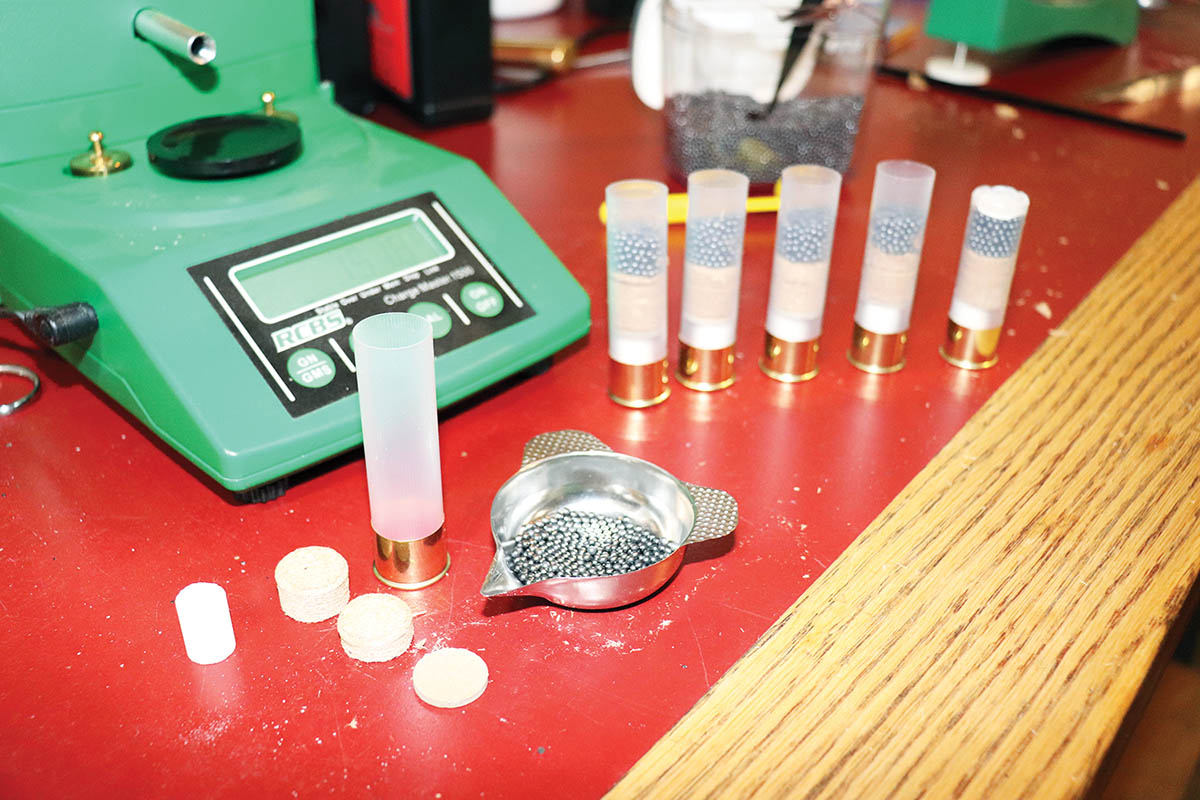
me like the beaks of so many baby robins, I weighed out 75 grains of Goex FFFg then added a 14-gauge nitro card and one and a half of 14-gauge cardboard wads. The shot charge weighed out 437.5 grains of No. 6 lead. To finish it off, I tamped down a 13-gauge overshot card and glued it with E6000 glue around the rim.
At the Range:
Patterning at 20 yards, the wad punched through the head of the paper turkey but did not put a lot of pellets in the kill zone.
Notes:
The pellets patterned center-high though and I would call this a worthy pheasant load. The thinking shotgunner will clean the old gun quickly to guard against black powder corrosion.
Quiet Starling
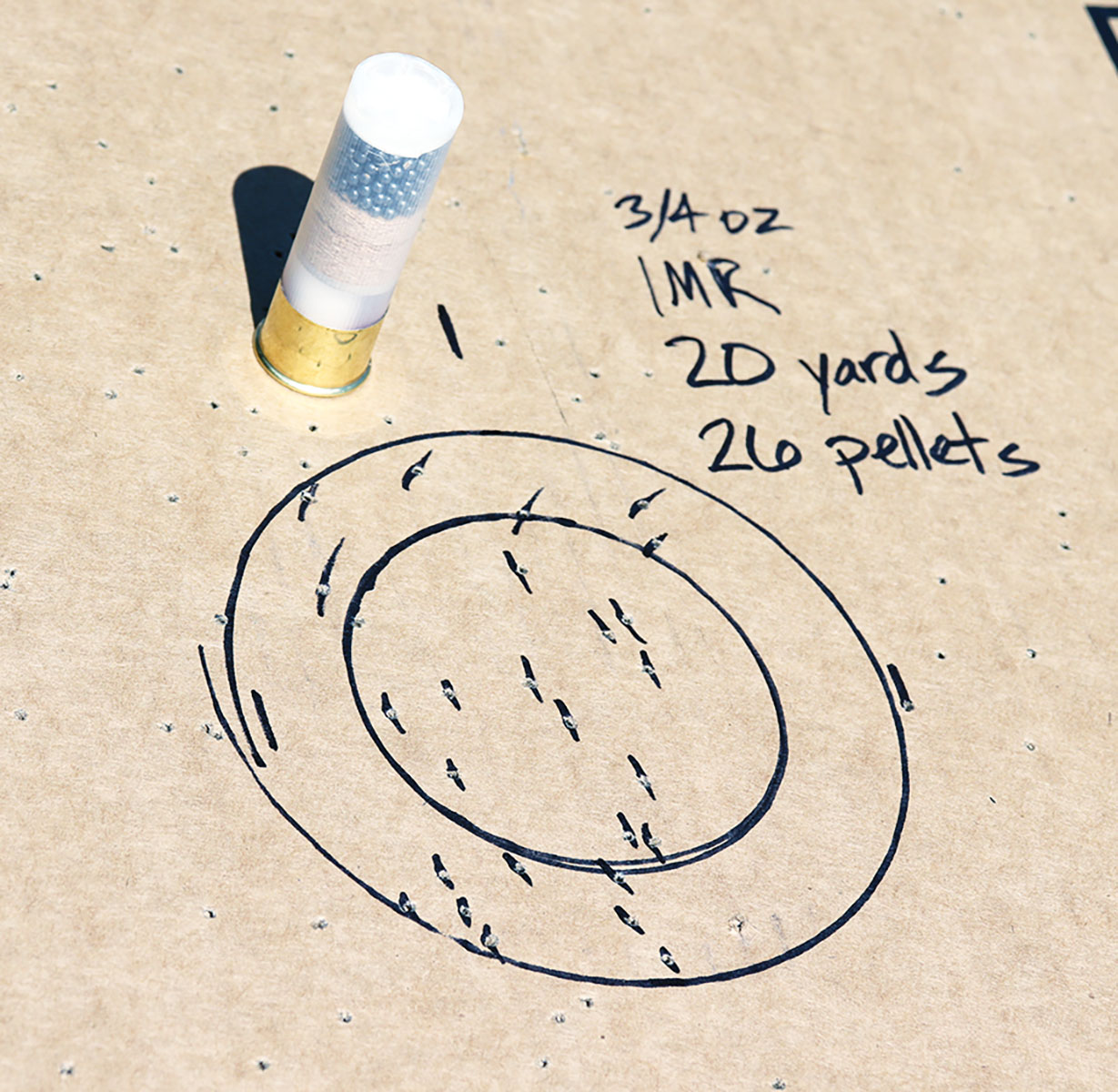
For something different, I also loaded half a dozen rounds consisting of a clear, pre-primed Cheddite case, one IMR White Hot pellet, 11⁄2 14-gauge cardboard
wads and 2⁄3 ounce of No. 8 shot, topped with a 13-gauge overshot card and a 6-point star crimp.
At the Range:
Patterned at 20 yards on the sketched silhouette of a White Flyer clay target and counted 26 pellet strikes inside the circle. When I shot at hard-flying clays in high wind, the wad blew off course, and it seemed the shot pattern did too.
Notes:
This was fun to shoot and provided a reason to use the White Hots, and I would just as soon load this recipe again if I could find a good application. It is quiet, and I suppose would make a starling load that won’t bother the neighbors.
Conclusions
After two hours of fighting the wind and my own preconceived notions, I came to realize there is always something to be learned about these old guns. I found the reason why I shoot the old Remington well at long range – the gun patterns center and high out of both barrels.
The barrels of the Western Arms Long Range gun, on the other hand, are not regulated to the same point of impact. Maybe the barrels were in tune when the gun left the factory back in the 1930s. Not so much now. Next time, I will shoot the left barrel first and save the right barrel for those birds going hard right to left, which is how I killed a rooster with it last December.
One of the hardest things about shooting vintage 16-gauge guns is finding the ammunition. If the gun is a suitably preserved sweetheart from someone else’s youth, like my old Damascus steel Remington, then finding ammunition is even harder. With the right components and good data like that found in The 16-Gauge Manual – 12th Edition, a handloader can craft exactly the loads needed for any situation.
.jpg)
.jpg)
.jpg)
.jpg)