

6.5-06 A-Square Long Range Big-Game Loads
An Older Wildcat Capable of Modern Long-Range Performance
feature By: Patrick Meitin | August, 26
The 6.5-06 A-Square label is what you’ll most commonly see attached to the wildcat cartridge created by necking the 30-06 Springfield case down to 6.5mm. The A-Square Company LLC claimed the name by submitting the cartridge for SAMMI (Sporting Arms & Ammunition Manufacturers’ Institute) approval in 1997, but in reality, the round had appeared in slightly different form as early as 1913. It was initially created by Charles Newton and named the 256 Newton. Undoubtedly, after the introduction of the 30-06 Springfield in 1906, others used the case as the basis of many wildcat cartridges, including those holding 6.5mm bullets, but Newton claimed it first. A man well ahead of his time, Newton also developed the 22 Savage and 250-3000 Savage, and cartridges similar to today’s 25-06 (25 Special) and 280 Remington (7mm Special), also based on the 30-06 case but including slightly different dimensions than modern factory cases.
The 256 Newton, as factory-loaded by Newton Cartridge and then by the Western Cartridge Company, remained in production until 1938. A-Square factory ammunition was discontinued by 2011. The 6.5-06 A-Square is then a factory round that became a wildcat. Creating 6.5-06 cases is no more difficult than running any 30-06-based case, such as the 25-06 Remington, 270 Winchester, 280 Remington, or the 30-06 parent case, through a full-length sizing die and trimming to 2.484 inches (trim-to length). All other dimensions remain the same.
For those who own several rifles chambered in 30-06 based rounds and feel more comfortable having properly headstamped brass, Quality Cartridge (qual-cart.com) supplies that need. This is precision brass, weighing from 176.2 to 179.9 grains, for a weight deviation of less than one grain. The Quality Cartridge cases held around 68 grains of water with a spent primer in place and filled to the brim. By comparison, a resized Winchester
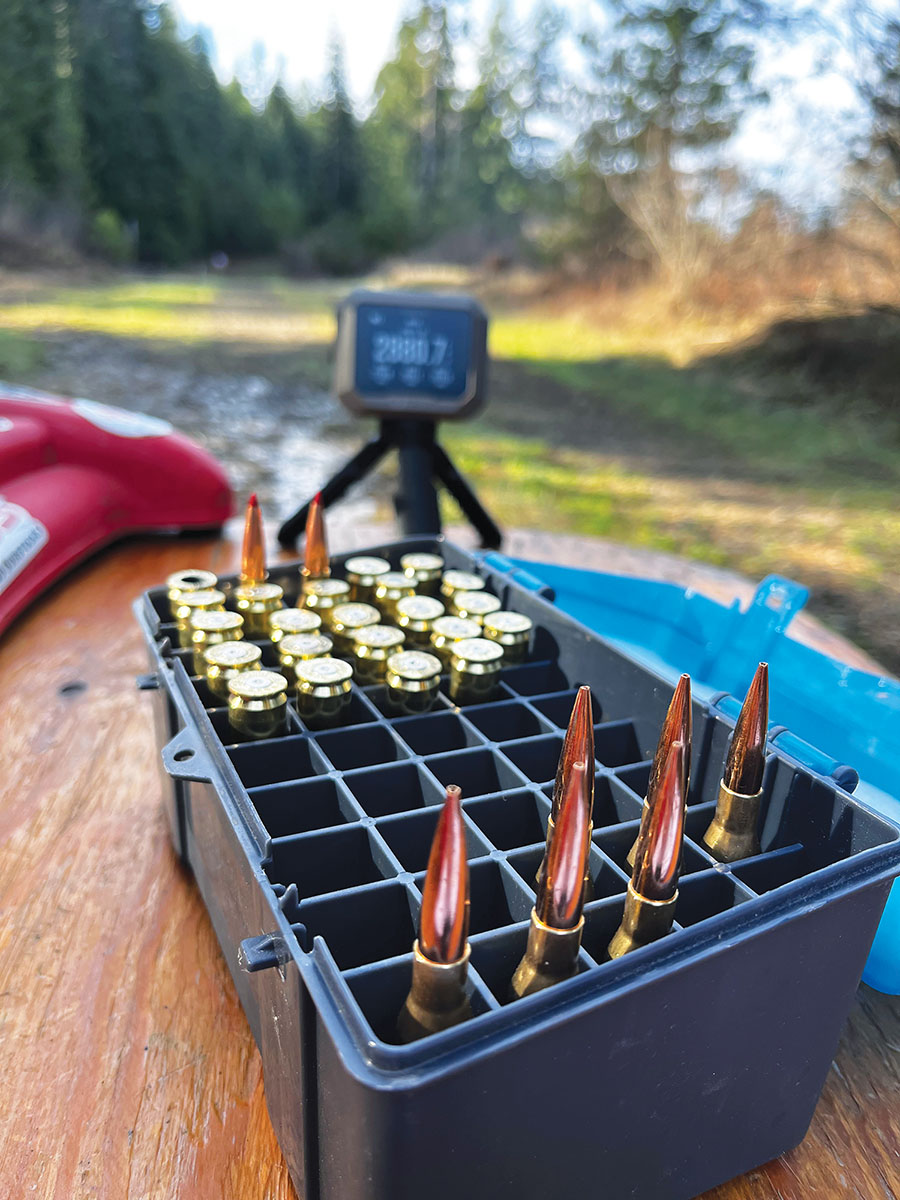
30-06 case held 67.9 grains of water, a Winchester 25-06 case 66.4 grains, a Federal 25-06 case 64.6 grains and a resized Remington 25-06 case 63.3 grains (all with spent primer in place and filled to the neck rim).
The 6.5-06 offers a straightforward round that matches 6.5-284 performance, while coming up slightly short of the older 264 Winchester Magnum or newer 6.5 PRC. The reason the 6.5-06 or 256 Newton failed to gain the early notoriety of other 30-06 based rounds hinges largely on being so far ahead of its time that the slow-burning powders required to truly make it sing simply didn’t appear until after World War II, when IMR-4350 and H-4831 became readily available. Perhaps, too, shooters of that era simply hadn’t bought into the idea of small bullets sent at high velocities. American shooters also took some time to fully embrace 6.5mm cartridges. The 260 Remington, 6.5 Remington Magnum and 6.5 Swedish Mauser, just as examples, are fine cartridges that never generated the U.S. attention they deserved. It took the 6.5 Creedmoor to dissolve that American 6.5mm stigma, so that now 6.5mm rounds, large and small, are all the rage.
Traditionally, the 6.5-06 retained an overall loaded length of around 3.340 inches. With the introduction of streamlined ELD/VLD-type projectiles with long, sharp ogives, overall loaded lengths of up to 3.470 inches became common, often requiring single feeding. Load data for the 6.5-06 has remained readily available, a testament to its relative popularity. Though most haven’t been significantly updated since IMR-4350, IMR-4831 and IMR-7828 were all that could be found on sporting goods
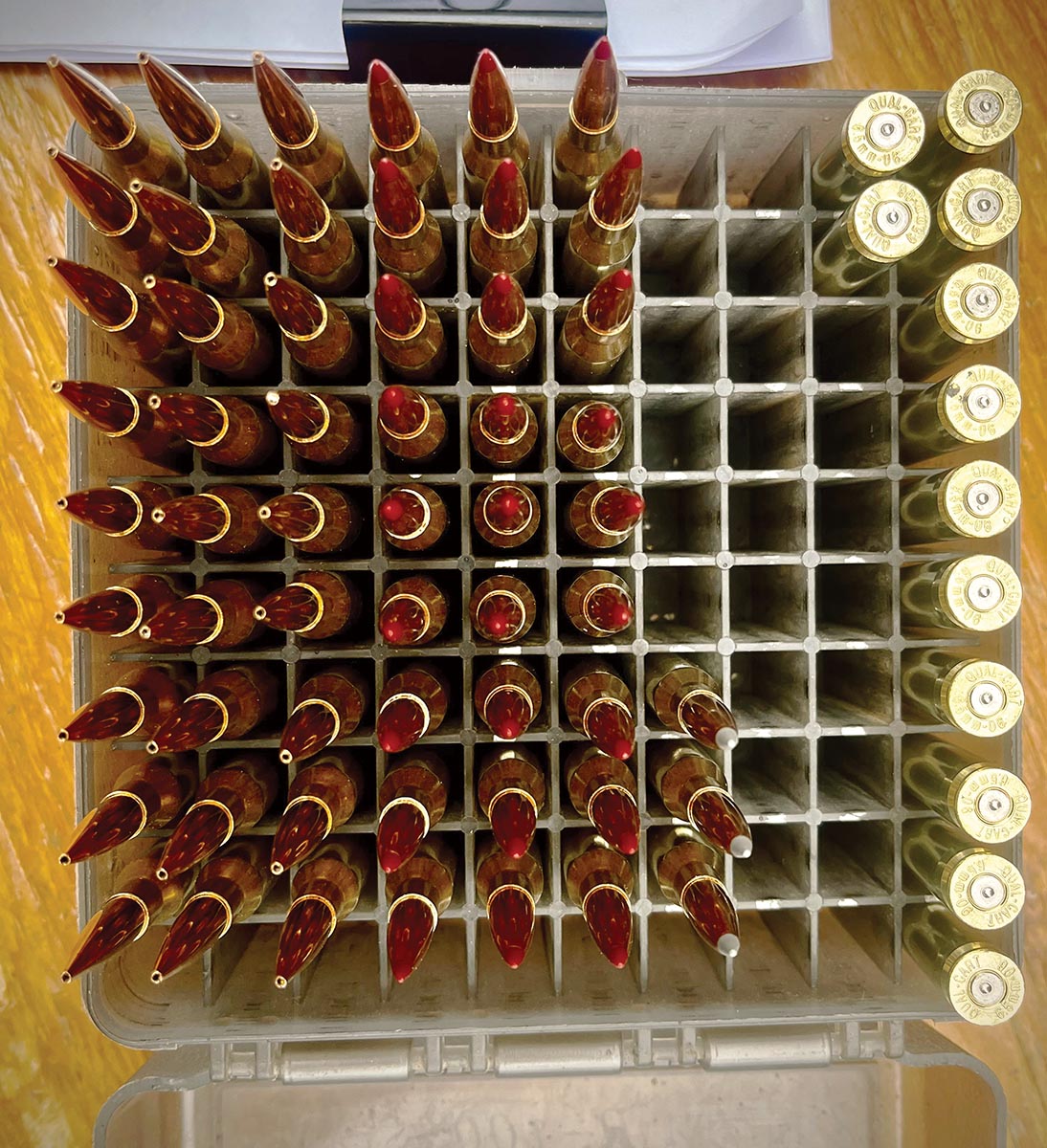
shelves. No worries, the trendy 6.5-284 shares nearly equal powder capacity, making powder charges essentially interchangeable – though the standard caution of starting well below listed maximum loads and working up slowly while watching for pressure signs should still applies.
The obvious question is why not just choose a 25-06 Remington or 270 Winchester, which offer comparable performance and readily available, properly headstamped brass and factory loads? There are several answers. It is well known that 6.5mm/.264-caliber bullets provide superior ballistic coefficients to standard .257-caliber options (at least until the appearance of the 25 Creedmoor). The 6.5-06 also allows running heavier bullets for larger game such as elk. Regarding .277-caliber bullets, 6.5mm comes in
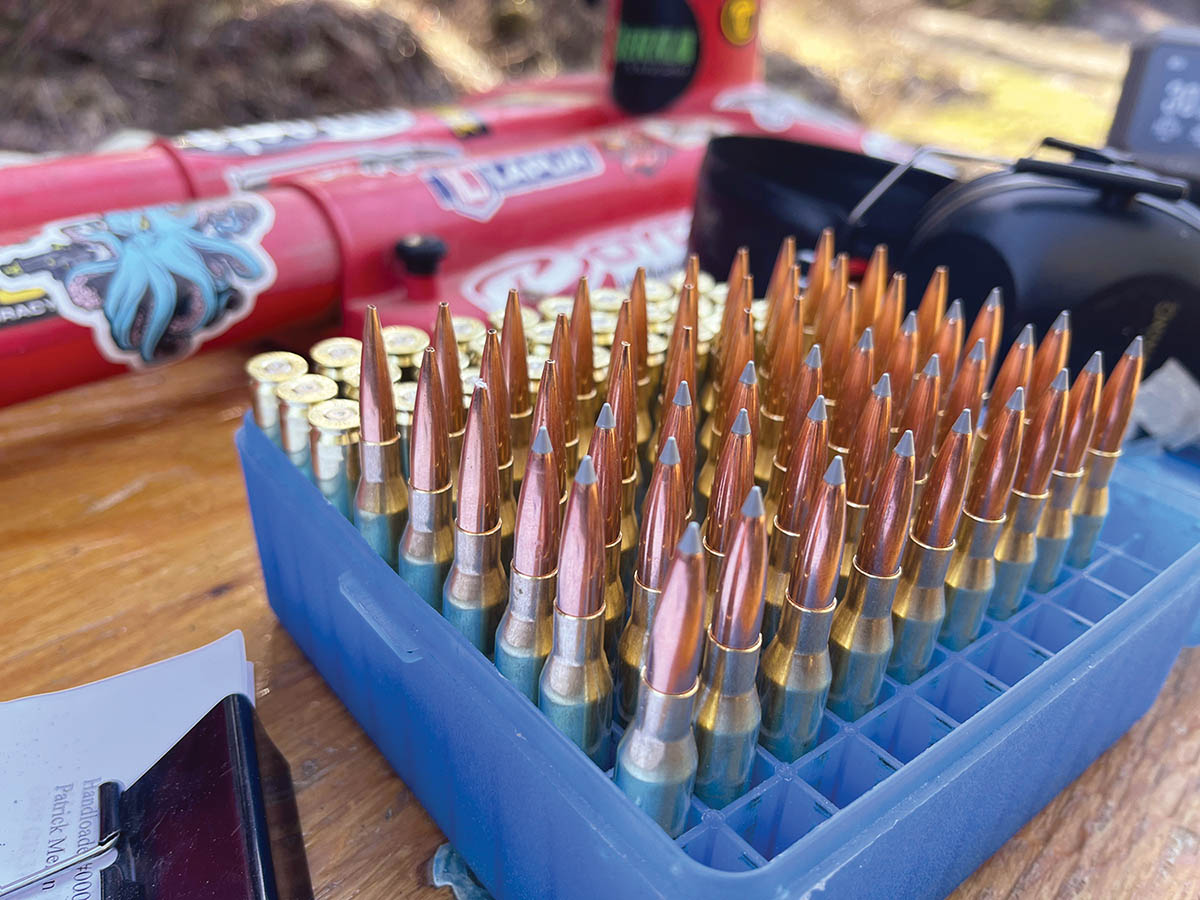
more quality options. Finding 6.5-06 handloading dies is also simple, as all major brands offer options.
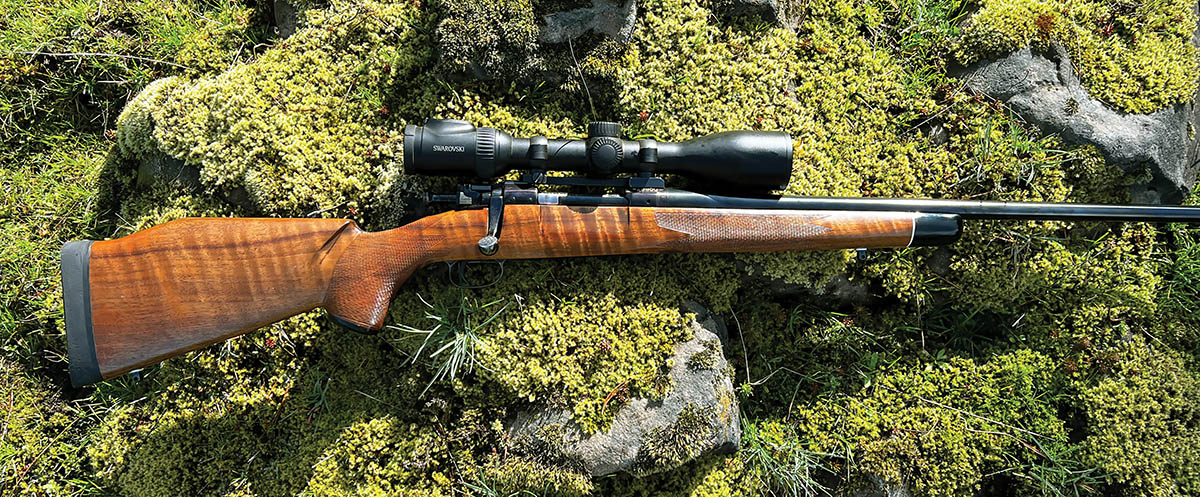
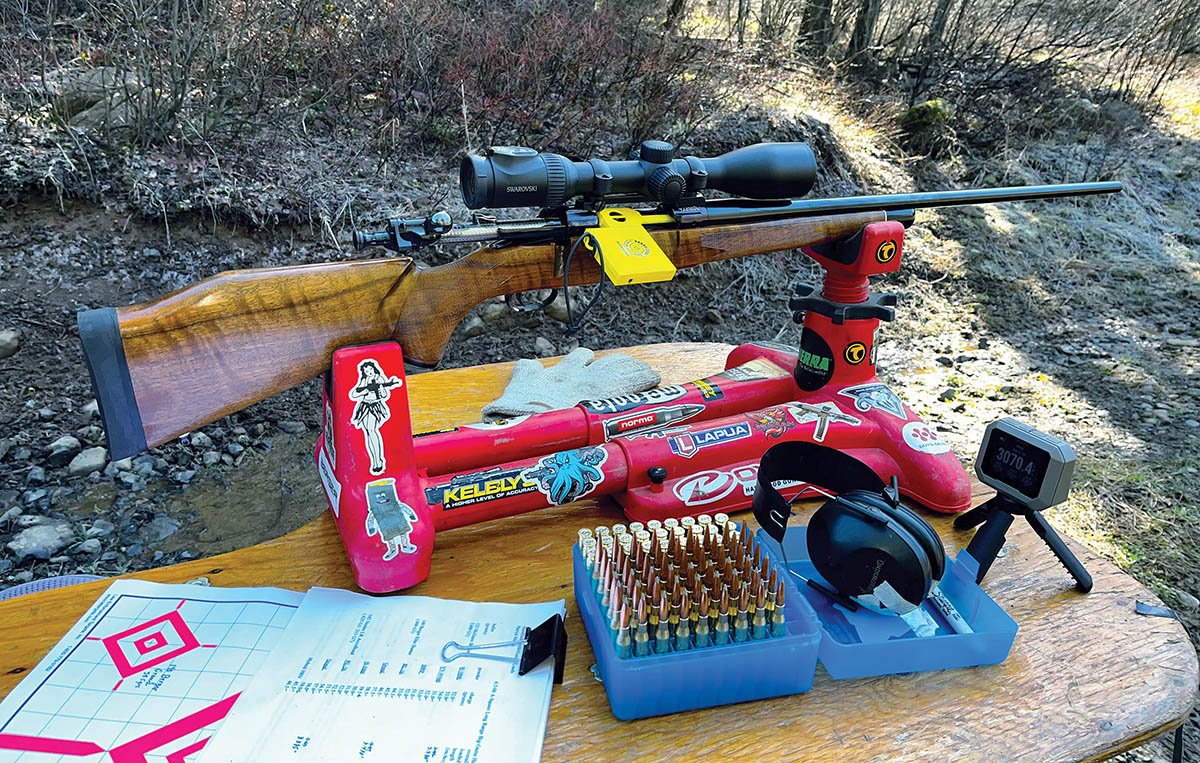
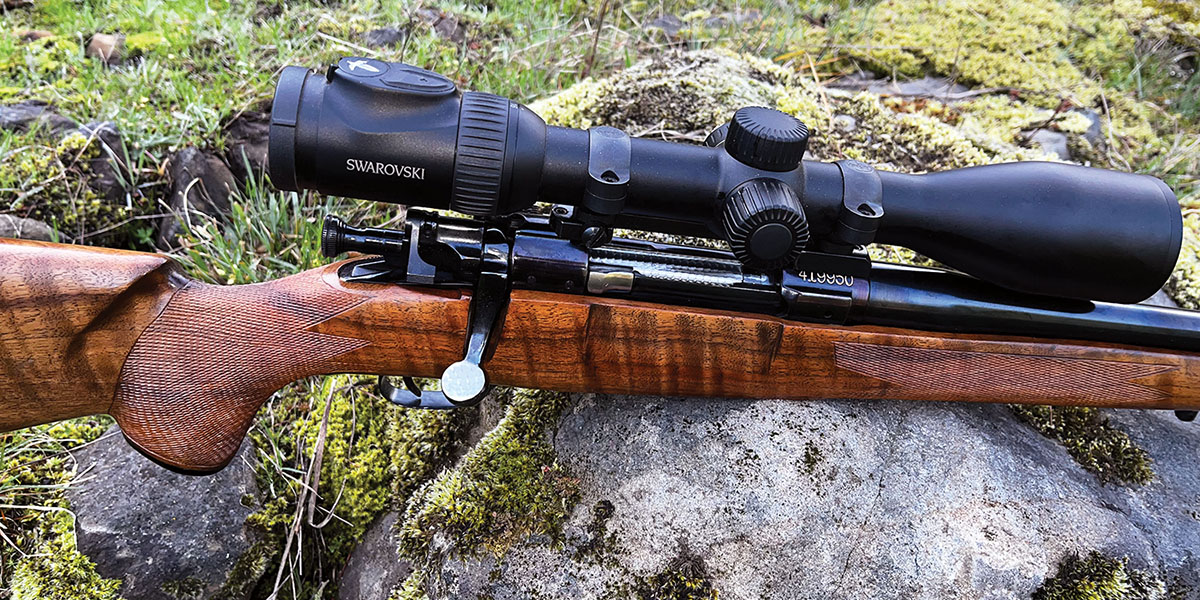
My newest 6.5-06 (yes, I own more than one) includes a 26-inch sporter-weight barrel with 1:8 twist, which makes it compatible with long-for-weight lead-core bullets to 156 grains, and monolithic copper slugs weighing 125 to 130 grains. This rifle was custom-built on a freshly blued ’03 Springfield military action, which includes the wing safety and left-side magazine cut-off switch. The rifle was glass bedded in a beautiful piece of highly-figured walnut, with flourishes including ebony forend and grip caps, and wrap-around hand checkering on the forearm and grip areas. The 1⁄4-inch black spacer added beneath the thick Pachmayr recoil pad creates a comfortable 14-inch length of pull (LOP). The bottom metal and trigger guard are blued steel. The trigger was honed to produce a crisp and creep-free 3-pound break. I added a Swarovski Z8i 2-16x 50 P optic in a one-piece Leupold STD base with 30mm Leupold STD two-screw rings, bringing the finished weight to 11.42 pounds. This weight and the well-fitted stock make this rifle a pussycat to shoot.
My goal was to introduce bullets with G1 ballistic coefficients (BCs) of no less than .600. That .600 benchmark is a truly arbitrary number, as in varmint shooting, I typically consider .450 G1 BC a good starting point for true long-range work. The term long range is also quite subjective, especially today when shooters are banging steel out to a mile. However, recall that these are big game loads, so the long-range label becomes a matter of ethical boundaries. I abhor the notion of treating coveted big-game animals as targets, and I’ve never warmed to the idea of encouraging some definitive yardage, say 1,000 yards, as a sort of holy grail when live animals are involved. I know
people who are capable of making such shots, but far too many hunters hold such aspirations without understanding the minute details involved or putting in the time required to develop the shooting skills necessary to ethically execute first-round, vital hits at such ranges. There is also the question of adequate remaining energy.
What I had in mind were maximum 500- to 600-yard shots on thin-skinned, light-boned big game. Coues whitetail and pronghorn come to mind. Animals for which a great deal of kinetic energy isn’t required. At these longer ranges, I’d consider beefy mountain mule deer a maximum, although for shots inside 350 yards, the high sectional densities of these long-for-caliber 6.5mm bullets should promote deep penetration on elk-sized animals. This might also include shots 100 to 200 yards shorter when dealing with stiff winds, as the high-BC bullets selected also result in narrower wind-drift margins.
Components included the aforementioned Quality Cartridge brass, Federal Premium Gold Metal GM210M large rifle match primers, an RCBS full-length die set and an Area 419 Zero Reloading Press. Powder charges were individually trickled into an RCBS beam scale.
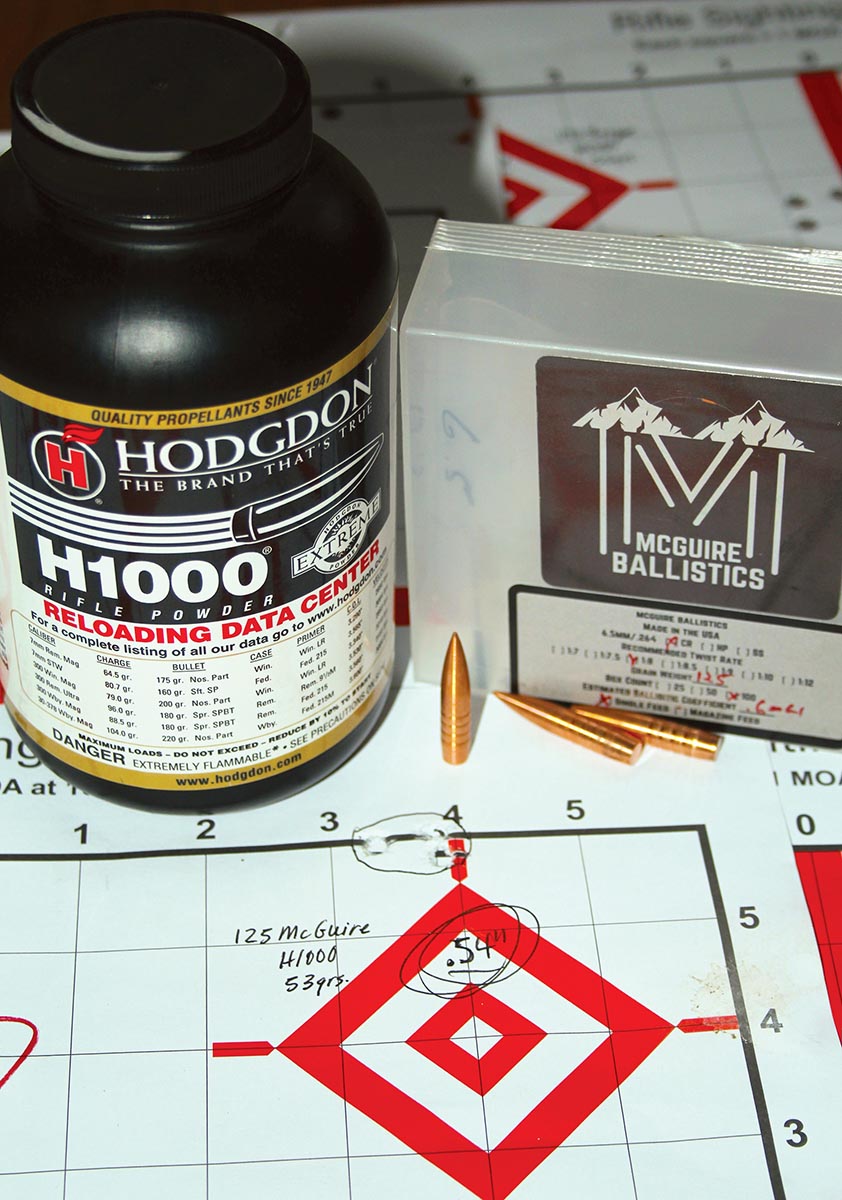
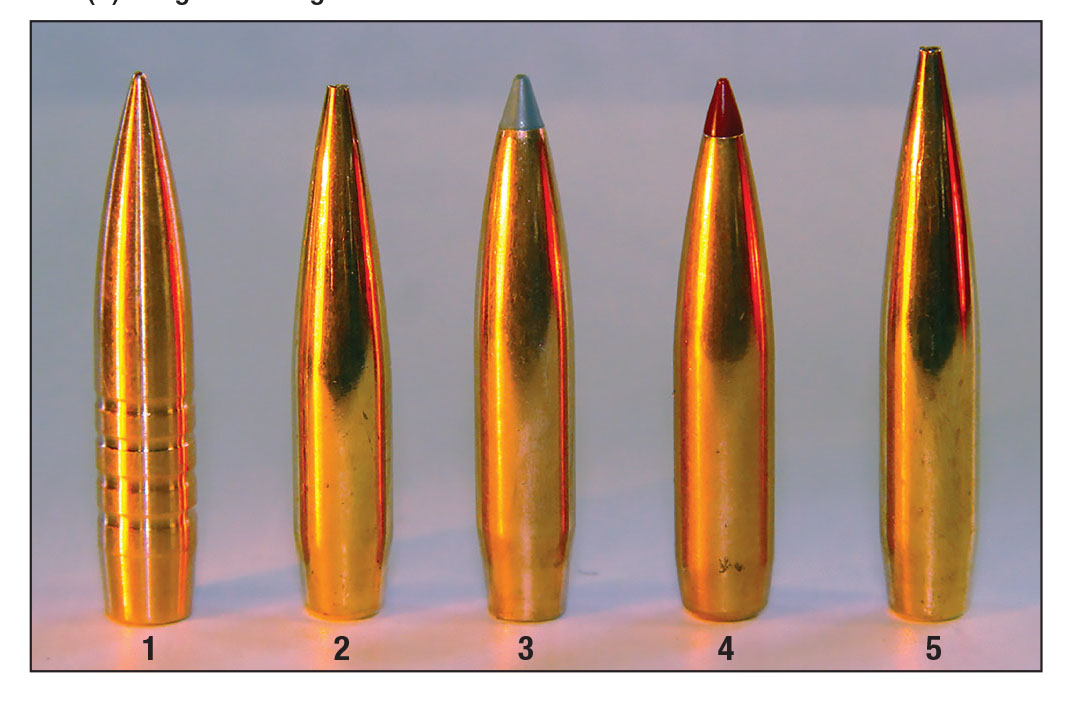
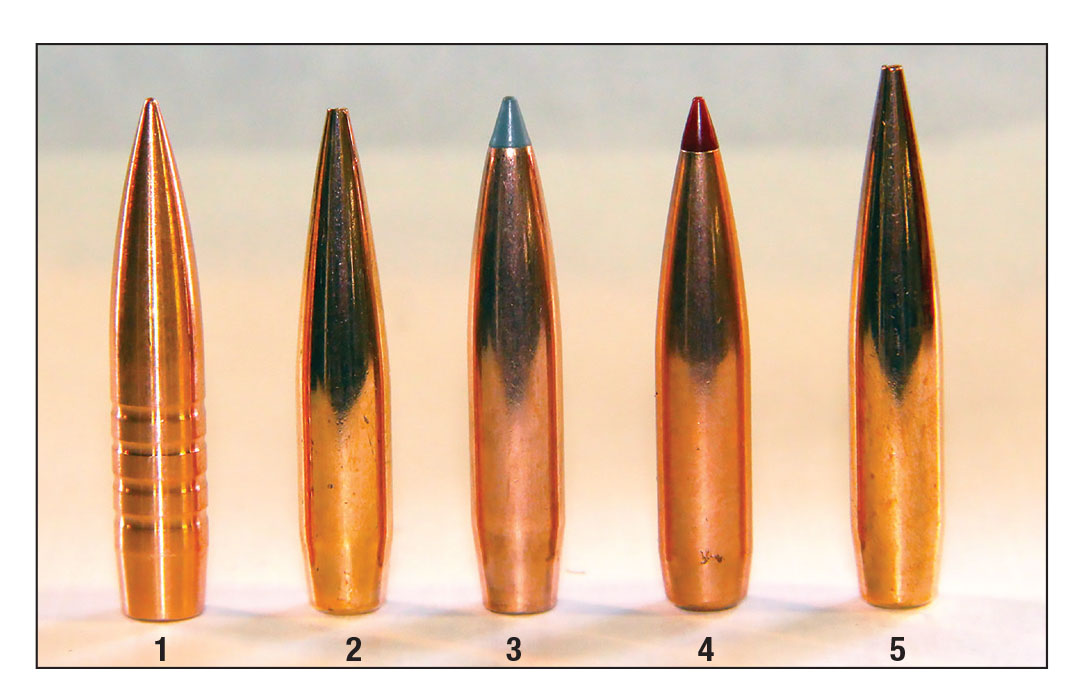
Starting with McGuire Ballistics’ 125-grain Copper Rose, we just hit the magic .600 G1 BC mark. This is a truly remarkable bullet. McGuire Ballistics engineered this copper projectile to maximize BC, including an enclosed tip and tapering boat-tail, while requiring only a 1:8 twist for full stabilization. McGuire recommends single feeding this bullet, as the tip is apparently easily damaged by magazine battering, though the heavy 6.5-06 test rifle introduces minimum recoil, so this shouldn’t pose as much of a problem as it would with magnum 6.5mm cartridges. Despite the enclosed tip, the Copper Rose peels back to produce beautiful double-size mushrooms that inspired the label, while also including very high weight retention. Sighted at 100 yards and with a conservative 2,900 feet per second (fps) muzzle velocity (I surpassed 3,000 fps with all powders tested), the 125-grain Copper
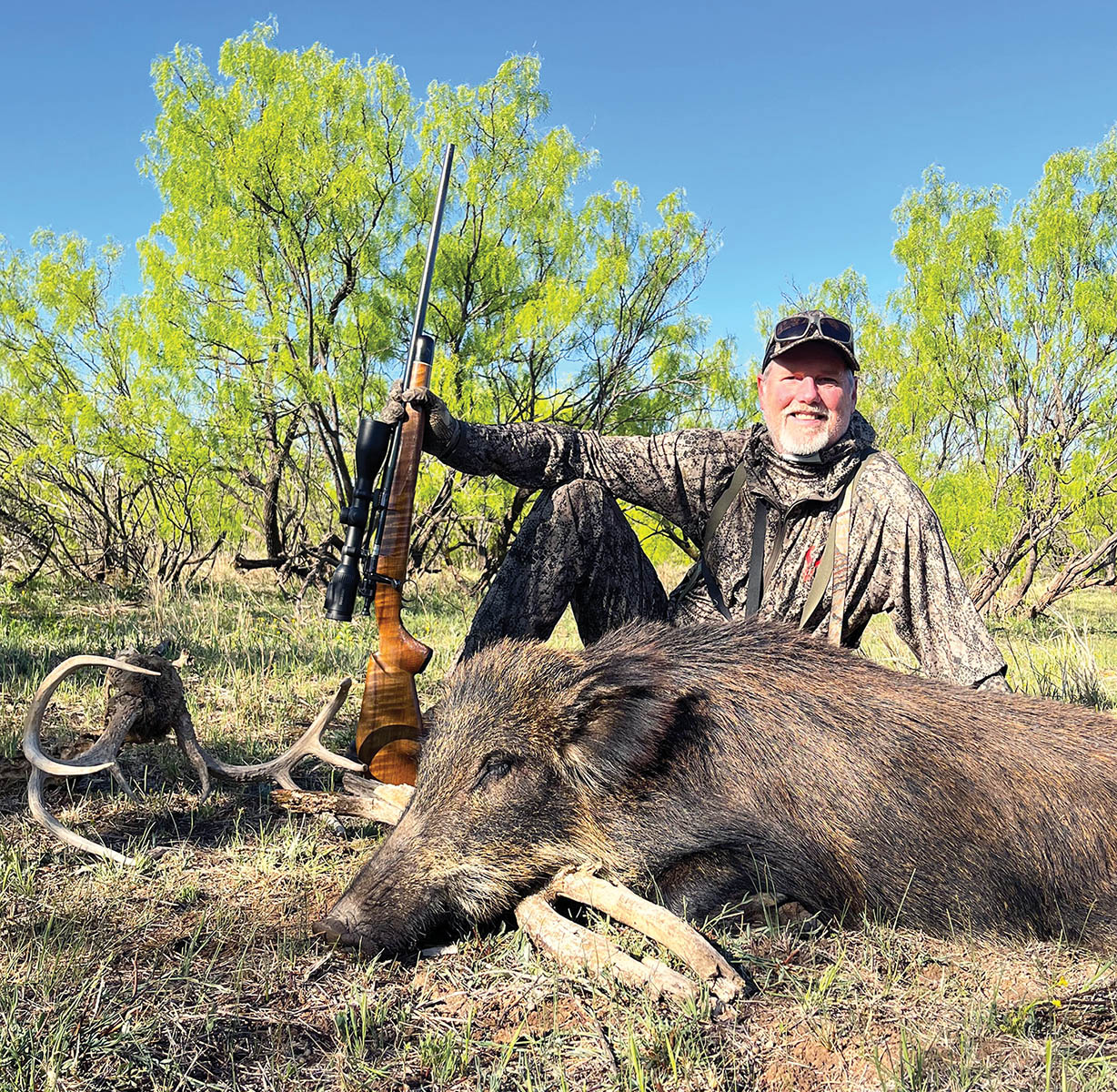
Rose requires 2.6 MILS of elevation correction and retains 1,311 foot pounds (ft-lbs) of energy at 500 yards, while drifting just 14.2 inches in a 10 mph crosswind at the same range.
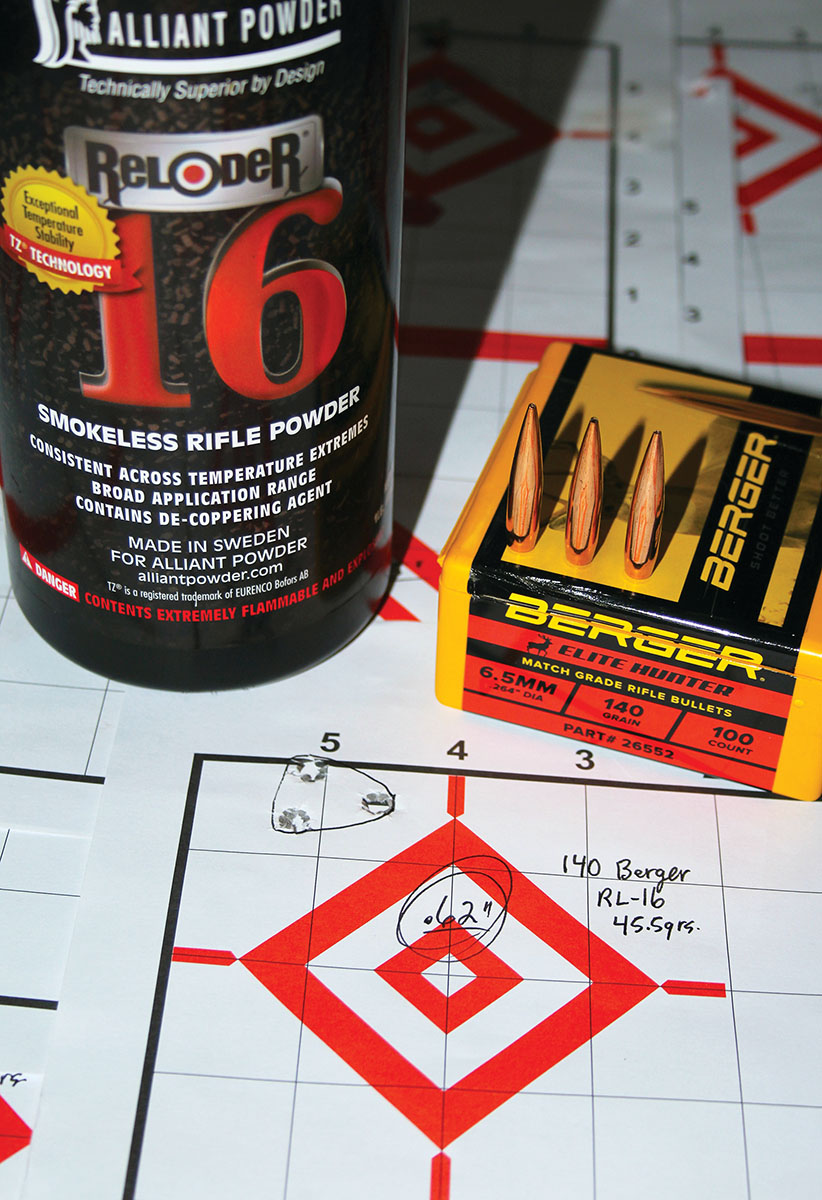
Berger’s 140-grain Elite Hunter provides a .606 G1/.310 G7 BC via a hybrid ogive, which is tangent at the bearing surface to minimize fussiness, secant at the nose to flatten trajectory and sleek boat-tail. Berger maximizes accuracy with ultra-consistent lead cores and J4 precision jackets that create .0003-inch run-out tolerances. Elite Hunter bullets were designed to penetrate 2 to 3 inches before expanding aggressively for devastating energy dumps. That means I wouldn’t use this bullet for bull elk. Running the numbers (100-
yard zero, 2,850 fps muzzle velocity – though I hit 3,100 fps with Ramshot Grand), 2.7 MILS of elevation correction must be applied at 500 yards, remaining energy is 1,421 ft-lbs, and wind drift with a 10 mph crosswind is 14.4 inches.
At 142 grains, Nosler’s AccuBond Long Range (LR) includes a .625 G1/.315 G7 BC created by a sleek boat-tail and polymer tip. This bullet was made to perform well on big game at extended ranges, including a specially designed tapered jacket and proprietary lead-core bonding process. It allows aggressive expansion for effective energy transfer, combined with maximum weight retention for deep penetration. Sighted at 100 yards and sent at 2,850 fps (I was able to surpass 3,000 fps) , the 142-grain AccuBond LR requires 2.6 MILS of elevation correction and retains 1,468 ft-lbs of energy at 500 yards, while drifting just 13.9 inches in a 10 mph crosswind.
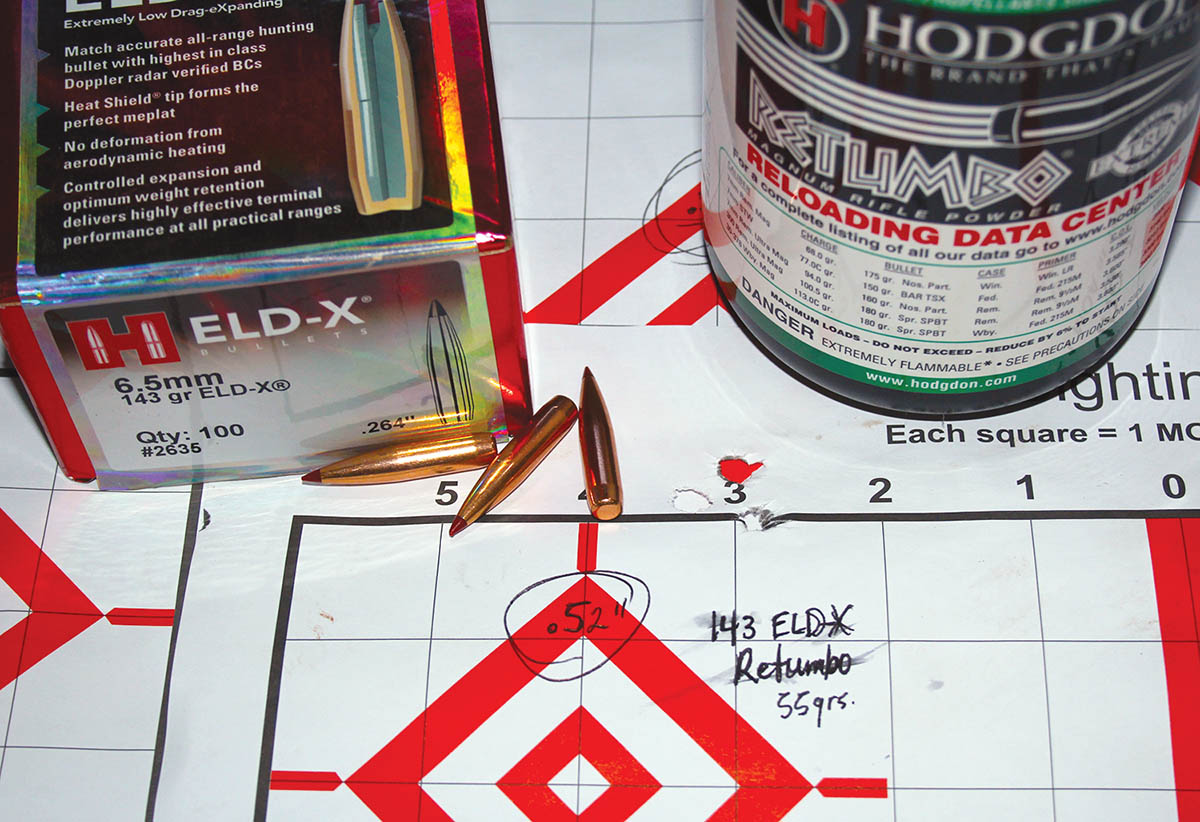
Hornady’s 143-grain ELD-X (Extremely Low Drag – eXpanding) also includes a .625 G1/.315 G7 BC, verified by Doppler radar. The red Heat Shield tip resists aerodynamic heating and resulting deformation on longer shots to provide a consistent BC over its entire trajectory. A
streamlined secant ogive, optimized boat-tail design, and concentric AMP jacket ensure accuracy. The ELD-X includes a thick jacket shank and InterLock ring to ensure 50 to 60 percent weight retention to 400 yards, and reliable expansion with 85 to 90 percent weight retention at 400-plus yards. Correction values and wind drift mirror those produced by the Nosler bullet.
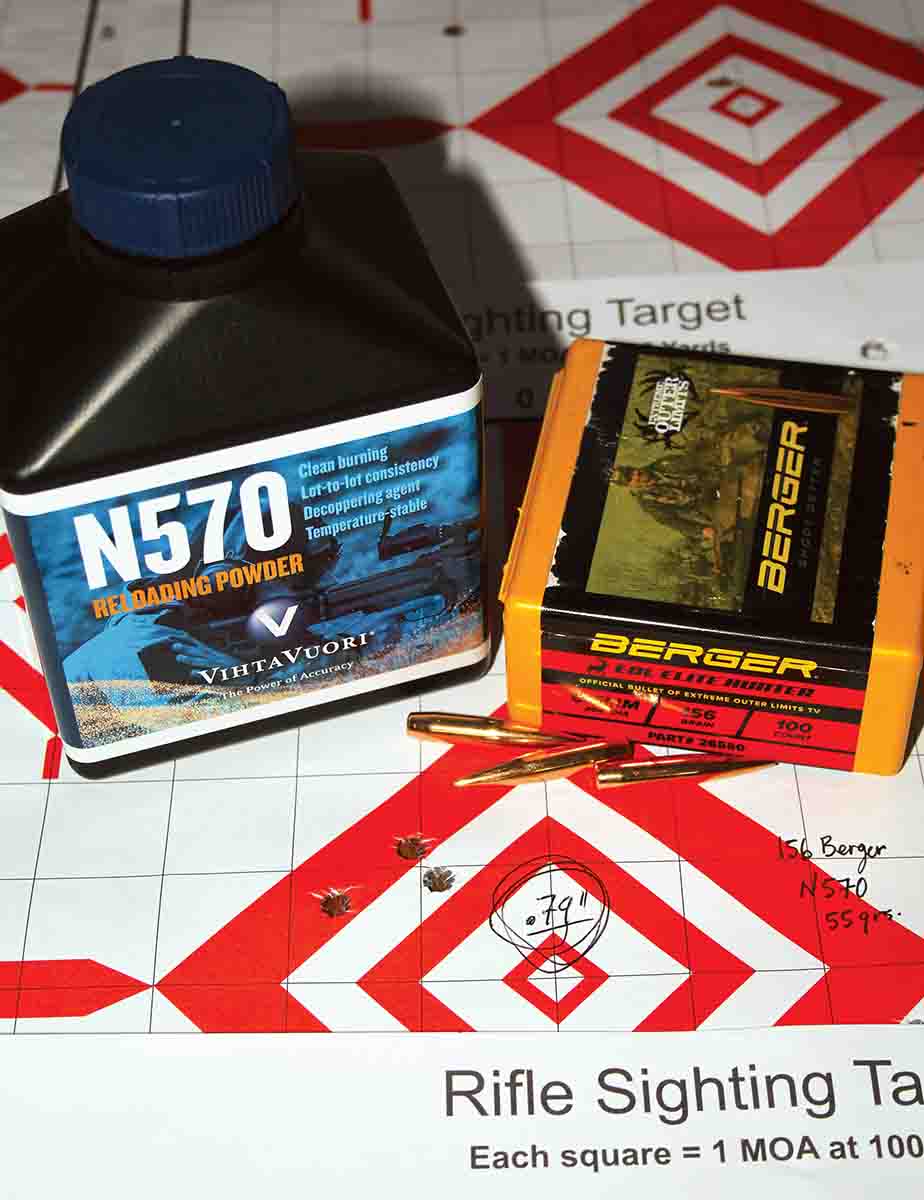
The highest BC of the five bullets tested was provided by Berger’s spear-like 156-grain Elite Hunter. The hybrid ogive and boat-tail give this bullet a .679 G1/.347 G7 BC. Construction and terminal performance mirror that of the 140-grain Elite Hunter already discussed,but backed by a little more lead. Plugging in numbers using the same parameters, 2.9 MILS of elevation corrections must be applied while retaining 1,517 ft-lbs of energy at 500 yards when launched at 2,700 fps. Five-hundred-yard wind drift is 13.4 inches in a 10 mph crosswind.
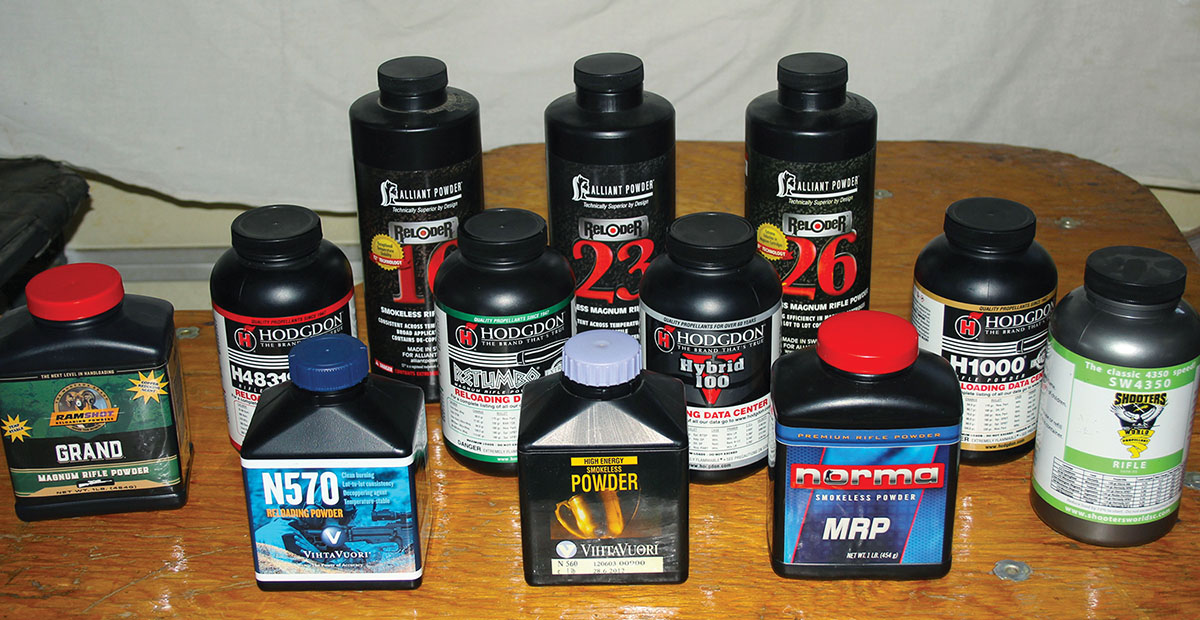
Optimal powders for bullets in this weight class sit between Alliant Reloder 16 to Vihtavuori N570 (used with the heaviest bullet). That leaves a huge variety of powders at your disposal. I selected those promising either top accuracy or velocity, and when possible, those including temperature stability, and/or de-coppering agents. Powders chosen that make no specific claims of temperature stability or de-coppering agents like Norma MRP, Shooters World4350 and Hodgdon Hybrid 100V have proven themselves in prior tests and should not be ignored. I worry less about temperature stability during generally cooler big-game hunts than I do during warmer spring/summer varmint shooting, but temperature stability equals accuracy, especially at extended ranges when vertical stringing can result from loads with wide extreme velocity spreads. Alliant Reloder 26 and Ramshot Grand gave the highest velocities, but note that these high-energy powders gain pressure quickly, so approach maximum loads with caution.
Interestingly, my rifle has generally provided more consistent accuracy with lighter bullets, the heavier bullets proving fussier and resulting in higher average group sizes. Whether a function of available rifling twist or seating depth, I cannot say with any degree of certainty.
.jpg)