

From the Bench
Sierra’s New Hunting Competition Bullet
column By: Art Merrill | February, 26

We cannot effectively employ marksmanship without ammunition that is up to the task. Unsurprisingly, the world’s bullets that shoot with the greatest precision are those intended for long-range competition. Such bullets are made with the utmost attention to bullet-to-bullet consistency in weight and dimensions, but without thought to terminal performance beyond punching a hole in paper or ricocheting off a steel plate. As a real-world example, Sierra has been making top-tier competition MatchKing bullets for many decades, and has always cautioned that they have no terminal performance suitable for hunting game animals.
My introduction to Sierra MatchKing bullets was in loading 200-grainers in 30-338 Winchester for NRA Long Range competition, followed by loading lighter .308 MatchKings (M-14), then .223 MatchKings (AR-15) for High Power competition. Over the years, many others and I have wondered why Sierra never developed MatchKings into hunting bullets. Well, well, whaddaya know:
“Sierra Bullets is proud to introduce the MatchKing X (MKX) –the next evolution of Sierra Bullets’ MatchKing series – designed with hunters in mind,” Sierra announced in a mid-2025 press release. “The MatchKing X offers the incredible long-range accuracy and shot-to-shot consistency that shooters have come to expect from the MatchKing series, now enhanced with proven terminal performance for reliable results in the field.”
In speaking with a Sierra technician, I learned that, in addition to what I discovered at the reloading bench, the MKX jacket and core material are softer than those on the MatchKing, and the tip of the jacket is precisely skived, all to promote reliable expansion in a game animal. Considering the MKX differs from the MatchKing in consistency, BC, length, relocation of the start of the ogive (which starts about .028 inch further back than on the 175-grain MatchKing), jacket hardness, core hardness,and terminal performance, I reckon that makes it a completely new bullet and that Sierra is taking advantage of the MatchKing’s long and deserved reputation for precision in giving the MKX the MatchKing name. Does that matter? No, it’s just marketing. What matters is that the MKX is a superb precision bullet for hunting, and Sierra can call it whatever it wants.
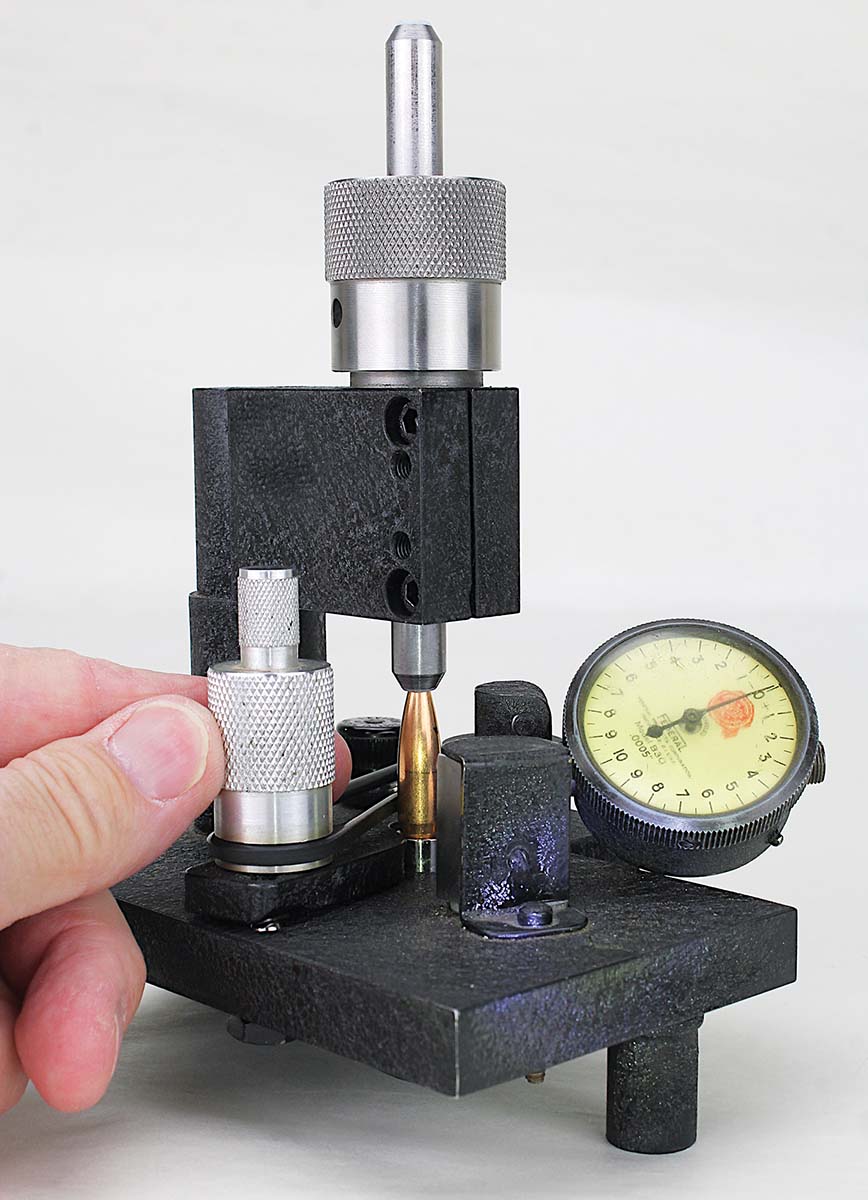
The test vehicle is a precision CZ 600 Range rifle with a 1:10 rifling twist rate; cases run through a Forster Bench Rest resizing die resisted bolt closure very slightly, indicating shoulders were in contact with the forward chamber wall for headspacing about as perfect as it gets. The maximum cartridge overall length for the 308 Winchester is given as 2.810 inches. A Sinclair bullet seating gauge indicated a cartridge overall length of 2.886 inches (or 3.199 inches measured to the bullet ogive with the comparator) would place the bullet ogive .005 inch off the CZ’s rifling lands, a “sweet spot” starting point for precision shooting, and the CZ’s magazine handled the extra length with room to spare.
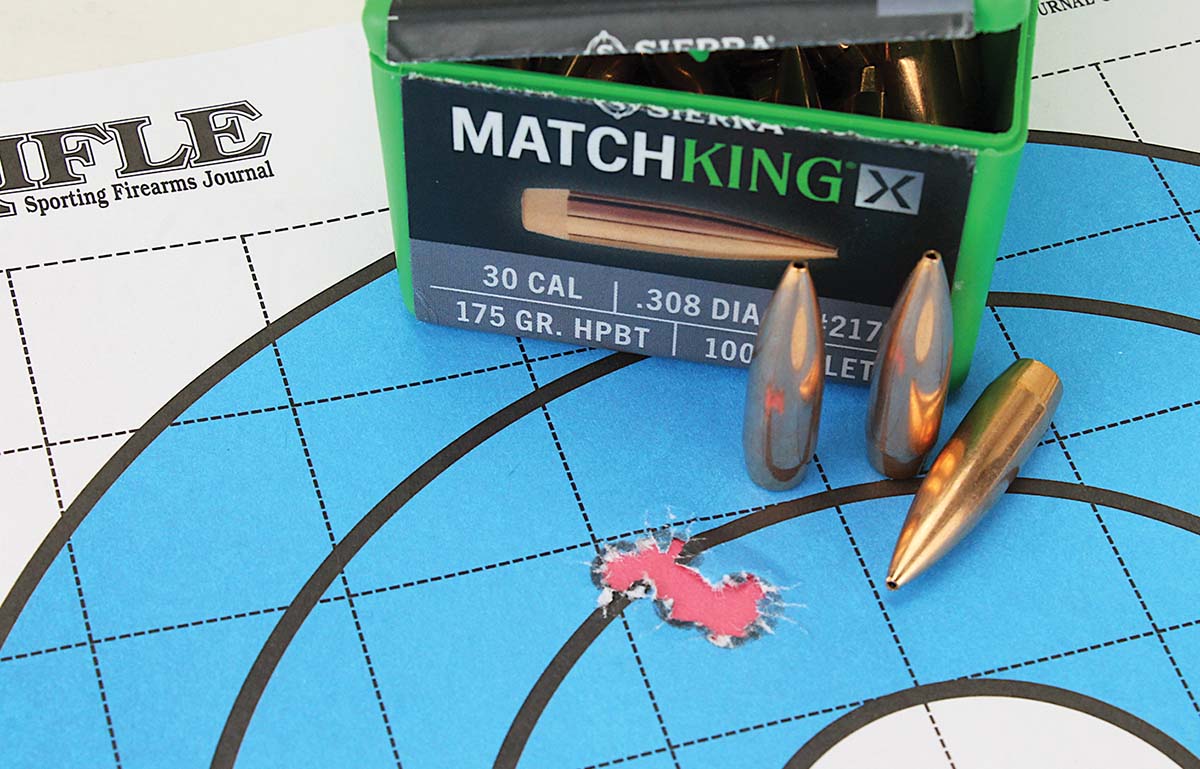
There’s a reason IMR-4895 is still around, and unsurprisingly, with this weight bullet in this cartridge, the oldie punched MKX bullets into the smallest group in 100-yard, five-shot tests, a one-holer of 0.54 inch. IMR-4831 came in second best with a 0.69-inch group.
Half MOA on its first outing. With performance like that, and with only seven loads tested, Sierra’s MKX is worthy of the MatchKing name, and the bonus is that Sierra load data for the MatchKing also works with the MKX.
Sierra says it has successfully tested the MKX bullet’s terminal performance “on thin-skinned game out to 500 yards.” Combining that with MatchKing precision, Sierra’s MKX offers the confidence that the bullet can do the job if the hunter possesses the wind-doping and marksmanship skills for an ethical long-range shot.
And while accuracy testing on paper targets typically consists of five-shot groups, I reckon Kjelgaard’s three-shot adage still holds, at any distance.
.jpg)
.jpg)