

The 8x56R and Its Mysteries
Hungarian Hybrid
feature By: Terry Wieland | February, 26

For a certain class of handloader, however, a rifle without ammunition is merely a challenge, and the more difficult it is to get brass and bullets, the better they like it. For such as these, the influx of near-pristine Hungarian Mannlicher M95s in the 1990s was Christmas come early.

The M95 was the final step in a progression of straight-pull military rifles designed by Ferdinand von Mannlicher between 1884 and 1895. Although relatively little known compared to the British Lee-Enfield or the Mauser ’98, the M95 was one of the best battle rifles of the Great War – simple in design, highly reliable and capable of intense firepower.
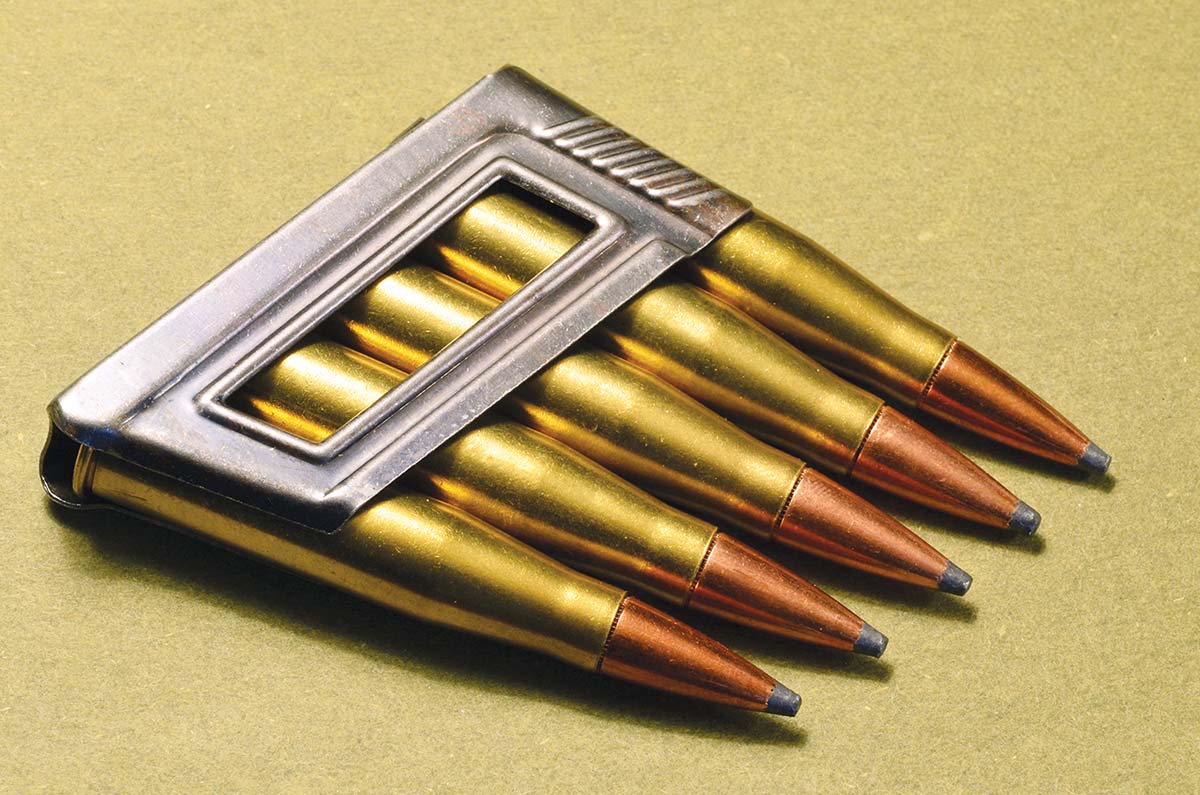
Instead of a box magazine (like the ’98) or even a detachable box (like the Lee-Enfield), the M95 used the “packet system” first employed with the Commission ’88 rifle, in the design of which von Mannlicher had a hand. Five cartridges are held in a spring-steel clip, which is inserted into the action. After the last round is fired, the empty clip falls out; if it happens to stick, it’s pushed out as a new clip is seated. Combined with the lightning-fast straight-pull bolt, it gave Austrian soldiers tremendous firepower.

Like the Austro-Hungarian Empire itself, the army structure was hideously complicated, as was its arms production industry. Austria had Steyr-Mannlicher, the Czech region Brno and Skoda, while Hungary had a Steyr subsidiary in Budapest as well as its own factory, Fegyver és Gépgyár (FÉG). When the Great War ended and the empire was broken up, the resulting countries not only split the assets but also engaged in border disputes and armed conflict for the next 20 years.
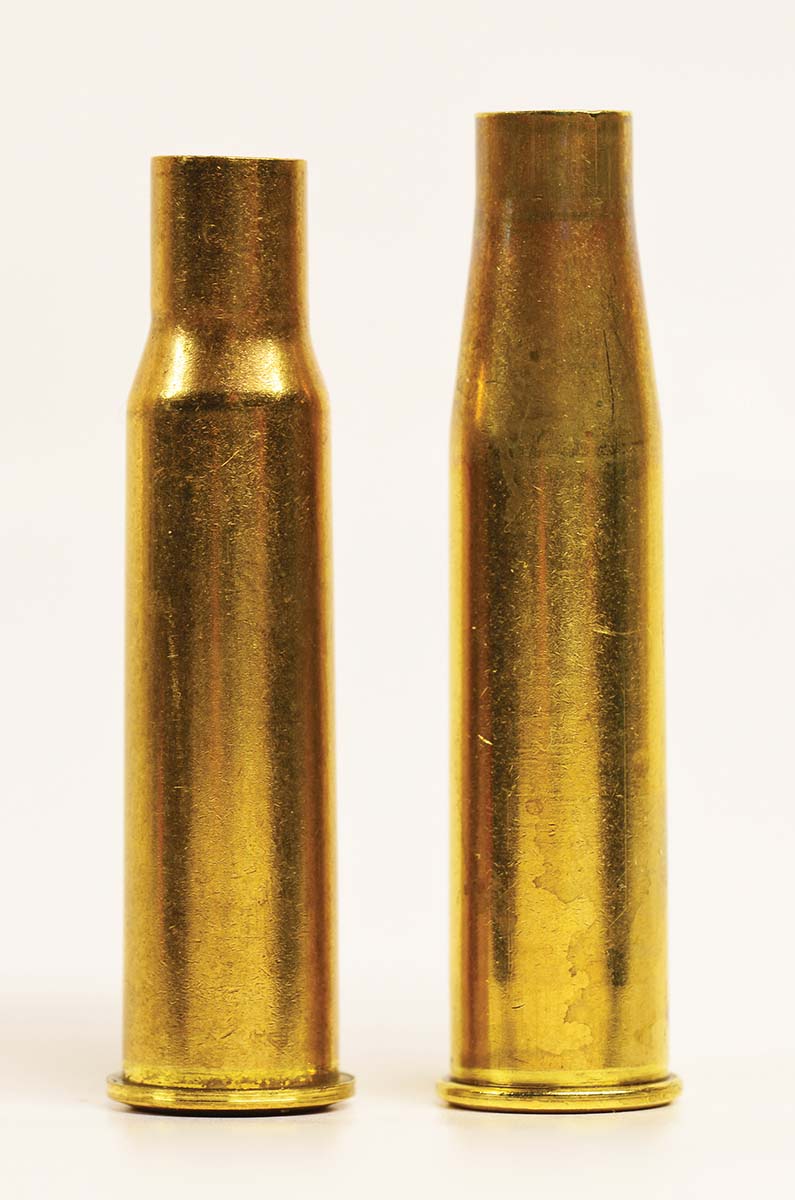
Since it was getting a machine gun chambered for this round, and since it would be unusable by any future adversary, such as Czechoslovakia or Rumania, Budapest decided to standardize and rebarrel all its M95s to 8x56R. These rifles are identified by an ’S’ (for Spitzer) or a ‘H’ (for Hegyes Töltény – pointed bullet) stamped on the barrel just forward of the receiver ring.
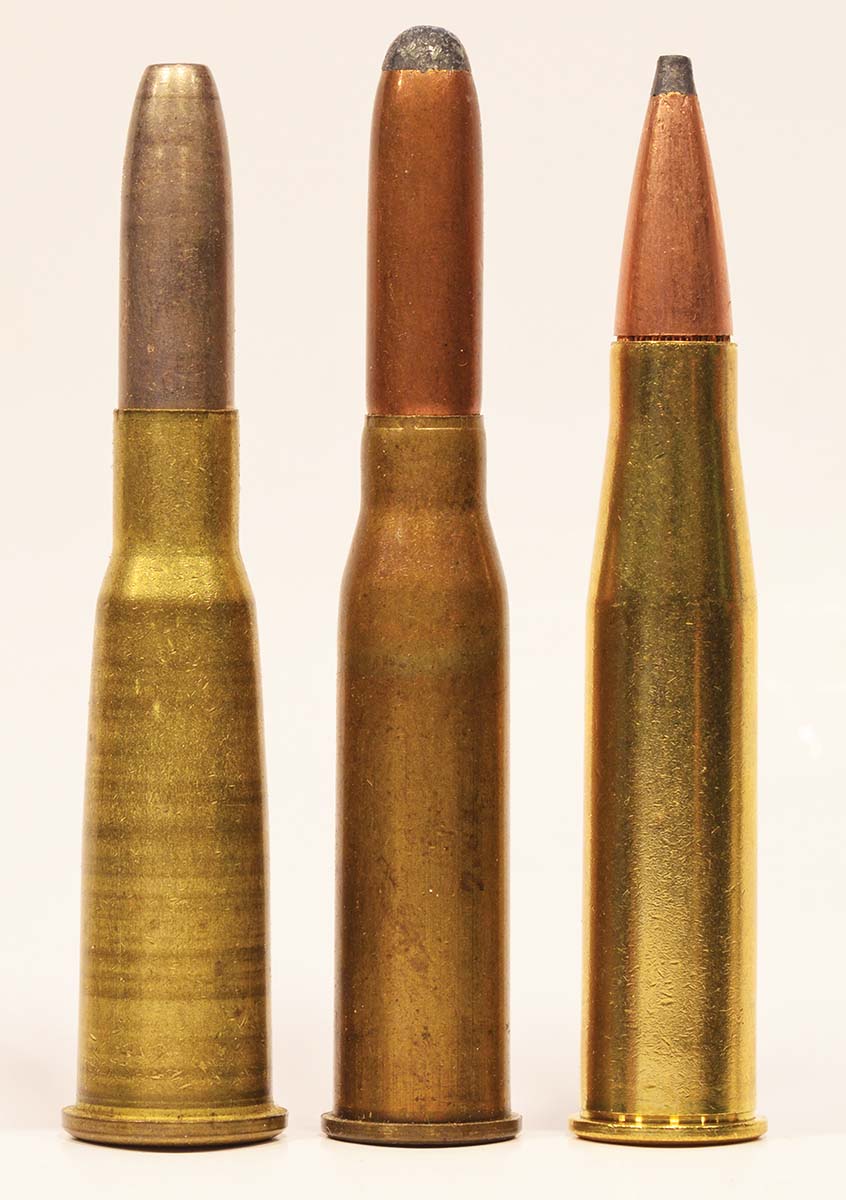
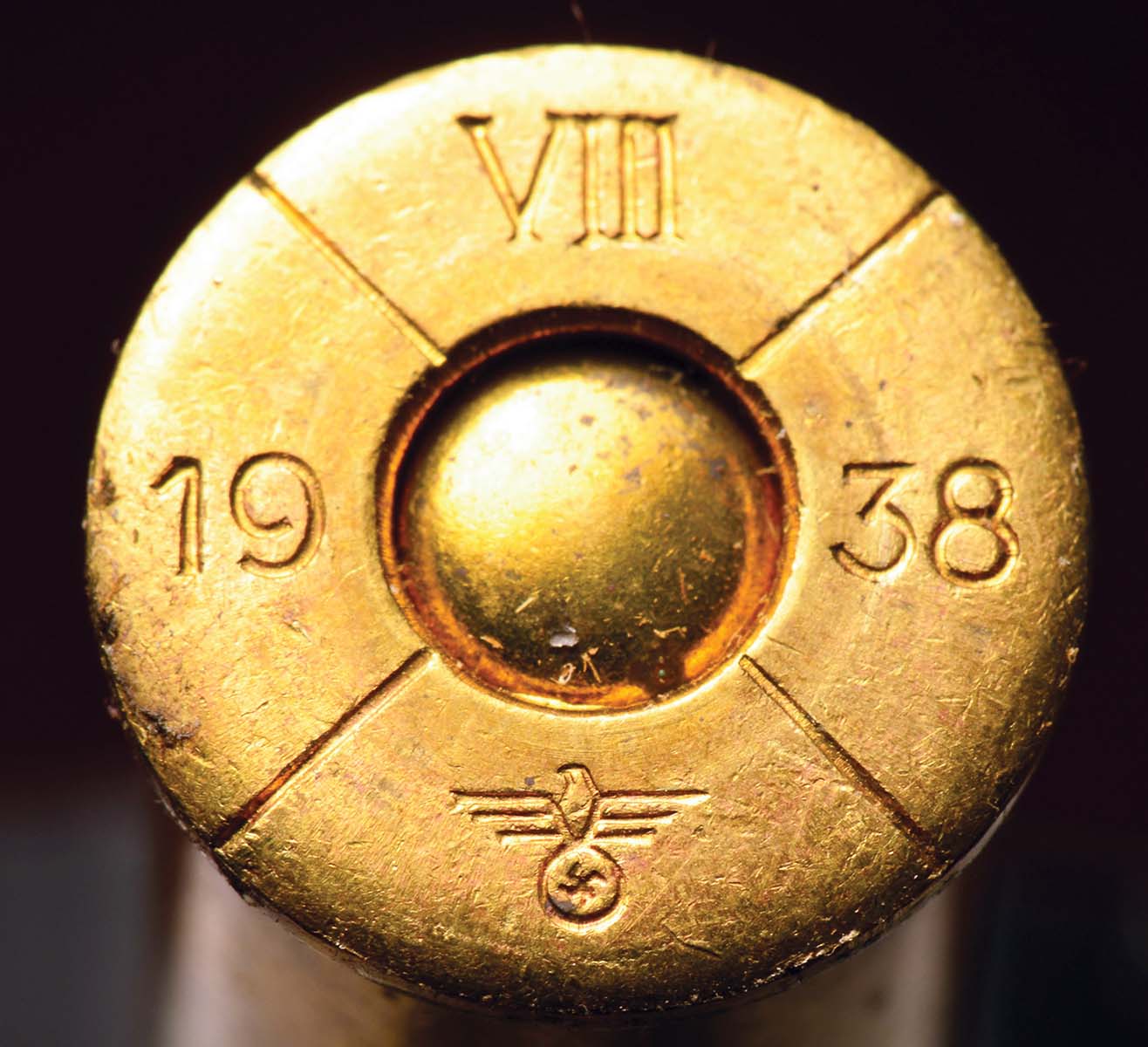
The upshot of all this was that thousands of M31s remained in storage even throughout World War II, and were ignored during the Soviet years. When the Iron Curtain came down in 1990, they were exhumed, sold to surplus dealers, and imported into the United States in near-new condition. All that was lacking was ammunition. Well, almost. It turned out that in 1938, RWS of Germany produced a large run of 8x56R in anticipation of the M31s being employed in a war. This ammunition, two packets to a 10-round cardboard pack, was also stored away and later found its way to the U.S. Although the brass is Berdan-primed, the spring steel packets are a gift from on high, since without them, you have a somewhat awkward single-shot. They can be reused indefinitely.
As M31s became more common, Graf & Sons began importing brass from Prvi Partizan (PPU) in Serbia, and prevailed on Hornady to do a run of 205-grain .329 bullets, and also load some ammunition in the PPU brass. Graf also brought in some PPU 225-grain bullets. A quick check of Ammoseek.com as I write this indicates that PPU loaded ammunition, with 205-grain bullets, is now being imported and appears to be widely available at reasonable prices, in the neighborhood of $1.50 per round. The spring-steel clips can be found with a bit of searching.
The Graf & Sons website (Grafs.com) shows PPU brass to be out of stock, but (inexplicably) offers the Hornady 205-grain bullet, even though Hornady’s website ceased to list it long ago. The PPU 225-grain bullet of old is nowhere to be found.
This gives some idea why, if you own an M31 and want to shoot it often, prudence and economics suggest you learn to load your own.
Shortages or no, brass these days is not hard to come by, but when I acquired my first M31 years ago, it was scarce. Bob Hayley made some brass for me, which was rather involved because the 8x56 Hungarian is not based on any other existing case. He began with Winchester 7.62x54R brass and altered it here and there until it would chamber. It’s a little short and requires fire-forming, but it can be made to work. Fortunately, I came upon some PPU brass and Hornady ammunition shortly after, so I was spared all this travail.
Bullets are more difficult.
The 8x56R uses a unique bullet diameter, .329 inches. You can use standard 8mm (.323) bullets, but accuracy ranges from poor to nonexistent.
Hornady’s run of 205-grain .329 bullets from 20 years ago was on its bullet list for years thereafter. It’s gone now, although, as mentioned, Graf & Sons seems to have some in stock. PPU has added a 206-grain bullet to their list, apparently replacing their 225-grain.

At this point, I should add that both rifle and carbine have noticeable recoil with either military or civilian loads, and the steel buttplate accentuates it. Other writers have noted this as well, so this is not merely me being an aging arthritic wimp.
Finally, the knottiest problem of all: Data. Not only is it practically nonexistent, but what one does find should be treated with some skepticism. The key is to start low.
In the first edition of Cartridges of the World, Frank Barnes recommended IMR-3031, which was his standby powder for practically everything mysterious in this class, new, old, American or otherwise. His recommendation looked too hot for my taste.
I preferred to go to my Powley Computer, since you begin by measuring case capacity and proceed from there.
According to the Powley Computer, with a 205-grain bullet, the best powders are H-4895, IMR-4895 or IMR-4064. With a 225-grain bullet, it advised either H-4831 or IMR-4350. I went with H-4895, simply because it’s one of my favorite powders and I have a good supply. With the 225-grain, I used IMR-4350 because of the faint-but-possible risk of pressure excursions if you start too light with H-4831.

Comparing my loads to data for the 8x57 was difficult because there are no exact correlations with bullet weights, and close as those might be, no exact crossover with powders. The Powley Computer does not give starting loads; it bases its data on what it perceives to be the ideal load in a particular cartridge, and this, I’ve found, can be high or low when compared to published data. All in all, treading very, very carefully is the best approach.
If all this suggests I am being overly cautious, I plead guilty.
Cast bullets were more of a problem simply because no data exists for light loads using such powders as Trail Boss and Accurate 5744. I did try some Trail Boss using the formula for determining loads, but the results, though included here for the record, were discouraging. I wanted light, but not that light.
My old favorite, Accurate 5744, calculated again according to the old Accurate Arms formula of 40 percent case capacity to the base of the bullet, performed very well. Velocity in both the rifle and the carbine were right where I want them and it was great fun to shoot at clay targets on a dirt bank.
For the record, all of the loads put their bullets about where the non-adjustable military sights indicated, but this will vary from rifle to rifle. Given the shortage of components, I decided that shooting formal groups was a waste of both time and resources. Suffice to say, they put their bullets where I wanted them. I know I can load up and take these rifles out any time I want to, and for a shooter, as opposed to a collector, that’s just fine.
.jpg)